

Kirjahaku
Etsi kirjoja tekijän nimen, kirjan nimen tai ISBN:n perusteella.
1000 tulosta hakusanalla Eric


Erichsen, J: On congestive pneumonia, consequent upon surgic
Antigonos Verlag
2024
sidottu

Erichsen, J: Science and Art of Surgery
Antigonos Verlag
2024
sidottu

Erich, F: Ueber Carcinoma mammae und seine Metastasen
Antigonos Verlag
2024
sidottu

Erichson, W: Beitrag zur lnsecten-Fauna von AngoIa, in beson
Antigonos Verlag
2024
nidottu

Erichson, W: Bericht über die wissenschaftlichen Leistungen
Antigonos Verlag
2024
nidottu

Erichson, W: Beitrag zur lnsecten-Fauna von AngoIa, in beson
Antigonos Verlag
2024
sidottu

Erichson, W: Bericht über die wissenschaftlichen Leistungen
Antigonos Verlag
2024
sidottu


This documentation of Remarque's (1898-1970) -All Quiet on the Western Front- combines the features expected of a commentary edition with an analysis of the marketing strategies connected with the novel's publication and a discussion of the reactions of the press in the period 1928 to 1930. Genesis, publication, and early reception of Remarque's anti-war novel are presented for the first time in the way they interconnect. Accordingly, the study's scope extends beyond the individual case of this one novel to encompass a large portion of the literature on the First World War by indicating the evaluation criteria drawn upon in the Weimar Republic to deal with this genre. - Appended is a CD-ROM with synoptic editions of different stages of the text."

Erich Preiser (1900 - 1967), wie Ludwig Erhard Sch ler von Franz Oppenheimer und Wilhelm Rieger, z hlt zweifellos zu den wichtigsten deutschen Vertretern der Wirtschafts- und Sozialwissenschaften. Als Mitglied des "Wissenschaftlichen Beirats beim Bundeswirtschaftsministerium" hinterlie Preiser aber auch in der wissenschaftlichen Politikberatung markante Spuren. Dabei l t sich seine wirtschaftspolitische Position als prononciert sozial-liberal charakterisieren mit eindeutiger Betonung auf "sozial", was ihn u.a. zu einem vehementen Verfechter einer "gerechten" Einkommensverteilung bzw. breiteren Verm gensstreuung - etwa im Sinne von Alfred M ller-Armacks "zweiter Phase der sozialen Marktwirtschaft" - werden lie . Auf der Grundlage des akademischen Werdegangs, des wissenschaftlichen Werkes und gest tzt auf bislang weitgehend unver ffentlichtes Archivmaterial arbeitet die vorliegende Schrift das wirtschaftspolitische Oeuvre Preisers auf.
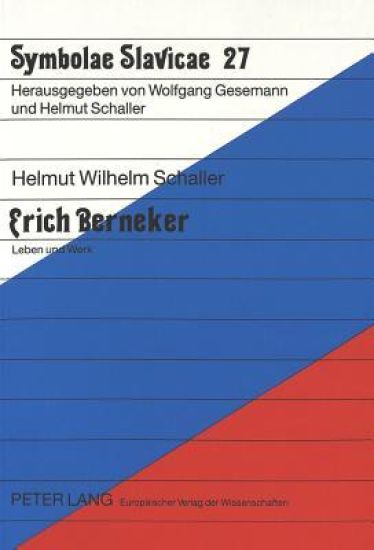
Erich Berneker war nach August Leskien der erste deutsche Slawist, der sich mit der Gesamtheit der slawischen Sprachen befasste. Er ist vor allem durch sein "Slavisches Etymologisches Worterbuch" bekannt geworden und war nach V. Jagic Herausgeber des "Archivs fur Slavische Philologie." Als Slawist an der Universitat Munchen und Mitglied der Bayerischen Akademie der Wissenschaften knupfte er zahlreiche Verbindungen in das slawische und westeuropaische Ausland und schuf damit wesentliche Grundlagen fur die Slawistik in Deutschland."



Erich Kästners "Fabian" vor dem Hintergrund der ausgehenden Weimarer Republik
Johannes Maase
Grin Publishing
2007
pokkari

Erich Maria Remarques "Drei Kameraden". Verbindung von Elementen des Ästhizismus und der Neuen Sachlichkeit
Katharina Maas
Grin Verlag
2007
pokkari

Erich Kästners "Fabian" - von der Krise in die Arbeitslosigkeit
Daniel Sorg
Grin Publishing
2007
pokkari