Kirjojen hintavertailu. Mukana 11 699 587 kirjaa ja 12 kauppaa.

Kirjahaku

Etsi kirjoja tekijän nimen, kirjan nimen tai ISBN:n perusteella.

1000 tulosta hakusanalla Erica David

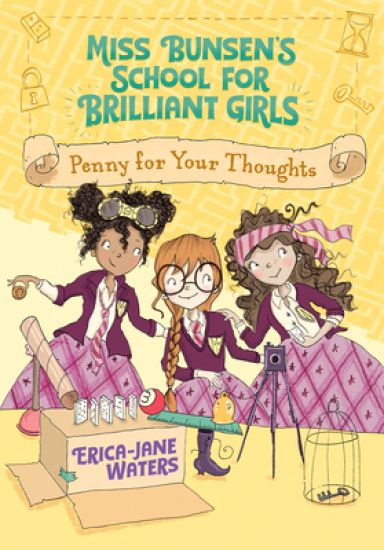
Penny for Your Thoughts

Penny for Your Thoughts

Erica-Jane Waters

Albert Whitman Company
2020
nidottu
When Miss Bunsen receives a mysterious invitation to compete in a maze adventure for a big prize, Pearl, Millie, and Halinka are excited to put their problem-solving skills to the test under pressure. But even though they're cracking all the right codes, they find themselves trapped in a strange maze--and Miss Bunsen has to give up her book of secrets in order to set them free Will the girls be able to keep their wits and solve their way out of this puzzle?
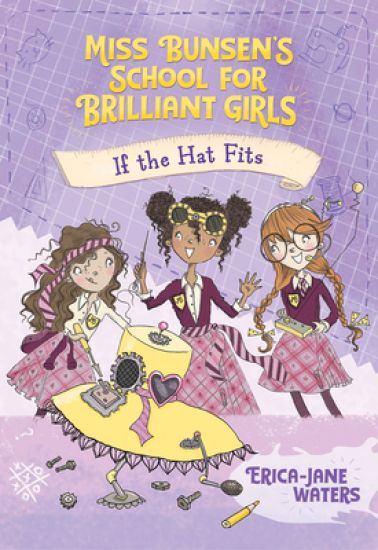
If the Hat Fits: Volume 1

If the Hat Fits: Volume 1

Erica-Jane Waters

Albert Whitman Company
2020
nidottu
It's a new school year with the same old problems: the school is going to run out of money A local engineering competition might just keep them funded for another year. Can Millie and her friends Pearl and Halinka invent a way out of the mess? With some guidance from their eccentric headmistress Miss Bunsen, anything seems possible.
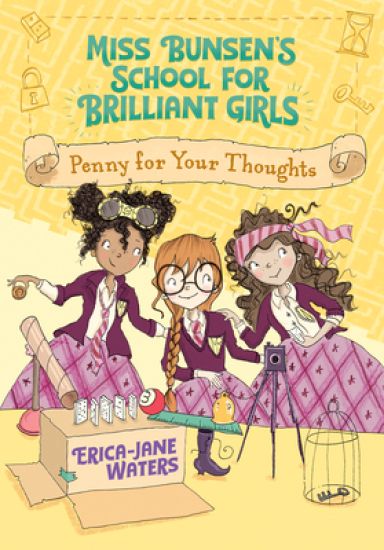
Penny for Your Thoughts

Penny for Your Thoughts

Erica-Jane Waters

Albert Whitman Company
2020
sidottu
When Miss Bunsen receives a mysterious invitation to compete in a maze adventure for a big prize, Pearl, Millie, and Halinka are excited to put their problem-solving skills to the test under pressure. But even though they're cracking all the right codes, they find themselves trapped in a strange maze--and Miss Bunsen has to give up her book of secrets in order to set them free Will the girls be able to keep their wits and solve their way out of this puzzle?
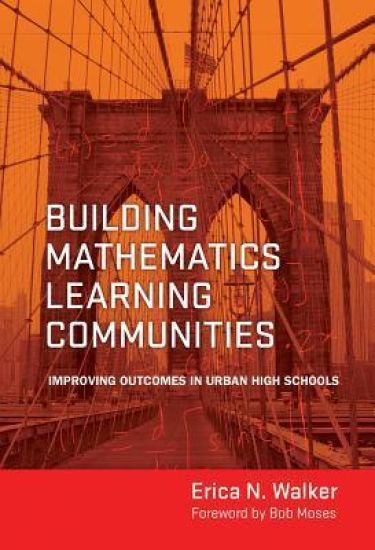
Building Mathematics Learning Communities

Building Mathematics Learning Communities

Erica N. Walker; Bob Moses

Teachers' College Press
2012
nidottu
Drawing on perceptions, behaviours, and experiences of students at an urban high school--both high and low achievers--this timely book demonstrates how urban youth can be meaningfully engaged in learning mathematics. The author presents a ''potential'' model rather than a ''deficit'' model, complete with teaching strategies and best practices for teaching mathematics in innovative and relevant ways. This resource offers practical insights for pre- and in-service teachers and administrators on facilitating positive interactions, engagement, and achievement in mathematics, particularly with Black and Latino/a students. It also examines societal perceptions of urban students and how these affect teaching and learning, policies, and mathematics outcomes.
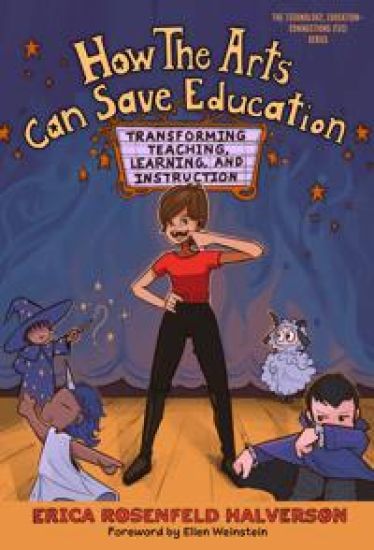
How the Arts Can Save Education

How the Arts Can Save Education

Erica Rosenfeld Halverson; Ellen Weinstein; Jacques d'Amboise

Teachers' College Press
2021
nidottu
This book provides a blueprint for using the arts—performing, visual, and multimedia—to rethink what good learning, teaching, and curriculum can be. The author presents a bold plan for saving education with an arts-based approach to teaching that focuses on risk-taking as the most important aspect of a successful classroom. Halverson offers new models for learning that embrace the social, cultural, and historical assets that kids bring to the classroom, with guidance for designing engaging learning experiences for all grades and subject areas. Featuring many evocative examples from Whoopensocker, the author's in-school artist-in-residence program, this resource illustrates how classroom practices and school structures can be reorganized for more inclusive success. Readers will learn how to reframe learning as acts of metacognitive representation, identity, and collaboration. And lots and lots of joy.Book Features:A guide for using theater, music, visual arts, dance, and digital media to transform the process of teaching and learning.Guidance for building learning environments with art at the core, as opposed to adding art to curricula built around standardized tests.Specific examples designed to inspire students' creativity through writing, improvisation, and performance.Exemplars culled from the author's 25-year history of making art with young people.Accessible language appropriate for nonacademics and nonexperts.
How the Arts Can Save Education

How the Arts Can Save Education

Erica Rosenfeld Halverson; Ellen Weinstein; Jacques d'Amboise

Teachers' College Press
2021
sidottu
This book provides a blueprint for using the arts—performing, visual, and multimedia—to rethink what good learning, teaching, and curriculum can be. The author presents a bold plan for saving education with an arts-based approach to teaching that focuses on risk-taking as the most important aspect of a successful classroom. Halverson offers new models for learning that embrace the social, cultural, and historical assets that kids bring to the classroom, with guidance for designing engaging learning experiences for all grades and subject areas. Featuring many evocative examples from Whoopensocker, the author's in-school artist-in-residence program, this resource illustrates how classroom practices and school structures can be reorganized for more inclusive success. Readers will learn how to reframe learning as acts of metacognitive representation, identity, and collaboration. And lots and lots of joy.Book Features:A guide for using theater, music, visual arts, dance, and digital media to transform the process of teaching and learning.Guidance for building learning environments with art at the core, as opposed to adding art to curricula built around standardized tests.Specific examples designed to inspire students' creativity through writing, improvisation, and performance.Exemplars culled from the author's 25-year history of making art with young people.Accessible language appropriate for nonacademics and nonexperts.
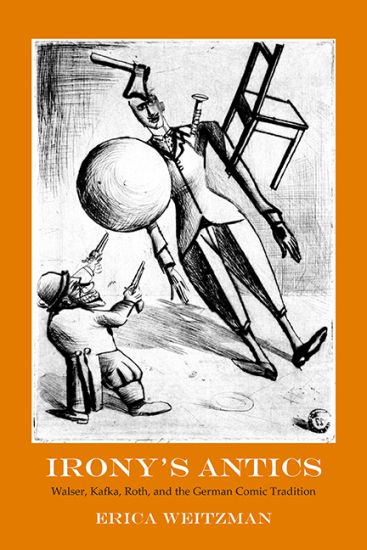
Irony's Antics

Irony's Antics

Erica Weitzman

Northwestern University Press
2015
nidottu
Irony’s Antics marks a major intervention into the underexplored role of the comic and its relationship to irony in German letters.Combining theoretical breadth with close textual analysis, Erica Weitzman shows how irony, a key term for the German romantics, reemerged in the early twentieth century from a postromantic relegation to the nonsensical and the nihilistic in a way that both rethought romantic irony and dramatically extended its reach.Through readings of works by Robert Walser, Franz Kafka, and Joseph Roth against the rich history of comic theory (particularly Hegel and Freud), Weitzman traces the development of a specifically comic irony in modern German-language literature and philosophy, a play with the irony that is itself the condition for all play. She thus provides a crucial reevaluation of German literary history and offers new insights into the significance of irony and the comic from the Enlightenment to the present day.
At the Limit of the Obscene

At the Limit of the Obscene

Erica Weitzman

Northwestern University Press
2021
nidottu
At the Limit of the Obscene: German Realism and the Disgrace of Matter examines the fear of materiality in German-language realist and postrealist literature. The book argues that with German literature's turn in the mid-nineteenth century to the depiction of the profane, sensual world, anxiety emerged about the terms of that depiction-with consequences not only for the formal development of realist poetics but also for the conception of profane physical matter itself.Erica Weitzman analyzes works by Adalbert Stifter, Gustav Freytag, Theodor Fontane, Arno Holz, Gottfried Benn, and Franz Kafka to show how efforts to represent the material world in human terms led to an idea of the obscene as an excess of sensual appearance beyond human meaning: the very obverse of the anthropocentric worldview that realism both propagates and pushes to its crisis. At the Limit of the Obscene thus brings to light the troubled and troubling ontology underlying German realism, at the same time demonstrating how it shaped-and continues to shape-our ideas about materiality, alterity, perception, knowledge, representability, and the relationship of human beings to the nonhuman world.
The Brothers Grim

The Brothers Grim

Erica Rowell

Scarecrow Press
2007
nidottu
In 1984 Joel and Ethan Coen burst onto the art-house film scene with their neo-noir Blood Simple and ever since then they have sharpened the cutting edge of independent film. Blending black humor and violence with unconventional narrative twists, their acclaimed movies evoke highly charged worlds of passion, absurdity, nightmare realms, and petty human failures, all the while revealing the filmmakers' penchant for visual jokes and bravura technical strokes. Their central characters may be blind to reality and individual flaws, but their illusions, dreams, fears, and desires map the boundaries of their worlds—worlds made stunningly memorable by the Coens. In The Brothers Grim: The Films of Ethan and Joel Coen, Erica Rowell unmasks the filmmakers as prankster mythmakers exploiting and subverting universal storytelling modes to further what seems to be their artistic agenda: to elicit laughs. Often employing satire and allegory, the Coens' movies hold a mirror up to American society, allowing viewers to both chuckle and gasp at its absurdities, hypocrisies, and foibles. From business partnerships (Blood Simple, The Ladykillers) to marriage (Intolerable Cruelty) to friendship and ethics (Miller's Crossing), the breakdowns of relationships are a steady focus in their work. Often the Coens' satires put broken social institutions in their cinematic crosshairs, exposing cracks in ineffective penal systems (Raising Arizona; O Brother, Where Art Thou?), unjust justice systems (The Man Who Wasn't There), a crooked corporate America (The Hudsucker Proxy), unnecessary wars (The Big Lebowski), a tyrannical Hollywood (Barton Fink), and the unbridled, fatuous pursuit of the American Dream (Fargo). While audiences may be excused for missing the duo's social commentary, the depth and breadth of the brothers' films bespeak an intelligence and cultural acuity that is rich, highly topical, and hard to pigeonhole.
P.S. I Made This.....

P.S. I Made This.....

Erica Domesek

Abrams
2010
nidottu
It's a movement. It's a call to action: re-imagine, re-use and re-invent. PS I Made This...will inspire and encourage readers to embrace the concept of: I see it, I like it, I make it. Part Designer DIY, part fashion and lifestyle inspiration guide, PS I Made This...was born from Erica Domesek's popular site of the same name. Domesek's collection of unique projects will tempt any fashionista who's ready for DIY style! The book features over 25 projects inspired by iconic fashion looks, runway trends, and celebrated style mavens for readers to create themselves. The user-friendly Designer DIY projects, which range from fashion accessories to apparel, are featured alongside inspirational, vivid fashion montages and clear, easy to follow, step-by-step instructions. The ultimate innovative style guide for the current economic climate, PS I Made This...shows readers how they can easily create designer inspired looks themselves. The book also includes a resource guide for readers on where to get ingredients " from each of the projects and sidebars chalk full of tips and tricks, making this the ultimate blend of fashion and craft.
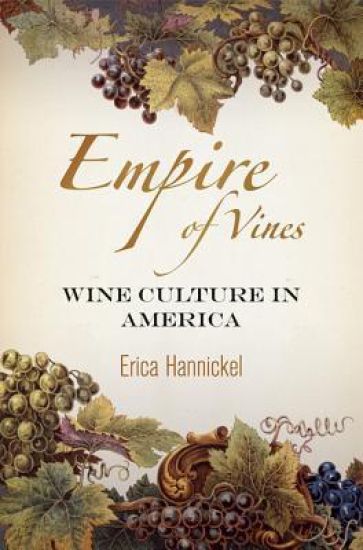
Empire of Vines

Empire of Vines

Erica Hannickel

University of Pennsylvania Press
2013
sidottu
The lush, sun-drenched vineyards of California evoke a romantic, agrarian image of winemaking, though in reality the industry reflects American agribusiness at its most successful. Nonetheless, as author Erica Hannickel shows, this fantasy is deeply rooted in the history of grape cultivation in America. Empire of Vines traces the development of wine culture as grape growing expanded from New York to the Midwest before gaining ascendancy in California-a progression that illustrates viticulture's centrality to the nineteenth-century American projects of national expansion and the formation of a national culture. Empire of Vines details the ways would-be gentleman farmers, ambitious speculators, horticulturalists, and writers of all kinds deployed the animating myths of American wine culture, including the classical myth of Bacchus, the cult of terroir, and the fantasy of pastoral republicanism. Promoted by figures as varied as horticulturalist Andrew Jackson Downing, novelist Charles Chesnutt, railroad baron Leland Stanford, and Cincinnati land speculator Nicholas Longworth (known as the father of American wine), these myths naturalized claims to land for grape cultivation and legitimated national expansion. Vineyards were simultaneously lush and controlled, bearing fruit at once culturally refined and naturally robust, laying claim to both earthy authenticity and social pedigree. The history of wine culture thus reveals nineteenth-century Americans' fascination with the relationship between nature and culture.
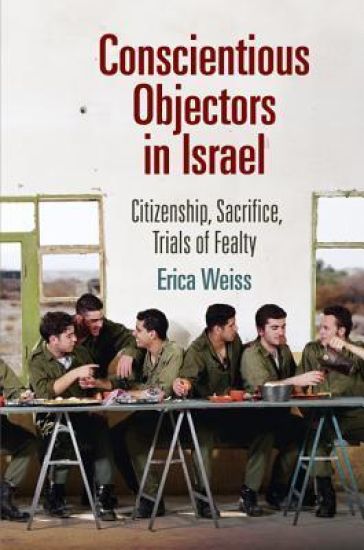
Conscientious Objectors in Israel

Conscientious Objectors in Israel

Erica Weiss

University of Pennsylvania Press
2014
sidottu
In Conscientious Objectors in Israel, Erica Weiss examines the lives of Israelis who have refused to perform military service for reasons of conscience. Based on long-term fieldwork, this ethnography chronicles the personal experiences of two generations of Jewish conscientious objectors as they grapple with the pressure of justifying their actions to the Israeli state and society-often suffering severe social and legal consequences, including imprisonment. While most scholarly work has considered the causes of animosity and violence in the Israeli-Palestinian conflict, Conscientious Objectors in Israel examines how and under what circumstances one is able to refuse to commit acts of violence in the midst of that conflict. By exploring the social life of conscientious dissent, Weiss exposes the tension within liberal citizenship between the protection of individual rights and obligations of self-sacrifice. While conscience is a strong cultural claim, military refusal directly challenges Israeli state sovereignty. Weiss explores conscience as a political entity that sits precariously outside the jurisdictional bounds of state power. Through the lens of Israeli conscientious objection, Weiss looks at the nature of contemporary citizenship, examining how the expectations of sacrifice shape the politics of both consent and dissent. In doing so, she exposes the sacrificial logic of the modern nation-state and demonstrates how personal crises of conscience can play out on the geopolitical stage.
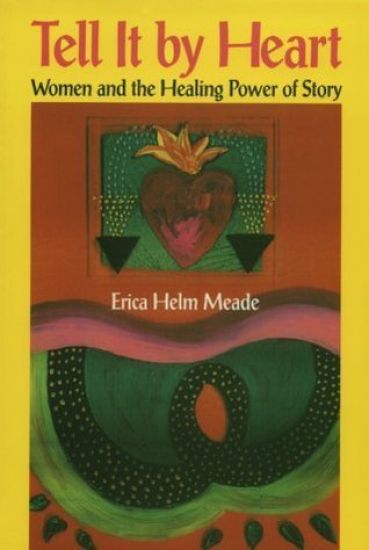
Tell It By Heart

Tell It By Heart

Erica Helm Meade

Open Court Publishing Co ,U.S.
1999
pokkari
'Tell It by Heart' is a collection of stories about contemporary women of various ages and ethnic backgrounds who have one thing in common: each embraces a pertinent myth as her guide through a difficult passage. Narrated by therapist Erica Helm Meade, these fictionalized case studies carry us along with all the intrigue of good short stories while at the same time instructing us in the use of healing lore."Clean, crisp, startling, intelligent and fun, these fictionalized case studies show that life imitates art -- and that art tells the stronger truths". -- James Hillman Author of A Blue Fire
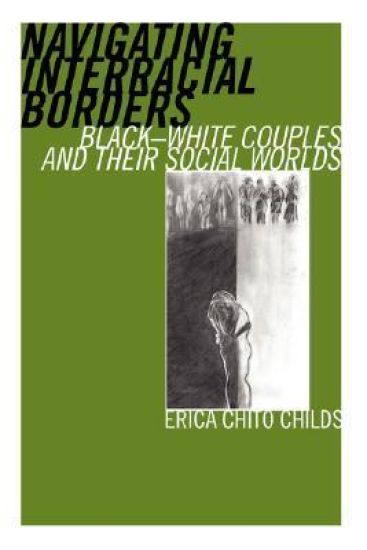
Navigating Interracial Borders

Navigating Interracial Borders

Erica Chito Childs

Rutgers University Press
2005
nidottu
Is love color-blind, or at least becoming increasingly so? Today’s popular rhetoric and evidence of more interracial couples than ever might suggest that it is. But is it the idea of racially mixed relationships that we are growing to accept or is it the reality? What is the actual experience of individuals in these partnerships as they navigate their way through public spheres and intermingle in small, close-knit communities? In Navigating Interracial Borders, Erica Chito Childs explores the social worlds of black-white interracial couples and examines the ways that collective attitudes shape private relationships. Drawing on personal accounts, in-depth interviews, focus group responses, and cultural analysis of media sources, she provides compelling evidence that sizable opposition still exists toward black-white unions. Disapproval is merely being expressed in more subtle, color-blind terms. Childs reveals that frequently the same individuals who attest in surveys that they approve of interracial dating will also list various reasons why they and their families wouldn’t, shouldn’t, and couldn’t marry someone of another race. Even college students, who are heralded as racially tolerant and open-minded, do not view interracial couples as acceptable when those partnerships move beyond the point of casual dating. Popular films, Internet images, and pornography also continue to reinforce the idea that sexual relations between blacks and whites are deviant. Well-researched, candidly written, and enriched with personal narratives, Navigating Interracial Borders offers important new insights into the still fraught racial hierarchies of contemporary society in the United States.
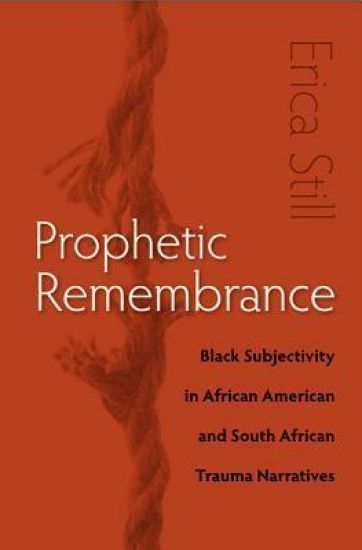
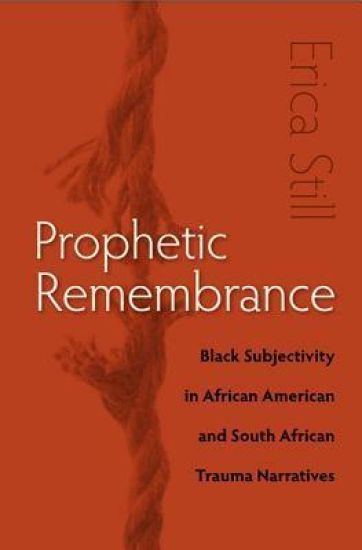
Prophetic Remembrance

Prophetic Remembrance

Erica Still

University of Virginia Press
2014
sidottu
Using the term “prophetic remembrance” to articulate the expression of a constituent faith in the performative capacity of language, Erica Still shows how black subjectivity is born of and interprets cultural trauma. She brings together African American neo-slave narratives and black South African postapartheid narratives to reveal the processes by which black subjectivity accounts for its traumatic origins, names the therapeutic work of the present, and inscribes the possibility of the future.The author draws on trauma studies, black theology, and literary criticism as she considers how writers such as Toni Morrison, Charles Johnson, John Edgar Wideman, David Bradley, Sindiwe Magona, K. Sello Duiker, and Zakes Mda explore the possibilities for rehearsing a traumatic past without being overcome by it. Although both African American and South African literary studies have addressed questions of memory, narrative, and trauma, little comparative work has been done. Prophetic Remembrance offers this comparative focus in reading these literatures together to address the question of what it means to remember and to recover from racial oppression.
Prophetic Remembrance

Prophetic Remembrance

Erica Still

University of Virginia Press
2014
nidottu
Using the term “prophetic remembrance” to articulate the expression of a constituent faith in the performative capacity of language, Erica Still shows how black subjectivity is born of and interprets cultural trauma. She brings together African American neo-slave narratives and black South African postapartheid narratives to reveal the processes by which black subjectivity accounts for its traumatic origins, names the therapeutic work of the present, and inscribes the possibility of the future.The author draws on trauma studies, black theology, and literary criticism as she considers how writers such as Toni Morrison, Charles Johnson, John Edgar Wideman, David Bradley, Sindiwe Magona, K. Sello Duiker, and Zakes Mda explore the possibilities for rehearsing a traumatic past without being overcome by it. Although both African American and South African literary studies have addressed questions of memory, narrative, and trauma, little comparative work has been done. Prophetic Remembrance offers this comparative focus in reading these literatures together to address the question of what it means to remember and to recover from racial oppression.
The Bear Tree and Other Stories from Cazenovia's History

The Bear Tree and Other Stories from Cazenovia's History

Erica Barnes; Jason Emerson

Syracuse University Press
2021
nidottu
The historic lakeside village of Cazenovia in the scenic Finger Lakes region is one of the jewels of Central New York, and yet very few books have told its story. Cazenovia is a town founded by wealthy men, and much of what has been written about it has focused on the elite and the grand lakeshore mansions in which they lived. In contrast, Barnes and Emerson's new book chronicles the story of everyday Cazenovia: the fascinating people, places, and history of this 225-year-old community.The Bear Tree and Other Stories from Cazenovia's History explores the unheralded, inaccurately told, and long-forgotten tales of the town. Readers will encounter historical characters such as elephant and lion tamer Lucia Zora Card, "The Bravest Woman in the World"; educator Susan Blow, "The Mother of American Kindergarten"; and World War I soldier Cecil Donovan, whose letters home vividly depicted the experience of war for those awaiting his return in Cazenovia.
The Bear Tree and Other Stories from Cazenovia's History

The Bear Tree and Other Stories from Cazenovia's History

Erica Barnes; Jason Emerson

Syracuse University Press
2021
sidottu
The historic lakeside village of Cazenovia in the scenic Finger Lakes region is one of the jewels of Central New York, and yet very few books have told its story. Cazenovia is a town founded by wealthy men, and much of what has been written about it has focused on the elite and the grand lakeshore mansions in which they lived. In contrast, Barnes and Emerson's new book chronicles the story of everyday Cazenovia: the fascinating people, places, and history of this 225-year-old community.The Bear Tree and Other Stories from Cazenovia's History explores the unheralded, inaccurately told, and long-forgotten tales of the town. Readers will encounter historical characters such as elephant and lion tamer Lucia Zora Card, "The Bravest Woman in the World"; educator Susan Blow, "The Mother of American Kindergarten"; and World War I soldier Cecil Donovan, whose letters home vividly depicted the experience of war for those awaiting his return in Cazenovia.
White Man's Water

White Man's Water

Erica Prussing

University of Arizona Press
2011
sidottu
In recent years, efforts to recognize and accommodate cultural diversity have gained some traction in the politics of US health care. But to date, anthropological perspectives have figured unevenly in efforts to define and address mental health problems. Particularly challenging are examinations of Native peoples' experiences with alcohol. Erica Prussing provides the first in-depth assessment of the politics of Native sobriety by focusing on the Northern Cheyenne community in southeastern Montana, where for many decades the federally funded health care system has relied on the Twelve Step program of Alcoholics Anonymous. White Man's Water provides a thoughtful and careful analysis of Cheyenne views of sobriety and the politics that surround the selective appeal of Twelve Step approaches despite wide-ranging local critiques. Narratives from participants in these programs debunk long-standing stereotypes about "Indian drinking" and offer insight into the diversity of experiences with alcohol that actually occur among Native North Americans. This critical ethnography employs vivid accounts of the Northern Cheyenne people to depict how problems with alcohol are culturally constructed, showing how differences in age, gender, and other social features can affect involvement with both drinking and sobriety. These testimonies reveal the key role that gender plays in how Twelve Step program participants engage in a selective and creative process of appropriation at Northern Cheyenne, adapting the program to accommodate local cultural priorities and spiritual resources. The testimonies also illuminate community reactions to these adaptations, inspiring deeper inquiry into how federally funded health services are provided on the reservation. This book will appeal to readers with an interest in Native studies, ethnography, women's studies, and medical anthropology. With its critical consideration of how cultural context shapes drinking and sobriety, White Man's Water offers a multivocal perspective on alcohol's impact on health and the cultural complexities of sobriety.
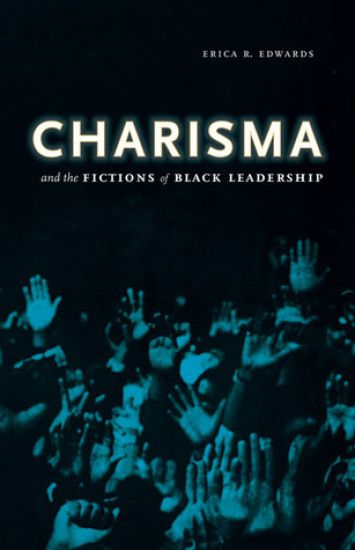
Charisma and the Fictions of Black Leadership

Charisma and the Fictions of Black Leadership

Erica R. Edwards

University of Minnesota Press
2012
nidottu
Social and political change is impossible in the absence of gifted male charismatic leadership-this is the fiction that shaped African American culture throughout the twentieth century. If we understand this, Erica R. Edwards tells us, we will better appreciate the dramatic variations within both the modern black freedom struggle and the black literary tradition.By considering leaders such as Marcus Garvey, Martin Luther King Jr., Malcolm X, and Barack Obama as both historical personages and narrative inventions of contemporary American culture, Edwards brings to the study of black politics the tools of intertextual narrative analysis as well as deconstruction and close reading. Examining a number of literary restagings of black leadership in African American fiction by W. E. B. Du Bois, George Schuyler, Zora Neale Hurston, William Melvin Kelley, Paul Beatty, and Toni Morrison, Edwards demonstrates how African American literature has contested charisma as a structuring fiction of modern black politics. Though recent scholarship has challenged top-down accounts of historical change, the presumption that history is made by gifted men continues to hold sway in American letters and life. This may be, Edwards shows us, because while charisma is a transformative historical phenomenon, it carries an even stronger seductive narrative power that obscures the people and methods that have created social and political shifts.