
Kirjahaku
Etsi kirjoja tekijän nimen, kirjan nimen tai ISBN:n perusteella.
1000 tulosta hakusanalla Erin Falligant
The values we live and raise our families by are grounded, first, in love. Contrary to many of today's so-called family values, our values go beyond one or two loaded social issues to a wholehearted lifestyle of practicing compassion, hospitality, justice, peace, and belonging. More than Words articulates ten values that forward-thinking, openhearted people want to embody in their lives and pass on to their children. With practical ideas and thought-provoking questions, this book inspires families to live more intentionally, engage their communities, and make a difference in the world.

Over the past few decades, the roles women play in public life have evolved significantly, as have the pressures that come with needing to do it all, have it all, and be all things to all people. And with this progress, misogyny has evolved as well. Today's discrimination is more subtle and indirect, expressed in double standards, microaggressions, and impossible expectations. In other ways, sexism has gotten more brash and repulsive as women have gained power and voice in the mainstream culture.Patriarchy is still sanctioned by every institution: capitalism, government, and evenâ€"maybe especiallyâ€"the church itself. This is perhaps the ultimate ironyâ€"that a religion based on the radical justice and liberation of Jesus' teachings has been the most complicit part of the narrative against women's equality. If we are going to dial back the harmful rhetoric against women and their bodies, the community of faith is going to have to be a big part of the solution.Erin Wathen navigates the complex layers of what it means to be a woman in our time and placeâ€"from the language we use to the clothes that we wear to the unseen and unspoken assumptions that challenge our full personhood at every turn. Resist and Persist reframes the challenges to women's equality in light of our current culture and political climate, providing a new language of resistance that can free women and men from the pernicious power of patriarchy.
Step into Advent with this captivating study and devotional, where angelic encounters come to life, echoing the timeless message of overcoming fear.What would you do if you were not afraid? Life can be daunting, filled with uncertainty and fears. It wasn’t any different two thousand years ago when Jesus was born. An aged priest is told he is about to become a father for the first time. A young woman is told she is going to give birth – outside the protection of marriage. A simple carpenter is asked to believe the impossible. A group of shepherds’ night on a hill is interrupted by a bright host of angels in the sky.Yet, each of these encounters begins with the same refrain: do not be afraid.Those words, though, are not just words of comfort; they are an invitation and a calling from God. In this captivating Advent study and devotional, pastor Erin Wathen challenges us to take this timeless message and apply it to our lives today. Calling All Angels asks us to contemplate what would change in our relationships, vocations, congregations, and communities if we have the courage to overcome our fears like Mary, Joseph, Zechariah, and the Shepherds in the story. Included in this book are:Weekly studies perfect for individuals or groups Questions for reflection and discussionDaily reflections Worship resources including liturgies, prayers, and children’s momentsAn uplifting playlist to accompany you through the Advent seasonFree videos featuring the author are available online - perfect for beginning weekly studies, sparking meaningful conversations, and deepening your understanding of that week’s story.Step into Advent where stories of angelic encounters come to life, echoing the timeless message of overcoming fear. Just like the characters in the nativity story, we're invited to embrace courage and join in God's transformative work.

Reflecting the Past is the first English-language study to address the role of historiography in medieval Japan, an age at the time widely believed to be one of irreversible decline. Drawing on a decade of research, including work with medieval manuscripts, it analyzes a set of texts—eight Mirrors—that recount the past in an effort to order the world around them. They confront rebellions, civil war, “China,” attempted invasions, and even the fracturing of the court into two lines. To interrogate the significance for medieval writers of narrating such pasts as a Mirror, Erin Brightwell traces a series of innovations across these and related texts that emerge in the face of disorder. In so doing, she uncovers how a dynamic web of evolving concepts of time, place, language use, and cosmological forces was deployed to order the past in an age of unprecedented social movement and upheaval.Despite the Mirrors’ common concerns and commitments, traditional linguistic and disciplinary boundaries have downplayed or obscured their significance for medieval thinkers. Through their treatment here as a multilingual, multi-structured genre, the Mirrors are revealed, however, as the dominant mode for reading and writing the past over almost three centuries of Japanese history.

Faith in the power and righteousness of retribution has taken over the American criminal justice system. Approaching punishment and responsibility from a philosophical perspective, Erin Kelly challenges the moralism behind harsh treatment of criminal offenders and calls into question our society’s commitment to mass incarceration.The Limits of Blame takes issue with a criminal justice system that aligns legal criteria of guilt with moral criteria of blameworthiness. Many incarcerated people do not meet the criteria of blameworthiness, even when they are guilty of crimes. Kelly underscores the problems of exaggerating what criminal guilt indicates, particularly when it is tied to the illusion that we know how long and in what ways criminals should suffer. Our practice of assigning blame has gone beyond a pragmatic need for protection and a moral need to repudiate harmful acts publicly. It represents a desire for retribution that normalizes excessive punishment.Appreciating the limits of moral blame critically undermines a commonplace rationale for long and brutal punishment practices. Kelly proposes that we abandon our culture of blame and aim at reducing serious crime rather than imposing retribution. Were we to refocus our perspective to fit the relevant moral circumstances and legal criteria, we could endorse a humane, appropriately limited, and more productive approach to criminal justice.

After Goldie Locks becomes sick with the chicken pox, a cast of friends comes around to pay her a visit, yet her jealous brother doesn't think this is fair until he starts seeing spots upon himself! Reprint.

Mathematics for the Life Sciences
Erin N. Bodine; Suzanne Lenhart; Louis J. Gross
Princeton University Press
2014
sidottu
The life sciences deal with a vast array of problems at different spatial, temporal, and organizational scales. The mathematics necessary to describe, model, and analyze these problems is similarly diverse, incorporating quantitative techniques that are rarely taught in standard undergraduate courses. This textbook provides an accessible introduction to these critical mathematical concepts, linking them to biological observation and theory while also presenting the computational tools needed to address problems not readily investigated using mathematics alone. Proven in the classroom and requiring only a background in high school math, Mathematics for the Life Sciences doesn't just focus on calculus as do most other textbooks on the subject. It covers deterministic methods and those that incorporate uncertainty, problems in discrete and continuous time, probability, graphing and data analysis, matrix modeling, difference equations, differential equations, and much more. The book uses MATLAB throughout, explaining how to use it, write code, and connect models to data in examples chosen from across the life sciences. * Provides undergraduate life science students with a succinct overview of major mathematical concepts that are essential for modern biology* Covers all the major quantitative concepts that national reports have identified as the ideal components of an entry-level course for life science students* Provides good background for the MCAT, which now includes data-based and statistical reasoning* Explicitly links data and math modeling* Includes end-of-chapter homework problems, end-of-unit student projects, and select answers to homework problems* Uses MATLAB throughout, and MATLAB m-files with an R supplement are available online* Prepares students to read with comprehension the growing quantitative literature across the life sciences* A solutions manual for professors and an illustration package is available

An exploration of the artistic and cultural influences that shaped writer and illustrator Edward GoreyThe illustrator, designer, and writer Edward Gorey (1925–2000) is beloved for his droll, surreal, and slightly sinister drawings. While he is perhaps best known for his fanciful, macabre books, such as The Doubtful Guest and The Gashlycrumb Tinies, his instantly recognizable imagery can be seen everywhere from the New Yorker to the opening title sequence of the television series Mystery! on PBS. Gorey's Worlds delves into the numerous and surprising cultural and artistic sources that influenced Gorey's unique visual language. Gorey was an inveterate collector--he called it "accumulating." A variety of objects shaped his artistic mindset, from works of popular culture to the more than twenty-six thousand books he owned and the art pieces in his vast collection. This collection, which Gorey left to the Wadsworth Atheneum Museum of Art upon his death, is diverse in style, subject, and media, and includes prints by Eugène Delacroix, Charles Meryon, Edvard Munch, and Odilon Redon; photographs by Eugène Atget; and drawings by Balthus, Pierre Bonnard, Charles Burchfield, Bill Traylor, and Édouard Vuillard. As this book shows, these artistic pieces present a visual riddle, as the connections between them—to each other and to Gorey's works—are significant and enigmatic. The essays in Gorey's Worlds also examine the artist's consuming passions for animals and ballet.Featuring a sumptuous selection of Gorey's creations alongside his fascinating and diverse collections, Gorey's Worlds reveals the private world that inspired one of the most idiosyncratic artists of the twentieth century.Exhibition Schedule: Wadsworth Atheneum Museum of Art, February 10 - May 6, 2018

Why too much work and too little time is hurting workers and companies—and how a proven workplace redesign can benefit employees and the bottom lineToday's ways of working are not working—even for professionals in "good" jobs. Responding to global competition and pressure from financial markets, companies are asking employees to do more with less, even as new technologies normalize 24/7 job expectations. In Overload, Erin Kelly and Phyllis Moen document how this new intensification of work creates chronic stress, leading to burnout, attrition, and underperformance. "Flexible" work policies and corporate lip service about "work-life balance" don't come close to fixing the problem. But this unhealthy and unsustainable situation can be changed—and Overload shows how.Drawing on five years of research, including hundreds of interviews with employees and managers, Kelly and Moen tell the story of a major experiment that they helped design and implement at a Fortune 500 firm. The company adopted creative and practical work redesigns that gave workers more control over how and where they worked and encouraged managers to evaluate performance in new ways. The result? Employees' health, well-being, and ability to manage their personal and work lives improved, while the company benefited from higher job satisfaction and lower turnover. And, as Kelly and Moen show, such changes can—and should—be made on a wide scale.Complete with advice about ways that employees, managers, and corporate leaders can begin to question and fix one of today's most serious workplace problems, Overload is an inspiring account about how rethinking and redesigning work could transform our lives and companies.

Corruption and ineffectiveness are often expected of public servants in developing countries. However, some groups within these states are distinctly more effective and public oriented than the rest. Why? Patchwork Leviathan explains how a few spectacularly effective state organizations manage to thrive amid general institutional weakness and succeed against impressive odds. Drawing on the Hobbesian image of the state as Leviathan, Erin Metz McDonnell argues that many seemingly weak states actually have a wide range of administrative capacities. Such states are in fact patchworks sewn loosely together from scarce resources into the semblance of unity.McDonnell demonstrates that when the human, cognitive, and material resources of bureaucracy are rare, it is critically important how they are distributed. Too often, scarce bureaucratic resources are scattered throughout the state, yielding little effect. McDonnell reveals how a sufficient concentration of resources clustered within particular pockets of a state can be transformative, enabling distinctively effective organizations to emerge from a sea of ineffectiveness.Patchwork Leviathan offers a comprehensive analysis of successful statecraft in institutionally challenging environments, drawing on cases from contemporary Ghana and Nigeria, mid-twentieth-century Kenya and Brazil, and China in the early twentieth century. Based on nearly two years of pioneering fieldwork in West Africa, this incisive book explains how these highly effective pockets differ from the Western bureaucracies on which so much state and organizational theory is based, providing a fresh answer to why well-funded global capacity-building reforms fail—and how they can do better.

Corruption and ineffectiveness are often expected of public servants in developing countries. However, some groups within these states are distinctly more effective and public oriented than the rest. Why? Patchwork Leviathan explains how a few spectacularly effective state organizations manage to thrive amid general institutional weakness and succeed against impressive odds. Drawing on the Hobbesian image of the state as Leviathan, Erin Metz McDonnell argues that many seemingly weak states actually have a wide range of administrative capacities. Such states are in fact patchworks sewn loosely together from scarce resources into the semblance of unity.McDonnell demonstrates that when the human, cognitive, and material resources of bureaucracy are rare, it is critically important how they are distributed. Too often, scarce bureaucratic resources are scattered throughout the state, yielding little effect. McDonnell reveals how a sufficient concentration of resources clustered within particular pockets of a state can be transformative, enabling distinctively effective organizations to emerge from a sea of ineffectiveness.Patchwork Leviathan offers a comprehensive analysis of successful statecraft in institutionally challenging environments, drawing on cases from contemporary Ghana and Nigeria, mid-twentieth-century Kenya and Brazil, and China in the early twentieth century. Based on nearly two years of pioneering fieldwork in West Africa, this incisive book explains how these highly effective pockets differ from the Western bureaucracies on which so much state and organizational theory is based, providing a fresh answer to why well-funded global capacity-building reforms fail—and how they can do better.

Why too much work and too little time is hurting workers and companies—and how a proven workplace redesign can benefit employees and the bottom lineToday's ways of working are not working—even for professionals in "good" jobs. Responding to global competition and pressure from financial markets, companies are asking employees to do more with less, even as new technologies normalize 24/7 job expectations. In Overload, Erin Kelly and Phyllis Moen document how this new intensification of work creates chronic stress, leading to burnout, attrition, and underperformance. "Flexible" work policies and corporate lip service about "work-life balance" don't come close to fixing the problem. But this unhealthy and unsustainable situation can be changed—and Overload shows how.Drawing on five years of research, including hundreds of interviews with employees and managers, Kelly and Moen tell the story of a major experiment that they helped design and implement at a Fortune 500 firm. The company adopted creative and practical work redesigns that gave workers more control over how and where they worked and encouraged managers to evaluate performance in new ways. The result? Employees' health, well-being, and ability to manage their personal and work lives improved, while the company benefited from higher job satisfaction and lower turnover. And, as Kelly and Moen show, such changes can—and should—be made on a wide scale.Complete with advice about ways that employees, managers, and corporate leaders can begin to question and fix one of today's most serious workplace problems, Overload is an inspiring account about how rethinking and redesigning work could transform our lives and companies.

How undetonated bombs from a war that ended more than fifty years ago still affect Cambodian farmers and their land Over the course of the Vietnam War, the United States dropped 500,000 tons of bombs over Cambodia—more than the combined weight of every man, woman, and child in the country. What began as a secret CIA infiltration of Laos eventually expanded into Cambodia and escalated into a nine-year war over the Ho Chi Minh trail fought primarily with bombs. Fifty years after the last sortie, residents of rural Cambodia are still coping with the unexploded ordnance that covers their land. In When the Bombs Stopped, Erin Lin investigates the consequences of the US bombing campaign across postconflict Cambodia.Drawing on interviews, original econometric analysis, and extensive fieldwork, Lin upends the usual scholarly perspective on the war and its aftermath, presenting the viewpoint of those who suffered the bombing rather than those who dropped the bombs. She shows that Cambodian farmers stay at a subsistence level because much of their land is too dangerous to cultivate—and yet, paradoxically, the same bombs that endanger and impoverish farming communities also protect them, deterring predatory elites from grabbing and commodifying their land. Lin argues that the half-century legacy of American bombs has sedimented the war into the layers of contemporary Cambodian society. Policies aimed at developing or modernizing Cambodia, whether economic liberalization or authoritarian consolidation, must be realized in an environment haunted by the violence of the past. As the stories Lin captures show, the bombing served as a critical juncture in these farming villages, marking the place in time where development stopped.

How undetonated bombs from a war that ended more than fifty years ago still affect Cambodian farmers and their land Over the course of the Vietnam War, the United States dropped 500,000 tons of bombs over Cambodia—more than the combined weight of every man, woman, and child in the country. What began as a secret CIA infiltration of Laos eventually expanded into Cambodia and escalated into a nine-year war over the Ho Chi Minh trail fought primarily with bombs. Fifty years after the last sortie, residents of rural Cambodia are still coping with the unexploded ordnance that covers their land. In When the Bombs Stopped, Erin Lin investigates the consequences of the US bombing campaign across postconflict Cambodia.Drawing on interviews, original econometric analysis, and extensive fieldwork, Lin upends the usual scholarly perspective on the war and its aftermath, presenting the viewpoint of those who suffered the bombing rather than those who dropped the bombs. She shows that Cambodian farmers stay at a subsistence level because much of their land is too dangerous to cultivate—and yet, paradoxically, the same bombs that endanger and impoverish farming communities also protect them, deterring predatory elites from grabbing and commodifying their land. Lin argues that the half-century legacy of American bombs has sedimented the war into the layers of contemporary Cambodian society. Policies aimed at developing or modernizing Cambodia, whether economic liberalization or authoritarian consolidation, must be realized in an environment haunted by the violence of the past. As the stories Lin captures show, the bombing served as a critical juncture in these farming villages, marking the place in time where development stopped.

In the early years of motherhood, it may be a feat to get out of the house without something sticky on our clothes, but that doesn't mean we can't have a growing, challenging, and life-giving personal relationship with God. Just 10 minutes a day in this devotional helps reset our focus as moms and gives us the encouragement that we need to thrive in the midst of daily challenges. For 100 days, we will see what we can learn as moms about God's relationship with us, His will for our lives, and how we can continue to grow into children who follow Him. Draw out the childlike joy and faith of the little girl inside you as you seek God in this unique season of motherhood.Each day includes: Relatable Story from MotherhoodBiblical ScripturePractical ApplicationPrayer PromptQuestion for Reflection

A remarkable journey out of grief into metaphysical awareness. In the process Erin discovered her true calling. While doing tarot readings Erin found she was sharing many of her own stories of overcoming adversities, and clients seemed to benefit. This book emerged out of those spiritual connections. May you be similarly touched. To contact the author please go to www.egbtarot.com.

Hindsight is a collection of essays flirting with the idea that the weight of distressing and confusing memories can be alleviated in the present, through writing. In precise, warm prose, young writer Erin Geary reveals lessons on loss, forgiveness, self-assurance, and hope, through vignettes of youth: friendship, teachers, first love, transformative pop songs, and more. With a title inspired by a Zora Neale Hurston quote: "There are years that ask questions and years that answer," Hindsight sensitively encourages readers to respond to their pasts.
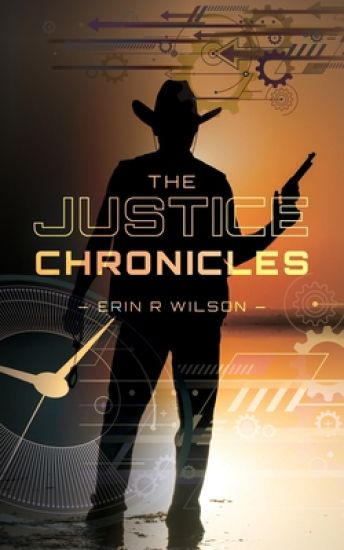
Parallel JusticeWhen tragedy strikes on his wedding night, U.S. Marshal Evan Longview begins a vengeful retaliation. When an opportunity appears that leads to his hated rival's downfall, Longview renews the chase in earnest. But when Evan inadvertently travels to another time, he is caught up in a different chase, one where he is the hunted. Helping to bring a witness to trial, and lost in a new world he doesn't understand, Longview must use his wits and his anger to survive, as this 20th century race against time is eerily parallel to his own past.Future JusticeNow Evan is stuck in 1990 and trying to make his way back in time. When a way is found to make this happen, his path becomes blocked by a greedy millionaire and his psychopath sibling. Evan and his FBI friend must wade through danger, deception and blood to find their friends and the time machine before time runs out and the shape of the world is changed forever.Final JusticeEvan Longview appears in Southern California 1890 with FBI agent Emily Jespsen. Evan is there to exact revenge on his childhood nemesis and wife's killer. But they are not alone as an even more dangerous adversary has followed them back in time. Learning of Evan's past and dodging killers, together they plan to patch up the past and forge a new future for themselves, if they survive.