Kirjojen hintavertailu. Mukana 11 717 486 kirjaa ja 12 kauppaa.

Kirjahaku

Etsi kirjoja tekijän nimen, kirjan nimen tai ISBN:n perusteella.

1000 tulosta hakusanalla Ernst-Wilhelm Handler

Max Ernst Two Eras: March 7 Through April 1, 1961

Max Ernst Two Eras: March 7 Through April 1, 1961

Julien Levy

Literary Licensing, LLC
2013
sidottu
""Max Ernst Two Eras"" is a book written by Julien Levy that explores the art of Max Ernst, a German artist who was a pioneer of the Dada and Surrealist movements. The book is a catalog of an exhibition that was held from March 7 through April 1, 1961, featuring Ernst's works from two different periods of his career. The first era, from 1919 to 1939, showcases Ernst's early experiments with collage, frottage, and automatism, which were groundbreaking techniques that helped define Surrealism. The second era, from 1940 to 1960, focuses on Ernst's later works, which reflect his experiences during World War II and his interest in mythology, alchemy, and the occult. The book includes full-color reproductions of Ernst's paintings, drawings, and sculptures, as well as an introduction by Levy that provides historical and biographical context for the artist's work. Overall, ""Max Ernst Two Eras"" is a comprehensive and visually stunning exploration of one of the most important artists of the 20th century.This scarce antiquarian book is a facsimile reprint of the old original and may contain some imperfections such as library marks and notations. Because we believe this work is culturally important, we have made it available as part of our commitment for protecting, preserving, and promoting the world's literature in affordable, high quality, modern editions, that are true to their original work.
Samuel Ernst Timotheus Stubenrauch und sein Neffe Friedrich Schleiermacher. Eine Geburtstagsgabe
This work has been selected by scholars as being culturally important, and is part of the knowledge base of civilization as we know it. This work was reproduced from the original artifact, and remains as true to the original work as possible. Therefore, you will see the original copyright references, library stamps (as most of these works have been housed in our most important libraries around the world), and other notations in the work.This work is in the public domain in the United States of America, and possibly other nations. Within the United States, you may freely copy and distribute this work, as no entity (individual or corporate) has a copyright on the body of the work.As a reproduction of a historical artifact, this work may contain missing or blurred pages, poor pictures, errant marks, etc. Scholars believe, and we concur, that this work is important enough to be preserved, reproduced, and made generally available to the public. We appreciate your support of the preservation process, and thank you for being an important part of keeping this knowledge alive and relevant.
Paul Ernst, Science Fiction Collection

Paul Ernst, Science Fiction Collection

Paul Ernst

Createspace Independent Publishing Platform
2014
nidottu
Paul Frederick Ernst (born between 1899 and 1902 - died between 1983 and 1985) was an American pulp fiction writer. He is best known as the author of the original 24 "Avenger" novels, published by Street and Smith Publications under the house name Kenneth Robeson. In this book: The Radiant Shell The Planetoid of Peril The Raid on the Termites Mask of Death The Red Hell of Jupiter World Behind the Moon
Portrait eines Schweizer Industrie- und Bank-Pioniers: Zum 150. Geburtstag von Dr. Rudolf J. Ernst
150 Jahre nach der Geburt und 60 Jahre nach dem Tode von Dr. Rudolf J. Ernst (1865-1956) erweckt der gleichnamige Enkel den Gr ndervater der UBS in dieser (bis anhin fehlenden) Biografie zu neuem Leben und zeigt auf, wie dieser als Pr sident der Bank in Winterthur das Institut durch bernahme pers nlicher Risiken nach Z rich bringt, es dann mit der Toggenburger Bank zur Schweizerischen Bankgesellschaft (SBG/UBS) fusioniert, und hierauf durch weitsichtige Dispositionen das solide Fundament schafft, auf dem Jahzehnte sp ter die UBS als weltgr sste Verm gensverwaltungs-Firma entsteht. Das 40 Jahre w hrende Wirken von Dr. Rudolf Ernst als Pr sident einer Grossbank steht in der Schweiz einmalig da. W hrend seines jahrelangen Studiums zahlloser ffentlicher und pers nlicher Dokumente stellt Rudy Ernst mit wachsendem Erstaunen fest, wie viel mehr als urspr nglich geahnt hinter seinem Grossvater steckt, der nicht nur als Bankier, sondern auch als Pr sident von Versicherungen und als Industrie-Pionier eine enorme Rolle im schweizerischen Wirtschaftsleben spielte. Wie ein Mosaik rekonstruiert der Enkel aus kleinen Bausteinchen das Verm chtnis seines Grossvaters, dessen unerm dliche Tatkraft jahrzehntelang in das Schweizer Wirtschaftsleben eingreift und durch grossz gig-langfristige Dispositionen auch im sozialen Bereich ein Verm chtnis hinterl sst, das vielerorts bis zum heutigen Tag berlebt. Der Autor erz hlt seine pers nlichen Erlebnisse aus dem grosselterlichen Hause und stellt auch kritische berlegungen an, wodurch sich diese Biografie nicht wie ein Sachbuch, sondern eher wie ein spannender Wirtschaftsroman liest, der dem Leser einen Blick aus erster Hand hinter die Kulissen dieses Wirtschaftsmagnaten mit zahlreichen pers nlichen Verflechtungen vermittelt. Dabei stellen wir einmal mehr erstaunt fest, wie konstant die menschlichen Komponenten in der Wirtschaft ber die Jahrhunderte geblieben sind, und wie unverhofft sich Parallelen zu aktuellen Tagesthemen sogar im Zeitalter des Internets immer wieder abzeichnen. Leserstimmen: "Eine sehr interessante, materialreiche Dokumentation des erstaunlichen Wirkens von Rudolf Ernst, die auch den Charakter von Verflechtungen in der Wirtschaft und unter wichtigen Familien erhellt." (Dr. Martin L pold, Archivar / Fachreferent Schweizerisches Wirtschaftsarchiv, Universit t Basel) "In jeder Beziehung sehr gelungen und hoch interessant.Das ist Schweizer Wirtschaftsgeschichte vom Feinsten." (Dr.jur. Peter Hauser, Rechtsanwalt und Pr sident des Altherrenvereins der Vitodurania, Winterthur)
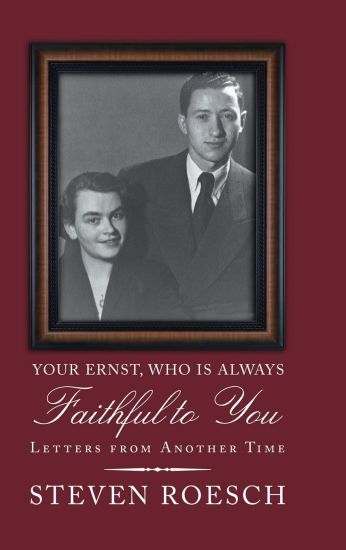
Your Ernst, Who Is Always Faithful to You
When she was growing up in Nazi Germany, Liselotte Peschel was fascinated with music, literature, and all things scientific and technical. Her bookkeeping job at a local telephone company brought her into contact with Ernst Roesch, a young apprentice eager to master the elements of his trade and bursting with his own ideas about the machines that he wanted to design and build.Their budding friendship seemed to be over when an official letter demanded that Ernst, a half-Jew, report to Gestapo headquarters in Munich early in 1945. Ernst's mother had already been sent away to the camp in Theresienstadt. Now he was shipped off to Wolmirsleben, a slave labor camp in northern Germany-where, early on, he decided that he'd do whatever he could to stay alive, and to keep in touch with the young woman he cared for.At first, when he was still at Wolmirsleben, he sent her a postcard to wish her a Happy Easter. Later-after the camp was liberated, and after he was reunited with his mother and emigrated to America-he began writing letters to her regularly, sharing his thoughts and hopes for his future-one that he hoped would include her.Their long-distance friendship took an unexpected turn when Ernst was drafted into the U.S. Army in 1951 and then sent to Berlin to work in military intelligence. Now, after a five-year hiatus, he had the chance to meet with her again face to face.In these pages Steven Roesch uses his parents' correspondence from the 1940s and 1950s to tell the story of their early years.