Sa vie et son oeuvre ont fait l'objet de nombreuses tudes historiques. Sur le plan litt raire, il est principalement connu pour Les Rougon-Macquart, fresque romanesque en vingt volumes d peignant la soci t fran aise sous le Second Empire et qui met en sc ne la trajectoire de la famille des Rougon-Macquart, travers ses diff rentes g n rations et dont chacun des repr sentants d'une poque et d'une g n ration particuli re fait l'objet d'un roman.
The Triumphs of Eugene Valmont (1906) brings together tales of the multifarious exploits of Robert Barr's elegant and cunning sleuth, Valmont, a brilliantly ironic parody of Sherlock Holmes. Exhibiting the crucial combination of realism and imagination that characterizes the finest crime writing, the stories exude playfulness and wit, blending mystery and quasi-Gothic thrills with humorous detours and romantic adventure. Robert Barr (16 September 1849 - 21 October 1912 was a Scottish-Canadian short story writer and novelist, born in Glasgow, Scotland.Barr emigrated with his parents to Upper Canada at age four and was educated in Toronto at Toronto Normal School. Barr became a teacher and eventual headmaster of the Central School of Windsor, Ontario. While he had that job he began to contribute short stories-often based on personal experiences-to the Detroit Free Press. In 1876 Barr quit his teaching position to become a staff member of that publication, in which his contributions were published with the pseudonym "Luke Sharp." This nom de plume was derived from the time he attended school in Toronto. At that time he would pass on his daily commute a shop sign marked, "Luke Sharpe, Undertaker", a combination of words Barr considered amusing in their incongruity. Barr was promoted by the Detroit Free Press, In 1881 Barr decided to "vamoose the ranch", as he stated, and relocated to London, to establish there the weekly English edition of the Detroit Free Press.In 1892 he founded the magazine The Idler, choosing Jerome K. Jerome as his collaborator (wanting, as Jerome said, "a popular name"). He retired from its co-editorship in 1895. In London of the 1890s Barr became a more prolific author-publishing a book a year-and was familiar with many of the best-selling authors of his day, including Bret Harte and Stephen Crane. Most of his literary output was of the crime genre, then quite in vogue. When Arthur Conan Doyle's Sherlock Holmes stories were becoming well-known Barr published in the Idler the first Holmes parody, "The Adventures of Sherlaw Kombs" (1892), a spoof that was continued a decade later in another Barr story, "The Adventure of the Second Swag" (1904). Despite the jibe at the growing Holmes phenomenon Barr and Doyle remained on very good terms. Doyle describes him in his memoirs Memories and Adventures as, "a volcanic Anglo-or rather Scot-American, with a violent manner, a wealth of strong adjectives, and one of the kindest natures underneath it all."
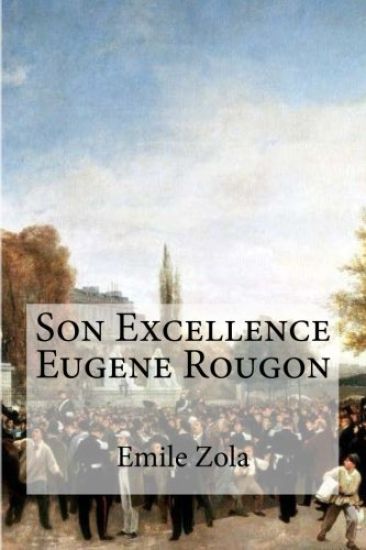
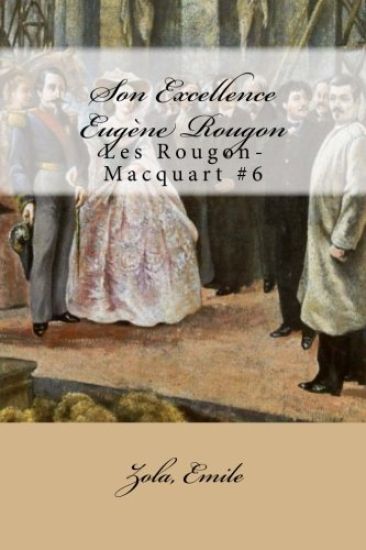
Son Excellence Eug ne Rougon est un roman d' mile Zola publi en 1876, sixi me volume de la s rie Les Rougon-Macquart. Dans cet ouvrage, selon ses propres termes, Zola p n tre les coulisses politiques du Second Empire. Les personnages sont des proches du pouvoir: ministres, d put s, hauts fonctionnaires. L'action se d roule de 1856 1861.
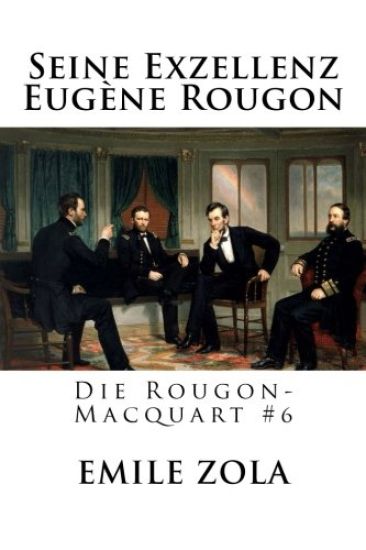
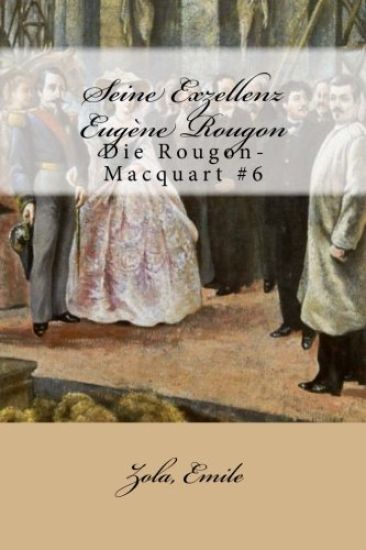
"Seine Exzellenz Eug ne Rougon" (1876) ist der sechste Teil des Romanzyklus. Er schildert das Leben und Treiben am kaiserlichen Hof zu Compi gne und in den politischen Kreisen jener Zeit. Im Mittelpunkt der Handlung steht der allm chtige Minister und Staatsmann Eug ne Rougon. Diese Figur schuf Zola ganz offensichtlich in Anlehnung an Eug ne Rouher, dem als Minister unter Napoleon III. eine gl nzende Karriere beschieden war.
Jadis comme aujourd'hui, iniquit , illusions et croyances affectent l'humaine nature. Nos six personnages en sont l'illustration: - en premier, Eug ne, confront l'hubris lors m me que son horizon se r sume son chien, sa bouteille de Gin et sa marche d' glise; - puis Dilha qui, bien que pauvre, est soumise la tentation attis e par les charmes d ploy s par les marchands; - ensuite Margot, qu'aucun justicier ne saurait lib rer des cha nes de sa parent le; - le suivant est Jeff, journaliste qui pense que son honn tet le prot gera du th tre d'ombres du pouvoir; - Elissa, quant elle, se fait prendre au pi ge d'un paradis artificiel qui cache la sordidit du monde; - enfin, Nadja, qui devra admettre que le despotisme qu'elle a adul puis d masqu , n'existe que de son fait. Chaque 'contes', dont le style correspond l'ancrage de chaque histoire dans son environnement, du plus populaire au plus classique, est une m taphore du temps pr sent: son cynisme, sa futilit , sa corruption, ses leurres...
Eug ne Rougon est le fils a n de Pierre et F licit Rougon. Dans les romans La Fortune des Rougon, La Cur e et La Conqu te de Plassans, son ascension politique a t d crite indirectement: depuis Paris, la capitale, il a permis ses parents de s'emparer du devant de la sc ne politique Plassans, sa ville natale (La Fortune des Rougon) et son fr re, Aristide Saccard, de s'enrichir par la sp culation immobili re Paris (La Cur e); par l'interm diaire de l'abb Faujas, il a fait en sorte que Plassans repasse politiquement du c t du pouvoir en place (La Conqu te de Plassans).
Die Hauptperson Eug ne Rougon ist der lteste Sohn von Pierre und F licit Rougon, die dem Leser bereits aus Das Gl ck der Familie Rougon bekannt sind. Er ist zugleich der Bruder von Aristide Rougon/Saccard, dessen in Die Beute beschriebene Karriere er gef rdert hat und der sp ter in Das Geld wieder auftritt. Als Unterst tzer von Napoleons III. Staatsstreich im Dezember 1851 hat Eug ne eine Position als einflussreicher Politiker erlangt.
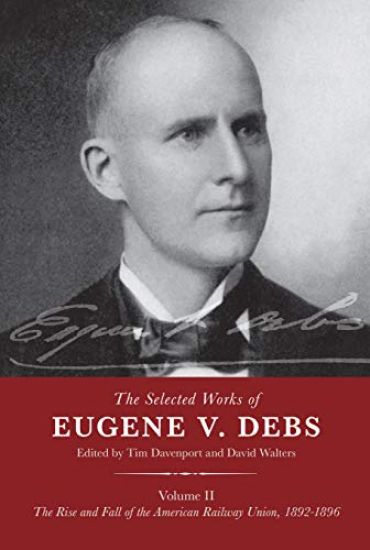
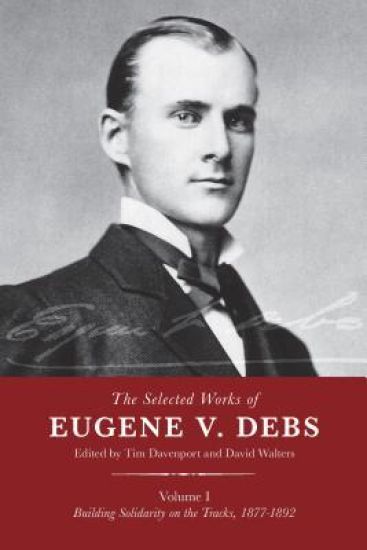
An extensive compilation of articles, speeches, press statements, and open letters by American socialist Eugene V. Debs, this book is the first in a five volume series that assembles much of Debs’s work for the first time in a single place. The collection makes readily accessible approximately 150 documents by one of the pivotal figures in the labor movement. Illuminating nineteenth century working-class history, particularly the complex and shifting situation in the transportation industry, this volume provides a basis for deeper understanding of Debs and his role later during the glory days of the Socialist Party of America.
Tim Davenport and David Walters have extracted the essential core of Debs’s life work, illustrating his intellectual journey from conservative editor of the magazine of a racially segregated railway brotherhood to his role as the public face and outstanding voice of social revolution in early twentieth-century America. Well over 1,000 Debs documents will be republished as part of this monumental project, the vast majority seeing print again for the first time since the date of their original publication. Eugene V. Debs (1855–1926) was a trade unionist, magazine editor, and public orator widely regarded as one of the most important figures in the history of American socialism.
Tim Davenport and David Walters have extracted the essential core of Debs’s life work, illustrating his intellectual journey from conservative editor of the magazine of a racially segregated railway brotherhood to his role as the public face and outstanding voice of social revolution in early twentieth-century America. Well over 1,000 Debs documents will be republished as part of this monumental project, the vast majority seeing print again for the first time since the date of their original publication. Eugene V. Debs (1855–1926) was a trade unionist, magazine editor, and public orator widely regarded as one of the most important figures in the history of American socialism.
An extensive compilation of articles, speeches, press statements, and open letters by American socialist Eugene V. Debs, this book is the first in a six volume series that assembles much of Debs's work for the first time in a single place.
Herv Guibert's incandescent correspondence with Belgian poet Eug ne Savitzkaya. In 1977, Herv Guibert discovered the first novel written by Eug ne Savitzkaya, Mentir, and sent him his La mort propagande, which had just been published. In the following years, they exchanged the books they had written, read each other, appreciated each other. They saw each other rarely, however: one lived in Li ge, the other Paris. A turning point occurred in 1982, when Herv published Lettre un fr re d' criture, in which he declared to Eug ne, I love you through your writing. The tone had changed; Herv , obsessed with his correspondent, wrote him increasingly incandescent letters. 1984 would, however, see the sudden extinguishing of that passion. A deep friendship replaced it, which found itself with new areas to explore: the adventure of publishing L'Autre Journal and at the Villa Medicis, where they were both fellows. These nearly eighty letters, exchanged between 1977 and 1987, form a correspondence that is all the more unique for being the only one whose publication was authorized by Guibert. An intersection of life and writing, self and other, reality and fiction, their release is a renewal of Guibert's oeuvre.
Everyone is unique in their own way. "Field Day for Eugene" is about a young boy who has a physical disability. One of Eugene's classmates notices that his wheelchair may impact his participation in field day. The class realizes that even though Eugene has a disability, he is still capable of achieving amazing things. In a world with so many differences, we can all decide to be kind, accepting, and inclusive.
Everyone is unique in their own way. "Field Day for Eugene" is about a young boy who has a physical disability. One of Eugene's classmates notices that his wheelchair may impact his participation in field day. The class realizes that even though Eugene has a disability, he is still capable of achieving amazing things. In a world with so many differences, we can all decide to be kind, accepting, and inclusive.
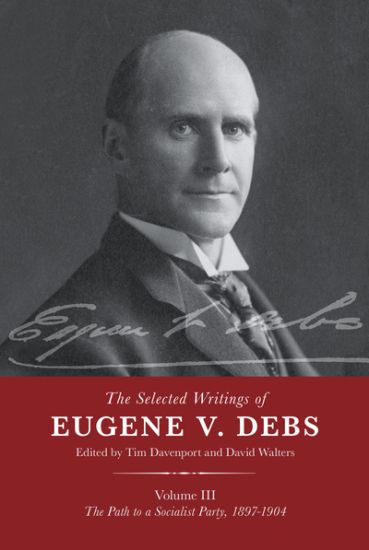
Eugene V. Debs exploded upon the national scene in 1894 as the leader of a sensational strike by his American Railway Union (ARU) against the Pullman Parlor Car Company—a job stoppage which paralyzed the country's transportation network for nearly two weeks. On January 1, 1897, the polarizing public figure Debs declared his allegiance to international socialism, emerging as the most widely recognized socialist in America. He would thereafter tour the country relentlessly, speaking to large audiences and writing hundreds of articles on political and economic themes over the ensuing three decades. Debs almost singlehandedly established a new political party, the Social Democracy of America, in the summer of 1897, building upon the remnants of the depleted ARU. The organization advanced a double agenda, seeking to promote both electoral politics and the construction of socialist colonies on the frontier—a dual focus which led to internal tensions and a bitter split. In 1898 Debs cast his lot with Milwaukee publisher Victor L. Berger in a new organization dedicated to political action, the Social Democratic Party of America. After a split of the older and larger Socialist Labor Party of America in 1899, protracted unity discussions between the Debs group and an organized body of former SLP dissidents ensued. This unity effort was marked by Debs's first run for president of the United States on a joint Social Democratic ticket in November 1900. After heated on-again off-again negotiation between the two groups, a marriage was finally brokered in the summer of 1901 and the Socialist Party of America was launched. The party would soon grow to become the third biggest in American politics, with Debs enthusiastically heading the Socialist ticket in 1904 in the second of his five runs for the presidency.
Eugene V. Debs exploded upon the national scene in 1894 as the leader of a sensational strike by his American Railway Union (ARU) against the Pullman Parlor Car Company—a job stoppage which paralyzed the country's transportation network for nearly two weeks. On January 1, 1897, the polarizing public figure Debs declared his allegiance to international socialism, emerging as the most widely recognized socialist in America. He would thereafter tour the country relentlessly, speaking to large audiences and writing hundreds of articles on political and economic themes over the ensuing three decades. Debs almost singlehandedly established a new political party, the Social Democracy of America, in the summer of 1897, building upon the remnants of the depleted ARU. The organization advanced a double agenda, seeking to promote both electoral politics and the construction of socialist colonies on the frontier—a dual focus which led to internal tensions and a bitter split. In 1898 Debs cast his lot with Milwaukee publisher Victor L. Berger in a new organization dedicated to political action, the Social Democratic Party of America. After a split of the older and larger Socialist Labor Party of America in 1899, protracted unity discussions between the Debs group and an organized body of former SLP dissidents ensued. This unity effort was marked by Debs's first run for president of the United States on a joint Social Democratic ticket in November 1900. After heated on-again off-again negotiation between the two groups, a marriage was finally brokered in the summer of 1901 and the Socialist Party of America was launched. The party would soon grow to become the third biggest in American politics, with Debs enthusiastically heading the Socialist ticket in 1904 in the second of his five runs for the presidency.