

Kirjahaku
Etsi kirjoja tekijän nimen, kirjan nimen tai ISBN:n perusteella.
1000 tulosta hakusanalla FREEDOM DIVIDEND
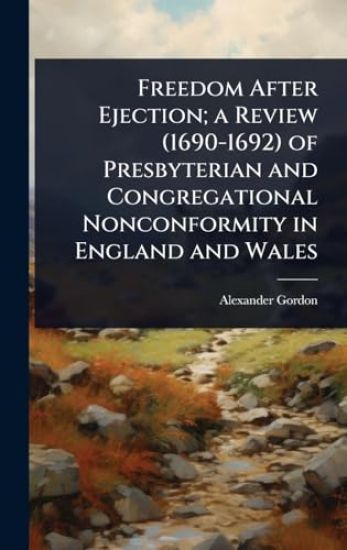
Freedom After Ejection; a Review (1690-1692) of Presbyterian and Congregational Nonconformity in England and Wales
Alexander Gordon
Hutson Street Press
2025
sidottu

Freedom After Ejection; a Review (1690-1692) of Presbyterian and Congregational Nonconformity in England and Wales
Alexander Gordon
Hutson Street Press
2025
pokkari
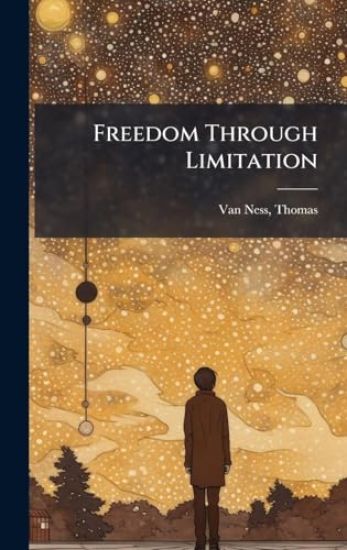
Freedom Through Limitation
Hutson Street Press
2025
sidottu
Freedom Through Limitation
Hutson Street Press
2025
pokkari
Freedom Commission and Freedom Academy. Hearings Before the Subcommittee to Investigate the Administration of the Internal Security Act and Other Internal Security Laws of the Committee on the Judiciary, United States Senate, Eighty-sixth Congress, First
Hutson Street Press
2025
sidottu
Freedom Commission and Freedom Academy. Hearings Before the Subcommittee to Investigate the Administration of the Internal Security Act and Other Internal Security Laws of the Committee on the Judiciary, United States Senate, Eighty-sixth Congress, First
Hutson Street Press
2025
pokkari

Freedom of Information Act
Hutson Street Press
2025
sidottu

Freedom of Information Act
Hutson Street Press
2025
pokkari

Freedom And Citizenship
Hutson Street Press
2025
sidottu
Freedom And Citizenship
Hutson Street Press
2025
pokkari
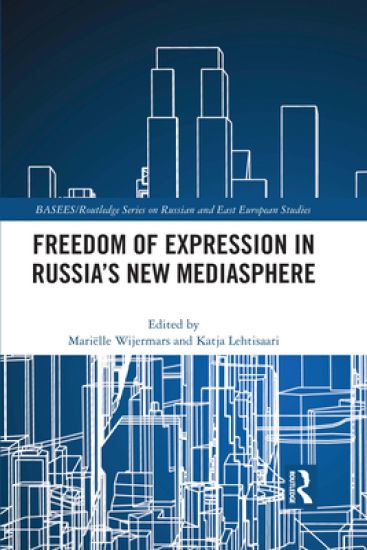
Freedom of Expression in Russia's New Mediasphere
Taylor Francis Ltd
2021
nidottu
In recent years, the Russian government has dramatically expanded its restrictions on the internet, while simultaneously consolidating its grip on traditional media. The internet, however, because of its transnational configuration, continues to evade comprehensive state control and offers ever new opportunities for disseminating and consuming dissenting opinions. Drawing on a wide range of disciplines, including media law, human rights, political science, media and cultural studies, and the study of religion, this book examines the current state of the freedom of speech, freedom of expression, and media freedom in Russia, focusing on digital media and cross-media initiatives that bridge traditional and new media spheres. It assesses how the conditions for free speech are influenced by the dynamic development of Russian media, including the expansion of digital technologies, explores the interaction and transfer of practices, formats, stylistics and aesthetics between independent and state-owned media, and discusses how far traditional media co-opt strategies developed by and associated with independent media to mask their lack of free expression. Overall, the book provides a deep and rich understanding of the changing structures and practices of national and transnational Russian media and how they condition the boundaries of freedom of expression in Russia today.
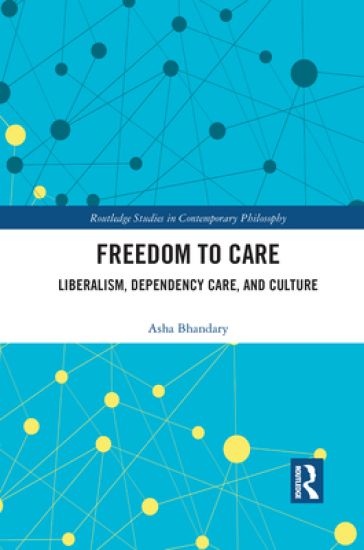
This book presents the first systematic account of dependency care in a liberal theory of justice. Despite the fact that receiving dependency care is necessary for human survival, the practices with which we meet society’s care needs are seldom recognized for their functional role. Instead, norms about gender and race obscure and shape expectations about whose needs for care are legitimate as well as about whose caregiving labor more advantaged members of society will receive. These opaque arrangements must be made visible if we are to remedy skewed intuitions and judgements about care. Freedom to Care develops a modified form of social contract theory with which to evaluate society’s caregiving arrangements. Building on work by feminist liberals and care ethicists, it reframes debates about care to move beyond gender with an inequality-tracking framework that can be employed in any culture. Because care provision has been enmeshed in the subordination of women and people of color, eliminating the invisibility of these forms of labor yields a critical liberal theory of justice with feminist and anti-racist aims.
First published in 1962, Freedom and History expresses a deep concern about freedom and the way it is imperilled by misunderstandings. The cause of freedom has not always been well served by its friends; by presenting one -sided ideas of freedom they have often paved the way for extreme forms of collectivism and despotism. Professor Lewis examines works of T.H. Green and compares Green with Locke and Rousseau, to show how much the attitude of Green and other idealists to questions of education, the family, punishment, slavery, and war was affected by the individualism that underlay their thought and the failure to pay due heed to the facts of moral perplexity. This in turn is seen to owe much to the optimism of late nineteenth century thinkers and the belief in inevitable progress. The volume also discusses the nature of history, objectivity in history, religion and history, and law and morality. Author subjects the works of writers like Reinhold Niebuhr, Barbara Wootton, Ian Ramsey, Leonard Hodgson to close critical examination and presents his own ideas about the relation of theology to historical fact. This book will be an essential read for scholars and researchers of political philosophy, religion, theology, ethics, moral philosophy, and philosophy in general.

First published in 1962, Freedom and History expresses a deep concern about freedom and the way it is imperilled by misunderstandings. The cause of freedom has not always been well served by its friends; by presenting one -sided ideas of freedom they have often paved the way for extreme forms of collectivism and despotism. Professor Lewis examines works of T.H. Green and compares Green with Locke and Rousseau, to show how much the attitude of Green and other idealists to questions of education, the family, punishment, slavery, and war was affected by the individualism that underlay their thought and the failure to pay due heed to the facts of moral perplexity. This in turn is seen to owe much to the optimism of late nineteenth century thinkers and the belief in inevitable progress. The volume also discusses the nature of history, objectivity in history, religion and history, and law and morality. Author subjects the works of writers like Reinhold Niebuhr, Barbara Wootton, Ian Ramsey, Leonard Hodgson to close critical examination and presents his own ideas about the relation of theology to historical fact. This book will be an essential read for scholars and researchers of political philosophy, religion, theology, ethics, moral philosophy, and philosophy in general.
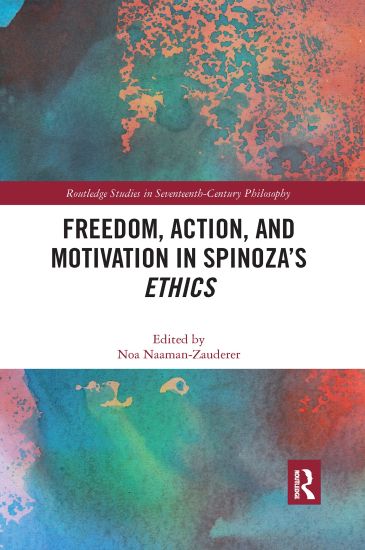
Freedom, Action, and Motivation in Spinoza’s "Ethics"
TAYLOR FRANCIS LTD
2021
nidottu
The present volume posits the themes of freedom, action, and motivation as the central principles that drive Spinoza’s Ethics from its first part to its last. It assembles essays by internationally leading scholars who provide different, sometimes opposing interpretations of these fundamental themes as they operate across the five parts of the Ethics and within its manifold domains. The diversity of issues, approaches, and perspectives within this volume, along with the chapters’ common focus, open up new ways of understanding not only some of the key concepts and main objectives in the Ethics but also the threads unifying the entire work. The sequence of essays in the book broadly follows the order of the Ethics, providing up-to-date perspectives of Spinoza’s views on freedom, action, and motivation in their ontological, cognitive, physical, affective, and ethical facets. This enables readers to engage with a variety of new interpretations of these key themes of the Ethics and to reconsider their consequences both for other related issues in the Ethics and for the relevance of the Ethics to contemporary trends in philosophy of action and motivation. The essays will contribute to the growing interest in Spinoza’s Ethics and spark further discussion and debate within and outside the vast body of scholarship on this important work. Freedom, Action, and Motivation in Spinoza’s Ethics will be of interest to scholars and advanced students working on Spinoza and early modern philosophy, as well as on philosophy of action and motivation.
This book argues that citizens have a moral right to decide by which criteria they grant migrants citizenship, as well as to control access to their territory in the first place. In developing and defending this argument, it critically engages numerous objections, thus providing the reader with a thorough overview of the current debate on the ethics of immigration and exclusion.The author’s argument is based on a straightforwardly individualist and liberal starting point. One of the rights granted by liberalism is freedom of association, which also comprises the right not to associate with people with whom one does not want to associate. While this is an individual right, it can be exercised collectively like many other individual rights. Thus, people can decide to collectively organize into an association pursuing certain goals; and subject to certain provisos, this gives rise to legitimate claims to space and territory in which they pursue these goals. The author shows that this right is far-reaching and robust, which entails an equally far-reaching and robust right to exclude. Moreover, he demonstrates that large-scale immigration from illiberal cultures tends to severely compromise the way of life, the values, and the institutions of liberal democracies in ways routinely ignored by apologists for multiculturalism.Freedom, Culture, and the Right to Exclude will be of interest to scholars and advanced students working in applied ethics, political philosophy, political theory, and law.
This book argues that citizens have a moral right to decide by which criteria they grant migrants citizenship, as well as to control access to their territory in the first place. In developing and defending this argument, it critically engages numerous objections, thus providing the reader with a thorough overview of the current debate on the ethics of immigration and exclusion.The author’s argument is based on a straightforwardly individualist and liberal starting point. One of the rights granted by liberalism is freedom of association, which also comprises the right not to associate with people with whom one does not want to associate. While this is an individual right, it can be exercised collectively like many other individual rights. Thus, people can decide to collectively organize into an association pursuing certain goals; and subject to certain provisos, this gives rise to legitimate claims to space and territory in which they pursue these goals. The author shows that this right is far-reaching and robust, which entails an equally far-reaching and robust right to exclude. Moreover, he demonstrates that large-scale immigration from illiberal cultures tends to severely compromise the way of life, the values, and the institutions of liberal democracies in ways routinely ignored by apologists for multiculturalism.Freedom, Culture, and the Right to Exclude will be of interest to scholars and advanced students working in applied ethics, political philosophy, political theory, and law.