

Kirjahaku
Etsi kirjoja tekijän nimen, kirjan nimen tai ISBN:n perusteella.
1000 tulosta hakusanalla Fiona MacCarthy

Austin, Texas, is filled to the brim with eerie tales of phantoms and creepy happenings. Read about Ben Thompson, Austin’s ghostly gambler and sheriff; meet Blanche Dumont, a famous “boarding house madam” ghost; explore the early days of the notorious Jack the Ripper and his killing spree in Austin; and find out how to observe the very strange and scary emergence of 20 million bats! Even better, this book tells you their exact locations, so that you can encounter Austin’s ghosts.
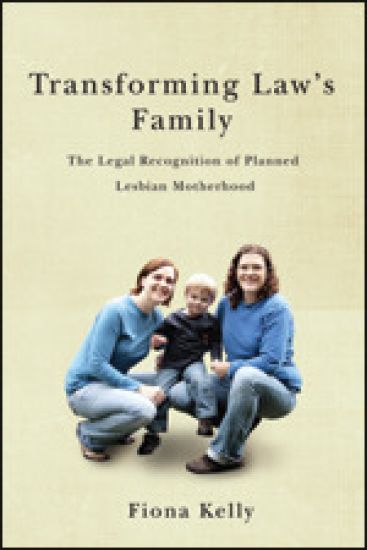
In the past few decades, gays and lesbians, along with theirfamilies, have become more visible members of Canadian society,enjoying increasing levels of legal recognition. In the area of legalparenthood, however, significant questions remain unanswered. InTransforming Law's Family, Fiona Kelly explores thecomplex issues encountered by planned lesbian families as they work todefine their parental rights, roles, and family structures within thetenets of family law. While Canadian courts recognize lesbian parenthood in somecircumstances, a number of issues that are largely unique to plannedlesbian families – such as the legal status of known spermdonors and non-biological mothers – persist. Drawing oninterviews with lesbian mothers, this groundbreaking book illuminatesthe changing definitions of family and suggests a model for law reformthat would enable the legal recognition of alternative forms ofparentage. The first empirical study in Canada to address the legal dimensions ofplanned lesbian families, this book makes an important contribution tofamily law, queer studies, and law reform literature.

In the past few decades, gays and lesbians, along with theirfamilies, have become more visible members of Canadian society,enjoying increasing levels of legal recognition. In the area of legalparenthood, however, significant questions remain unanswered. InTransforming Law's Family, Fiona Kelly explores thecomplex issues encountered by planned lesbian families as they work todefine their parental rights, roles, and family structures within thetenets of family law. While Canadian courts recognize lesbian parenthood in somecircumstances, a number of issues that are largely unique to plannedlesbian families – such as the legal status of known spermdonors and non-biological mothers – persist. Drawing oninterviews with lesbian mothers, this groundbreaking book illuminatesthe changing definitions of family and suggests a model for law reformthat would enable the legal recognition of alternative forms ofparentage. The first empirical study in Canada to address the legal dimensions ofplanned lesbian families, this book makes an important contribution tofamily law, queer studies, and law reform literature.

The Ancient Egyptians: Dress, Eat, Write and Play Just Like the Egyptians
Fiona MacDonald
CRABTREE PUBLISHING CO,CANADA
2024
pokkari
Step into the world of the Ancient Egyptians Make your own beaded collar, challenge a friend to the ancient game of senet, make papyrus paper, learn to write in hieroglyphs, measure time with a water clock, and paint a life-size pharaoh. Fascinating facts and thirteen easy-to-do activities involve young readers in exploring this ancient civilization and its people.

Romans: Dress, Eat, Write, and Play Just Like the Romans
Fiona MacDonald
CRABTREE PUBLISHING CO,CANADA
2024
pokkari

Vikings: Dress, Eat, Write, and Play Just Like the Vikings
Fiona MacDonald
CRABTREE PUBLISHING CO,CANADA
2024
pokkari

Gay and Lesbian Parenting
Fiona Tasker; Jerry J. Bigner
Routledge Member of the Taylor and Francis Group
2008
sidottu
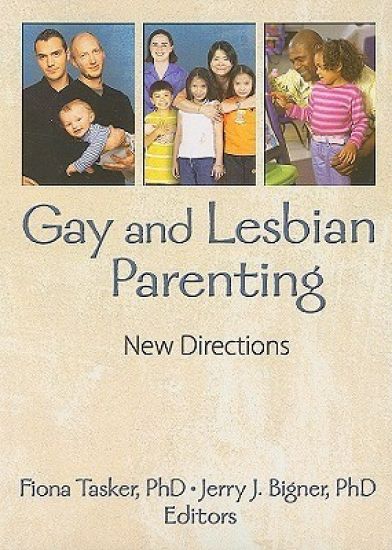
A new, multidisciplinary look at GLBT parenting Over the past 30 years, research on gay and lesbian parents has produced findings that challenge deeply rooted beliefs in child psychology about the processes through which parents influence the development of their children. Gay and Lesbian Parenting: New Directions builds on this important research with a detailed multidisciplinary examination of established knowledge and emerging information. In addition to evaluating already substantiated findings, this innovative collection marks a turning point in the field by showcasing a new wave of research that examines the dynamics of same-sex parenting and addresses questions about newly emerging concerns such as the consequences of different routes to same-sex parenthood and the effects of social perceptions on gay and lesbian family life. Gay and Lesbian Parenting: New Directions presents an overview of significant developments and suggests future directions for the field. Arranged in four sections, this unique text offers cutting-edge information gathered from both quantitative and qualitative research methods. Section one considers gay and lesbian family formation and the may routes through which lesbians and gay men have become parents. Section two reviews family relationships from parents', and their children's, perspective. The contributions to the third section discuss how gay and lesbian families describe themselves to others. The final section examines the public perceptions held by heterosexuals about lesbian and gay parenting and looks toward possibilities for the future. Chapters in Gay and Lesbian Parenting: New Directions: look at established research and the perspective of gay and lesbian parents and their children on family life explore methodological advances in the research field define the demographics of gay and lesbian parenting and the comparisons of lesbians, gay men, heterosexual women, and heterosexual men without children consider the decisions involved in and the systemic process of donor insemination and surrogacy study gay and lesbian adoptive parents investigate representations of diversity in storybooks for children of gay and lesbian parents situate gay men’s journeys into fatherhood within the sociohistorical context of developments in the United States tell personal stories about the prospect of gay fatherhood present a consideration of the different identities that lesbian and heterosexual mothers construct critically consider the terminology used both within and outside lesbian-parented families to describe a wide variety of co-parenting relationships give an introduction to critical psychology and deconstruct the debate over the importance of paternal influence report findings from a large community survey in Australia on attitudes toward same-sex parenting and beliefs about developmental outcomes and much more! Accessible and detailed, with numerous case studies, bibliographies, tables, and figures, Gay and Lesbian Parenting: New Directions is an ideal resource for students and educators, researchers and professionals working in GLBT and Queer Studies, family therapists, counselors, psychotherapists, social workers, and psychiatrists.
Gay and Lesbian Parenting
Fiona Tasker; Jerry J. Bigner
Routledge Member of the Taylor and Francis Group
2008
nidottu
A new, multidisciplinary look at GLBT parenting Over the past 30 years, research on gay and lesbian parents has produced findings that challenge deeply rooted beliefs in child psychology about the processes through which parents influence the development of their children. Gay and Lesbian Parenting: New Directions builds on this important research with a detailed multidisciplinary examination of established knowledge and emerging information. In addition to evaluating already substantiated findings, this innovative collection marks a turning point in the field by showcasing a new wave of research that examines the dynamics of same-sex parenting and addresses questions about newly emerging concerns such as the consequences of different routes to same-sex parenthood and the effects of social perceptions on gay and lesbian family life. Gay and Lesbian Parenting: New Directions presents an overview of significant developments and suggests future directions for the field. Arranged in four sections, this unique text offers cutting-edge information gathered from both quantitative and qualitative research methods. Section one considers gay and lesbian family formation and the may routes through which lesbians and gay men have become parents. Section two reviews family relationships from parents', and their children's, perspective. The contributions to the third section discuss how gay and lesbian families describe themselves to others. The final section examines the public perceptions held by heterosexuals about lesbian and gay parenting and looks toward possibilities for the future. Chapters in Gay and Lesbian Parenting: New Directions: look at established research and the perspective of gay and lesbian parents and their children on family life explore methodological advances in the research field define the demographics of gay and lesbian parenting and the comparisons of lesbians, gay men, heterosexual women, and heterosexual men without children consider the decisions involved in and the systemic process of donor insemination and surrogacy study gay and lesbian adoptive parents investigate representations of diversity in storybooks for children of gay and lesbian parents situate gay men’s journeys into fatherhood within the sociohistorical context of developments in the United States tell personal stories about the prospect of gay fatherhood present a consideration of the different identities that lesbian and heterosexual mothers construct critically consider the terminology used both within and outside lesbian-parented families to describe a wide variety of co-parenting relationships give an introduction to critical psychology and deconstruct the debate over the importance of paternal influence report findings from a large community survey in Australia on attitudes toward same-sex parenting and beliefs about developmental outcomes and much more! Accessible and detailed, with numerous case studies, bibliographies, tables, and figures, Gay and Lesbian Parenting: New Directions is an ideal resource for students and educators, researchers and professionals working in GLBT and Queer Studies, family therapists, counselors, psychotherapists, social workers, and psychiatrists.

"Lollard" is the name given to followers of John Wyclif, the English dissident theologian who was dismissed from Oxford University in 1381 for his arguments regarding the eucharist. A forceful and influential critic of the ecclesiastical status quo in the late fourteenth century, Wyclif's thought was condemned at the Council of Constance in 1415. While lollardy has attracted much attention in recent years, much of what we think we know about this English religious movement is based on records of heresy trials and anti-lollard chroniclers. In Feeling Like Saints, Fiona Somerset demonstrates that this approach has limitations. A better basis is the five hundred or so manuscript books from the period (1375–1530) containing materials translated, composed, or adapted by lollard writers themselves. These writings provide rich evidence for how lollard writers collaborated with one another and with their readers to produce a distinctive religious identity based around structures of feeling. Lollards wanted to feel like saints. From Wyclif they drew an extraordinarily rigorous ethic of mutual responsibility that disregarded both social status and personal risk. They recalled their commitment to this ethic by reading narratives of physical suffering and vindication, metaphorically martyring themselves by inviting scorn for their zeal, and enclosing themselves in the virtues rather than the religious cloister. Yet in many ways they were not that different from their contemporaries, especially those with similar impulses to exceptional holiness.

The Wildlife of Costa Rica: A Field Guide
Fiona A. Reid; Twan Leenders; Jim Zook
Comstock Publishing
2010
nidottu
This full-color field guide is an indispensable companion to the most popular neotropical ecotourism destination: Costa Rica. Featuring all the mammals, birds, reptiles, amphibians, and arthropods that one is likely to see on a trip to the rainforest (as well as those secretive creatures such as the jaguar that are difficult to glimpse), The Wildlife of Costa Rica is the guide to have when encountering trogons, tapirs, and tarantulas.In addition to providing details for identifying animals along with interesting facts about their natural history, this guide offers tips for seeing them in the wild. Costa Rica, a peaceful nation with many and diverse animal species, is one of the best places in the world for wildlife watching and nature study. It has an excellent system of national parks and reserves, a wide choice of ecolodges, and many professionally trained tourist guides. It is possible to leave the capital city of San Jos and, just a few hours later, visit a high-elevation cloud forest, dense rainforest, savanna-like plain, or coastal habitat, each with a unique collection of animal species.This new lightweight field guide provides nature enthusiasts visiting Costa Rica with the best introduction to the country's amazing diversity of wildlife. It is the first general field guide to Costa Rica to combine the most sought-after features: -treatment of all major phyla in the country;-coverage of the animals most likely and most desirable to be seen;-more than 600 detailed illustrations integrated with the text (the preferred method of animal identification in the wild);-full species accounts including ID points, range and habitat, size, and behaviors;-a wealth of natural history information, including more than 20 photographic natural history features; and-tips for seeing animals.

Humanitarian groups have failed, Fiona Terry believes, to face up to the core paradox of their activity: humanitarian action aims to alleviate suffering, but by inadvertently sustaining conflict it potentially prolongs suffering. In Condemned to Repeat?, Terry examines the side-effects of intervention by aid organizations and points out the need to acknowledge the political consequences of the choice to give aid. The author makes the controversial claim that aid agencies act as though the initial decision to supply aid satisfies any need for ethical discussion and are often blind to the moral quandaries of aid. Terry focuses on four historically relevant cases: Rwandan camps in Zaire, Afghan camps in Pakistan, Salvadoran and Nicaraguan camps in Honduras, and Cambodian camps in Thailand.Terry was the head of the French section of Medecins sans frontieres (Doctors Without Borders) when it withdrew from the Rwandan refugee camps in Zaire because aid intended for refugees actually strengthened those responsible for perpetrating genocide. This book contains documents from the former Rwandan army and government that were found in the refugee camps after they were attacked in late 1996. This material illustrates how combatants manipulate humanitarian action to their benefit. Condemned to Repeat? makes clear that the paradox of aid demands immediate attention by organizations and governments around the world. The author stresses that, if international agencies are to meet the needs of populations in crisis, their organizational behavior must adjust to the wider political and socioeconomic contexts in which aid occurs.

In The Garden of Delights, Fiona J. Griffiths offers the first major study of the Hortus deliciarum, a magnificently illuminated manuscript of theology, biblical history, and canon law written both by and explicitly for women at the end of the twelfth century. In so doing she provides a brilliantly persuasive new reading of female monastic culture. Through careful analysis of the contents, structure, and organization of the Hortus, Griffiths argues for women's profound engagement with the spiritual and intellectual vitality of the period on a level previously thought unimaginable, overturning the assumption that women were largely excluded from the "renaissance" and "reform" of this period. As a work of scholarship that drew from a wide range of sources, both monastic and scholastic, the Hortus provides a witness to the richness of women's reading practices within the cloister, demonstrating that it was possible, even late into the twelfth century, for communities of religious women to pursue an educational program that rivaled that available to men. At the same time, the manuscript's reformist agenda reveals how women engaged the pressing spiritual questions of the day, even going so far as to criticize priests and other churchmen who fell short of their reformist ideals. Through her wide-ranging examination of the texts and images of the Hortus, their sources, composition, and function, Griffiths offers an integrated understanding of the whole manuscript, one which highlights women's Latin learning and orthodox spirituality. The Garden of Delights contributes to some of the most urgent questions concerning medieval religious women, the interplay of gender, spirituality, and intellectual engagement, to discussions concerning women scribes and writers, women readers, female authorship and authority, and the visual culture of female communities. It will be of interest to art historians, scholars of women's and gender studies, historians of medieval religion, education, and theology, and literary scholars studying questions of female authorship and models of women's reading.

During the Middle Ages, female monasteries relied on priests to provide for their spiritual care, chiefly to celebrate Mass in their chapels but also to hear the confessions of their nuns and give last rites to their sick and dying. These men were essential to the flourishing of female monasticism during the eleventh and twelfth centuries, yet they rarely appear in scholarly accounts of the period. Medieval sources are hardly more forthcoming. Although medieval churchmen consistently acknowledged the necessity of male spiritual supervision in female monasteries, they also warned against the dangers to men of association with women. Nuns' Priests' Tales investigates gendered spiritual hierarchies from the perspective of nuns' priests-ordained men (often local monks) who served the spiritual needs of monastic women. Celibacy, misogyny, and the presumption of men's withdrawal from women within the religious life have often been seen as markers of male spirituality during the period of church reform. Yet, as Fiona J. Griffiths illustrates, men's support and care for religious women could be central to male spirituality and pious practice. Nuns' priests frequently turned to women for prayer and intercession, viewing women's prayers as superior to their own, since they were the prayers of Christ's "brides." Casting nuns as the brides of Christ and adopting for themselves the role of paranymphus (bridesman, or friend of the bridegroom), these men constructed a triangular spiritual relationship in which service to nuns was part of their dedication to Christ. Focusing on men's spiritual ideas about women and their spiritual service to them, Nuns' Priests' Tales reveals a clerical counter-discourse in which spiritual care for women was depicted as a holy service and an act of devotion and obedience to Christ.

In The Israeli Radical Left, Fiona Wright traces the dramatic as well as the mundane paths taken by radical Jewish Israeli leftwing activists, whose critique of the Israeli state has left them uneasily navigating an increasingly polarized public atmosphere. This activism is manifested in direct action solidarity movements, the critical stances of some Israeli human rights and humanitarian NGOs, and less well-known initiatives that promote social justice within Jewish Israel as a means of undermining the overwhelming support for militarism and nationalism that characterizes Israeli domestic politics. In chronicling these attempts at solidarity with those most injured by Israeli policy, Wright reveals dissent to be a fraught negotiation of activists' own citizenship in which they feel simultaneously repulsed and responsible. Based on eighteen months of fieldwork, The Israeli Radical Left provides a nuanced account of various kinds of Jewish Israeli antioccupation and antiracist activism as both spaces of subversion and articulations of complicity. Wright does not level complicity as an accusation, but rather recasts the concept as an analysis of the impurity of ethical and political relations and the often uncomfortable ways in which this makes itself felt during moments of attempted solidarity. She imparts how activists persistently underline their own feelings of complicity and the impossibility of reconciling their principles with the realities of their everyday lives, despite the fact that the activism in which they engage specifically aims to challenge Jewish Israeli citizens' participation in state violence. The first full ethnographic account of the Israeli radical left, Wright's book explores the ethics and politics of Jewish Israeli activists who challenge the violence perpetrated by their state and in their name.
Although there is excellent work being done on ethics/normative theory and international relations and on gender/feminist theory and international relations, very little is available that seeks, explicitly, to integrate the two fields. Moreover, while feminist ethics, which explore the theory of care and noncontractual values such as trust and responsibility, are increasingly linked to political theory, there appears to be a reluctance to relate this moral theory to the specific questions of international or global political theory.In Globalizing Care, Fiona Robinson successfully weaves feminist theory and ethics with international relations. By bringing in the important contributions of feminist moral and political theorists, contributions that are notably absent from most of the important work in this field, Robinson broadens the debate on normative theory in international relations. This text will be essential reading for students and scholars of gender or feminist studies, international relations, philosophy, and political theory and of special interest to scholars of feminist, moral, and political philosophy.

Originally published in 2005. Uniting critical debates on globalization with those on regulation, this book provides an innovative account of the fate of safety regulation in the face of global pressures. The author addresses the key question of whether globalization is making safety standards better or worse. She analyzes the diverse strands of globalization that threaten safety standards and examines the measures that hold potential for beneficial change. Regulatory character, a theoretical model that captures local economic, political and cultural influence developed in the work, sheds light on how and why regulation and safety standards do or do not change in the face of a crisis. The theoretical work is grounded and illuminated by research on the Thai government's response to the Kader fire, set in the rapidly industrializing context of Southeast Asia. Theoretically rigorous and empirically rich, the book has critical contemporary social relevance. It demonstrates a diverse theoretical heritage (embracing Weber, Douglas and Christopher Hood amongst others) that critically and productively engages with research and policy making to raise safety standards.

Analysing Discourses in Teacher Observation Feedback Conferences
Fiona Copland; Helen Donaghue
CRC Press Inc
2021
sidottu
This volume focuses on the post-observation feedback conference, a common feature of teacher education programs, and highlights the importance of such talk in the development and evaluation of teachers and other professionals. The book adopts a linguistic ethnographic approach, which provides a framework for examining the contextual nature of the talk and how it is embedded within wider social contexts and structures, such as evaluation regimes. Drawing on data from a range of settings, including pre-service teacher education, medical education, and teacher appraisal programs, Copland and Donaghue examine the feedback conference from a range of perspectives, including face, identity and genre, and show how a nuanced understanding of discussions can support teacher trainers, supervisors and observers to provide appropriate and useful feedback. A concluding chapter brings together brief vignettes from researchers active in the field to point to future directions for further study.This book will be of particular interest to students and researchers in discourse analysis, language education, linguistic anthropology, and professional communication, as well as pre- and in-service teachers.

Since the establishment of the Northern Irish state in 1921, theatre has often captured and reflected the political, social, and cultural changes that the North has experienced. From the mid–twentieth century, theatre has played a particularly important role in documenting women’s experiences and in showing how women’s social and political status has changed with the transformation of the state. Throughout the North’s history, women’s dramatic writing and performance have often contradicted mainstream narratives of the sectarian conflict, creating a rich and daring trove of counternarratives that contest the stories promoted by the government and media.Moving beyond the better-known women theatre practitioners of the North such as Marie Jones, Christina Reid, Anne Devlin, and the Charabanc Theatre Company, Coffey recovers the lost history of lesser-known, early playwrightsand highlights a new generation of women writing during peacetime. She examines how Northern women have historically used the theatrical stage as a form of political activism when more traditional avenues were closed off to them. Tracing the development of women’s involvement in Northern theatre, Coffey ultimately illuminates how issues such as feminism, gender roles, violence,politics, and sectarianism have shifted over the past century as the North moves from conflict into a developing and fragile peace.

Since the establishment of the Northern Irish state in 1921, theatre has often captured and reflected the political, social, and cultural changes that the North has experienced. From the mid–twentieth century, theatre has played a particularly important role in documenting women’s experiences and in showing how women’s social and political status has changed with the transformation of the state. Throughout the North’s history, women’s dramatic writing and performance have often contradicted mainstream narratives of the sectarian conflict, creating a rich and daring trove of counternarratives that contest the stories promoted by the government and media.Moving beyond the better-known women theatre practitioners of the North such as Marie Jones, Christina Reid, Anne Devlin, and the Charabanc Theatre Company, Coffey recovers the lost history of lesser-known, early playwrightsand highlights a new generation of women writing during peacetime. She examines how Northern women have historically used the theatrical stage as a form of political activism when more traditional avenues were closed off to them. Tracing the development of women’s involvement in Northern theatre, Coffey ultimately illuminates how issues such as feminism, gender roles, violence,politics, and sectarianism have shifted over the past century as the North moves from conflict into a developing and fragile peace.