Kirjojen hintavertailu. Mukana 11 244 527 kirjaa ja 12 kauppaa.

Kirjahaku

Etsi kirjoja tekijän nimen, kirjan nimen tai ISBN:n perusteella.

1000 tulosta hakusanalla Frederic Messick

Male Homosexuality in Four Societies

Male Homosexuality in Four Societies

Frederic Whitam

Praeger Publishers Inc
1985
sidottu
This book shows which aspects of homosexuality are culturally variable and which are not and explores the implications for current descriptions and explanations of homosexuality. Utilizing a combination of quantitative and qualitative material, the authors draw conclusions about the nature of homosexuality across cultural boundaries. Among their findings: homosexuals comprise approximately five percent of the population in each country no matter the degree of repressiveness or acceptance; homosexuals in different societies appear to have the same occupational and leisure-time interests; and their psycho-sexual development is similar and characterized by similar patterns of early cross-gender behavior.
Revolutionary Grenada

Revolutionary Grenada

Frederic Pryor

Praeger Publishers Inc
1986
sidottu
Based on hitherto classified government documents and interviews with many of the key decision-makers, the author examines the People's Revolutionary Government of Grenada's (PRG) economic successes and failures during its four and one-half year reign. It includes discussions of how the PRG attempted to realize its intentions; the most important political and economic problems faced by the government in light of its foreign aid socialism strategy; Grenada's role in the Soviet block; how Grenada gained allies and aid; general problems of economic development, including proposed solutions and results; and the different sectors of the Grenadan economy and the macroeconomic success of the PRG.
From Spear to Flintlock

From Spear to Flintlock

Frederic J. Baumgartner

Praeger Publishers Inc
1991
sidottu
This is a fast-paced survey of the history of war in the Eurasian world from classical Greece to the French Revolution. Defining the period as the era of pre-industrial warfare, Frederic Baumgartner describes the broad differences, as well as the similarities, in the armies through those 2,000 years. He suggests that the Greek hoplite, the Roman legionary, the nomadic horse archer, the medieval knight, the Swiss pikeman, the early musketeer, and other military types have more in common with each other than with the soldier of the twentieth century. Although he concentrates on the wars and military systems of western Europe, Baumgartner devotes considerable attention to those societies that had a significant impact on European warfare. The Byzantine Empire, the Arabs, the Central Asian nomads, and the Ottoman Turks are examined as are the countries of eastern Europe. Naval history is well integrated into the work with special attention given to galley warfare in the Mediterranean between Christendom and Islam. Fortification and siegecraft are also discussed extensively.Baumgartner has produced a significant original synthesis of scholarship on military history. It is not a series of biographies of great commanders or studies of the tactics of great battles, although a number of battles are examined in some detail to illustrate the tactics, fighting style, or weapons system typical of a particular era. Baumgartner is more concerned with illuminating the close relationship between social and economic change and military change throughout history. This work will be useful as a textbook for a college-level course in military history or as supplemental reading for classes in Western civilization.
Invisible Victims

Invisible Victims

Frederic Lynch

Praeger Publishers Inc
1991
nidottu
Lynch condemns the sloppy, fearful thinking that has converted affirmative action into quotas and that has kept social researchers shying away from this explosive topic. Shulamit Reinharz Choice There is nothing quite like Frederick Lynch's book which describes how affirmative action works in real life, and points to some very disturbing effects. This is a subject that should be discussed not only in the Supreme Court and Lynch makes an important contribution to that discussion. Nathan Glazer, Harvard University More and more questions have surfaced in the past decade concerning the wisdom and fairness of affirmative action programs. In this book, Lynch takes a hard look at affirmative action policy development and the social and ethical implications of a system that promotes gender and race as criteria for vocational advancement and educational opportunity. He focuses on the experiences of white males who have been victims of reverse discrimination under such programs and explores the lackluster response from government, the media, and employing institutions. Lynch examines the political taboo that for two decades effectively stifled discussion of the issues that affirmative action raises in both public discourse and scholarly analysis. He reviews the original ideals and purposes of affirmative action and contrasts them with the program as it has actually operated in everyday work settings. In case studies based on interviews and other data, Lynch assesses the reactions of white males to affirmative action social barriers, as well as their impact on co-workers, friends, and relatives. He describes the role of the mass media, the social sciences, and ideological elites in creating a conspiracy of silence concerning the hidden and unintended consequences of affirmative action policies. The only study that deals specifically with the impact of affirmative action on white males, this book is a must read for anyone who is truly interested in understanding the sociological, political, and psychological complexities of this issue.
Sketches of Early Texas and Louisiana

Sketches of Early Texas and Louisiana

Frédéric Gaillardet

University of Texas Press
1966
nidottu
A lively report of travels in early nineteenth-century Texas and Louisiana and a fascinating account of the discovery, exploration, and settlement of those areas is presented in the work of this ebullient young French dramatist and journalist who traveled to Louisiana in 1837 and to Texas in 1839. FrÉdÉric Gaillardet, an alert and talented writer of the romantic school, was lured away for a decade from a successful career in Paris to satisfy his wanderlust and to seek inspiration on the American frontier. During that time he visited the American Southwest, and he talked with many personages there-men like Sam Houston, Mirabeau B. Lamar, and Achille Murat. His character sketches of these men add zest to the book, as do the facets of Gaillardet's own personality and life displayed in these pages. Gaillardet's reports of his travels were published in various French-language newspapers of the time; a few were incorporated into the author's posthumous memoirs. His opinions, as recorded in his writings, exerted undeniable influence in the French decision to recognize Texas; one of his theses was that the Republic of Texas might become a curb, rather than a stepping stone, to an expanding United States. Despite Gaillardet's historical importance, however, none of these chapters has ever appeared before in English translation. This collection was gathered from several sources: the Journal des DÉbats, the Constitutionnel, the Courrier des États-Unis, and Gaillardet's memoirs, entitled L'Aristocratie en AmÉrique. The latter chapters concentrate on the career of a prominent Louisiana lawyer, politician, and diplomat, Pierre SoulÉ, whose much maligned name Gaillardet repeatedly and stoutly defended. A less favorable treatment of SoulÉ, contained in Fanny CalderÓn de la Barca's AttachÉ in Madrid, is reprinted in the appendix to aid the reader in judging the accuracy of Gaillardet's analysis of this arresting figure. Copious footnotes to clarify the text have been added by the translator. His introduction presents a biographical sketch of Gaillardet, together with a careful analysis of the book, which has been translated lucidly and vividly.
From a Year in Greece

From a Year in Greece

Frederic Will

University of Texas Press
1967
nidottu
In this book, the reader is privileged to take a leisurely and thoroughly enjoyable trip through the Greece of the mid-twentieth century, led by a poet-narrator who is a comfortable and engaging guide and complemented by the artwork of John Guerin. Frederic Will recounts his odyssey: from Austria through Yugoslavia, across the northern Greek border, from Salonika to Athens and the Aegean Sea, to the site of remnants of Old Greece in Smyrna, Pergamum, and Ephesus, and finally to the monasteries on Mount Athos. The author not only presents vivid descriptions of the towns and people in contemporary Greece but also conveys the still-present aura of the ancient Greek deities, in both the ruins and the modern cities. Witness the following passage written at Salonika, in Northern Greece, Will's first stop of importance: The sense-binding, sense-shaping ocean is omnipresent there. It is visible from nearly any point in the city. You only need to go up to your second story—if you have one. There is that pure, rhythmic, bounded but boundless element, spread somewhere at the bottom of the street. The same vision glimmers or stirs at the end of nearly every east-west-running street. Many townsmen spend much of their time promenading along the harbor. They seem to be subliminally magnetized to the sea. I spent several weeks there. During that time I would often go up to the crowning Venetian walls, and look down onto Salonika and its harbor. From there Salonika's deep dependence on the ocean became a fact proved by eyesight. The city is built on the half-moon-shaped plain of the Axios River. Two images came to me repeatedly: that Salonika is an amphitheater facing the ocean; or that she is a lover, reaching to embrace the ocean. Here are the hot, white (or cream-colored) buildings of the city; there is the element they thirst for. Will gives a great deal of fascinating information but gives it gracefully and without excess. Above all, the narrative is suffused with the atmosphere, the emotions, and the beauty of Greece. The author has said he intends for this work to dramatize, not to instruct. Actually, it does both.
Dane County Place-names

Dane County Place-names

Frederic G. Cassidy; David Medaris

University of Wisconsin Press
2009
nidottu
Dane County Place-Names is an entertaining record of the heritage of Dane County, Wisconsin's capital region, from its earliest days through the 1940s. This classic work by the late lexicographer Frederic G. Cassidy is back in print for new generations to enjoy. Cassidy applied his insightful eye to the origins and evolution of local names that reveal a colorful history: Whiskey Creek, Brag Hollow, Marxville, Pancake Valley, Halunkenburg, Skunk Hollow, and Tipple School. This edition features a new introduction by local historian Tracy Will and a foreword by Isthmus journalist David Medaris.
Bayreuth

Bayreuth

Frederic Spotts

Yale University Press
1996
pokkari
Germany's cultural glory and for a time Germany's political shame: the operatic festival established by Richard Wagner in 1876 is one of the most intriguing phenomena in modern European intellectual history. The oldest and best known of all musical festivals, Bayreuth soon after Wagner's death in 1883 became the center of a reactionary and nationalistic ideological cult. This book is the first to provide a frank and fully rounded account of the institution and the way it operates.The focus of the study is a critical analysis of the performances and productions, brought alive with photographs and sketches of stage settings, conductors, singers, and costumes from 1876 to 1990. Around this artistic history is woven the remarkable story of why, against tremendous odds, Wagner built his famous Festspielhaus and established his controversial festival and of how his descendants have managed to keep it alive. At the same time, the book traces the institution's association with nationalism and racism, its eventual debasement into "Hitler's court theatre," and its postwar liberation from its chauvinist, anti-Semitic past.With its own form of Wagnerian Gesamtkunstwerk—linking art, the personalities of the Wagner family, and German ideological development—this provocative study will be compelling reading not only for Wagner enthusiasts but also for anyone interested in European intellectual history since 1876.
Meselson, Stahl, and the Replication of DNA

Meselson, Stahl, and the Replication of DNA

Frederic Lawrence Holmes

Yale University Press
2002
sidottu
In 1957 two young scientists, Matthew Meselson and Frank Stahl, produced a landmark experiment confirming that DNA replicates as predicted by the double helix structure Watson and Crick had recently proposed. It also gained immediate renown as a “most beautiful” experiment whose beauty was tied to its simplicity. Yet the investigative path that led to the experiment was anything but simple, Frederic L. Holmes shows in this masterful account of Meselson and Stahl’s quest. This book vividly reconstructs the complex route that led to the Meselson-Stahl experiment and provides an inside view of day-to-day scientific research--its unpredictability, excitement, intellectual challenge, and serendipitous windfalls, as well as its frustrations, unexpected diversions away from original plans, and chronic uncertainty. Holmes uses research logs, experimental films, correspondence, and interviews with the participants to record the history of Meselson and Stahl’s research, from their first thinking about the problem through the publication of their dramatic results. Holmes also reviews the scientific community’s reception of the experiment, the experiment’s influence on later investigations, and the reasons for its reputation as an exceptionally beautiful experiment.
Investigative Pathways

Investigative Pathways

Frederic Lawrence Holmes

Yale University Press
2004
sidottu
This fascinating book is an investigation of scientific creativity. Following the research pathways of outstanding scientists over the past three centuries, it finds common features in their careers and their landmark discoveries and sheds light on the nature of long-term experimental research.Frederic Lawrence Holmes begins by discussing various approaches to the historical study of scientific practice. He then explains three kinds of analysis of the individual scientific life: broad-scale, which examines the phases of a scientist’s career—apprenticeship, mastery, distinction, and maturity—over a lifetime; middle-scale, which explores the episodes within such a career; and fine-scale, which scrutinizes laboratory notebooks and other data to focus on the daily interplay between thought and operation.Using these analyses, Holmes presents rich examples from his studies of six preeminent scientists: Antoine-Laurent Lavoisier, Claude Bernard, Hans Krebs, Matthew Meselson, Franklin Stahl, and Seymour Benzer. The similar themes that he finds in their work and careers lead him to valuable insights into enduring issues and problems in understanding the scientific process.
Reconceiving the Gene

Reconceiving the Gene

Frederic Lawrence Holmes

Yale University Press
2006
sidottu
This book relates how, between 1954 and 1961, the biologist Seymour Benzer mapped the fine structure of the rII region of the genome of the bacterial virus known as phage T4. Benzer’s accomplishments are widely recognized as a tipping point in mid-twentieth-century molecular biology when the nature of the gene was recast in molecular terms. More often than any other individual, he is considered to have led geneticists from the classical gene into the molecular age. Drawing on Benzer’s remarkably complete record of his experiments, his correspondence, and published sources, this book reconstructs how the former physicist initiated his work in phage biology and achieved his landmark investigation. The account of Benzer’s creativity as a researcher is a fascinating story that also reveals intriguing aspects common to the scientific enterprise.
The Shameful Peace

The Shameful Peace

Frederic Spotts

Yale University Press
2009
pokkari
A vivid and poignant account of the struggle of French writers and artists to endure and combat the German occupation that threatened their cultural heritage The German occupation of France from 1940 to 1945 presented wrenching challenges for the nation’s artists and intellectuals. Some were able to flee the country; those who remained—including Gide and Céline, Picasso and Matisse, Cortot and Messiaen, and Cocteau and Gabin—responded in various ways. This fascinating book is the first to provide a full account of how France’s artistic leaders coped under the crushing German presence. Some became heroes, others villains; most were simply survivors.Filled with anecdotes about the artists, composers, writers, filmmakers, and actors who lived through the years of occupation, the book illuminates the disconcerting experience of life and work within a cultural prison. Frederic Spotts uncovers Hitler’s plan to pacify the French through an active cultural life, and examines the unexpected vibrancy of opera, ballet, painting, theater, and film in both the Occupied and Vichy Zones. In view of the longer-term goal to supplant French with German culture, Spotts offers moving insight into the predicament of French artists as they fought to preserve their country’s cultural and national identity.
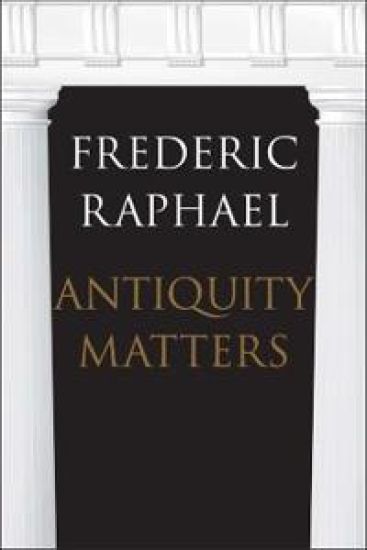
Antiquity Matters

Antiquity Matters

Frederic Raphael

Yale University Press
2017
sidottu
A sharp, often surprising, view of the classical world by a major classics scholar at Cambridge and author of The Glittering Prizes This book is the culmination of more than sixty years of a writing life during which Frederic Raphael has returned again and again to the literature and landscape of the ancient world. In his new book, Raphael deploys his renowned wit and erudition to give us a vivid mosaic of the complexities and contradictions underlying Western civilization and its continuing influence upon contemporary society. Tackling a broad range of topics, from the presumed superiority of democracy to the momentum behind today's gay rights movement, Raphael's often daringly heterodox view of the Greek and Roman world will provoke, surprise, and, at the same time, entertain readers. He shows how the interplay of fiction and reality, rhetorical aspiration and practical cunning, are threaded through modern culture.
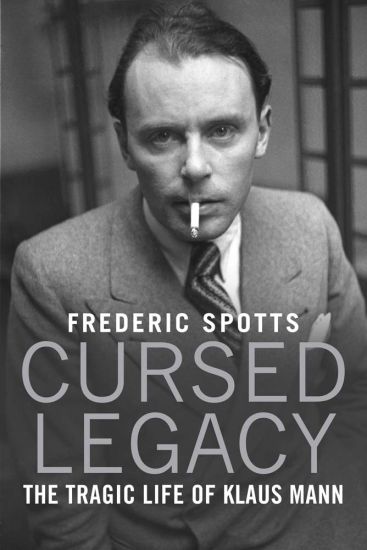
Cursed Legacy

Cursed Legacy

Frederic Spotts

Yale University Press
2016
sidottu
Son of the famous Thomas Mann, homosexual, drug-addicted, and forced to flee from his fatherland, the gifted writer Klaus Mann’s comparatively short life was as artistically productive as it was devastatingly dislocated. Best-known today as the author of Mephisto, the literary enfant terrible of the Weimar era produced seven novels, a dozen plays, four biographies, and three autobiographies—among them the first works in Germany to tackle gay issues—amidst a prodigious artistic output. He was among the first to take up his pen against the Nazis, as a reward for which he was blacklisted and denounced as a dangerous half-Jew, his books burnt in public squares around Germany, and his citizenship revoked. Having served with the U.S. military in Italy, he was nevertheless undone by anti-Communist fanatics in Cold War-era America and Germany, dying in France (though not, as all other books contend, by his own hand) at age forty-two. Powerful, revealing, and compulsively readable, this first English-language biography of Klaus Mann charts the effects of reactionary politics on art and literature and tells the moving story of a supreme talent destroyed by personal circumstance and the seismic events of the twentieth century.
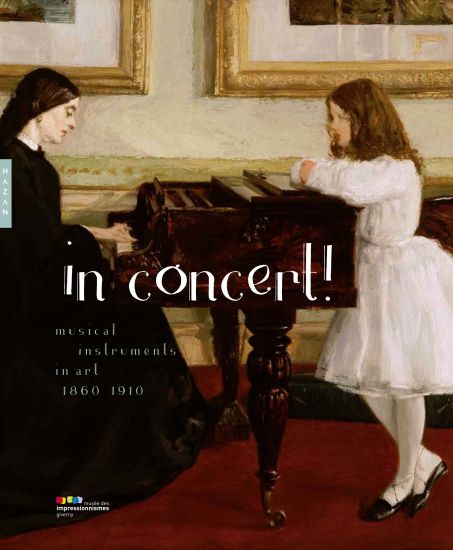
In Concert!

In Concert!

Frédéric Frank; Belinda Thomson

Yale University Press
2017
sidottu
The rise of democratic ideals and the burgeoning middle class of the late 19th and early 20th centuries precipitated an important surge in the prevalence of music in everyday life. Café concerts, dances, and operas all flourished in major cities across Europe as more people wanted access to performances and musical education. The approximately 150 artworks included in this handsomely illustrated volume, by major artists including Edouard Manet, Edgar Degas, Berthe Morisot, James McNeill Whistler, Henri de Toulouse-Lautrec, and Pierre Bonnard, trace the growing presence of music in painting, and include depictions of public performances—brass bands, circuses, cabarets, orchestras, operas, festivals–-as well as more intimate scenes featuring parlor music and music lessons. Distributed for Editions Hazan, ParisExhibition Schedule:Musée des impressionnismes Giverny (03/24/17-07/02/17)