Kirjojen hintavertailu. Mukana 12 390 323 kirjaa ja 12 kauppaa.

Kirjahaku

Etsi kirjoja tekijän nimen, kirjan nimen tai ISBN:n perusteella.

1000 tulosta hakusanalla Freeman Gregory A.

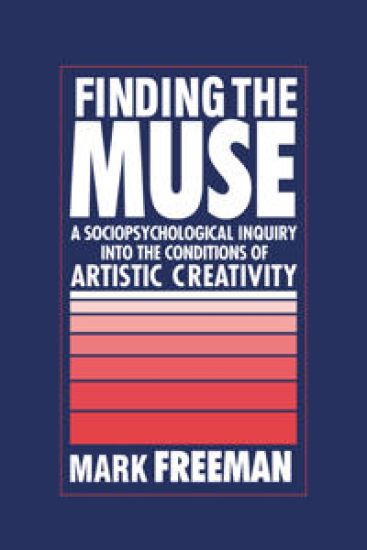
Finding the Muse

Finding the Muse

Mark Freeman

Cambridge University Press
1994
sidottu
Finding the Muse explores the lives of a group of aspiring fine artists from the mid-1960s, when they completed art school, to the mid-1980s. It focuses on problems of artistic creativity as they relate to such issues as the mystique of the artist, the challenge of establishing community among artists, the place of the art market in the construction of artistic identity, and the limits and possibilities of modern and postmodern art itself. By identifying the salient problems of artistic creativity, the author provides a realistic portrayal of the contemporary artist and some useful suggestions for addressing the problems that curb creativity. Focusing on problems of creativity that have arisen in recent years, the book articulates the more optimal conditions within which the process of artistic creation might occur. Part psychology of creativity, part sociology of art, and part cultural criticism, the book will be of interest to psychologists, sociologists, philosophers, art historians, art educators and especially aspiring artists.
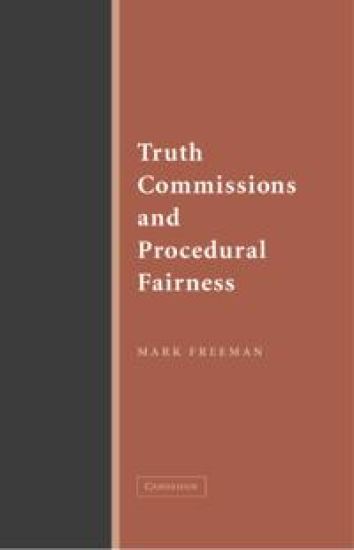
Truth Commissions and Procedural Fairness

Truth Commissions and Procedural Fairness

Mark Freeman

Cambridge University Press
2006
pokkari
This is the first law book devoted entirely to the subject of truth commissions. The book sets forth standards of procedural fairness aimed at protecting the rights of those who come into contact with truth commissions - primarily victims and their families, witnesses, and perpetrators. The aim of the book is to provide recommended criteria of procedural fairness for five possible components of a truth commission's mandate: the taking of statements, the use of subpoenas, the exercise of powers of search and seizure, the holding of victim-centered public hearings, and the publication of findings of individual responsibility in a final report (sometimes called the issue of 'naming names'). The book draws on the experience of past and present truth commissions, analogous national and multilateral investigative bodies, and international and comparative standards of procedural fairness.
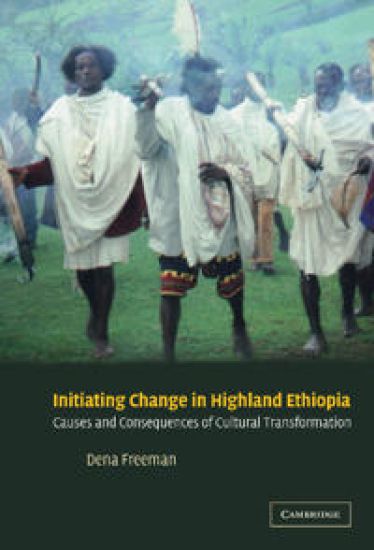
Initiating Change in Highland Ethiopia

Initiating Change in Highland Ethiopia

Dena Freeman

Cambridge University Press
2002
sidottu
In a rural community in Southern Ethiopia, there are two types of rituals performed by the same people. Historical evidence suggests that one has shown remarkable stability over the years, while the other has undergone massive transformations. External factors are the same, so how is this to be explained? In this 2002 book, Dena Freeman focuses on ethnographical and historical data from the Gamo Highlands of Southern Ethiopia to tackle the question of cultural change and transformation. She uses a comparative perspective and contrasts the continuity in sacrificial rituals with the rapid divergence and differentiation in initiations. Freeman argues that although external change drives internal cultural transformation, the way in which it does is greatly influenced by the structural organization of the cultural systems themselves. This insight leads to a rethinking of the analytic tension between structure and agency that is at the heart of contemporary anthropological theory.
Truth Commissions and Procedural Fairness

Truth Commissions and Procedural Fairness

Mark Freeman

Cambridge University Press
2006
sidottu
This is the first law book devoted entirely to the subject of truth commissions. The book sets forth standards of procedural fairness aimed at protecting the rights of those who come into contact with truth commissions - primarily victims and their families, witnesses, and perpetrators. The aim of the book is to provide recommended criteria of procedural fairness for five possible components of a truth commission's mandate: the taking of statements, the use of subpoenas, the exercise of powers of search and seizure, the holding of victim-centered public hearings, and the publication of findings of individual responsibility in a final report (sometimes called the issue of 'naming names'). The book draws on the experience of past and present truth commissions, analogous national and multilateral investigative bodies, and international and comparative standards of procedural fairness.
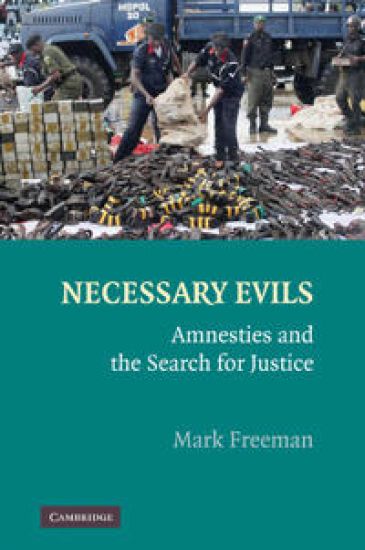
Necessary Evils

Necessary Evils

Mark Freeman

Cambridge University Press
2009
sidottu
This book is about amnesties for grave international crimes that states adopt in moments of transition or social unrest. The subject is naturally controversial, especially in the age of the International Criminal Court. The goal of this book is to reframe and revitalise the global debate on the subject and to offer an original framework for resolving amnesty dilemmas when they arise. Most literature and jurisprudence on amnesties deal with only a small subset of state practice and sidestep the ambiguity of amnesty's position under international law. This book addresses the ambiguity head on and argues that amnesties of the broadest scope are sometimes defensible when adopted as a last recourse in contexts of mass violence. Drawing on an extensive amnesty database, the book offers detailed guidance on how to ensure that amnesties extend the minimum leniency possible, while imposing the maximum accountability on the beneficiaries.
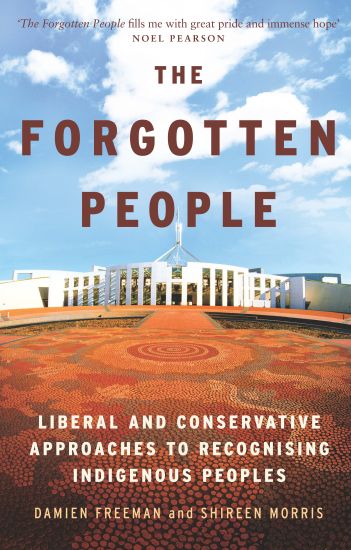
The Forgotten People

The Forgotten People

Damien Freeman; Shireen Morris

Melbourne University Press
2016
nidottu
It is easy to assume that constitutional recognition of indigenous Australians is a project of the left in Australia, and something that the right staunchly opposes. This collection challenges that assumption. It frames indigenous constitutional recognition in the context of conservative and liberal philosophical thought, and demonstrates that there may indeed be a set of reforms for constitutional recognition that can achieve the symbolic and substantive change sought by indigenous leaders, while at the same time addressing the critical concerns of constitutional conservatives and classical liberals. More than that, this collection demonstrates the genuine goodwill that many Australians share for the cause of indigenous recognition that is both practically useful and symbolically powerful. Prestigious Australian leaders and thinkers from diverse fields, including defence, business, journalism, law and religion, share their thoughts on what recognition means to them and how it might be achieved.
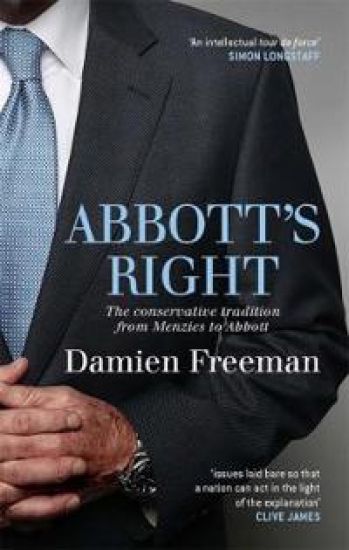
Abbott's Right

Abbott's Right

Damien Freeman

Melbourne University Press
2017
pokkari
Tony Abbott may have been a Rhodes Scholar, but some commentators are convinced that he offered nothing more than three-word slogans. Abbott's Right challenges this perception, and presents Abbott as someone who rejoices in the political battle of ideas. It looks at how the contemporary conservative voice that Abbott champions was fashioned by Sir Robert Menzies, Malcolm Fraser and John Howard, and reflects on what it means to be conservative in modern Australia. It argues that the Liberal Party should return to its conservative roots as a centre-right party and signals how, as such, it might address the public policy challenges in the years ahead. Tony Abbott responds to Freeman's analysis in an afterword, and sets it in the context of the questions that Donald Trump's ascendancy poses for conservatives and Labor alike.
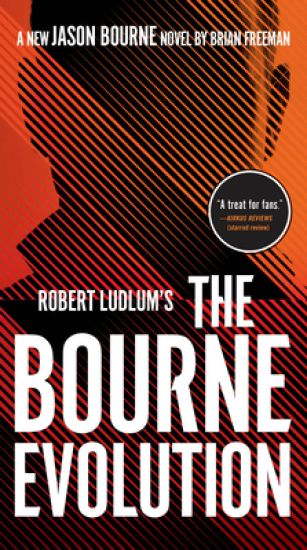
Robert Ludlum's the Bourne Evolution

Robert Ludlum's the Bourne Evolution

Brian Freeman

G.P. Putnam's Sons
2021
pokkari
America's most enduring hero, Jason Bourne, returns in a propulsive, fresh story for the Bourne canon that tests old skills--and uncovers new ones. After the death of his lover in a mass shooting, secret agent Jason Bourne is convinced that there is more to her murder than it seems. Worse, he believes that Treadstone--the agency that made him who he is, that trained him, is behind the killing. Bourne goes rogue, leaving Treadstone behind and taking on a new mission to infiltrate and expose an anarchist group, Medusa. But when a congresswoman is assassinated in New York, Bourne is framed for the crime, and he finds himself alone and on the run, hunted by both Treadstone and the tech cabal that had hired him. In his quest to stay one step ahead of his enemies, Bourne teams up with a journalist, Abbey Laurent, to figure out who was behind the frame-up, and to learn as much as he can about the ever-growing threat of the mysterious Medusa group. As more and more enemies begin to hunt Bourne, it's a race against the clock to discover who led him into a trap . . . and what their next move may be.
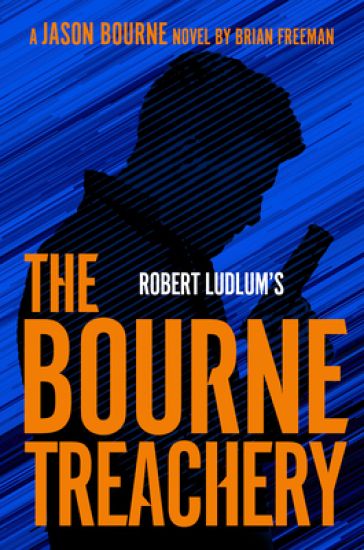
Robert Ludlum's the Bourne Treachery

Robert Ludlum's the Bourne Treachery

Brian Freeman

G.P. Putnam's Sons
2021
sidottu
The world's most ruthlessly efficient assassin, Jason Bourne, is facing the one force he can't defeat--his own past--in the latest thrilling entry in Robert Ludlum's New York Times bestselling series. Three years ago, Jason Bourne embarked on a mission in Estonia with his partner and lover, a fiery Treadstone agent code-named Nova. Their job was to rescue a Russian double agent who'd been smuggled out of St. Petersburg in the midst of an FSB manhunt. They failed. The Russian died at the hands of a shadowy assassin known only by the nickname Lennon. Now everything has changed for Bourne. Nova is gone, killed in a mass shooting in Las Vegas. Bourne is a lone operative, working in the shadows for Treadstone, when he's called in for a new mission in London--to prevent another assassination masterminded by Lennon. But nothing about this mission is what it seems. As Bourne engages in a cat-and-mouse game with Lennon across the British countryside, he discovers that everything he thought he knew about the past was a lie. And with the body count rising, he comes to an inevitable conclusion: Some secrets should stay buried.
Robert Ludlum's the Bourne Treachery

Robert Ludlum's the Bourne Treachery

Brian Freeman

G.P. Putnam's Sons
2022
pokkari
The world's most ruthlessly efficient assasin, Jason Bourne, has carved a bloody swathe through all his opponents but now he's facing the one force he can't defeat--his own past--in the latest thrilling entry in Robert Ludlum's New York Times bestselling series. Three years ago, Jason Bourne embarked on a mission in Estonia with his partner and lover, a fiery Treadstone agent code-named Nova. Their job was to rescue a Russian double agent who'd been smuggled out of St. Petersburg in the midst of an FSB manhunt. They failed. The Russian died at the hands of a shadowy assassin known only by the nickname Lennon. Now everything has changed for Bourne. Nova is gone, killed in a mass shooting in Las Vegas. Bourne is a lone operative, working in the shadows for Treadstone, when he's called in for a new mission in London--to prevent another assassination masterminded by Lennon. But nothing about this mission is what it seems. As Bourne engages in a cat-and-mouse game with Lennon across the British countryside, he discovers that everything he thought he knew about the past was a lie. And with the body count rising, he comes to an inevitable conclusion: Some secrets should stay buried.
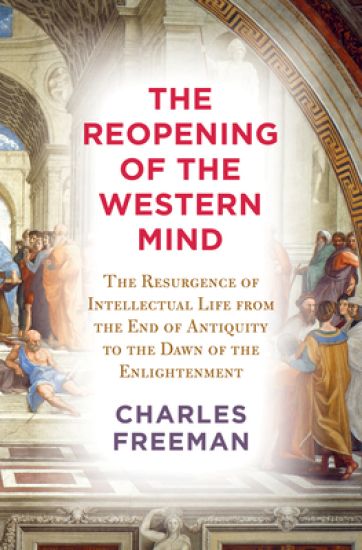
The Reopening of the Western Mind: The Resurgence of Intellectual Life from the End of Antiquity to the Dawn of Theenlightenment
A monumental and exhilarating history of European thought from the end of Antiquity to the beginning of the Enlightenment--500 to 1700 AD--tracing the arc of intellectual history as it evolved, setting the stage for the modern era. With more than 140 illustrations; 90 in full-color. Charles Freeman, lauded historical scholar and author of The Closing of the Western Mind ("A triumph"--The Times London]), explores the rebirth of Western thought in the centuries that followed the demise of the classical era. As the dominance of Christian teachings gradually subsided over time, a new open-mindedness made way for the ideas of morality and theology, and fueled and formed the backbone of the Western mind of the late Middle Ages, the Renaissance, and beyond. In this wide-ranging history, Freeman follows the immense intellectual development that culminated in the Enlightenment, from political ideology to philosophy and theology, as well as the fine arts and literature. He writes, in vivid detail, of how Europeans progressed from the Christian-minded thinking of Saint Augustine to the more open-minded later scholars, such as Michel de Montaigne, leading to a broader, more "humanist" way of thinking. He explores how the discovery of America fundamentally altered European conceptions of humanity, religion, and science; how the rise of Protestantism and the Reformation profoundly influenced the tenor of politics and legal systems, with enormous repercussions; and how the radical Christianity of philosophers such as Spinoza affected a rethinking of the concept of religious tolerance that has influenced the modern era ever since.