Kirjojen hintavertailu. Mukana 11 244 527 kirjaa ja 12 kauppaa.

Kirjahaku

Etsi kirjoja tekijän nimen, kirjan nimen tai ISBN:n perusteella.

1000 tulosta hakusanalla Gary Soto

Electronic Whistle-Stops

Electronic Whistle-Stops

Gary W. Selnow

Praeger Publishers Inc
1998
nidottu
Fifty years ago, the political whistle-stop tour was thus named because trains blew their whistles twice when making unscheduled stops in backwater towns. Like its distant cousin, the electronic whistle-stop brings the candidate's message directly to the people, but with one outstanding difference: the new whistle-stop offers politicians an accuracy, efficiency, and success at voter persuasian unimaginable to by earlier whistle-stoppers such as Harry Truman.As Selnow shows, American political campaigns have an extraordinary affinity for electronic devices. They have seized upon electronic bulletin boards, home pages, and electronic libraries. Since political campaigns are communication campaigns, Selnow concludes that candidates who successfully inform, persuade, enlighten, and even confuse voters will win votes. Selnow also examines the debate between those who argue that new technologies have improved efficiency and those who believe that the innovations have affected society in other ways. Scholars and students of American political communication must read this book; the lively style will also make it exciting reading for anyone interested in this new political tool.
The Dollar Decade

The Dollar Decade

Gary D. Best

Praeger Publishers Inc
2003
sidottu
This book examines the underlying causes of the tumult of the 1920s in America that has since captivated writers, readers, moviegoers, and television viewers. During the 1920s, Americans were aware of the momentous changes taking place in their lives. It was an introspective decade. Magazines and newspaper articles, books and anthologies explored the causes, nature, and implications of those changes. The impact of radio, and to a lesser extent motion pictures, rivaled the effects that the invention of printing had had on human society hundreds of years earlier. Add to these developments the effects of World War I and the popularization of Freud and Darwin, and the result was an America cast adrift on a sea of normlessness, treading water between two worlds: one of stability and tradition before the war, and one as yet dimly perceived in the mists of the future.While Freud challenged notions of traditional behavior, Darwin challenged traditional religious beliefs. The arrival of the affordable automobile transformed human mobility on a scale not seen since the domestication of the horse and the invention of the wheel thousands of years before. But those previous changes had not ushered in so many cataclysmic changes in so short a time. The author maintains that only in this context can much of the behavior of the time be understood, from the popularity of the Ku Klux Klan to the excesses of the flappers and the jazz age.
A Short History of Taiwan

A Short History of Taiwan

Gary M. Davison

Praeger Publishers Inc
2003
sidottu
This concise account of Taiwan's history makes a cogent, compelling argument for the right of the Taiwanese people to declare their nation independent, if they so choose. Davison's bold stand—unprecedented from a Western author—challenges the one China notion advanced in the Shanghai Communique of 1972 and states unequivocally that, should independence be proclaimed, it could only be taken away by force if the international community sides with contemporary might over historical right. He argues that the possible conflict could be sufficiently incendiary to induce a major military clash between the United States, the People's Republic of China, and other major powers. Davison lets the facts of Taiwanese history make the case for Taiwan's existence as a unique national entity. A historical overview details the circumstances under which the Qing dynasty made its 17th century claim on the island, the events that led to cession to Japan in 1895, the origins of the Guomindang occupation during the Chinese Civil War, and the dramatic election of March 2000 that brought the Democratic Progressive Party's Chen Shuibian to office, ending Guomindang domination. After centuries of outsider domination, and over a hundred years of disconnection from any government exercising power over all of mainland China, the Taiwanese people are in a position to make a decision for national independence based on solid historical evidence.
Can God Intervene?

Can God Intervene?

Gary Stern

Praeger Publishers Inc
2007
sidottu
The death and devastation wrought by the tsunami in South Asia, Hurricane Katrina in the Gulf states, the earthquake in Pakistan, the mudslides in the Philippines, the tornadoes in the American Midwest, another earthquake in Indonesia-these are only the most recent acts of God to cause people of faith to question God's role in the physical universe. Volcanic eruptions, wildfires, epidemics, floods, blizzards, droughts, hailstorms, and famines can all raise the same questions: Can God intervene in natural events to prevent death, injury, sickness, and suffering? If so, why does God not act? If not, is God truly the All-Loving, All-Powerful, and All-Present Being that many religions proclaim? Grappling with such questions has always been an essential component of religion, and different faiths have arrived at wildly different answers. To explore various religious explanations of the tragedies inflicted by nature, author Gary Stern has interviewed 43 prominent religious leaders across the religious spectrum, among them Rabbi Harold Kushner, author of When Bad Things Happen to Good People; Father Benedict Groeschel, author of Arise from Darkness; The Rev. James Rowe Adams, founder of the Center for Progressive Christianity; Kenneth R. Samples, vice president of Reason to Believe; Dr. James Cone, the legendary African American theologian; Tony Campolo, founder of the Evangelical Association for the Promotion of Education; Dr. Sayyid Syeed, general secretary of the Islamic Society of North America; Imam Yahya Hendi, the first Muslim chaplain at Georgetown University; Dr. Arvind Sharma, one of the world's leading Hindu scholars; Robert A. F. Thurman, the first American to be ordained a Tibetan Buddhist monk; David Silverman, the national spokesman for American Atheists; and others—rabbis, priests, imams, monks, storefront ministers, itinerant holy people, professors, and chaplains—Jews, Roman Catholics, mainline Protestants, evangelical Christians, Muslims, Hindus, Buddhists, and Atheists-people of belief, and people of nonbelief, too. Stern asked each of them probing questions about what their religion teaches and what their faith professes regarding the presence of tragedy. Some feel that the forces of nature are simply impersonal, and some believe that God is omniscient but not omnipotent. Some claim that nature is ultimately destructive because of Original Sin, some assert that the victims of natural disasters are sinners who deserve to die, and some explain that natural disasters are the result of individual and collective karma. Still others profess that God causes suffering in order to test and purify the victims. Stern, an award-winning religion journalist, has extensive experience in this type of analytical journalism. The result is a work that probes and challenges real people's beliefs about a subject that, unfortunately, touches everyone's life.
Rethinking Our War on Drugs

Rethinking Our War on Drugs

Gary L. Fisher

Praeger Publishers Inc
2006
sidottu
The National Drug Control Policy has failed its two major functions (supply reduction and demand reduction) due to faulty assumptions regarding nearly every aspect of the alcohol and drug fields, charges author Fisher. Yet in spite of overwhelming evidence of this failure policy makers have strongly resisted discussing major changes to the assumptions that underly current policy, because of political pressure, bias and philosophical intransigence, he adds. Fisher discusses controversial topics and defends uncommon approaches in chapters focused on subjects including legalization, harm reduction, the futility of supply reduction, the problem of underage drinking and effectiveness of treatment and prevention. He proposes a new national policy for drug control, including elimination of the war metaphor, inclusion of alcohol in the mandate, conceptualization of addiction as a public health problem, utilization of harm reduction principles to guide policy and discontinuation of approaches that isolate drug and alcohol problems from their connection to broader social issues such as poverty.In this work, the premises of the current National Drug Control Strategy are challenged, and both Democratic and Republican administrations across the last 10 years are critically examined. Statements of the Director of the Office of National Drug Control Strategy are critiqued. Major points include that there is no evidence the NDCS has achieved any of its goals, that harm reduction should be its guiding principle, and supply reduction should not be part of the national strategy.
Jesus and the Land

Jesus and the Land

Gary Burge

SPCK Publishing
2010
nidottu
The relationship of 'land' to 'theology' has been a motif living within the Jewish tradition since the patriarchal era: one mark of the covenant with Abraham was the promise of land. Gary Burge explores what the New Testament says about 'the land' and outlines the various ways in which these passages have been interpreted. Jesus and the Land will help Christians to form a biblical view about modern-day claims to the land in Israel-Palestine. Examining what the New Testament says about the idea of land being 'holy', this guide is accessible and non-technical.
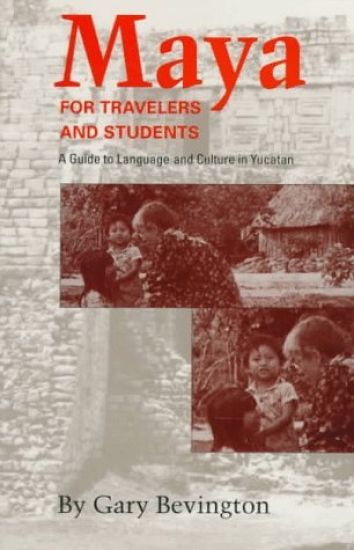
Maya for Travelers and Students

Maya for Travelers and Students

Gary Bevington

University of Texas Press
1995
pokkari
The Yucatan Peninsula draws many North American and European travelers each year to view the ruins of the pre-Columbian Classical Maya civilization and the abundant native flora and fauna. For these travelers, as well as armchair travelers and students, Gary Bevington has prepared the first general English-language introduction to Yucatec Maya, the native language of the people indigenous to the region. Written in nontechnical terms for learners who have a basic knowledge of simple Mexican Spanish, the book presents easily understood, practical information for anyone who would like to communicate with the Maya in their native language. In addition to covering the pronunciation and grammar of Maya, Bevington includes invaluable tips on learning indigenous languages "in the field." Most helpful are his discussions of the cultural and material worlds of the Maya, accompanied by essential words and expressions for common objects and experiences. A Maya-English-Spanish glossary with extensive usage examples and an English-Maya glossary conclude the book. Note: The supplemental audiocasette, Spoken Maya for Travelers and Students, is now available as a free download through the book's page on the University of Texas Press's website.
Turn Out the Lights

Turn Out the Lights

Gary Cartwright

University of Texas Press
2000
nidottu
Whether the subject is Jack Ruby, Willie Nelson, or his own leukemia-stricken son Mark, when it comes to looking at the world through another person's eyes, nobody does it better than Gary Cartwright. For over twenty-five years, readers of Texas Monthly have relied on Cartwright to tell the stories behind the headlines with pull-no-punches honesty and wry humor. His reporting has told us not just what's happened over three decades in Texas, but, more importantly, what we've become as a result. This book collects seventeen of Cartwright's best Texas Monthly articles from the 1980s and 1990s, along with a new essay, "My Most Unforgettable Year," about the lasting legacy of the Kennedy assassination. He ranges widely in these pieces, from the reasons for his return to Texas after a New Mexican exile to profiles of Kris Kristofferson and Willie Nelson. Along the way, he strolls through San Antonio's historic King William District; attends a Dallas Cowboys old-timers reunion and the Holyfield vs. Foreman fight; visits the front lines of Texas' new range wars; gets inside the heads of murderers, gamblers, and revolutionaries; and debunks Viagra miracles, psychic surgery, and Kennedy conspiracy theories. In Cartwright's words, these pieces all record "the renewal of my Texas-ness, a rediscovery of Texas after returning home."
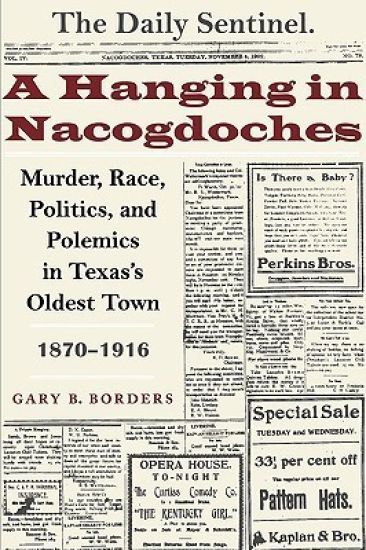
A Hanging in Nacogdoches

A Hanging in Nacogdoches

Gary B. Borders

University of Texas Press
2006
pokkari
On October 17, 1902, in Nacogdoches, Texas, a black man named James Buchanan was tried without representation, condemned, and executed for the murder of a white family-all in the course of three hours. Two white men played pivotal roles in these events: Bill Haltom, a leading local Democrat and the editor of the Nacogdoches Sentinel, who condemned lynching but defended lynch mobs, and A. J. Spradley, a Populist sheriff who, with the aid of hundreds of state militiamen, barely managed to keep the mob from burning Buchanan alive, only to escort him to the gallows following his abbreviated trial. Each man's story serves to illuminate a part of the path that led to the terrible parody of justice which lies at the heart of A Hanging in Nacogdoches.The turn of the twentieth century was a time of dramatic change for the people of East Texas. Frightened by the Populist Party's attempts to unite poor blacks and whites in a struggle for economic justice, white Democrats defended their power base by exploiting racial tensions in a battle that ultimately resulted in the complete disenfranchisement of the black population of East Texas. In telling the story of a single lynching, Gary Borders dramatically illustrates the way politics and race combined to bring horrific violence to small southern towns like Nacogdoches.
Desert Terroir

Desert Terroir

Gary Paul Nabhan

University of Texas Press
2012
sidottu
Why does food taste better when you know where it comes from? Because history-ecological, cultural, even personal-flavors every bite we eat. Whether it’s the volatile chemical compounds that a plant absorbs from the soil or the stories and memories of places that are evoked by taste, layers of flavor await those willing to delve into the roots of real food. In this landmark book, Gary Paul Nabhan takes us on a personal trip into the southwestern borderlands to discover the terroir-the “taste of the place”-that makes this desert so delicious.To savor the terroir of the borderlands, Nabhan presents a cornucopia of local foods-Mexican oregano, mesquite-flour tortillas, grass-fed beef, the popular Mexican dessert capirotada, and corvina (croaker or drum fish) among them-as well as food experiences that range from the foraging of Cabeza de Vaca and his shipwrecked companions to a modern-day camping expedition on the Rio Grande. Nabhan explores everything from the biochemical agents that create taste in these foods to their history and dispersion around the world. Through his field adventures and humorous stories, we learn why Mexican oregano is most potent when gathered at the most arid margins of its range-and why foods found in the remote regions of the borderlands have surprising connections to foods found by his ancestors in the deserts of the Mediterranean and the Middle East. By the end of his movable feast, Nabhan convinces us that the roots of this fascinating terroir must be anchored in our imaginations as well as in our shifting soils.
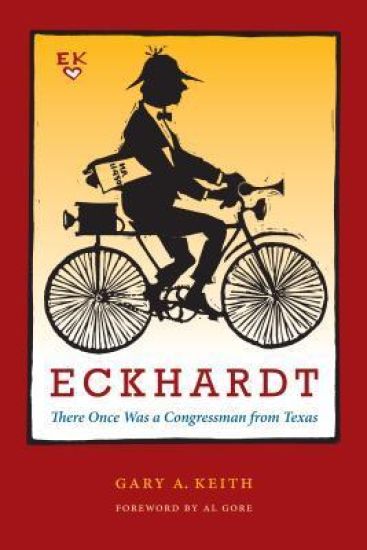
Eckhardt

Eckhardt

Gary A. Keith

University of Texas Press
2007
nidottu
Runner-up, Violet Crown Award, Writer's League of Texas, 2008 Renowned for his "brilliant legislative mind" and political oratory-as well as for bicycling to Congress in a rumpled white linen suit and bow tie-U.S. Congressman Bob Eckhardt was a force to reckon with in Texas and national politics from the 1940s until 1980. A liberal Democrat who successfully championed progressive causes, from workers' rights to consumer protection to environmental preservation and energy conservation, Eckhardt won the respect of opponents as well as allies. Columnist Jack Anderson praised him as one of the most effective members of Congress, where Eckhardt was a national leader and mentor to younger congressmen such as Al Gore. In this biography of Robert Christian Eckhardt (1913-2001), Gary A. Keith tells the story of Eckhardt's colorful life and career within the context of the changing political landscape of Texas and the rise of the New Right and the two-party state. He begins with Eckhardt's German-American family heritage and then traces his progression from labor lawyer, political organizer, and cofounder of the progressive Texas Observer magazine to Texas state legislator and U.S. congressman. Keith describes many of Eckhardt's legislative battles and victories, including the passage of the Open Beaches Act and the creation of the Big Thicket National Preserve, the struggle to limit presidential war-making ability through the War Powers Act, and the hard fight to shape President Carter's energy policy, as well as Eckhardt's work in Texas to tax the oil and gas industry. The only thorough recounting of the life of a memorable, important, and flamboyant man, Eckhardt also recalls the last great era of progressive politics in the twentieth century and the key players who strove to make Texas and the United States a more just, inclusive society.
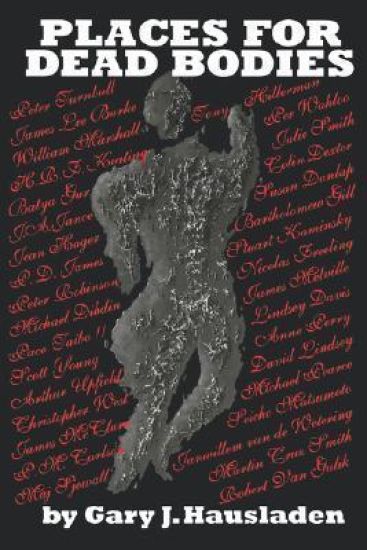
Places for Dead Bodies

Places for Dead Bodies

Gary J. Hausladen

University of Texas Press
2000
pokkari
From Tony Hillerman's Navajo Southwest to Martin Cruz Smith's Moscow, an exotic, vividly described locale is one of the great pleasures of many murder mysteries. Indeed, the sense of place, no less than the compelling character of the detective, is often what keeps authors writing and readers reading a particular series of mystery novels. This book investigates how "police procedural" murder mysteries have been used to convey a sense of place. Gary Hausladen delves into the work of more than thirty authors, including Tony Hillerman, Martin Cruz Smith, James Lee Burke, David Lindsey, P. D. James, and many others. Arranging the authors by their region of choice, he discusses police procedurals set in America, the United Kingdom and Ireland, Europe, Moscow, Asia, and selected locales in other parts of the world, as well as in historical places ranging from the Roman Empire to turn-of-the-century Cairo.
Before Brown

Before Brown

Gary M. Lavergne

University of Texas Press
2010
nidottu
Winner, Coral Horton Tullis Memorial Prize for Best Book on Texas History, Texas State Historical Association, 2010 Carr P. Collins Award, Texas Institute of Letters, 2011On February 26, 1946, an African American from Houston applied for admission to the University of Texas School of Law. Although he met all of the school's academic qualifications, Heman Marion Sweatt was denied admission because he was black. He challenged the university's decision in court, and the resulting case, Sweatt v. Painter, went to the U.S. Supreme Court, which ruled in Sweatt's favor. The Sweatt case paved the way for the landmark Brown v. Board of Education of Topeka rulings that finally opened the doors to higher education for all African Americans and desegregated public education in the United States.In this engrossing, well-researched book, Gary M. Lavergne tells the fascinating story of Heman Sweatt's struggle for justice and how it became a milestone for the civil rights movement. He reveals that Sweatt was a central player in a master plan conceived by the National Association for the Advancement of Colored People (NAACP) for ending racial segregation in the United States. Lavergne masterfully describes how the NAACP used the Sweatt case to practically invalidate the "separate but equal" doctrine that had undergirded segregated education for decades. He also shows how the Sweatt case advanced the career of Thurgood Marshall, whose advocacy of Sweatt taught him valuable lessons that he used to win the Brown v. Board of Education case in 1954 and ultimately led to his becoming the first black Associate Justice of the Supreme Court.
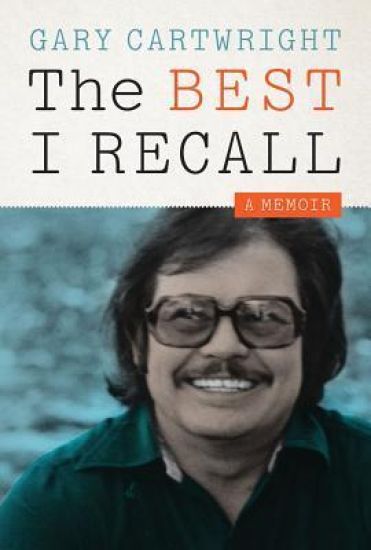
The Best I Recall

The Best I Recall

Gary Cartwright

University of Texas Press
2015
sidottu
Gary Cartwright is one of Texas’s legendary writers. In a career spanning nearly six decades, he has been a newspaper reporter, Senior Editor of Texas Monthly, and author of several acclaimed books, including Blood Will Tell, Confessions of a Washed-up Sportswriter, and Dirty Dealing. Cartwright was a finalist for a National Magazine Award for reporting excellence, and he has won several awards from the Texas Institute of Letters, including its most prestigious-the Lon Tinkle Award for lifetime achievement. His personal life has been as colorful and occasionally outrageous as any story he reported, and in this vivid, often hilarious, and sometimes deeply moving memoir, Cartwright tells the story of his writing career, tangled like a runaway vine with great friendships, love affairs, four marriages, four or five great dogs . . . looking always to explain, at least to himself, how the pattern probably makes a kind of perverted sense.Cartwright’s career began at the Fort Worth Star-Telegram and Fort Worth Press, among kindred spirits and fellow pranksters Edwin “Bud” Shrake and Dan Jenkins. He describes how the three rookie writers followed their mentor Blackie Sherrod to the Dallas Times Herald and the Dallas Morning News, becoming the “best staff of sportswriters anywhere, ever” and creating a new kind of sportswriting that “swept the country and became standard.” Cartwright recalls his twenty-five years at Texas Monthly, where he covered everything from true crime to notable Texans to Texas’s cultural oddities. Along the way, he tells lively stories about “rebelling against sobriety” in many forms, with friends and co-conspirators that included Willie Nelson, Ann Richards, Dennis Hopper, Willie Morris, Don Meredith, Jack Ruby, and countless others. A remarkable portrait of the writing life and Austin’s counterculture, The Best I Recall may skirt the line between fact and fiction, but it always tells the truth.
Toward a Theory of Cultural Linguistics

Toward a Theory of Cultural Linguistics

Gary B. Palmer

University of Texas Press
1996
pokkari
Imagery, broadly defined as all that people may construe in cognitive models pertaining to vision, hearing, touch, taste, smell, and feeling states, precedes and shapes human language. In this pathfinding book, Gary B. Palmer restores imagery to a central place in studies of language and culture by bringing together the insights of cognitive linguistics and anthropology to form a new theory of cultural linguistics.Palmer begins by showing how cognitive grammar complements the traditional anthropological approaches of Boasian linguistics, ethnosemantics, and the ethnography of speaking. He then applies his cultural theory to a wealth of case studies, including Bedouin lamentations, spatial organization in Coeur d'Alene place names and anatomical terms, Kuna narrative sequence, honorifics in Japanese sales language, the domain of ancestral spirits in Proto-Bantu noun-classifiers, Chinese counterfactuals, the non-arbitrariness of Spanish verb forms, and perspective schemas in English discourse.This pioneering approach suggests innovative solutions to old problems in anthropology and new directions for research. It will be important reading for everyone interested in anthropology, linguistics, cognitive science, and philosophy.
Law and Trade Issues of the Japanese Economy

Law and Trade Issues of the Japanese Economy

Gary R. Saxonhouse

University of Washington Press
1986
sidottu
This volume presents the most recent studies on Japanese and American trade, antitrust, patent, and other laws and their effects on bilateral economic relations. The studies included, written by Japanese and American officials, lawyers, and economists, will be of interest to policy makers, scholars, and corporations concerned with or interested in bilateral trade, technology transfer, investment, and joint ventures. The studies also offer analyses and insights significant in examining the legal-economic issues involved in economic relations among all advanced industrial nations.The three foci of the book are Japan's laws and their enforcement which affect the practices and behavior of individuals, firms, and the government within its domestic economy; the effects of Japanese laws and legal administrative practices on foreign access to Japanese markets; and the roles American laws play in bilateral economic relations. Each article deals with specific Japanese and American laws affecting bilateral economic relations. Together they succeed in substantively increasing our understanding of the issues involved and in identifying the changes that are called for that will reduce the bilateral economic conflicts which now mar the otherwise friendly relations between the two nations. Resolution of these bilateral legal-economic issues will be difficult to attain because they arise in part from differences in legal traditions and in the roles government plays in each economy. However, only through studies such as those offered in this volume, prepared by individuals directly involved i n enforcement of the laws discussed and by scholars specializing in the legal-economic issues affecting bilateral economic relations, can we gain knowledge and insights essential in taking the necessary steps to reduce bilateral economic conflicts.
Storied Lives

Storied Lives

Gary Y. Okihiro; Leslie A. Ito

University of Washington Press
1999
pokkari
During World War II over 5,500 young Japanese Americans left the concentration camps to which they had been confined with their families in order to attend college. Storied Lives describes—often in their own words—how nisei students found schools to attend outside the West Coast exclusion zone and the efforts of white Americans to help them. The book is concerned with the deeds of white and Japanese Americans in a mutual struggle against racism, and argues that Asian American studies—indeed, race relations as a whole—will benefit from an understanding not only of racism but also of its opposition, antiracism.To uncover this little known story, Gary Okihiro surveyed the colleges and universities the nisei attended, collected oral histories from nisei students and student relocation staff members, and examined the records of the National Japanese American Student Relocation Council and other materials.
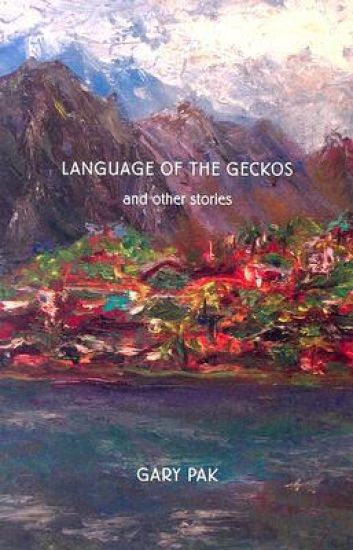
Language of the Geckos and Other Stories

Language of the Geckos and Other Stories

Gary Yong Ki Pak

University of Washington Press
2005
pokkari
Gary Pak has emerged as one of the most important Asian Hawaiian writers of our time. In this new collection, Pak expertly crafts a memorable cast of Hawai'i's Korean Americans, Chinese Americans, Japanese Americans, and Native Hawaiians, amplifying our cross-cultural understanding of Hawaiian life today.The nine short stories in Language of the Geckos and Other Stories paint an array of locals caught up in failed dreams of financial success and romantic fulfillment. Many of these stories deal with issues particular to Native Hawaiian perspectives, while others take slice-of-life glimpses at characters alienated in the land of their birth. Pak's sure narrative voice shifts deftly between his actors, shading the nuanced voices and interior lives of housewives, mechanics, cabdrivers, aging hippies, and desperate bargirls. Most of these characters speak in the lingua franca of the islands, a highly developed Creole that is commonly called Pidgin English. Also strongly present is the spiritual ambiance of the land.The worlds of Pak's Hawaiians, Asian locals, and the haoles sometimes intersect and collide and other times remain parallel, but each world is haunted by the past. Whether Pak evokes shadows of World War II, the Vietnam War, the radical sixties, or the military dictatorship of Chun Doo Hwan in Korea, the larger historical context looms ominously in the background as wounded memories of characters in despair.
Lead Pencil Studio

Lead Pencil Studio

Gary Sangster

University of Washington Press
2009
pokkari
This book documents a mammoth two-part installation and related drawings, videos, and sculpture by Annie Han and Daniel Mihalyo. Their work After transformed the Boise Art Museum's Sculpture Court and Garden into a construction / deconstruction zone. The terrain of the indoor work consisted of a gravel landscape and, floating above it, several fragments of a modern living room. Outside, a flourescent-lit billboard advertising the promise of modern living perched atop a pile of construction debris.Annie Han and Daniel Mihalyo are professional architects and artists who utilize unconventional architectural systems and new media to explore issues of spatial perception. They are the principals and founders of the Seattle architectural and installation art firm Lead Pencil Studio and the 2008 recipients of the Prix de Rome in architecture.
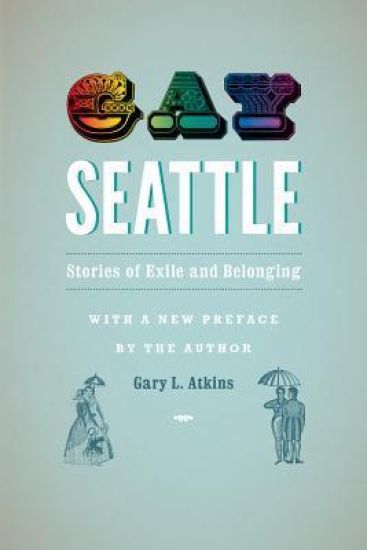
Gay Seattle

Gay Seattle

Gary L. Atkins

University of Washington Press
2013
pokkari
Winner of a 2004 Washington State Book AwardWinner of a 2004 Alpha Sigma Nu (ASN) Jesuit Book AwardIn 1893, the Washington State legislature quietly began passing a set of laws that essentially made homosexuality, and eventually even the discussion of homosexuality, a crime. A century later Mike Lowry became the first governor of the state to address the annual lesbian and gay pride rally in Seattle. Gay Seattle traces the evolution of Seattle's gay community in those 100 turbulent years, telling through a century of stories how gays and lesbians have sought to achieve a sense of belonging in Seattle.Gary Atkins recounts the demonization of gays by social crusaders around the turn of the century, the earliest prosecutions for sodomy, the official harassment and discrimination through most of the twentieth century, and the medical discrimination and commitment to mental hospitals that continued into the 1970s as homosexuality was diagnosed as a disease that could be "cured."Places of refuge from this imposed social exile were created in underground theater and dance clubs: the Gold Rush-era burlesque shows, modern drag theater, and in mid-century the emergence of openly gay bars, from the Casino to Shelley's Leg. Many of these were subjected to steady exploitation by corrupt police - until bar owner MacIver Wells and two Seattle Times reporters exposed the racket.The increasingly public presence of gays in Seattle was accompanied by the gradual coalescence of social services and self-help organizations such as the Dorian Society, gay businesses and advocacy groups including the Greater Seattle Business Association, and the stormy relationship between the Vatican, Seattle's Catholic hierarchy, and gay worshippers.Atkins' narrative reveals the complex and often frustrating process of claiming a civic life, showing how gays and lesbians have engaged in a multilayered struggle for social acceptance against the forces of state and city politics, the police, the media, and public opinion. The emergence of mainstream political activism in the 1970s, and ultimately the election of Cal Anderson and other openly gay officials to the state legislature and city council, were momentous events, yet shadowed by the devastating rise of AIDS and its effect on the homosexual community as a whole.These stories of exile and belonging draw on numerous original interviews as well as case studies of individuals and organizations that played important roles in the history of Seattle's gay and lesbian community. Collectively, they are a powerful testament to the endurance and fortitude of this minority community, revealing the ways a previously hidden sexual minority "comes out" as a people and establishes a public presence in the face of challenges from within and without.