Kirjojen hintavertailu. Mukana 11 699 587 kirjaa ja 12 kauppaa.

Kirjahaku

Etsi kirjoja tekijän nimen, kirjan nimen tai ISBN:n perusteella.

1000 tulosta hakusanalla Gene Gurney

Murine Homeobox Gene Control of Embryonic Patterning and Organogenesis
The first homeobox gene was molecular cloned nearly two decades ago, and since that time tremendous progress has been made in our understanding of the distribution of homeobox genes in the genomes of many animal species and the common functional role the encoded homeodomains play in cell-type specification, morphogenesis and development. The amino acid sequence of the homeodomain, as well as the presence of other conserved protein domains, has allowed the classification of homeodomain-containing proteins (homeoproteins) into over thirty separate families (e.g. Hox, Dlx, Msx, Otx, Hmx, Cdx etc.). In many cases a single gene has been shown to fully direct the morphogenesis and development of a complex tissue, organ or even an entire body segment. Yet how this "master" regulatory ability of homeoproteins functions at the molecular level to a large degree still remains a mystery, in part owing to our limited understanding of the nature of both homeoprotein transcriptional cofactors and even more elusively, the downstream targets of homeoprotein function. In the reviews presented here it is limited primarily to what has been learned in vertebrate systems, principally focusing on the mouse, owing to the strengths of the technical approaches currently existing in murine developmental genetics that are not yet available to the same degree in other vertebrate species. Despite this mammalian predilection, a common thread to each of these reviews is the underlying importance of what has been learned about homeoprotein function in other animal species, particularly arthropods like Drosophila.

The Math Gene

The Math Gene

Devlin Keith

Basic Books
2001
pokkari
Why is math so hard? And why, despite this difficulty, are some people so good at it? If there's some inborn capacity for mathematical thinking,which there must be, otherwise no one could do it ,why can't we all do it well? Keith Devlin has answers to all these difficult questions, and in giving them shows us how mathematical ability evolved, why it's a part of language ability, and how we can make better use of this innate talent.He also offers a breathtakingly new theory of language development,that language evolved in two stages, and its main purpose was not communication,to show that the ability to think mathematically arose out of the same symbol-manipulating ability that was so crucial to the emergence of true language. Why, then, can't we do math as well as we can speak? The answer, says Devlin, is that we can and do,we just don't recognize when we're using mathematical reasoning.
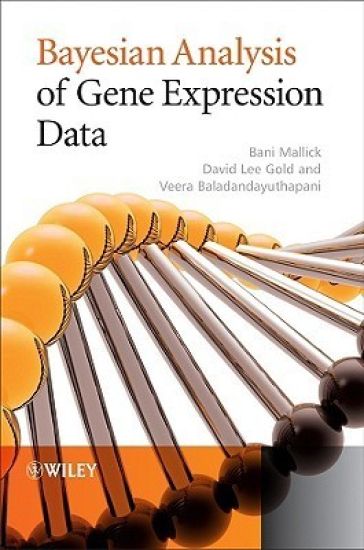
Bayesian Analysis of Gene Expression Data

Bayesian Analysis of Gene Expression Data

Bani K. Mallick; David Gold; Veera Baladandayuthapani

John Wiley Sons Inc
2009
sidottu
The field of high-throughput genetic experimentation is evolving rapidly, with the advent of new technologies and new venues for data mining. Bayesian methods play a role central to the future of data and knowledge integration in the field of Bioinformatics. This book is devoted exclusively to Bayesian methods of analysis for applications to high-throughput gene expression data, exploring the relevant methods that are changing Bioinformatics. Case studies, illustrating Bayesian analyses of public gene expression data, provide the backdrop for students to develop analytical skills, while the more experienced readers will find the review of advanced methods challenging and attainable. This book: Introduces the fundamentals in Bayesian methods of analysis for applications to high-throughput gene expression data.Provides an extensive review of Bayesian analysis and advanced topics for Bioinformatics, including examples that extensively detail the necessary applications.Accompanied by website featuring datasets, exercises and solutions. Bayesian Analysis of Gene Expression Data offers a unique introduction to both Bayesian analysis and gene expression, aimed at graduate students in Statistics, Biomedical Engineers, Computer Scientists, Biostatisticians, Statistical Geneticists, Computational Biologists, applied Mathematicians and Medical consultants working in genomics. Bioinformatics researchers from many fields will find much value in this book.
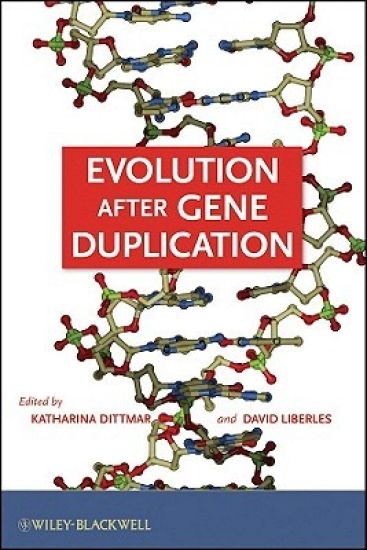
Evolution after Gene Duplication
Gene duplication has long been believed to have played a major role in the rise of biological novelty through evolution of new function and gene expression patterns. The first book to examine gene duplication across all levels of biological organization, Evolution after Gene Duplication presents a comprehensive picture of the mechanistic process by which gene duplication may have played a role in generating biodiversity. Key Features: Explores comparative genomics, genome evolution studies and analysis of multi-gene families such as Hox, globins, olfactory receptors and MHC (immune system)A complete post-genome treatment of the topic originally covered by Ohno's 1970 classic, this volume extends coverage to include the fate of associated regulatory pathwaysTaps the significant increase in multi-gene family data that has resulted from comparative genomicsComprehensive coverage that includes opposing theoretical viewpoints, comparative genomics data, theoretical and empirical evidence and the role of bioinformatics in the study of gene duplication This up-to-date overview of theory and mathematical models along with practical examples is suitable for scientists across various levels of biology as well as instructors and graduate students.
mRNA Metabolism & Post-Transcriptional Gene Regulation
mRNA METABOLISM & POST-TRANSCRIPTIONAL GENE REGULATIONEdited by Joe B. Harford and David R. MorrisGene expression is a process that begins with the transcription of DNA to an RNA messenger (mRNA), which is then translated into a protein. Historically, attention has been focused on the regulation of RNA synthesis (transcription); however, there is a growing recognition of and appreciation for the importance of the many regulatory mechanisms that take place after RNA synthesis has been completed.mRNA Metabolism and Post-Transcriptional Gene Regulation is the first comprehensive overview of the various modes of gene regulation that exist post-transcriptionally. Collecting studies by some of the top researchers in the field, this volume provides both an up-to-date review of the complex "life" of an mRNA molecule and an introduction to current work on the diversity of mechanisms of post-transcriptional reactions.Topics covered include: *RNA structure *Mammalian RNA editing *RNA export from the nucleus *The fundamentals of translation initiation *Control of mRNA decay in plants *mRNA metabolism and cancer *Control of mRNA stability during herpes simplex virus infection *Regulation of mRNA expression in HIV-1 and other complex retroviruses *Nucleases *RNA localizationA timely contribution to the understanding of genetic regulatory mechanisms, mRNA Metabolism and Post-Transcriptional Gene Regulation provides a basis from which potential therapeutic strategies may be developed. This book will be of vital interest to cell and molecular biologists at all levels, from graduate students to senior investigators, clinical researchers, and professionals in the pharmaceutical and biotechnology industries.
Stem Cell Biology and Gene Therapy
STEM CELL BIOLOGY AND GENE THERAPYEdited by Peter J. Quesenberry, Gary S. Stein, Bernard Forget, and Sherman WeissmanAdvances in molecular genetics and recombinant DNA technology have ushered in a new era in medical therapeutic research. New insights into the molecular basis of human disease and the role played by biological regulatory mechanisms have precipitated tremendous drug development efforts backed by intensive research into human gene therapy worldwide.Stem Cell Biology and Gene Therapy is the first book to thoroughly cover major advances in the field and their applications to novel molecular therapies.This self-contained volume integrates biological and clinical components of stem cell biology, examines some of the most difficult aspects of gene therapy, and provides a systematic review of advanced gene modification techniques. Twenty essays by leading researchers address some of the most compelling topics in contemporary medical research, including: *Fundamental regulatory mechanisms that operate in stem cells *Stem cells from a therapeutic perspective, including preparations of stem cells and their therapeutic potential as vehicles for gene therapy *Delivery systems for therapeutic genes, including an overview of the most promising vectors *Clinical applications for gene therapy, covering a broad range of diseases such as hemophilia, cancers, neurological disease, and moreComplete with illustrations and real-world examples of a variety of disorders, Stem Cell Biology and Gene Therapy is essential for researchers in gene therapy and members of the biotechnology industry who are developing human molecular therapies for commercial use. It is also an important reference for molecular biologists, cell biologists, immunologists, molecular geneticists, hematologists, cancer researchers, biochemists, and anyone working in internal medicine.
Analyzing Microarray Gene Expression Data

Analyzing Microarray Gene Expression Data

Geoffrey J. McLachlan; Kim-Anh Do; Christophe Ambroise

John Wiley Sons Inc
2004
sidottu
A multi-discipline, hands-on guide to microarray analysis of biological processes Analyzing Microarray Gene Expression Data provides a comprehensive review of available methodologies for the analysis of data derived from the latest DNA microarray technologies. Designed for biostatisticians entering the field of microarray analysis as well as biologists seeking to more effectively analyze their own experimental data, the text features a unique interdisciplinary approach and a combined academic and practical perspective that offers readers the most complete and applied coverage of the subject matter to date. Following a basic overview of the biological and technical principles behind microarray experimentation, the text provides a look at some of the most effective tools and procedures for achieving optimum reliability and reproducibility of research results, including: An in-depth account of the detection of genes that are differentially expressed across a number of classes of tissuesExtensive coverage of both cluster analysis and discriminant analysis of microarray data and the growing applications of both methodologiesA model-based approach to cluster analysis, with emphasis on the use of the EMMIX-GENE procedure for the clustering of tissue samplesThe latest data cleaning and normalization proceduresThe uses of microarray expression data for providing important prognostic information on the outcome of disease
Understanding DNA and Gene Cloning

Understanding DNA and Gene Cloning

Karl Drlica

John Wiley Sons Inc
2006
nidottu
Do you realize how much impact DNA technology has on your life today? Registering your child's DNA with the police, bold new medical cures, the perfect tomato, gene cloning and DNA manipulation are no longer remote events that will have impact in your life - they are today's headlines! In this highly acclaimed guide, Karl Drlica fully explains the basis of the ongoing genetic revolution. He guides you through the science and technology you need to understand the issues and make informed decisions. This text can be used either as a main text in a course where instructors want to use a thematic, case study approach to biology, a non-majors genes or genomics course, or as a supplement for Introductory Biology.
The Genial Gene

The Genial Gene

Joan Roughgarden

University of California Press
2009
sidottu
Are selfishness and individuality - rather than kindness and cooperation - basic to biological nature? Does a 'selfish gene' create universal sexual conflict? In "The Genial Gene", Joan Roughgarden forcefully rejects these and other ideas that have come to dominate the study of animal evolution. Building on her brilliant and innovative book Evolution's Rainbow, in which she challenged accepted wisdom about gender identity and sexual orientation, Roughgarden upends the notion of the selfish gene and the theory of sexual selection and develops a compelling and controversial alternative theory called social selection. This scientifically rigorous, model-based challenge to an important tenet of neo-Darwinian theory emphasizes cooperation, elucidates the factors that contribute to evolutionary success in a gene pool or animal social system, and vigorously demonstrates that to identify Darwinism with selfishness and individuality misrepresents the facts of life as we now know them.
The Genial Gene

The Genial Gene

Joan Roughgarden

University of California Press
2009
pokkari
Are selfishness and individuality - rather than kindness and cooperation - basic to biological nature? Does a 'selfish gene' create universal sexual conflict? In "The Genial Gene", Joan Roughgarden forcefully rejects these and other ideas that have come to dominate the study of animal evolution. Building on her brilliant and innovative book "Evolution's Rainbow", in which she challenged accepted wisdom about gender identity and sexual orientation, Roughgarden upends the notion of the selfish gene and the theory of sexual selection and develops a compelling and controversial alternative theory called social selection. This scientifically rigorous, model-based challenge to an important tenet of neo-Darwinian theory emphasizes cooperation, elucidates the factors that contribute to evolutionary success in a gene pool or animal social system, and vigorously demonstrates that to identify Darwinism with selfishness and individuality misrepresents the facts of life as we now know them.
The Concept of the Gene in Development and Evolution
Advances in molecular biological research in the latter half of the twentieth century have made the story of the gene vastly complicated: the more we learn about genes, the less sure we are of what a gene really is. Knowledge about the structure and functioning of genes abounds, but the gene has also become curiously intangible. This collection of essays renews the question: what are genes? Philosophers, historians and working scientists re-evaluate the question in this volume, treating the gene as a focal point of interdisciplinary and international research. It will be of interest to professionals and students in the philosophy and history of science, genetics and molecular biology.
DNA Microarrays and Gene Expression

DNA Microarrays and Gene Expression

Pierre Baldi; G. Wesley Hatfield

Cambridge University Press
2011
pokkari
Massive data acquisition technologies, such as genome sequencing, high-throughput drug screening, and DNA arrays are in the process of revolutionizing biology and medicine. Using the mRNA of a given cell, at a given time, under a given set of conditions, DNA microarrays can provide a snapshot of the level of expression of all the genes in the cell. Such snapshots can be used to study fundamental biological phenomena such as development or evolution, to determine the function of new genes, to infer the role individual genes or groups of genes may play in diseases, and to monitor the effect of drugs and other compounds on gene expression. Originally published in 2002, this inter-disciplinary introduction to DNA arrays will be of value to anyone with an a interest in this powerful technology.
Methods for Computational Gene Prediction

Methods for Computational Gene Prediction

William H. Majoros

Cambridge University Press
2007
pokkari
Inferring the precise locations and splicing patterns of genes in DNA is a difficult but important task, with broad applications to biomedicine. The mathematical and statistical techniques that have been applied to this problem are surveyed and organized into a logical framework based on the theory of parsing. Both established approaches and methods at the forefront of current research are discussed. Numerous case studies of existing software systems are provided, in addition to detailed examples that work through the actual implementation of effective gene-predictors using hidden Markov models and other machine-learning techniques. Background material on probability theory, discrete mathematics, computer science, and molecular biology is provided, making the book accessible to students and researchers from across the life and computational sciences. This book is ideal for use in a first course in bioinformatics at graduate or advanced undergraduate level, and for anyone wanting to keep pace with this rapidly-advancing field.
The Concept of the Gene in Development and Evolution
Advances in molecular biological research in the last forty years have made the story of the gene vastly complicated: the more we learn about genes, the less sure we are of what a gene really is. Knowledge about the structure and functioning of genes abounds, but the gene has also become curiously intangible. This collection of essays renews the question: what are genes? Philosophers, historians, and working scientists re-evaluate the question in this volume, treating the gene as a focal point of interdisciplinary and international research. This book is unique in that it is the first interdisciplinary volume solely devoted to the quest for the gene. It will be of interest to professionals and students in the philosophy and history of science, genetics, and molecular biology.
Anatomy of Gene Regulation

Anatomy of Gene Regulation

Panagiotis A. Tsonis

Cambridge University Press
2003
sidottu
No longer simple line drawings on a page, molecular structures can now be viewed in full-figured glory, often in color and even with interactive possibilities. Anatomy of Gene Regulation is the first book to present the parts and processes of gene regulation at the three-dimensional level. Vivid structures of nucleic acids and their companion proteins are revealed in full-color, three-dimensional form. Beginning with a general introduction to three-dimensional structures, the book looks at the organization of the genome, the structure of DNA, DNA replication and transcription, splicing, protein synthesis, and ultimate protein death. Throughout, the text employs a discussion of genetics and structural mechanics. The concise and unique synthesis of information will offer insight into gene regulation, and into the development of methods to interfere with regulation at diseased states. This textbook and its accompanying web site are appropriate for both undergraduate and graduate students in genetics, molecular biology, structural biology, and biochemistry courses.
Methods for Computational Gene Prediction

Methods for Computational Gene Prediction

William H. Majoros

Cambridge University Press
2007
sidottu
Inferring the precise locations and splicing patterns of genes in DNA is a difficult but important task, with broad applications to biomedicine. The mathematical and statistical techniques that have been applied to this problem are surveyed and organized into a logical framework based on the theory of parsing. Both established approaches and methods at the forefront of current research are discussed. Numerous case studies of existing software systems are provided, in addition to detailed examples that work through the actual implementation of effective gene-predictors using hidden Markov models and other machine-learning techniques. Background material on probability theory, discrete mathematics, computer science, and molecular biology is provided, making the book accessible to students and researchers from across the life and computational sciences. This book is ideal for use in a first course in bioinformatics at graduate or advanced undergraduate level, and for anyone wanting to keep pace with this rapidly-advancing field.
Tyranny of the Gene

Tyranny of the Gene

James Tabery

ALFRED A. KNOPF
2023
sidottu
A revelatory account of how power, politics, and greed have placed the unfulfilled promise of "personalized medicine" at the center of American medicine The United States is embarking on a medical revolution. Supporters of personalized or precision medicine--the tailoring of health care to our genomes--have promised to usher in a new era of miracle cures. Advocates of this gene-guided health-care practice foresee a future where skyrocketing costs can be curbed by customization and unjust disparities are vanquished by biomedical breakthroughs. Progress, however, has come slowly, and with a price too high for the average citizen. In Tyranny of the Gene, James Tabery exposes the origin story of personalized medicine--essentially a marketing idea dreamed up by pharmaceutical executives--and traces its path from the Human Genome Project to the present, revealing how politicians, influential federal scientists, biotech companies, and drug giants all rallied behind the genetic hype. The result is a medical revolution that privileges the few at the expense of health care that benefits us all. Now American health care, driven by the commercialization of biomedical research, is shifting focus away from the study of the social and environmental determinants of health, such as access to fresh and nutritious food, exposure to toxic chemicals, and stress caused by financial insecurity. Instead, it is increasingly investing in "miracle pills" for leukemia that would bankrupt most users, genetic studies of minoritized populations that ignore structural racism and walk dangerously close to eugenic conclusions, and oncology centers that advertise the perfect gene-drug match, igniting a patient's hope, and often dashing it later.Tyranny of the Gene sounds a warning cry about the current trajectory of health care and charts a path to a more equitable alternative.
Muscle-directed Gene and Enzyme Replacement Therapies for Glycogen Storage Disorder Type II Pompe Disease
Dissertation Discovery Company and University of Florida are dedicated to making scholarly works more discoverable and accessible throughout the world. This dissertation, "Muscle-directed Gene and Enzyme Replacement Therapies for Glycogen Storage Disorder Type II Pompe Disease" by Thomas Joseph Fraites Jr, was obtained from University of Florida and is being sold with permission from the author. A digital copy of this work may also be found in the university's institutional repository, IR@UF. The content of this dissertation has not been altered in any way. We have altered the formatting in order to facilitate the ease of printing and reading of the dissertation.
Muscle-directed Gene and Enzyme Replacement Therapies for Glycogen Storage Disorder Type II Pompe Disease
Dissertation Discovery Company and University of Florida are dedicated to making scholarly works more discoverable and accessible throughout the world. This dissertation, "Muscle-directed Gene and Enzyme Replacement Therapies for Glycogen Storage Disorder Type II Pompe Disease" by Thomas Joseph Fraites Jr, was obtained from University of Florida and is being sold with permission from the author. A digital copy of this work may also be found in the university's institutional repository, IR@UF. The content of this dissertation has not been altered in any way. We have altered the formatting in order to facilitate the ease of printing and reading of the dissertation.