Facebook, PayPal, Alibaba, Uber—these companies have upended entire industries by harnessing a single phenomenon: the platform business model. Platform Revolution delivers the first comprehensive analysis of how platforms match producers and consumers in a multi-sided marketplace, unlocking hidden resources and creating new forms of value. Platform Revolution explores the what, how and why of this revolution and provides the first “owner’s manual” for creating a platform marketplace. It provides the essential guide to unlocking the potential of an economic landscape transformed.
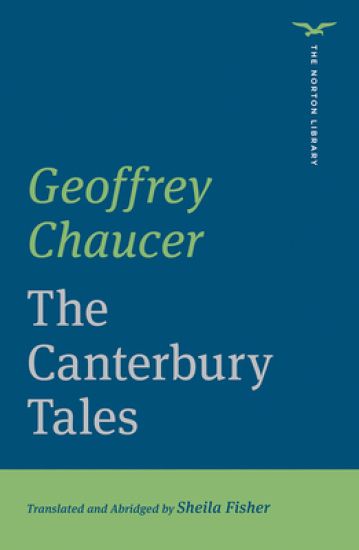
Preserving Chaucer’s rhyme and metre, Sheila Fisher’s vivid, lively and readable translation makes the poetic artistry of The Canterbury Tales accessible to a contemporary ear and invites readers, even those who have read the work before in Middle English, to a new appreciation of its delightful stories and unforgettable, surprisingly modern characters.
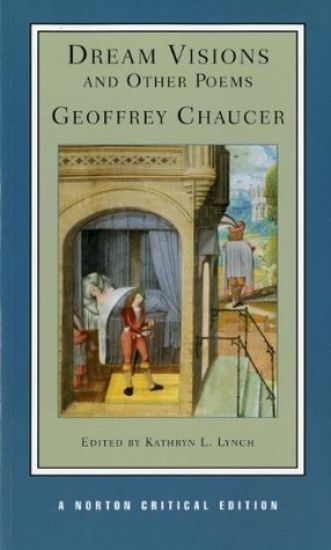
The texts are extensively glossed and are accompanied by individual introductions and explanatory annotations. A lightly regularized system of spellings has been adopted. No prior knowledge of Chaucer is assumed. “Contexts” connects the poems to their classical and medieval foundations and includes works by Virgil, Ovid, Cicero, Boethius, Dante, and Boccaccio, among others. From the wealth of scholarly work available, the editor has chosen for “Criticism” six essays that address the poems’ central themes. Contributors include Charles Muscatine, A. C. Spearing, R. T. Lenaghan, Richard Firth Green, Elaine Tuttle Hansen, and Steven Kruger. A Chronology and Selected Bibliography are also included.
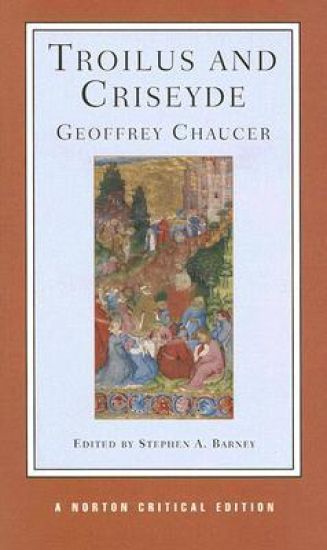
The editor’s lucid introduction, marginal glosses, and explanatory annotations make Troilus and Criseyde easily accessible to students with no prior knowledge of Chaucer or Middle English. Also included is Robert Henryson’s Testament of Cresseid, the poignant "sequel" to Troilus and Criseyde from fifteenth-century Scotland. "Criticism" includes ten essays by a diverse group of distinguished Chaucerians, among them C. S. Lewis, E. Talbot Donaldson, Karla Taylor, Lee Patterson, and Jill Mann, that illuminate the major scholarly issues raised by this complex and challenging poem. A Glossary and Selected Bibliography are also included
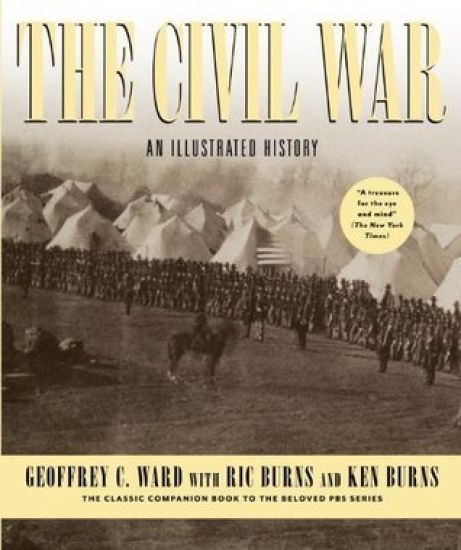
"A treasure for the eye and mind" (The New York Times) about the greatest war in American history--and a magnificent companion volume to the celebrated PBS television series by one of our most treasured filmmakers. - With more than 500 illustrations: rare Civil War photographs--many never before published--as well as paintings, lithographs, and maps reproduced in full color. It was the greatest war in American history. It was waged in 10,000 places--from Valverde, New Mexico, and Tullahoma, Tennessee, to St. Albans, Vermont, and Fernandina on the Florida coast. More than 3 million Americans fought in it and more than 600,000 men died in it. Not only the immensity of the cataclysm but the new weapons, the new standards of generalship, and the new strategies of destruction--together with the birth of photography--were to make the Civil War an event present ever since in the American consciousness. Thousands of books have been written about it. Yet there has never been a history of the Civil War quite like this one. A wealth of documentary illustrations and a narrative alive with original and energetic scholarship combine to present both the grand sweep of events and the minutest of human details. Here are the crucial events of the war: the firing of the first shots at Fort Sumter; the battles of Shiloh, Chancellorsville, and Gettysburg; the siege of Vicksburg; Sherman's dramatic march to the sea; the surrender at Appomattox. Here are the superb portraits of the key figures: Abraham Lincoln, claiming for the presidency almost autocratic power in order to preserve the Union; the austere Jefferson Davis, whose government disappeared almost before it could be formed; Robert E. Lee and Ulysses S. Grant, seasoned generals of fierce brilliance and reckless determination. Here is the America in which the war was fought: The Civil War is not simply the story of great battles and great generals; it is also an elaborate portrait of the American people caught up in the turbulence of the times. An additional resonance is provided by four essays by prominent Civil War historians, and Shelby Foote talks to filmmaker Ken Burns about wartime life on the battlefield and at home.
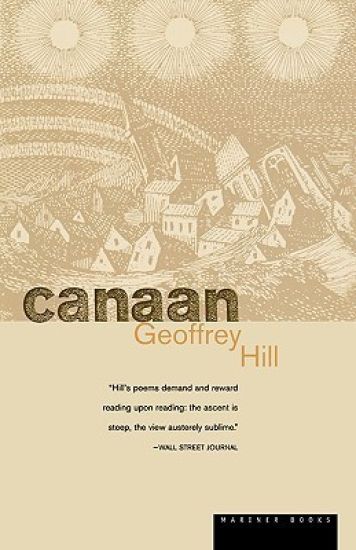
Here is public poetry of uncommon moral urgency: it bears witness to the sufferings of the innocent at the hands of history and to the martyrdom of those who have dared look history in the eye. "Rich, quarrelsome...handsome and brutish...Hill's poetry is the major achievement of late-twentieth-century verse," says The New Criterion. "Canaan is one of the few serious books we will have to mark the millennium."
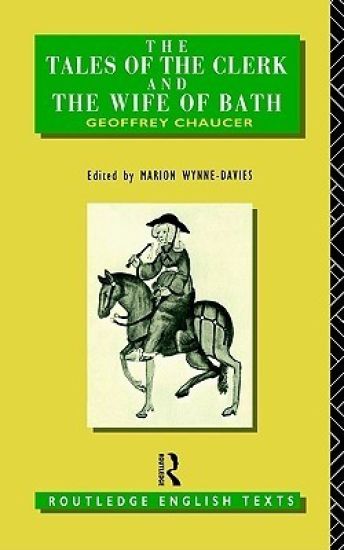
The first feminist edition of these two tales. Wynne-Davies addresses the social and cultural context of the poems' production in a critical commentary to the texts. Also includes a line by line gloss and a historical introduction.
Coalitional behaviour is central to the Italian system of government but has been largely neglected by research. As a result, coalitions in post-war Italy have been viewed as simply unstable, short-lived and incohesive. In this book, the author corrects this one-sidedness by analysing Italian coalition politics as a continuous and dynamic process. His comprehensive, interpretative approach takes account of other new developments in coalition studies and relates his subject both to the literature on Italian politics and to the comparative study of party systems in liberal democracies. An introductory section places Italian coalitional behaviour in a theoretical and comparative context. This inductive framework is then used as a reference for examining the historical, institutional, motivational, internal, socio-political andenvironmental dimensions of the phenomenon.
For the many categories of EFL teachers throughout the world, this book examines the main principles which concern them. By drawing upon their experience the authors have indicated a modern and practical approach.
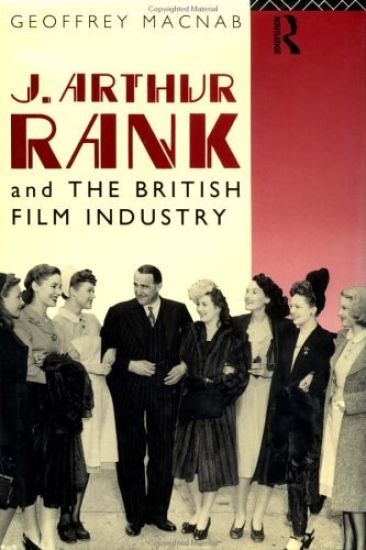
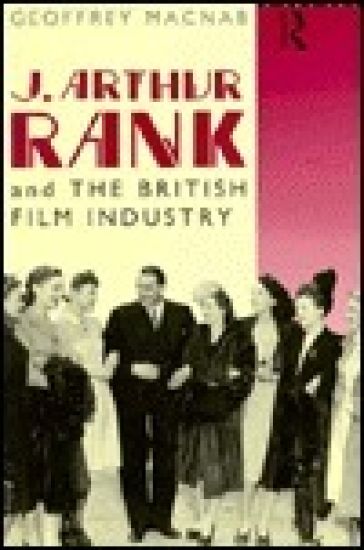
Presiding over the "golden era" of the British Film Industry from the mid to late 1940s, J. Arthur Rank financed movies such as Oliver Twist, The Red Shoes, Brief Encounter, Caesar and Cleopatra and Black Narcissus. Never before, and never since, has the industry risen to such heights.J. Arthur Rank charts every aspect of the robust film culture that Rank helped to create. Having started out with relatively little knowledge of the cinema, Rank's sponsorship was to bring about astounding progress within the industry, and by establishing an organization comparable in size to any of the major Hollywood studios, Rank briefly managed to reconcile and consolidate the competing demands of "art" and "business" - an achievement very much absent from today's diminished and fragmented film industry. Macnab goes on to explain the eventual collapse of the Rank experiment amidst the economic and political maelstrom of post-war Britain, highlighting the problems still facing the industry today. By meshing archival research with interviews with Rank's contemporaries and members of his family, this definitive study firmly restores Rank to his rightful place at the hub of British film history.
Since the fall of the Berlin Wall we have been told that no alternative to Western capitalism is possible or desirable. This book challenges this view with two arguments. First, the above premise ignores the enormous variety within capitalism itself. Second, there are enormous forces of transformation within contemporary capitalisms, associated with moves towards a more knowledge-intensive economy. These forces challenge the traditional bases of contract and employment, and could lead to a quite different socio-economic system. Without proposing a static blueprint, this book explores this possible scenario.
This is the first book to take nursing ethics beyond stock 'moral concepts' to a critical examination of the fundamental assumptions underlying the very nature of nursing. It takes as its point of departure the difficulties nurses experience practising within the confines of a bioethical model of health and illness and a hierarchical, technocratic health care system. The contributors go on to deal openly and honestly with controversial issues faced by nurses, such as euthanasia and HIV.
This is the first book to take nursing ethics beyond stock 'moral concepts' to a critical examination of the fundamental assumptions underlying the very nature of nursing. It takes as its point of departure the difficulties nurses experience practising within the confines of a bioethical model of health and illness and a hierarchical, technocratic health care system. The contributors go on to deal openly and honestly with controversial issues faced by nurses, such as euthanasia and HIV.
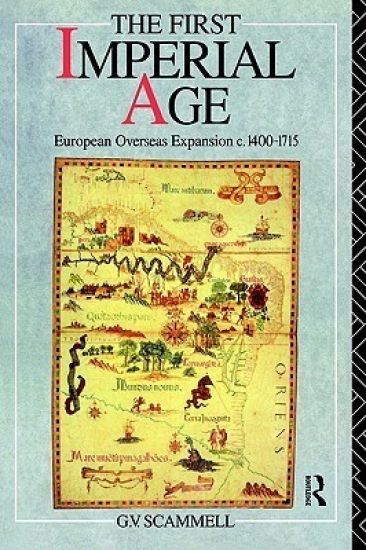
The First Imperial Age explores with subtlety and vigour the origins of Europe's rise to world hegemony in the early modern period, in a survey which brings together a huge range of Geoffrey Scammell's own and other recent research. After a slow start in the 1400s, the pace of European exploration and discovery quickened dramatically. By the end of the period, Europeans in pursuit of Asia and the opportunities encountered en route had determined the outlines of the Africa land mass, discovered and partly subjugated the Americas, opened a sea route to the Far East and established themselves in the great maritime economy of Asia. Europe became a world trader; indigenous people the world over were converted to Christianity; colonies became matters of dispute between European states, and although European knowledge of the worlds they discovered were largely confined to their coastlines, they know enought to feel thay had at last surpassed the deeds of antiquity. Geofrrey Scammell's detached and sceptical view highlights the ambiguities inherent in these triumphs: Europe rose to wealth and power at painful cost to much of the rest of the world, and set in train an enduring legacy of racial tension. The book takes an original approach to its subject. After outlining the salient features of the story, it is organised around broad themes: the reasons for Europe's expansion, how Europeaans could establish themselves in some part of the world and not others, the ways in which they exploited their new possessions; the nature of colonial societies; the influence of Europe on empire; and the nature of imperial experience.
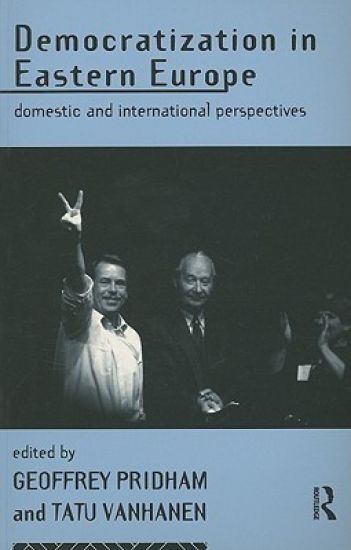
This book is an attempt to tackle the problem of democratization in East-Central Europe from a variety of theoretical perspectives. Its contributors look at the process of change within a comparative framework, discussing the emergence of multi-party and new electoral systems, comparing democratic transition in other parts of the world with that of Eastern Europe and analysing that region's relationship with the Soviet Union.Democratization in Eastern Europe will be indespensable to upper-level students of East European Politics, and will also be useful for those with more comparative and theoretical interests.
This book is an attempt to tackle the problem of democratization in East-Central Europe from a variety of theoretical perspectives. Its contributors look at the process of change within a comparative framework, discussing the emergence of multi-party and new electoral systems, comparing democratic transition in other parts of the world with that of Eastern Europe and analysing that region's relationship with the Soviet Union.Democratization in Eastern Europe will be indespensable to upper-level students of East European Politics, and will also be useful for those with more comparative and theoretical interests.
Presiding over the "golden era" of the British Film Industry from the mid to late 1940s, J. Arthur Rank financed movies such as Oliver Twist, The Red Shoes, Brief Encounter, Caesar and Cleopatra and Black Narcissus. Never before, and never since, has the industry risen to such heights.J. Arthur Rank charts every aspect of the robust film culture that Rank helped to create. Having started out with relatively little knowledge of the cinema, Rank's sponsorship was to bring about astounding progress within the industry, and by establishing an organization comparable in size to any of the major Hollywood studios, Rank briefly managed to reconcile and consolidate the competing demands of "art" and "business" - an achievement very much absent from today's diminished and fragmented film industry. Macnab goes on to explain the eventual collapse of the Rank experiment amidst the economic and political maelstrom of post-war Britain, highlighting the problems still facing the industry today. By meshing archival research with interviews with Rank's contemporaries and members of his family, this definitive study firmly restores Rank to his rightful place at the hub of British film history.
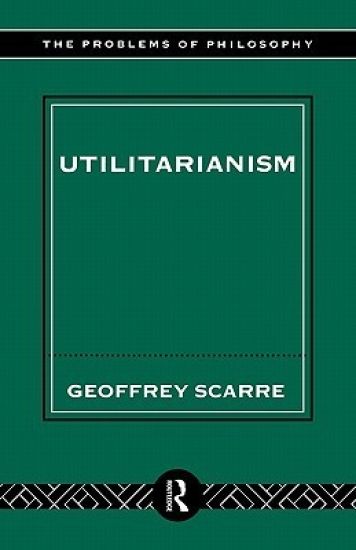
Surveying the historical development and the present condition of utilitarian ethics, Geoffrey Scarre examines the major philosophers from Lao Tzu in the fifth century BC to Richard Hare in the twentieth.Utilitarianism traces the 'doctrine of utility' from the moralists of the ancient world, through the Enlightenment and Victorian utilitarianism up to the lively debate of the present day. Utilitarianism today faces challenges on several fronts: it cannot warrant the drawing of adequate protective boundaries around the essential interests of individuals, and it does not allow them the space to pursue the personal concerns which give meaning to their lives. Geoffrey Scarre considers these and other charges, and concludes that whilst utilitarianism may not be a faultless moral doctrine, its positions are relevant, and significant today. Written with undergraduates in mind, this is an ideal course book for those studying and those teaching moral philosophy.