Kirjojen hintavertailu. Mukana 11 699 587 kirjaa ja 12 kauppaa.

Kirjahaku

Etsi kirjoja tekijän nimen, kirjan nimen tai ISBN:n perusteella.

1000 tulosta hakusanalla Gregory Gaines

LEGO® Minifigure A Visual History New Edition

LEGO® Minifigure A Visual History New Edition

Gregory Farshtey; Daniel Lipkowitz; Simon Hugo

DK Children
2020
sidottu
Celebrate the epic journey of the LEGO® minifigure. Features an orange spaceman minifigure!Enter the world of minifigures with this fully updated edition. The first minifigure was created in 1978, and today the entire minifigure population could circle the globe more than five times!Starring more than 2,000 of the most popular and rarest minifigures from the LEGO® Minifigure Series and themes including LEGO® NINJAGO®, THE LEGO® MOVIE™, LEGO® Star Wars™, LEGO® City, LEGO® Harry Potter™, and many more.From astronauts and vampires to Super Heroes and movie characters, feast your eyes on the most awesome minifigures of every decade!©2020 The LEGO Group.

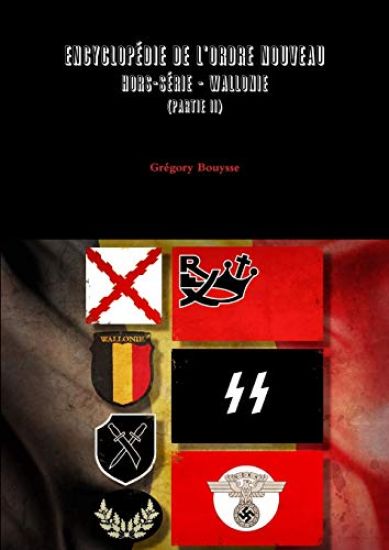
Encyclopedia of the New Order - Special issue - French in German uniform Part I
First volume of an encyclopedia of the French in German uniform. Part One is dedicated to the 176 French officers of the Waffen-SS (and at the end the Germans attached to the Charlemagne SS Division), classified by origin (Sturmbrigade Frankreich, LVF, Milice Fran aise, Kriegsmarine). 340 pages, with more than 240 photographs! A totally new amount of work on this topic, for the first time in English. PS: At least two other volumes will follow (and two others about the Officers, NCO's and other soldiers of the Legion Wallonie).
Harbinger

Harbinger

Gregory Figg

Lulu.com
2018
pokkari
London burns after disaster at the Tower. Paris starves from a harvest left untouched in the fields. Wales stirs with rebellion on both sides. In the far north, an expedition to recover Templar treasure is frustrated, and the woman leading it rallies her comrades to overcome failure at any cost. With barely a moment for the dust to settle between each upheaval, personal and political ambitions come into sharper focus as society strains under fear and disorder. At the centre of it all is a relic of inexplicable powers, driving conflict of all kinds at all turns. The fires of unrest are fanned across Christendom, whilst ominous rumours swirl in its farthest reaches. Will Europe ride out its present turmoil and discover the truth behind the Godstone, or is a storm breaking on the horizon?
Homer's Text and Language

Homer's Text and Language

Gregory Nagy

University of Illinois Press
2004
sidottu
As Homer remains an indispensable figure in the canons of world literature, interpreting the Homeric text is a challenging and high stakes enterprise. There are untold numbers of variations, imitations, alternate translations, and adaptations of the Iliad and Odyssey, making it difficult to establish what, exactly, the epics were. Gregory Nagy's essays have one central aim: to show how the text and language of Homer derive from an oral poetic system. In Homeric studies, there has been an ongoing debate centering on different ways to establish the text of Homer and the different ways to appreciate the poetry created in the language of Homer. Gregory Nagy, a lifelong Homer scholar, takes a stand in the midst of this debate. He presents an overview of millennia of scholarly engagement with Homer's poetry, shows the different editorial principles that have been applied to the texts, and evaluates their impact.
Beyond the Black Power Salute

Beyond the Black Power Salute

Gregory J. Kaliss

UNIVERSITY OF ILLINOIS PRESS
2023
sidottu
Unequal opportunity sparked Jim Brown’s endeavors to encourage Black development while Billie Jean King fought so that women tennis players could earn more money and enjoy greater freedom. Gregory J. Kaliss examines these events and others to guide readers through the unprecedented wave of protest that swept sports in the 1960s and 1970s. The little-known story of the University of Wyoming football players suspended for their activism highlights an analysis of protests by college athletes. The 1971 Muhammad Ali–Joe Frazier clash provides a high-profile example of the Black male athlete’s effort to redefine Black masculinity. An in-depth look at the American Basketball Association reveals a league that put Black culture front and center with its style of play and shows how the ABA influenced the development of hip-hop. As Kaliss describes the breakthroughs achieved by these athletes, he also explores the barriers that remained--and in some cases remain today.
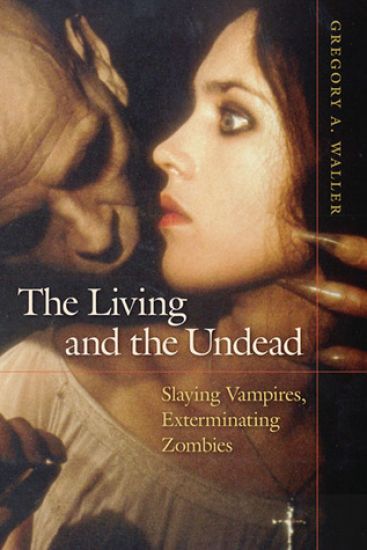
The Living and the Undead

The Living and the Undead

Gregory A. Waller

University of Illinois Press
2010
nidottu
With a legacy stretching back into legend and folklore, the vampire in all its guises haunts the film and fiction of the twentieth century and remains the most enduring of all the monstrous threats that roam the landscapes of horror. In The Living and the Undead, Gregory A. Waller shows why this creature continues to fascinate us and why every generation reshapes the story of the violent confrontation between the living and the undead to fit new times. Examining a broad range of novels, stories, plays, films, and made-for-television movies, Waller focuses upon a series of interrelated texts: Bram Stoker's Dracula (1897); several film adaptations of Stoker's novel; F. W. Murnau's Nosferatu, A Symphony of Horror (1922); Richard Matheson's I Am Legend (1954); Stephen King's 'Salem's Lot (1975); Werner Herzog's Nosferatu the Vampyre (1979); and George Romero's Night of the Living Dead (1968) and Dawn of the Dead (1979). All of these works, Waller argues, speak to our understanding and fear of evil and chaos, of desire and egotism, of slavish dependence and masterful control. This paperback edition of The Living and the Undead features a new preface in which Waller positions his analysis in relation to the explosion of vampire and zombie films, fiction, and criticism in the past twenty-five years.
Beyond the Black Power Salute

Beyond the Black Power Salute

Gregory J. Kaliss

UNIVERSITY OF ILLINOIS PRESS
2023
nidottu
Unequal opportunity sparked Jim Brown’s endeavors to encourage Black development while Billie Jean King fought so that women tennis players could earn more money and enjoy greater freedom. Gregory J. Kaliss examines these events and others to guide readers through the unprecedented wave of protest that swept sports in the 1960s and 1970s. The little-known story of the University of Wyoming football players suspended for their activism highlights an analysis of protests by college athletes. The 1971 Muhammad Ali–Joe Frazier clash provides a high-profile example of the Black male athlete’s effort to redefine Black masculinity. An in-depth look at the American Basketball Association reveals a league that put Black culture front and center with its style of play and shows how the ABA influenced the development of hip-hop. As Kaliss describes the breakthroughs achieved by these athletes, he also explores the barriers that remained--and in some cases remain today.
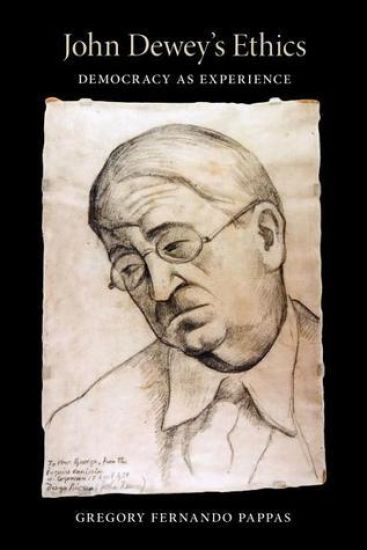
John Dewey's Ethics

John Dewey's Ethics

Gregory Pappas

Indiana University Press
2008
pokkari
John Dewey, widely known as "America's philosopher," provided important insights into education and political philosophy, but surprisingly never set down a complete moral or ethical philosophy. Gregory Fernando Pappas presents the first systematic and comprehensive treatment of Dewey's ethics. By providing a pluralistic account of moral life that is both unified and coherent, Pappas considers ethics to be key to an understanding of Dewey's other philosophical insights, especially his views on democracy. Pappas unfolds Dewey's ethical vision by looking carefully at the virtues and values of ideal character and community. Showing that Dewey's ethics are compatible with the rest of his philosophy, Pappas corrects the reputation of American pragmatism as a philosophy committed to skepticism and relativism. Readers will find a robust and boldly detailed view of Dewey's ethics in this groundbreaking book.
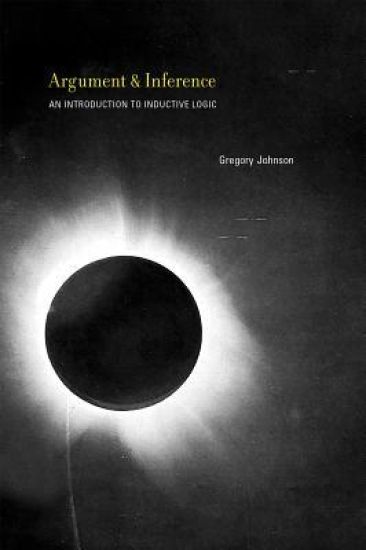
Argument and Inference

Argument and Inference

Gregory Johnson

MIT Press
2017
sidottu
A thorough and practical introduction to inductive logic with a focus on arguments and the rules used for making inductive inferences.This textbook offers a thorough and practical introduction to inductive logic. The book covers a range of different types of inferences with an emphasis throughout on representing them as arguments. This allows the reader to see that, although the rules and guidelines for making each type of inference differ, the purpose is always to generate a probable conclusion.After explaining the basic features of an argument and the different standards for evaluating arguments, the book covers inferences that do not require precise probabilities or the probability calculus: the induction by confirmation, inference to the best explanation, and Mill's methods. The second half of the book presents arguments that do require the probability calculus, first explaining the rules of probability, and then the proportional syllogism, inductive generalization, and Bayes' rule. Each chapter ends with practice problems and their solutions. Appendixes offer additional material on deductive logic, odds, expected value, and (very briefly) the foundations of probability. Argument and Inference can be used in critical thinking courses. It provides these courses with a coherent theme while covering the type of reasoning that is most often used in day-to-day life and in the natural, social, and medical sciences. Argument and Inference is also suitable for inductive logic and informal logic courses, as well as philosophy of sciences courses that need an introductory text on scientific and inductive methods.
American Bridge: Reinventing Building, Making History
Why a world-transforming invention remained an untold story--until now. How did builders shift from the erection of one structure at a time to the mass construction of hundreds of thousands? American Bridge explores a radical reimagining, a new way of building that introduced uniformity and modularity on a global scale while enabling the connectivity essential to the rise of the nation-state. With tales of bygone infrastructure and astonishing images, Gregory Dreicer spans a deep gap in history. He tracks the transnational creative flows that propelled the development of beam, truss, and skeleton frame as industrial essentials, shaped by classical, capitalist, techno-utopian beliefs that still animate engineering and architecture. Evolutionism and nationalism for two centuries have dictated how innovators, their chroniclers, and all of us view materials, structures, and each other. These perspectives determine what we celebrate and who we forget. Dreicer instead prioritizes bridges over borders and evidence over myth. As a result, American Bridge restores lumber's role as seminal industrial product. It recognizes the contributions of enslaved Black people at a transformational technological moment. It portrays designers, workers, and managers devising methods of launching long bridges and assembling the tallest of towers. And it invites you to consider the ever-changing meanings of "America."
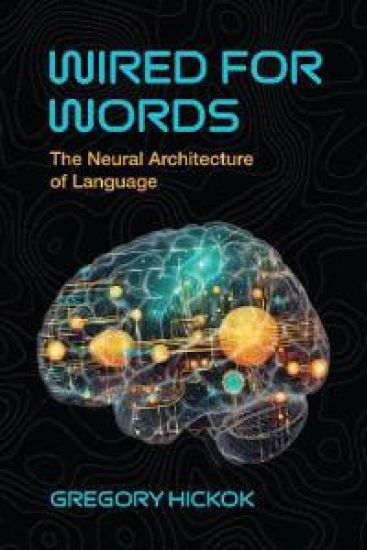
Wired for Words: The Neural Architecture of Language
A critical synthesis of over 150 years of research on the brain's networks that enable us to communicate through language. The neural architecture of language has been a hotly debated topic in neurology, cognitive neuroscience, linguistics, and philosophy since the early 1800s. Is language separable from intelligence? Is it enabled by dedicated and localizable neural networks? Do we speak and understand with our left hemisphere? How did language emerge? Is language grounded in sensorimotor systems, or is it abstract and amodal? Will we ever have a clear picture of how syntax, the pinnacle of human linguistic prowess, is organized neurologically? Wired for Words answers these questions and more. Gregory Hickok tells the stories behind the big ideas, revealing the source of both modern progress and persistent myths. Drawing on decades of research using tools and insights from neurology, functional imaging, neurosurgery, linguistics, psychology, and engineering, Hickok builds a new understanding of the neural architecture--the components and connection patterns--of the brain's language system from sound to meaning to speech.
The Big Book of Concepts

The Big Book of Concepts

Gregory Murphy

MIT Press
2004
pokkari
Concepts embody our knowledge of the kinds of things there are in the world. Tying our past experiences to our present interactions with the environment, they enable us to recognize and understand new objects and events. Concepts are also relevant to understanding domains such as social situations, personality types, and even artistic styles. Yet like other phenomenologically simple cognitive processes such as walking or understanding speech, concept formation and use are maddeningly complex.Research since the 1970s and the decline of the "classical view" of concepts have greatly illuminated the psychology of concepts. But persistent theoretical disputes have sometimes obscured this progress. The Big Book of Concepts goes beyond those disputes to reveal the advances that have been made, focusing on the major empirical discoveries. By reviewing and evaluating research on diverse topics such as category learning, word meaning, conceptual development in infants and children, and the basic level of categorization, the book develops a much broader range of criteria than is usual for evaluating theories of concepts.
Desiring Bodies

Desiring Bodies

Gregory Heyworth

University of Notre Dame Press
2009
nidottu
Gregory Heyworth's Desiring Bodies considers the physical body and its relationship to poetic and corporate bodies in the Middle Ages and Renaissance. Beginning in the odd contest between body and form in the first sentence of Ovid's protean Metamorphoses, Heyworth identifies these concepts as structuring principles of civic and poetic unity and pursues their consequences as refracted through a series of romances, some typical of the genre, some problematically so. Bodies, in Ovidian romance, are the objects of human desire to possess, to recover, to form, or to violate. Part 1 examines this desire as both a literal and socio-political phenomenon through readings of Marie de France's Lais, Chrétien de Troyes' Cligès and Perceval, and Chaucer's Canterbury Tales, texts variously expressing social, economic, and political culture in romance. In part 2, Heyworth is concerned with missing or absent bodies in Petrarch's Rime sparse, Shakespeare's Romeo and Juliet, and Milton's Paradise Lost and the generic rupture they cause in lyric, tragedy, and epic. Throughout, Heyworth draws on social theorists such as Kant, Weber, Simmel, and Elias to explore the connection between social and literary form. The first comparative, diachronic study of romance form in many years, Desiring Bodies is a persuasive and important cultural history that demonstrates Ovid's pervasive influence not only on the poetics but on the politics of the medieval and early modern Western tradition.
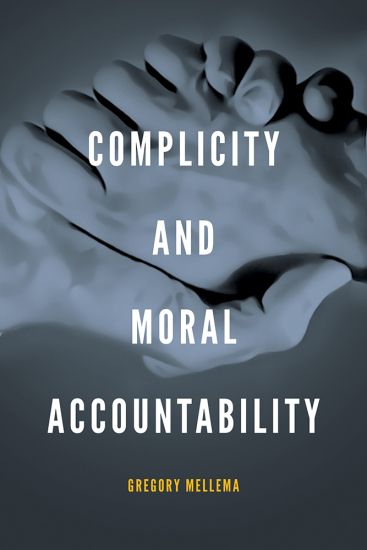
Complicity and Moral Accountability

Complicity and Moral Accountability

Gregory Mellema

University of Notre Dame Press
2016
sidottu
In Complicity and Moral Accountability, Gregory Mellema presents a philosophical approach to the moral issues involved in complicity. Starting with a taxonomy of Thomas Aquinas, according to whom there are nine ways for one to become complicit in the wrongdoing of another, Mellema analyzes each kind of complicity and examines the moral status of someone complicit in each of these ways. Mellema's central argument is that one must perform a contributing action to qualify as an accomplice, and that it is always morally blameworthy to perform such an action. Additionally, he argues that an accomplice frequently bears moral responsibility for the outcome of the other's wrongdoing, but he distinguishes this case from cases in which the accomplice is tainted by the wrongdoing of the principal actor. He further distinguishes between enabling, facilitating, and condoning harm, and introduces the concept of indirect complicity. Mellema tackles issues that are clearly important to any case of collective and shared responsibility and yet are rarely discussed in depth, and he always presents his arguments clearly, concisely, and engagingly. His account of the nonmoral as well as moral qualities of complicity in wrongdoing—especially of the many and varied ways in which principles and accomplices can interact—is highly illuminating. Liberally sprinkled with helpful and nuanced examples, Complicity and Moral Accountability vividly illustrates the many ways in which one may be complicit in wrongdoing.
Complicity and Moral Accountability

Complicity and Moral Accountability

Gregory Mellema

University of Notre Dame Press
2021
nidottu
In Complicity and Moral Accountability, Gregory Mellema presents a philosophical approach to the moral issues involved in complicity. Starting with a taxonomy of Thomas Aquinas, according to whom there are nine ways for one to become complicit in the wrongdoing of another, Mellema analyzes each kind of complicity and examines the moral status of someone complicit in each of these ways. Mellema's central argument is that one must perform a contributing action to qualify as an accomplice, and that it is always morally blameworthy to perform such an action. Additionally, he argues that an accomplice frequently bears moral responsibility for the outcome of the other's wrongdoing, but he distinguishes this case from cases in which the accomplice is tainted by the wrongdoing of the principal actor. He further distinguishes between enabling, facilitating, and condoning harm, and introduces the concept of indirect complicity. Mellema tackles issues that are clearly important to any case of collective and shared responsibility and yet are rarely discussed in depth, and he always presents his arguments clearly, concisely, and engagingly. His account of the nonmoral as well as moral qualities of complicity in wrongdoing—especially of the many and varied ways in which principles and accomplices can interact—is highly illuminating. Liberally sprinkled with helpful and nuanced examples, Complicity and Moral Accountability vividly illustrates the many ways in which one may be complicit in wrongdoing.
Sacred Passion

Sacred Passion

Gregory Wolfe

University of Notre Dame Press
2010
sidottu
In the second edition of Sacred Passion, biographer Gregory Wolfe chronicles the artistic career of William Schickel (1919-2009) in the years since the original 1998 publication of this book by the University of Notre Dame Press. There are two new chapters, one on Schickel's recent contributions to the built environment in several communities, and the other on his recent paintings. There are 70 new color images, in addition to the 189 from the first edition, many of which have been replaced or enhanced. William Schickel was born in Stamford, Connecticut in 1919 and raised in Ithaca, New York. He graduated from the University of Notre Dame in 1944. His graduation project was the sculptural fountain "Living Water," now in the university's grotto. In a consistently productive career spanning more than six decades, Schickel has combined his skills as a sculptor, architectural designer, furniture designer, stained-glass artist, and painter with his deep personal faith to bring a healing vision to a number of American communities. In addition to his many paintings and ritual arts creations, Schickel's public works include the renovation of Gethsemani Abbey in Kentucky, for which he received the American Institute of Architects' Gold Medal Award; the Duchesne Memorial Shrine in St. Charles, Missouri; the Miami Valley Hospital Chapel in Dayton, Ohio; the "Rotunda of Creation" in the Cincinnati Center for Health and Wellness; the renovation of the Bellarmine Chapel in Cincinnati; the "Journeying with Christ" mural in the St. John Neumann Church in Canton, Michigan; and the Larry Hoffsis stained-glass window in the Epiphany Lutheran Church near Dayton, Ohio. Celebrating an artist of extraordinary faith, power, creativity, and dedication, the second edition of Sacred Passion is a tribute to William Schickel and his achievements.