This collection of some of the best of H G W ells'' stories includes The Strange Orchid, The Lord of the D ynamos, In the Abyss, The Cone and The Red Room. Herbert George "H. G." Wells (21 September 1866 - 13 August 1946) was an English writer. He was prolific in many genres, including the novel, history, politics, social commentary, and textbooks and rules for war games. Wells is now best remembered for his science fiction novels and is called a "father of science fiction", along with Jules Verne and Hugo Gernsback. His most notable science fiction works include The Time Machine (1895), The Island of Doctor Moreau (1896), The Invisible Man (1897), and The War of the Worlds (1898). He was nominated for the Nobel Prize in Literature four times.
Herbert George "H. G." Wells (21 September 1866 - 13 August 1946) was an English writer. He was prolific in many genres, including the novel, history, politics, social commentary, and textbooks and rules for war games. Wells is now best remembered for his science fiction novels and is called a "father of science fiction", along with Jules Verne and Hugo Gernsback. His most notable science fiction works include The Time Machine (1895), The Island of Doctor Moreau (1896), The Invisible Man (1897), and The War of the Worlds (1898). He was nominated for the Nobel Prize in Literature four times. Wells's earliest specialised training was in biology, and his thinking on ethical matters took place in a specifically and fundamentally Darwinian context. He was also from an early date an outspoken socialist, often (but not always, as at the beginning of the First World War) sympathising with pacifist views. His later works became increasingly political and didactic, and he wrote little science fiction, while he sometimes indicated on official documents that his profession was that of journalist. Novels like Kipps and The History of Mr Polly, which describe lower-middle-class life, led to the suggestion that he was a worthy successor to Charles Dickens, but Wells described a range of social strata and even attempted, in Tono-Bungay (1909), a diagnosis of English society as a whole. A diabetic, in 1934, Wells co-founded the charity The Diabetic Association (known today as Diabetes UK).
Herbert George "H. G." Wells (21 September 1866 - 13 August 1946) was an English writer. He was prolific in many genres, including the novel, history, politics, social commentary, and textbooks and rules for war games. Wells is now best remembered for his science fiction novels and is called a "father of science fiction", along with Jules Verne and Hugo Gernsback. His most notable science fiction works include The Time Machine (1895), The Island of Doctor Moreau (1896), The Invisible Man (1897), and The War of the Worlds (1898). He was nominated for the Nobel Prize in Literature four times. Wells's earliest specialised training was in biology, and his thinking on ethical matters took place in a specifically and fundamentally Darwinian context. He was also from an early date an outspoken socialist, often (but not always, as at the beginning of the First World War) sympathising with pacifist views. His later works became increasingly political and didactic, and he wrote little science fiction, while he sometimes indicated on official documents that his profession was that of journalist. Novels like Kipps and The History of Mr Polly, which describe lower-middle-class life, led to the suggestion that he was a worthy successor to Charles Dickens, but Wells described a range of social strata and even attempted, in Tono-Bungay (1909), a diagnosis of English society as a whole. A diabetic, in 1934, Wells co-founded the charity The Diabetic Association (known today as Diabetes UK).
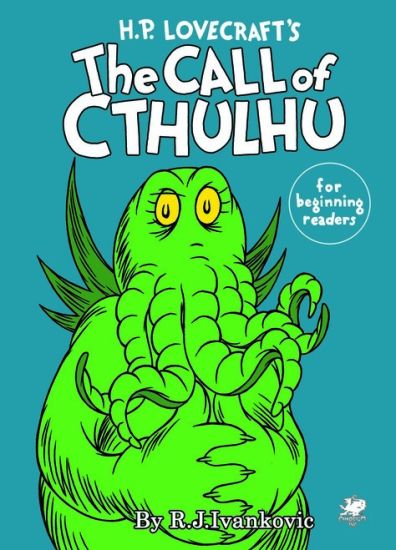
The most merciful thing in the world, I believe is humanity's failure to fully conceive the cosmical horrors we've yet to reveal, and which up until now I have tried to conceal. The iconic H.P. Lovecraft 1928 story, The Call of Cthulhu, is now a children's book. Seamlessly and gracefully told in anapestic tetrameter by "genius poet-artist" RJ Ivankovic. The late Professor Angell's research has been discovered by his grand-nephew, Francis Wayland Thurston. Francis delves into the papers and discovers a bas-relief depicting an odd creature with an octopoid head, spurring him to read on. He learns of the raid led by Inspector Legrasse and the voyage of the Vigilant, captained by Gustaf Johansen. This glorious full color 102-page adaptation of the H.P. Lovecraft story was written and illustrated by R.J. Ivankovic.
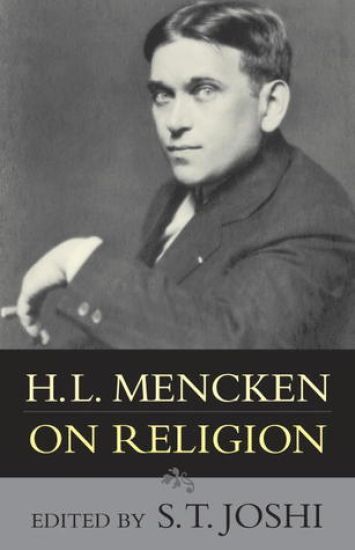
No one ever argued more forcefully or with such acerbic wit against the foolish aspects of religion as H. L. Mencken (1880-1956). As a journalist, he gained national prominence through his newspaper columns describing the now-famous 1925 Scopes trial, which pitted Fundamentalists against a public school teacher who dared to teach evolution. But both before and after the Scopes trial, Mencken spent much of his career as a columnist and book reviewer lampooning the ignorant piety of gullible Americans. S. T. Joshi has brought together and organized many of Mencken's writings on religion in this provocative and entertaining collection. The articles here presented demonstrate that Mencken canvassed the entire range of religious phenomena of his time, from evangelists Billy Sunday and Aime Semple McPherson, to Christian Scientists, and theosophists and spiritualists. On a more serious note are his discussions of the philosophy of Friedrich Nietzsche and the scientific worldview as a rival to religious belief. Also included are poignant autobiographical accounts of Mencken's own upbringing and his core beliefs on religion, ethics, and politics. If anything was sacred to Mencken, it was the right to speak one's mind freely, and many of his attacks are directed against those true believers who he felt tried to foist their beliefs on others to stifle independent thinking. For everyone who values freethought and sharp intelligence, this collection of articles by America's premier iconoclast is a must.
H. G. Wells's World Reborn: The Outline of History and its Companions explores the phenomenon that was H. G. Wells's Outline of History and subsequent volumes built around the biological and social sciences. First published in 1919, the Outline was immensely successful, starting a fad for explanations of the world aimed at a knowledge-hungry middle-class audience. Ross examines the Wellsian view of universal history, both in its conception and its execution, and also looks at the Outline's reception by contemporary historians, especially those associated with the American New History movement. He also surveys the scope, and relative strengths of the two subsequent and more moderately successful volumes: The Science of Life and The Work, Wealth and Happiness of Mankind. In a series of chapters, he also sets Wells's progressive, Enlightenment-based view of the world against more current attitudes towards race, colonialism, feminism, and eugenics.