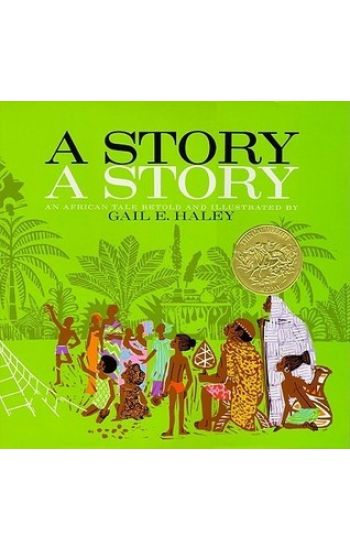
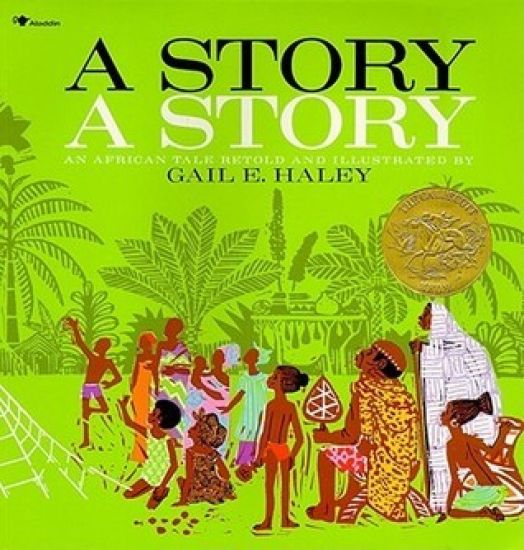
Winner of the Caldecott Medal Once, all the stories in the world belonged to Nyame, the Sky God. He kept them in a box beside his throne. But Ananse, the Spider man, wanted them -- and caught three sly creatures to get them. This story of how we got our own stories to tell is adapted from an African folktale.
Traditional schooling systems are proving to be suboptimal learning environments for many students of color. Black parents bear witness to the myriad of problems their children face at school and are becoming increasingly frustrated with the inability to implement positive and constructive change. Many understand the immense value an education provides and understand its empowering effects in the lives of their children. However, as traditional systems of education fail their children, they feel they have no alternatives. As a Black mother, Myiesha experienced this first-hand. As she noticed her daughter, Haley, lose her passion for learning in public school, she made the bold decision to simply pull her out and homeschool her. Homeschooling is fraught with myths and misconceptions and with this how-to guide, memoir fusion, Haley and Myiesha offer insight and enlighten readers on the "real deal" of homeschooling. Primarily that homeschooling is a mindset--a mindset that can be incorporated into all aspects of child-rearing. There are many options and opportunities to incorporate a homeschooling mindset, even if a family utilizes the public school system.
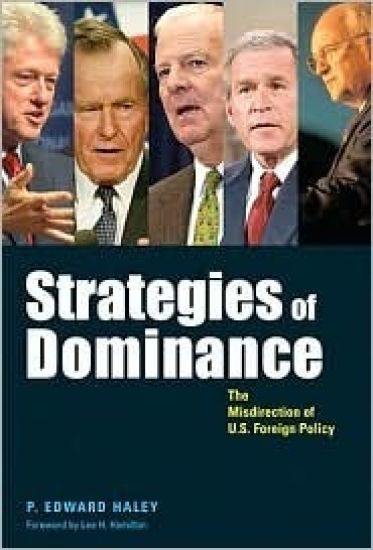
In a critical overview of U.S. foreign policy since the end of the Cold War, P. Edward Haley draws surprising connections between key elements of George W. Bush's foreign policy and those of his predecessor, Bill Clinton. Haley further shows how these elements in both cases produced disastrous results, and he proposes an alternative that is constructive and tolerant but not amorally "realistic." Specifically, Strategies of Dominance faults reliance on American exceptionalism, treatment of globalization and global democratization as vital to security, a misreading of American primacy, expectation of bandwagoning by allies, and reliance on economic sanctions and coercive diplomacy. Haley argues that these characteristics have replaced a more tolerant Cold War-era program in which such attitudes were tempered by recognition of a bipolar world, a nuclear standoff, and a global zero-sum competition for allies and influence. This is the only book covering the foreign policies of all three post-Cold War presidents-George H. W. Bush, William J. Clinton, and George W. Bush. And although a number of books have criticized the foreign policy of George W. Bush, no other shows how its post-Cold War underpinnings are shared with Clinton's and to a more limited degree with those of his father.
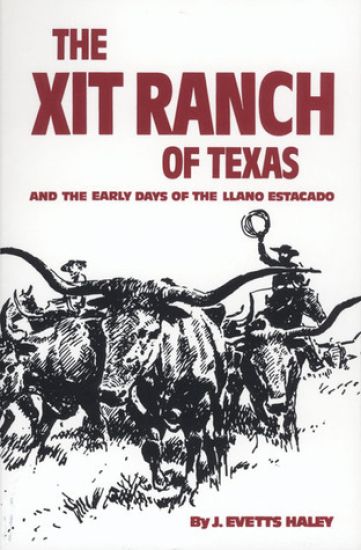
Among the famous ranch brands of Texas are the T Anchor, JA, Diamond Tail, 777, Bar C, and XIT. And the greatest of these was XIT - The XIT Ranch of Texas. It was not the first ranch in West Texas, but after its formation in the eighteen-eighties it became the largest single operation in the cow country of the Old West and covered more than three million acres, all fenced. The state of Texas patented this huge rectangle of land, at the time considered by many to be part of ""the great American desert,"" to the Capitol Freehold Land and Investment Company of Chicago, in exchange for funds to erect the state capitol building in Austin. This ""desert"" became a legend in the cattle business, and it remains today a memory to thousands who recall the era when mustangs and longhorns grazed beneath the brand of the XIT. The development and operation of this pastoral enterprise and its relation to the history of Texas is the subject of this great and widely discussed book by J. Evetts Haley, now made available to readers every· where. It is the story of a wild prairie, roamed by Indians, buffalo, mustangs, and antelope, that became a country of railroads, oil fields, prosperous farms, and carefully bred herds of cattle. The XIT Ranch of Texas is the epic account of a ranching operation about which many know a little but only a few very much. It is the one volume that, more than any other, portrays the early-day cattle business of the West.
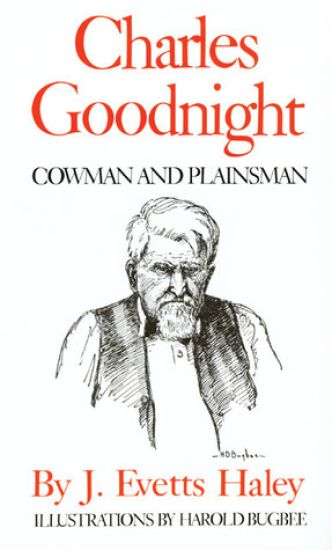
An exciting story of a Texas Ranger, adventurer, and immigration officer who became a symbol of his age while gambling with death in the wild frontier regions of Texas, Arizona, and Old and New Mexico. Charles Goodnight knew the West of Jim Bridger, Kit Carson, Dick Wooton, St. Vrain, and Lucien Maxwell. He ranged a country as vast as Bridger ranged. He rode with the boldness of Fremont, guided by the craft of Carson. His vigorous zest for life enabled him to live intensely and amply, and in this book by J. Evetts Haley, himself no stranger to the West, provides a fully readable and important western biography, vividly told, thrilling, witty, and completely authentic.
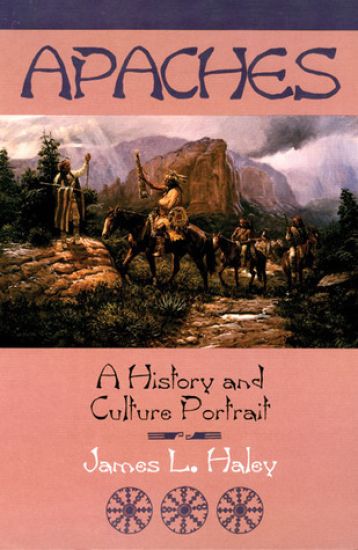
Apaches: A History and Culture Portrait, James L. Haley's dramatic saga of the Apaches' doomed guerrilla war against the whites, marks a radical departure from the method followed by previous histories of white-Native conflict. Arguing that "you cannot understand the history unless you understand the culture," Haley first discusses the lifeway of the Apaches--their mythology and folklore, religious customs, everyday life, and social mores. Haley then explores the tumultuous decades of trade and treaties and of betrayal and bloodshed that preceded the Apaches' final military defeat in 1886. He emphasizes figures that played a decisive role in the conflict: Mangas Coloradas, Cochise, and Geronimo, on the one hand, and Royal Whitman, George Crook, and John Clum on the other. With a new preface that places the book in the context of contemporary scholarship, Apaches is a well-rounded overview of Apache history and culture.
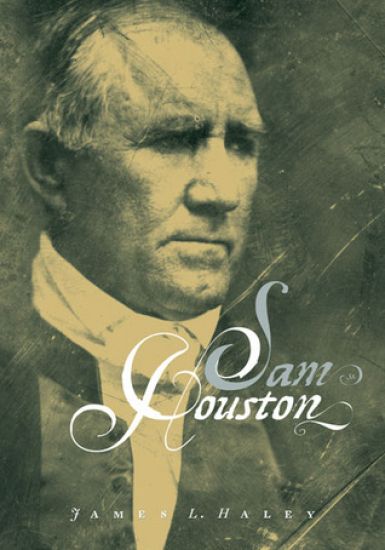
In the decades preceding the Civil War, few figures in the United States were as influential or as controversial as Sam Houston. In Sam Houston, James L. Haley explores Houston's momentous career and the complex man behind it. Haley's fifteen years of research and writing have produced possibly the most complete, most personal, and most readable Sam Houston biography ever written. Drawn from personal papers never before available as well as the papers of others in Houston's circle, this biography will delight anyone intrigued by Sam Houston, Texas history, Civil War history, or America's tradition of rugged individualism.
What issues arise when students' uses of intellectual materials are legally challenged, and how does the academic context affect them? What happens when users of intellectual property, either within or outside the academic structure, violate students' rights to their intellectual products? In Intellectual Property on Campus, TyAnna K. Herrington addresses these concerns and more, clearing up the confusion often surrounding intellectual property law and its application in an academic setting. Filled with practical information and simple yet thorough explanations, this enlightening volume provides educators and students with a solid basis for understanding the broader impacts of legal and ethical dilemmas involving intellectual materials. Herrington provides insight for students into how complex concepts such as patent, trademark, copyright, fair use, and plagiarism affect their work. She outlines the potential effects of the choices students make, as well as the benefits and limitations of legal protection for intellectual property, including the thorny issues of authorship and authority under the 1976 Copyright Act. Herrington also explores the topic of student collaboration--now very common on college campuses--and how it affects intellectual property issues and legal relationships, as well as the impact of new technologies, such as blogs, on student work in educational environments.Intellectual Property on Campus also provides useful information for administrators and educators. In particular, Herrington investigates the possible ramifications of their pedagogical and policy choices, and examines in depth the responsibility of instructors to treat students' intellectual property legally, ethically, and conscientiously. Cautioning educators about the limitations on their control over intellectual materials in an academic setting, Herrington encourages teachers to minimize their influence over student works, instead giving pupils more freedom to control their own creations. The volume also investigates the rights, responsibilities, and limitations for users of intellectual property, as opposed to creators, especially as related to student or instructor use of copyrighted materials. Discussed in detail are such issues as fair use and the TEACH Act, as well as the often-intertwined areas of plagiarism, authorship, and copyright. In addition, Herrington addresses recent cultural developments regarding the use and creation of intellectual property by students and instructors. Written in a jargon-free style that is easy to understand, Intellectual Property on Campus gives students, instructors, and administrators the information they need to navigate the intricate landscape of law and integrity in the realm of academic creation.
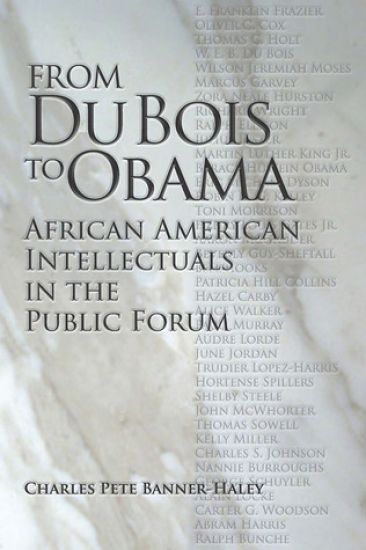
In his ground-breaking new book Charles Pete Banner-Haley explores the history of African American intellectualism and reveals the efforts of black intellectuals in the ongoing struggle against racism, showing how they have responded to Jim Crow segregation, violence against black Americans, and the more subtle racism of the post-integration age. Banner-Haley asserts that African American intellectuals including academicians, social critics, activists, and writers serve to generate debate, policy, and change, acting as a moral force to persuade Americans to acknowledge their history of slavery and racism, become more inclusive and accepting of humanity, and take responsibility for social justice.Other topics addressed in this insightful study include the disconnection over time between black intellectuals and the masses for which they speak; the ways African American intellectuals identify themselves in relation to the larger black community, America as a whole, and the rest of the world; how black intellectuals have gained legitimacy in American society and have accrued moral capital, especially in the area of civil rights; and how that moral capital has been expended. Among the influential figures covered in the book are W. E. B. Du Bois, Ralph Ellison, Richard Wright, James Weldon Johnson, E. Franklin Frazier, Ralph Bunche, Oliver C. Cox, George S. Schuyler, Zora Neale Hurston, Martin Luther King, Jr., Jesse Jackson, Cornel West, Toni Morrison, bell hooks, Charles Johnson, and Barack Obama.African American intellectuals, as Banner-Haley makes clear, run the political gamut from liberal to conservative. He discusses the emergence of black conservatism, with its accompanying questions about affirmative action, government intervention on behalf of African Americans, and the notion of a colour-blind society. He also looks at how popular music particularly rap and hip-hop television, movies, cartoons, and other media have functioned as arenas for investigating questions of identity, exploring whether African American intellectuals can also be authentically black.A concluding discussion of the so-called browning of America, and the subsequent rise in visibility and influence of black intellectuals culminates with the historic election of President Barack Obama, an African American intellectual who has made significant contributions to American society through his books, articles, and speeches. Banner-Haley ponders what Obama election will means for the future of race relations and black intellectualism in America.
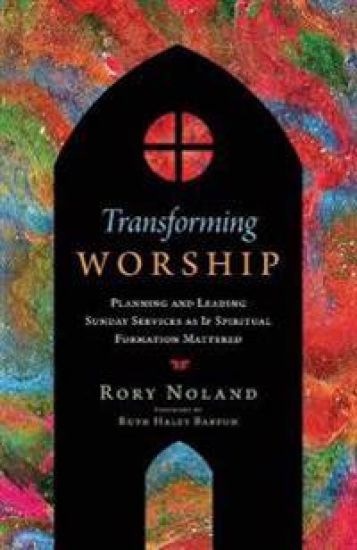
Spiritual formation is the key to the survival of our faith. There is an urgent need today for church services that are substantive and purposeful. Stigmatized by scandal, the church in North America and throughout Europe has been branded as useless and irrelevant. To stem the tide of nominal Christianity, we need to get serious about making disciples who can make other disciples. Rory Noland is a worship leader who has led in contexts ranging from megachurches to small retreat settings such as the Transforming Center with Ruth Haley Barton. Combining discipleship and worship—what Noland calls transforming worship—he offers a vision for worship as spiritual formation. We need to reclaim our worship services as a formative space, and through that we will become the light of Christ in a dark world.
When we experience frustrations in daily life, many of us hold ourselves to blame. Self-criticism is often our default setting. But we can have a more gracious posture toward ourselves. We can practice disciplines of self-kindness. Editor and spiritual director Cindy Bunch calls us to self-care through greater compassion for ourselves. She helps us pay attention to the frustrations that bug us in order to identify negative thinking about ourselves or others. As we do so, we can discern what we need to let go. This allows us to lean into the things that bring us joy. Each chapter is filled with spiritual practices and creative exercises for reflection and celebration. The pages of the appealing smaller book format are illustrated with photographs and art from the author. Be kind to yourself. And discover new opportunities to embrace joy.
John Furman Haley lived from 1897 to 1972, from wagon roads to superhighways, from chugging locomotives to rocket-powered journeys in outer space. He was a West Texas rancher, and his attitude epitomized the creed of western ranchers and cowboys of his time. He moved no mountains, toppled no governments, or built any empires; yet he was an embodiment of the character and spirit that creates the distinctive aura which identifies those proud individuals who value freedom above all else.In this warm and often humorous memoir, Haley’s son, himself a rancher, captures the image of a man known for his extraordinary self-reliance, endless energy, and willingness—even eagerness—to meet any challenge life held in store.The volume is illustrated with original drawings by western artist Duane Breyers.
God's Creation I Am A Dictionary For The Created Soul is a daily devotional guiding you through a meditative process designed to align you with the truth of who you were created to be. Scriptures and descriptors will unveil your natural and spiritual eyes to aid you in your problems, think back on your mistakes and triumphs, and teach you how to pray to God for the strength every woman needs to fight through and dwell in the Christ confidence that she has already won, no matter the battle.
Dive into the heart of modern parenting with "Raising a Grownup", your go-to guide for transforming the tumultuous tween, teen, and twenty-something years into a launchpad for adulthood. This isn't just another parenting playbook. It's a revolutionary approach to shaping independent, resilient, and well-rounded grownups ready to take on the world.Packed with touching stories, clever insights, and hands-on tips, this book is your ally in empowering you to master the subtle art of raising a grownup. It's a call to parents everywhere to see beyond the here and now, teaching them to mix just the right amount of support with the freedom necessary for fostering long-term happiness and well-being. "Raising a Grownup" hands you the tools for guiding your young adult in building a meaningful career, managing their money like a pro, and leading a life that's both intentional and impactful.Get ready for a deep dive into the art of conversation and take a fresh look at evolving parent-child dynamics based on mutual respect. Learn to navigate the digital age and help your child grow authentically in an ever-changing world.But that's not all-this guide stands as a beacon for intentional parenting, highlighting the WISE and ADULT methods as your compass for navigating the challenges that lie ahead. For parents dreaming of raising successful, kind-hearted individuals poised to make their mark, "Raising a Grownup" is your manifesto for change. It's more than a book; it's a movement towards a guide-to-independence parenting, readying your young adult to face life's hurdles with grace and gusto.