Kirjojen hintavertailu. Mukana 12 419 203 kirjaa ja 12 kauppaa.

Kirjahaku

Etsi kirjoja tekijän nimen, kirjan nimen tai ISBN:n perusteella.

1000 tulosta hakusanalla Harrison David L.

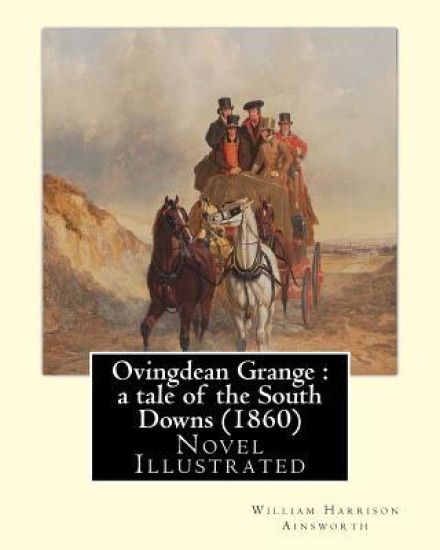
Ovingdean Grange: a tale of the South Downs (1860). By: William Harrison Ainsworth, illustrated By: Hablot K. Browne: Novel (Original Cl
William Harrison Ainsworth (4 February 1805 - 3 January 1882) was an English historical novelist born at King Street in Manchester. He trained as a lawyer, but the legal profession held no attraction for him. While completing his legal studies in London he met the publisher John Ebers, at that time manager of the King's Theatre, Haymarket. Ebers introduced Ainsworth to literary and dramatic circles, and to his daughter, who became Ainsworth's wife. Ainsworth briefly tried the publishing business, but soon gave it up and devoted himself to journalism and literature. His first success as a writer came with Rookwood in 1834, which features Dick Turpin as its leading character. A stream of 39 novels followed, the last of which appeared in 1881. Ainsworth died in Reigate on 3 January 1882. EARLY LIFE: Ainsworth was born on 4 February 1805 in the family house at 21 King Street, Manchester, to Thomas Ainsworth, a prominent Manchester lawyer, and Ann (Harrison) Ainsworth, the daughter of the Rev. Ralph Harrison, the Unitarian minister at Manchester Cross Street Chapel. On 4 October 1806, Ainsworth's brother, Thomas Gilbert Ainsworth, was born. Although the family home was eventually destroyed, it was a three-storey Georgian home in a well-to-do community. The area influenced Ainsworth with its historical and romantic atmosphere, which existed until the community was later replaced by commercial buildings. Besides the community, Ainsworth read romantic works as a child and enjoyed stories dealing with either adventure or supernatural themes. Of these, Dick Turpin was a favourite of Ainsworth. During his childhood, he adopted Jacobean ideas and held Tory ideas in addition to his Jacobite sympathies, even though his community was strict Whig and Nonconformist. During this time, Ainsworth began to write prolifically. The Ainsworth family moved to Smedly Lane, north of Manchester in Cheetham Hill, during 1811. They kept the old residence in addition to the new, but resided in the new home most of the time. The surrounding hilly country was covered in woods, which allowed Ainsworth and his brother to act out various stories. When not playing, Ainsworth was tutored by his uncle, William Harrison. In March 1817, he was enrolled at Manchester Grammar School, which was described in his novel Mervyn Clitheroe. The work emphasised that his classical education was of good quality but was reinforced with strict discipline and corporal punishment. Ainsworth was a strong student and was popular among his fellow students. His school days were mixed; his time within the school and with his family was calm even though there were struggles within the Manchester community, the Peterloo Massacre taking place in 1819. Ainsworth was connected to the event because his uncles joined in protest at the incident, but Ainsworth was able to avoid most of the political after-effects. During the time, he was able to pursue his own literary interests and even created his own little theatre within the family home at King Street. Along with his friends and brother, he created and acted in many plays throughout 1820. During 1820, Ainsworth began to publish many of his works under the name "Thomas Hall".... Hablot Knight Browne (10 July 1815 - 8 July 1882) was an English artist and illustrator. Well-known by his pen name, Phiz, he illustrated books by Charles Dickens, Charles Lever, and Harrison Ainsworth.
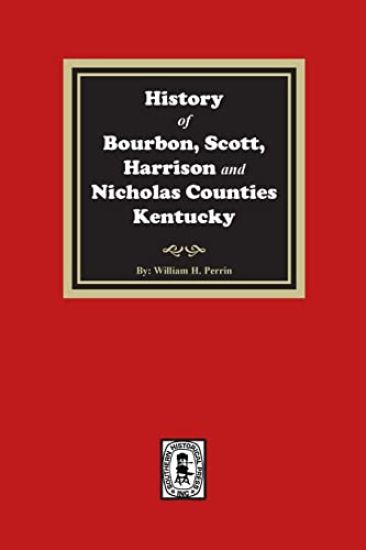
History of Bourbon, Scott, Harrison and Nicholas Counties, Kentucky

History of Bourbon, Scott, Harrison and Nicholas Counties, Kentucky

Willam Henry Perrin

Southern Historical Press
2022
nidottu
By: W.H. Perrin, Orig. Pub. 1882, Reprinted 2022, 848 pages, Index, Hard Cover, ISBN #0-89308-142-6.This book is devoted to "the Blue Grass Region" of the state of Kentucky. It has been said to have more genealogical information than any other book of its kind. The book is divided into two main topics of interest. The first is a general history of the four above mentioned counties. With the second being of greater interest to the genealogist, this section is devoted to biographical sketches of these early settlers. The index alone references over 8,000 individuals.
Welcome to Friar Park: A Guide for Time-Travelers visiting the estate owned by The Beatles' George Harrison
Have you ever wondered what it would be like to time-travel back to one of England's most incredible country estates? Now you can Our unique guide offers detailed maps that accompany a series of unforgettable, intricately detailed walking tours through the gorgeous grounds & legendary gardens at Friar Park, so you may experience what it was like in visit when it it was in its full glory Your tour will begin in London in the 19th century. From there you will take a train, and then steamship to the medieval town of Henley-on-Thames. Following that you will stroll past charming streets and buildings, and to the gates of Friar Park. Once the gates open you will get a copy of the beautiful, colorful, detailed map illustrated by Alan Tabor and your true time-travel adventure of the exquisite estate Frank Crisp build in 1895 and George Harrison purchased in 1970 will begin
The Battle of Tippecanoe and the Battle of New Orleans: The History of the Battles that Led William Henry Harrison and Andrew Jackson to the Presidenc
*Includes pictures *Includes accounts of the battles written by participants *Includes bibliographies for further reading *Includes a table of contents The Battle of Tippecanoe, fought on November 7, 1811 near present-day Lafayette, Indiana, involved forces of fewer than 2,000 Native American warriors and white soldiers, and only about 300 men were killed or wounded on both sides. Given those numbers, it's apparent that the battle was far from being a Saratoga or a Gettysburg in terms of its scale or significance as an historical turning point, yet it was one of the most important battles in shaping American history during the early 19th century. The battle also involved an epic confrontation between two important American figures: William Henry Harrison, who would become the 9th president of the United States by running on his success in the battle, and the Shawnee war chief Tecumseh, arguably the most famous Native American leader in American history. The initial Native American attack struck the southern point of Harrison's defensive perimeter around 4:30 a.m. on November 7, 1811, and almost immediately the warriors rushed in among the American defenders manning that sector. Soldiers defending the southern side of the perimeter suffered the highest casualties, with the Yellow Jackets suffering a 30% casualty rate, but in fighting lasting about two hours Harrison's force of roughly 1,000, suffered only 62 dead and about 120 wounded. As the sun rose, the warriors began running low on ammunition, and the light revealed their small numbers, leading them to break off the attack and retreat towards Prophetstown. The battle was hardly a decisive victory, but at the end of the fighting the Americans still held their perimeter, allowing them to claim victory. While Tippecanoe was clearly not a total victory, and Native American resistance would continue through the War of 1812, the battle is widely considered the end of Tecumseh's War and did help bring about the decline of Native American ascendance in the region. There are countless examples of battles that take place in wars after a peace treaty is signed. The last battle of the Civil War was a skirmish in Texas that Confederate forces won, nearly a month after Lee's surrender at Appomattox. But it's certainly rare for the most famous battle of a war to take place after the peace treaty is signed. Luckily for Andrew Jackson, the War of 1812 was that unique exception. Less than a year after his victory in the Battle of Horseshoe Creek, Jackson led his forces into a more important battle at the Battle of New Orleans. The British hoped to grab as much of the land on the western frontier as they could, especially New Orleans, which had a prominent position on the Mississippi River for trading. With more than 8,000 soldiers aboard a British fleet sailing in from Jamaica in early January 1815, the attack on New Orleans promised to be a significant one, while Jackson's men defended New Orleans with about half that number. This went on despite the fact that the two sides had signed the Treaty of Ghent on Christmas Eve 1814, which was supposed to end the war. However, the slow nature of bringing news from England to America ensured that the battle would take place anyway. Though it was an enormous victory for Jackson and the Americans - the most important of the entire war - it proved to be a completely unnecessary one. The Treaty of Ghent had officially ended the war by keeping the status quo ante bellum. Regardless, the nation much appreciated Jackson's skills and the Battle of New Orleans was forever christened as one of the greatest in American history. Jackson was honored with a "Thanks from Congress," which was then the nation's highest military honor. Jackson would subsequently become one of the 19th century's most influential presidents. This book analyzes both battles and their legacies.
A history of the United States for young Americans from the landing of Columbus to the inauguration of Benjamin Harrison
A history of the United States for young Americans from the landing of Columbus to the inauguration of Benjamin Harrison is an unchanged, high-quality reprint of the original edition of 1889. Hansebooks is editor of the literature on different topic areas such as research and science, travel and expeditions, cooking and nutrition, medicine, and other genres. As a publisher we focus on the preservation of historical literature. Many works of historical writers and scientists are available today as antiques only. Hansebooks newly publishes these books and contributes to the preservation of literature which has become rare and historical knowledge for the future.
The Ancient Capital of the State of Indiana, Corydon, Harrison County
The Ancient Capital of the State of Indiana, Corydon, Harrison County is an unchanged, high-quality reprint of the original edition of 1891. Hansebooks is editor of the literature on different topic areas such as research and science, travel and expeditions, cooking and nutrition, medicine, and other genres. As a publisher we focus on the preservation of historical literature. Many works of historical writers and scientists are available today as antiques only. Hansebooks newly publishes these books and contributes to the preservation of literature which has become rare and historical knowledge for the future.
Las Crónicas de Cranford. Confesiones del Sr. Harrison. Milady Ludlow (Relatos) / The Cranford Chronicles. MR Harrison's Confessions. My Lady Ludlow (
Las historias de Cranford enlazan brillantemente unas con otras, como cerezas extra das de un cesto . Casi todas pueden ser le das como cuentos independientes, pero en su conjunto forman una narraci n suficientemente s lida como para estar muy lejos de ser consideradas una mera sucesi n de relatos. Si algo unifica todas las historias que se cuentan es, sin duda, la ternura que late en cada una de ellas: la de la mujer madura que recupera a un amor de juventud al que abandon para cuidar a su hermana enferma; la solterona que, ablandada por la muerte de un viejo amor, autoriza a su criada a responder a los requiebros de un pretendiente; la del chiquillo descarriado que huye de la casa tras una inopinada paliza de su padre, de la que el hombre se arrepiente de por vida... - del pr logo de Marta Rivera de la Cruz ENGLISH DESCRIPTION "The stories in Cranford are brilliantly interwoven, like cherries drawn from a basket." "Most of them can be read as standalone tales, yet together they form a narrative solid enough to be far from a mere succession of anecdotes. If there's something that unites all the stories, it's undoubtedly the tenderness that pulses through each one: the mature woman who reunites with a long-lost love she once left behind to care for her ill sister; the spinster who, softened by the death of an old flame, allows her maid to respond to a suitor's advances; the wayward boy who runs away after an unexpected beating from his father--a moment the man regrets for the rest of his life..." - from the foreword by Marta Rivera de la Cruz