Kirjojen hintavertailu. Mukana 11 342 296 kirjaa ja 12 kauppaa.

Kirjahaku

Etsi kirjoja tekijän nimen, kirjan nimen tai ISBN:n perusteella.

1000 tulosta hakusanalla Henry Kitchell Webster

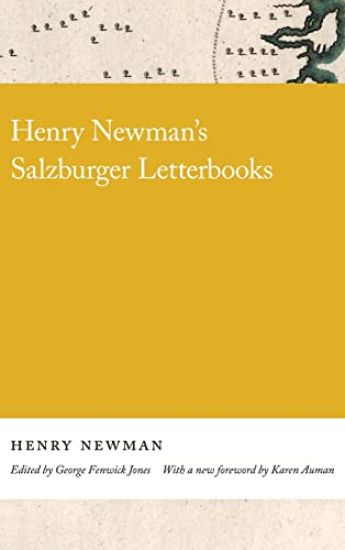
Henry Newman's Salzburger Letterbooks

Henry Newman's Salzburger Letterbooks

Henry Newman; Karen Auman

UNIVERSITY OF GEORGIA PRESS
2021
sidottu
Henry Newman’s Salzburger Letterbooks contains correspondence between Henry Newman and Samuel Urlsperger, a German Lutheran minister in Ausburg. These two men were heavily involved in the settlement of the Salzburgers in Georgia. Their letters, which contain both inward and outward correspondence, provide a unique journal of the settlement of Salzburg and colonial life in Georgia. The Georgia Open History Library has been made possible in part by a major grant from the National Endowment for the Humanities: Democracy demands wisdom. Any views, findings, conclusions, or recommendations expressed in this collection, do not necessarily represent those of the National Endowment for the Humanities.
Henry Newman's Salzburger Letterbooks

Henry Newman's Salzburger Letterbooks

Henry Newman; Karen Auman

UNIVERSITY OF GEORGIA PRESS
2021
pokkari
Henry Newman’s Salzburger Letterbooks contains correspondence between Henry Newman and Samuel Urlsperger, a German Lutheran minister in Ausburg. These two men were heavily involved in the settlement of the Salzburgers in Georgia. Their letters, which contain both inward and outward correspondence, provide a unique journal of the settlement of Salzburg and colonial life in Georgia. The Georgia Open History Library has been made possible in part by a major grant from the National Endowment for the Humanities: Democracy demands wisdom. Any views, findings, conclusions, or recommendations expressed in this collection, do not necessarily represent those of the National Endowment for the Humanities.
Henry James and London

Henry James and London

John Kimmey

Peter Lang Publishing Inc
1991
sidottu
This is the first full-length study of the influence of London on Henry James' fiction. It begins with a comparison of his treatment of the city with that of Dickens, Gissing, and H.G. Wells and proceeds to analyze decade by decade how he employed it in his essays on England and the British capital as well as an examination of the part the metropolis played in his life from his childhood to his last years.
Henry Miller and the Surrealist Discourse of Excess

Henry Miller and the Surrealist Discourse of Excess

Paul Jahshan

Peter Lang Publishing Inc
2001
sidottu
Henry Miller is one of the least stylistically understood modern writers. Having been dubbed a Zen saint and ostracized as a happy pornographer, Miller is now relegated to the museum of literary oddities and his text treated with unjustified indifference. If the influence of French surrealism has been recognized by most critics and readers, it is not without a cost: Miller is safely classified as a surrealist writer and most, if not all, of his stylistic peculiarities are thus conveniently disposed of. What Miller's texts share with those of the French surrealists is an imagery of excess, indeed, but one which is economically and masterfully geared toward a reader whose response(s) help in constructing a peculiarly Millerian version of stylistic deviation. This study focuses on the way this Millerian text invites a fresh re-reading of one of America's leading modern authors.
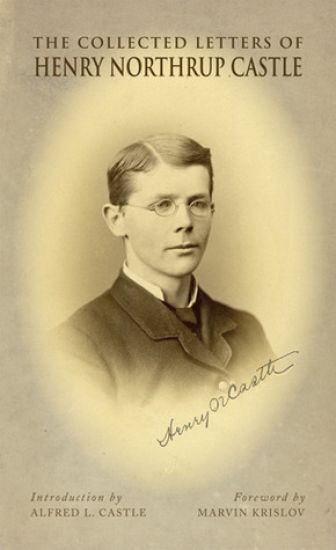
The Collected Letters of Henry Northrup Castle

The Collected Letters of Henry Northrup Castle

Henry Northrup Castle

Ohio University Press
2012
pokkari
George Herbert Mead, one of America's most important and influential philosophers, a founder of pragmatism, social psychology, and symbolic interactionism, was also a keen observer of American culture and early modernism. In the period from the 1870s to 1895, Henry Northrup Castle maintained a correspondence with family members and with Mead—his best friend at Oberlin College and brother-in-law—that reveals many of the intellectual, economic, and cultural forces that shaped American thought in that complex era. Close friends of John Dewey, Jane Addams, and other leading Chicago Progressives, the author of these often intimate letters comments frankly on pivotal events affecting higher education, developments at Oberlin College, Hawaii (where the Castles lived), progressivism, and the general angst that many young intellectuals were experiencing in early modern America. The letters, drawn from the Mead-Castle collection at the University of Chicago, were collected and edited by Mead after the tragic death of Henry Castle in a shipping accident in the North Sea. Working with his wife Helen Castle (one of Henry's sisters), he privately published fifty copies of the letters to record an important relationship and as an intellectual history of two progressive thinkers at the end of the nineteenth century. American historians, such as Robert Crunden and Gary Cook, have noted the importance of the letters to historians of the late nineteenth century. The letters are made available here using the basic Mead text of 1902. Additional insights into the connection between Mead, John Dewey, Henry and Harriet Castle, and Hawaii's progressive kindergarten system are provided by the foundation's executive director Alfred L. Castle. Marvin Krislov, president of Oberlin College, has added additional comments on the importance of the letters to understanding the intellectual relationship that flourished at Oberlin College. Published with the support of the Samuel N. and Mary Castle Foundation.
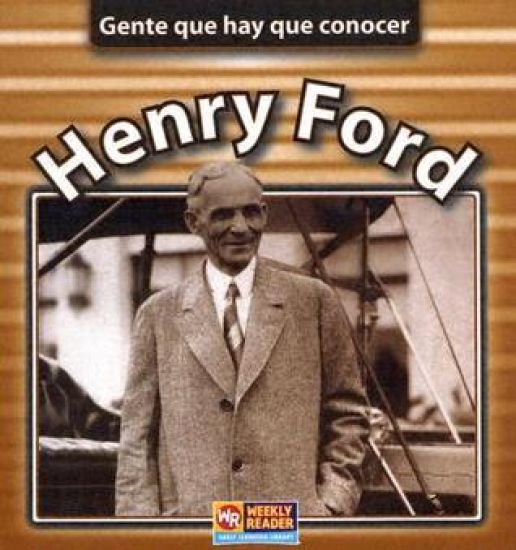
Henry Ford

Henry Ford

Jonatha A. Brown

Gareth Stevens Publishing
2004
sidottu
A complete translation of People We Should Know, Gente que hay que conocer is a series of first biographies designed for beginning readers. Each book introduces one of the most important individuals in recent times and explains what makes her or him so remarkable. Historic photos and easy-to-read text help readers understand each person's life and times.
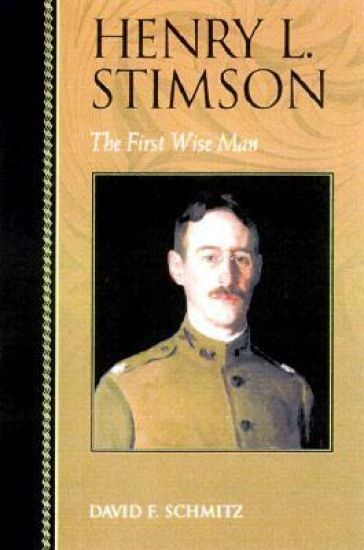
Henry L. Stimson

Henry L. Stimson

David F. Schmitz

Rowman Littlefield
2000
sidottu
The twentieth century witnessed the rise of the United States as the preeminent player on the world stage. While many individuals were responsible for the American ascension, few have left a larger legacy in the arena of foreign policy than Henry L. Stimson. Serving nearly every American president from Theodore Roosevelt to Harry S. Truman, Stimson shaped America's worldview and influenced America's foreign affairs decisions for over 40 years. A Republican, Stimson served as Secretary of War under William H. Taft (1911-13), Secretary of State under Herbert Hoover (1929-33), and Secretary of War for Franklin D. Roosevelt and Harry S. Truman (1940-45); in addition, he fought in World War I, initiated the Good Neighbor Policy in Central America, and served as Governor General of the Philippines (1927-29). In this new book, David Schmitz reveals how the life of Stimson provides a unique framework for analyzing America's foreign policy development from the imperialism of the 1890s to the origins of the Cold War and the emergence of the United States as the world's leading power after World War II. The author also explains the continuities in foreign policy over this period and the emergence of the internationalist perspective over isolation-ism, showing how Stimson was able to pass along his perspec-tives to the next generation of American policymakers who after World War II established the internationalist mindset of the Cold War years. Stimson's crucial role in the development and use of the atomic bomb is also examined. Henry L. Stimson: The First Wise Man is useful for courses in United States foreign policy, World War II, American history from 1900-1945, and survey courses in U.S. history.
Henry L. Stimson

Henry L. Stimson

David F. Schmitz

Rowman Littlefield
2000
nidottu
The twentieth century witnessed the rise of the United States as the preeminent player on the world stage. While many individuals were responsible for the American ascension, few have left a larger legacy in the arena of foreign policy than Henry L. Stimson. Serving nearly every American president from Theodore Roosevelt to Harry S. Truman, Stimson shaped America's worldview and influenced America's foreign affairs decisions for over 40 years. A Republican, Stimson served as Secretary of War under William H. Taft (1911-13), Secretary of State under Herbert Hoover (1929-33), and Secretary of War for Franklin D. Roosevelt and Harry S. Truman (1940-45); in addition, he fought in World War I, initiated the Good Neighbor Policy in Central America, and served as Governor General of the Philippines (1927-29). In this new book, David Schmitz reveals how the life of Stimson provides a unique framework for analyzing America's foreign policy development from the imperialism of the 1890s to the origins of the Cold War and the emergence of the United States as the world's leading power after World War II. The author also explains the continuities in foreign policy over this period and the emergence of the internationalist perspective over isolation-ism, showing how Stimson was able to pass along his perspec-tives to the next generation of American policymakers who after World War II established the internationalist mindset of the Cold War years. Stimson's crucial role in the development and use of the atomic bomb is also examined. Henry L. Stimson: The First Wise Man is useful for courses in United States foreign policy, World War II, American history from 1900-1945, and survey courses in U.S. history.
Henry Moore

Henry Moore

Anita Feldman; Ann Wagner

Rizzoli International Publications
2012
pokkari
"Everything I do, I intend to make on a large scale . . . Size itself has its own impact, and physically we can relate ourselves more strongly to a big sculpture than to a small one." —Henry Moore It was Moore’s intention that these large-scale forms be interacted with, viewed close-up, and even touched. In order that their heft and mass be perceived in a myriad of settings, they were most commonly placed outdoors, subject to the effects of changing light, seasons, and terrain. Within the controlled white environment of the gallery space, the sheer volume and mammoth proportions of the sculptures are more keenly felt. Brimming with latent energy, their richly textured surfaces and sensual, rippling arcs and concavities can be seen to new effect.
Henry Taylor

Henry Taylor

Ghansah Rachel Kaadzi

Rizzoli International Publications
2018
sidottu
This definitive survey of over 200 of the painter s portraits and street scenes forms a personal and political portrait of society today. For three decades the iconic artist has worked his way through New York, Los Angeles, Europe, and Africa, documenting what he sees. In his circle are artists, musicians, writers, performers, as well as friends from his ten years as a psychiatric technician. It is the artist s empathetic eye that allows him to imagine his figures with authenticity and grace not better than they are, or more glamorous but part of a big, complicated world. Flat, brushy flows of colour cast figures that often float in surreal landscapes abstracted from the barbeque in the park, or neighbouring street. Suites of Taylor s paintings are reproduced alongside handwritten accounts of the sittings, offering an in-depth understanding of the artist s world. Contributions by Hilton Als, Charles Gaines, Rachel Kaadzi Ghansah, and Zadie Smith touch on the nature of truth, Matisse s concept of original naivete, and the state of the subject. This definitive monograph celebrates Taylor s direct and revealing portraits, offering a tonic to a divisive cultural moment in time.
Henry VIII's Army

Henry VIII's Army

Cornish Paul

Osprey Publishing
1987
nidottu
Military affairs occupied a very significant place during Henry VIII's reign, with English armies seeing action against two main enemies: the French and the Scots, of which France was undoubtedly viewed as the principal foe. Henry nursed grandiose ambitions to be acclaimed as the arbiter of European politics, and whilst intervention in European affairs did not necessarily dictate a policy of hostility towards France; England was invariably to be found in league with her enemies in time of war. This absorbing text by Paul Cornish deals with the history, uniforms and equipment of King Henry VIII's army.
Henry VIII's Divorce: Literature and the Politics of the Printing Press
A close examination of the rivalry between two printing presses at the time of the divorce crisis shows how the new learning could be employed to influence even the king himself. During the period of Henry VIII's divorce crisis, a political and literary rivalry developed between Thomas Berthelet, the king's printer, and the Rastell family, kinsmen of the Lord Chancellor Sir Thomas More and quasi-official printers in their own right. This study recounts the text-by-text progress of the feud. It describes how Berthelet represented Henry as a prudent philosopher-king, taking the advice of scholars and theologians on anulling his marriage, and on limiting the Church's power (texts include A Glass of the Truth, rumoured to be by Henry himself, and the works of Sir Thomas Elyot). In response to the king's press campaign, the Rastells' dialogues and dramasstaged the kind of wise counsel that Henry ostensibly welcomed (John Rastell's A New Book of Purgatory, Skelton's Magnificenceamong them), observing the rules dictated by the king's public image and urging him towards greater conformity with that image than divorce or declaration of royal supremacy would allow. J. CHRISTOPHER WARNER is Associate Professor of English at Le Moyne College.