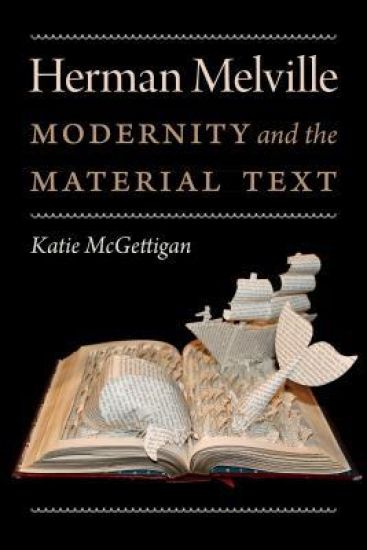
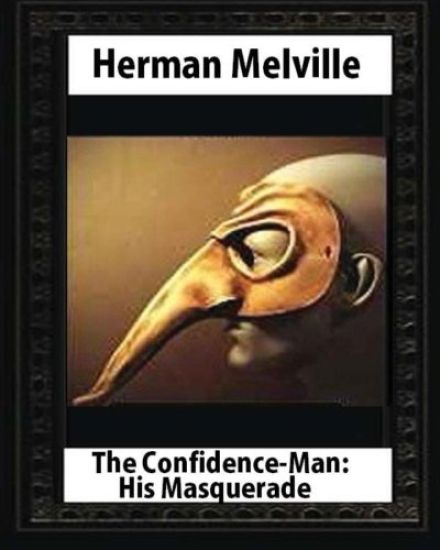
In this imaginative book, Katie McGettigan argues that Melville's novels and poetry demonstrate a sustained engagement with the physical, social, and economic materiality of industrial and commercial forms of print. Further, she shows that this "aesthetics of the material text," central both to Melville's stylistic signature and to his innovations in form, allows Melville to explore the production of selfhood, test the limits of narrative authenticity, and question the nature of artistic originality. Combining archival research in print and publishing history with close reading, McGettigan situates Melville's works alongside advertising materials, magazine articles, trade manuals, and British and American commentary on the literary industry to demonstrate how Melville's literary practice relies on and aestheticizes the specific conditions of literary production in which he worked. For Melville, the book is a physical object produced by particular technological processes, as well as an entity that manifests social and economic values. His characters carry books, write on them, and even sleep on them; they also imagine, observe, and participate in the buying and selling of books. Melville employs the book's print, paper, and binding-and its market circulations-to construct literary figures, to shape textual form, and to create irony and ambiguity.Exploring the printed book in Melville's writings brings neglected sections of his poetry and prose to the fore and invites new readings of familiar passages and images. These readings encourage a reassessment of Melville's career as shaped by his creative engagements with print, rather than his failures in the literary marketplace. McGettigan demonstrates that a sustained and deliberate imaginative dialogue with the material text is at the core of Melville's expressive practice and that, for Melville, the printed book served as a site for imagining the problems and possibilities of modernity.
Herman Melville (August 1, 1819 - September 28, 1891) was an American novelist, short story writer, and poet from the American Renaissance period. Most of his writings were published between 1846 and 1857. Best known for his sea adventure Typee (1846) and his whaling novel Moby-Dick (1851), he was almost forgotten during the last thirty years of his life. Melville's writing draws on his experience at sea as a common sailor, exploration of literature and philosophy, and engagement in the contradictions of American society in a period of rapid change. The main characteristic of his style is probably pervasive allusion, reflecting his written sources. Melville's way of adapting what he read for his own new purposes, scholar Stanley T. Williams wrote, "was a transforming power comparable to Shakespeare's".