Kirjojen hintavertailu. Mukana 11 717 486 kirjaa ja 12 kauppaa.

Kirjahaku

Etsi kirjoja tekijän nimen, kirjan nimen tai ISBN:n perusteella.

1000 tulosta hakusanalla Howard Pollack

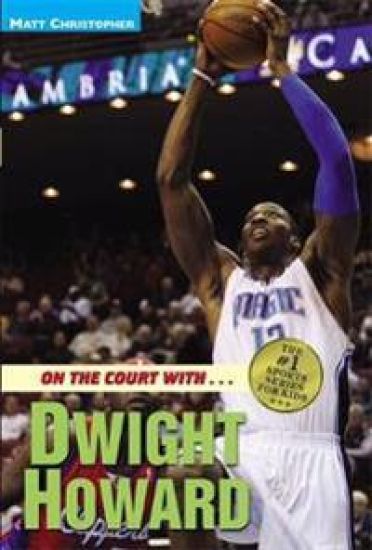
On The Court With...Dwight Howard

On The Court With...Dwight Howard

Matt Christopher

Little, Brown Young Readers
2010
pokkari
Outstanding. Unbelievable. Mindblowing. A three-time All-Star, three-time All-NBA team selection, two-time All-Defensive member, and the 2009 Defensive Player of the Year, Howard has been ranked consistently as one of the best in the league in field goal percentage and rebounds, and has set numerous league records. He has led the Orlando Magic to two division titles and one conference title, and he was the winner of the 2008 NBA Slam Dunk Contest.
Lovecraftian Roots: Writers Who Influenced Howard Phillips Lovecraft
The companion to "Lovecraftian Branches," this bookcollects stories from a number of authors who wereinfluential to the writings of H.P. Lovecraft. The stories included here are:"The Willows" by Algernon Blackwood (1907)"The Yellow Sign" by Robert W. Chambers (1895)"Idle Days on the Yann" by Lord Dunsany (1910)"Lost Hearts" by M. R. James (1895)"The White People" by Arthur Manchen (1904)"out of the Deep" by Walter de la Mare (1923)"The Facts in the Case of M. Valdemar" by Edgar Allan Poe (1845)"The House of Sounds" by Matthew Phipps Shiel (1911)The book is edited and compiled by Gary Hill. It is dedicated to W.H. Pugmire and his estatereceives part of the royalties from the book.Cover artwork by J.B. Lee
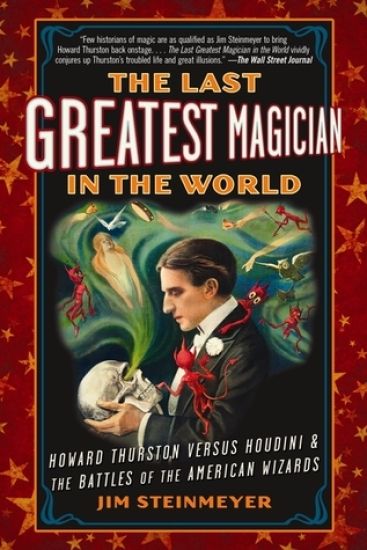
The Last Greatest Magician in the World: Howard Thurston Versus Houdini & the Battles of the American Wizards
Now in paperback, the acclaimed biography of the magician's magician, Howard Thurston. "There is no greater expert on the history of stage magicians than Jim Steinmeyer. His deep knowledge of the subject, combined with a remarkable mastery of magical know-how, makes this book a smart, fantastic read. I can't recommend it enough "--Neil Patrick Harris "Steinmeyer produces an engaging full-length biography of the man Orson Welles called 'the master'...Steinmeyer recovers, from the shadows of his greatest rival, a figure whose grandiose productions were an American institution for almost 30 years."--Publishers Weekly"Magician and author Jim Steinmeyer rescues a forgotten American icon from Houdini's shadow."--AARP: The Magazine"Thurston may have been forgotten, but The Last Greatest Magician In The World ably resurrects his legend and his awe-inspiring magic."--The Onion A.V. Club"An erudite, challenging text full of difficult questions"--Kirkus Reviews Here is the seminal biography of the magician's magician, Howard Thurston, a man who surpassed Houdini in the eyes of showmen and fans and set the standard fro how stage magic is performed today.Everyone knows Houdini-but who was Thurston? In this rich, vivid biography of the "greatest magician in the world," celebrated historian of stage magic Jim Steinmeyer captures the career and controversies of the wonder-worker extraordinaire, Howard Thurston.The public's fickleness over magicians has left Thurston all but forgotten today. Yet Steinmeyer shows how his story is one of the most remarkable in show business. During his life, from 1869 to 1936, Thurston successfully navigated the most dramatic changes in entertainment-from street performances to sideshows to wagon tours through America's still-Wild West to stage magic amid the glitter of grand theaters. Thurston became one of America's most renowned vaudeville stars, boldly performing an act with just a handful of playing cards, and then had the foresight to leave vaudeville, expanding his show into an extravaganza with more than forty tons of apparatus and costumes. His touring production was an American institution for nearly thirty years, and Thurston earned a brand name equal to Ziegfeld or Ringling Brothers.Steinmeyer explores the stage and psychological rivalry between Thurston and Houdini during the first decades of the twentieth century-a contest that Thurston won. He won with a bigger show, a more successful reputation, and the title of America's greatest magician. In The Last Greatest Magician in the World, Thurston's magic show is revealed as the one that animates our collective memories.
Accidental Argonaut: A Natural History of Winslow Howard
In Accidental Argonaut, Steve Cary relates the wide-ranging escapades of Winslow Howard, a renaissance man of science and culture whose life spanned the 19th Century. Howard was a trained jeweler, businessman, husband and father. He journeyed West to seek respite from deadly consumption and his ensuing adventures exemplified the fortunes of many contemporary Americans who left home and comfort on quests for freedom and new life in the largely unknown West. Like the mythical Greek Argonauts, Howard was driven to seek his fortune in gold, but the real treasure lay in his journey, during which he achieved fame and success as a self-taught assayer, naturalist, scientist and society organizer, and during which fortunes were won and lost and personal accomplishments came at tragic costs. New Hampshire-born, Howard apprenticed at Tiffany & Co. in New York City. His thirteen years of training culminated in prized, journeyman jeweler credentials and Howard seemed destined for prosperity in America's financial center, but that dream shattered when he acquired consumption. Unwilling to wither and die at age thirty, Howard rolled the dice and headed to New Mexico Territory, home of Kit Carson, ancient Spanish gold mines and a health-restoring climate. For the next forty years, Howard operated jewelry and assay shops in gold rush towns and silver mine camps around the West. Along his life's journey, Howard collected everything from clocks and coins to fossils and Indian artifacts. He was of a curious and scientific disposition, so the Smithsonian's Spencer Baird was able to lure him into the world of natural history where Howard made a name for himself collecting new species of plants and insects across the West. While American science was coalescing, gaining momentum and matching European science, Howard rode the rising tide of reason, interacting with founding scientists John Torrey, John Newberry, Asa Gray and Henry Edwards. At home in his mining towns, Howard's business ventures and scientific achievements contributed to transformation of the American West as its myth was being made.
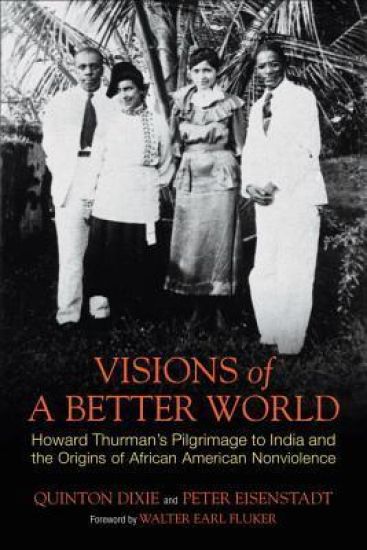
Visions of a Better World: Howard Thurman's Pilgrimage to India and the Origins of African American Nonviolence
In 1935, at the height of his powers, Howard Thurman, one of the most influential African American religious thinkers of the twentieth century, took a pivotal trip to India that would forever change him--and that would ultimately shape the course of the civil rights movement in the United States. When Thurman (1899-1981) became the first African American to meet with Mahatma Gandhi, he found himself called upon to create a new version of American Christianity, one that eschewed self-imposed racial and religious boundaries, and equipped itself to confront the enormous social injustices that plagued the United States during this period. Gandhi's philosophy and practice of satyagraha, or "soul force," would have a momentous impact on Thurman, showing him the effectiveness of nonviolent resistance. After the journey to India, Thurman's distinctly American translation of satyagraha into a Black Christian context became one of the key inspirations for the civil rights movement, fulfilling Gandhi's prescient words that "it may be through the Negroes that the unadulterated message of nonviolence will be delivered to the world." Thurman went on to found one of the first explicitly interracial congregations in the United States and to deeply influence an entire generation of black ministers--among them Martin Luther King Jr. Visions of a Better World depicts a visionary leader at a transformative moment in his life. Drawing from previously untapped archival material and obscurely published works, Quinton Dixie and Peter Eisenstadt explore, for the first time, Thurman's development into a towering theologian who would profoundly affect American Christianity--and American history.
The Collected Works of William Howard Taft, Volume I
The inaugural volume of The Collected Works of William Howard Taft is composed of two of his earliest books, Four Aspects of Civic Duty and Present Day Problems. Based on a series of lectures delivered at Yale in 1906, Four Aspects of Civic Duty is an attempt by then Secretary of War Taft to bring to the attention of his audience the importance of civic duty from the perspective of the university graduate, the judge on the bench, the colonial administrator, and the national executive branch of government. His remarks were drawn from his own experience, while at the same time he laid down the principles of citizenship with which all people could identify. In Present Day Problems, William Howard Taft demonstrates the depth of his knowledge and the seriousness of his reflections on a wide range of topics including Sino-American relations and the ongoing contest between capital and labor in America's increasingly industrial socioeconomy. The problems he takes up are met head-on and discussed in a fashion likely to persuade his audience that he is well prepared to tackle the burdens of the presidency. The Collected Works of William Howard Taft, in eight volumes, will include Taft's complete published works as well as his presidential and state addresses and selected court opinions from his days as chief justice of the Supreme Court.
The Collected Works of William Howard Taft, Volume II
The second volume of The Collected Works of William Howard Taft is dedicated to the speeches and writings that displayed his thinking in the autumn of 1908 and the following winter. At this time he was campaigning for the presidency against the well-known William Jennings Bryan, and in Taft's writings is evidence of the contrast in style between Taft and Bryan and between Taft and his predecessor, Teddy Roosevelt. as well. Although uncomfortable with campaigning, he thoughtfully addresses the concerns of the day that framed the election, including race, the Philippines, and socialism. Political Issues and Outlooks also contains speeches made after the election and leading up to his inauguration as the twenty-seventh president of the United States. Introduced by a commentary from the general series editor Professor David H. Burton, the second volume of The Collected Works of William Howard Taft is a revealing look at the machinations of United States politics at the beginning of the twentieth century and a glimpse into the mind of one of the century's most influential political architects.
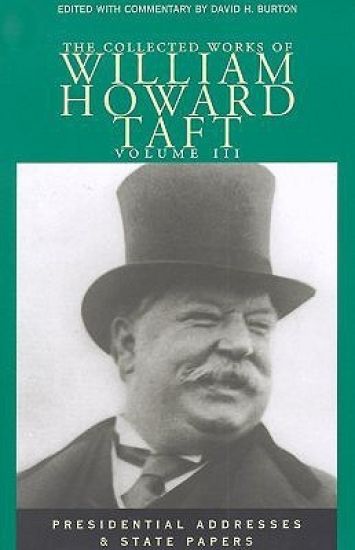
The Collected Works of William Howard Taft, Volume III
The third volume of The Collected Works of William Howard Taft imparts an appreciation of the range of the twenty-seventh president's interests. Beginning with his inaugural address and concluding with a detailed exposition of governmental expenses and needed economies, President William Howard Taft showed himself willing to tackle the routine as well as the rarified responsibilities of executive rule. Whether he was addressing the issue of strikes and labor unions or conservation, President Taft consistently demonstrated that, in word and action, he was prepared to be a modern president. What impresses the reader of these remarks is Taft's willingness to administer to virtually every part of the nation, thereby proving that he was not a mere figurehead but a chief executive truly concerned about problems across the country. Perhaps, as his words here indicate, Taft was not a good politician after all but a kind man who saw himself as president of all the people. As the first of two volumes directly related to Taft's tenure as president, Presidential Addresses and State Papers documents a pivotal time in the public life of this man from Ohio. Introduced by a commentary from the general series editor Professor David H. Burton, the third volume of The Collected Works of William Howard Taft underscores the presidential stature of William Howard Taft.
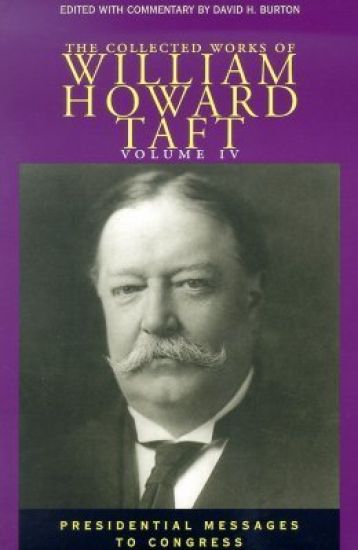
The Collected Works of William Howard Taft, Volume IV
"A time when panics seem far removed is the best time to prepare our financial system to withstand a storm. The most crying need this country has is a proper banking and currency system. The existing one is inadequate, and everyone who has studied the question admits it."—William Howard Taft The interaction between President William Howard Taft and the Congress provides a window on his leadership. Volume IV of The Collected Works of William Howard Taft is devoted to his messages to the legislative branch and concerns some of the pressing issues of the day, issues that have relevance still. Oftentimes President Taft was at odds with a somewhat reactionary Congress, causing him to veto legislation that he thought unwise. For example, his commitment to the independence of elected judges led him to reject statehood for Arizona until its constitution was altered to address his objection. His messages also touched on subjects for which he led the way over the objections of Congress, such as his recommendation of a federal law to protect resident aliens against denial of their civil rights and his advocacy of free trade with Canada. In his commentary to the volume, Professor Burton points out: "There is exhibited time after time concern for the American people, for men and women from different walks of life. Taft comes across less as a judge, which he had been, or the chief justice he was to become, and more as a sitting president of all the people." Taft's Presidential Messages to Congress provides the documentary evidence to support that claim.
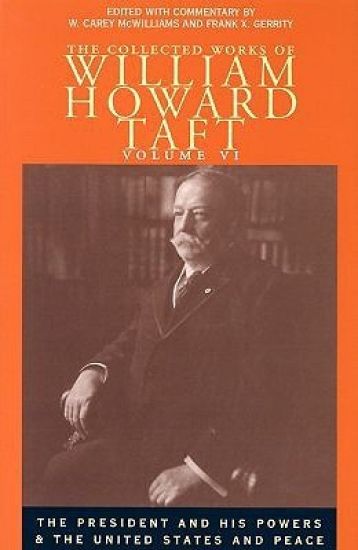
The Collected Works of William Howard Taft, Volume VI
Volume VI of The Collected Works of William Howard Taft follows the career of William Howard Taft upon his leaving the White House. It consists of two short publications from 1914 and 1915. The first, The President and His Powers, is based on a series of lectures delivered at Columbia University and draws on Taft's experience in the presidency and the executive branch. It speaks particularly to the nature of executive power and its place in the American system and is rooted in his disagreement with Theodore Roosevelt regarding presidential power. Taft believed all presidential power must be traced to some specific grant of power or be necessary to its exercise, while Roosevelt saw the presidency as a position of "steward of the people" limited only by some express provision of the Constitution. The second, The United States and Peace, reflects Taft's interest in foreign policy, which was intensified by his years as governor of the Philippines and as secretary of war, as well as by his presidency. Originally four lectures delivered in 1914, The United States and Peace discusses the Monroe Doctrine, the threat to peace presented by incidents of violence to foreigners in the United States, the maintenance of peace through international arbitration, and the trend toward federation in international affairs. Taft hoped to see the latter result in the establishment of an independent judiciary to resolve international disputes. Taft's reasoned arguments, supplemented by the commentaries of Professors McWilliams and Gerrity, will stimulate interest among historians, lawmakers, political activists, and the general public.
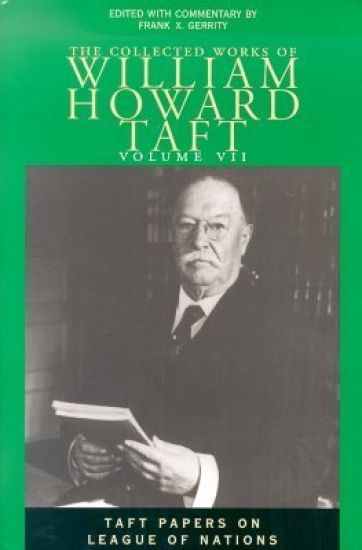
The Collected Works of William Howard Taft, Volume VII
Eager to turn the congressional election of 1918 into a confirmation of his foreign policy, President Woodrow Wilson was criticized for abandoning the spirit of the popular slogan "Politics adjourned!" His predecessor, William Howard Taft, found Wilson difficult to deal with and took issue with his version of the League of Nations, which Taft felt was inferior to the model proposed by the League to Enforce Peace. Rather than join the massive Republican opposition to the Treaty of Versailles, however, Taft instead supported Wilson's controversial decision to travel to Paris as the head of the American peace delegation, and he defended the critical tenth article in the covenant, which detractors saw as a surrender of American sovereignty. He also counseled Wilson to insert a clause concerning the Monroe Doctrine that would pacify the Senate's group of "reservationists," whose votes were essential to approval of the treaty. Volume VII in The Collected Works of William Howard Taft consists of the Taft Papers on League of Nations originally published in 1920. This is a collection ofTaft's speeches, newspaper articles, and complementary documents that reflect his consistent support for a league of nations and, eventually, for the Covenant of the League of Nations emanating from the Paris Peace Conference. Although the failure of the treaty and its League of Nations can probably be laid at the feet of an obstinate Wilson and a wily Henry Cabot Lodge, William Howard Taft can be credited with rising above partisanship to emerge as the League's most consistent supporter. As in the rest of the Collected Works, Taft Papers on League of Nations provides a window on the machinations surrounding some of the most significant decisions of the era.
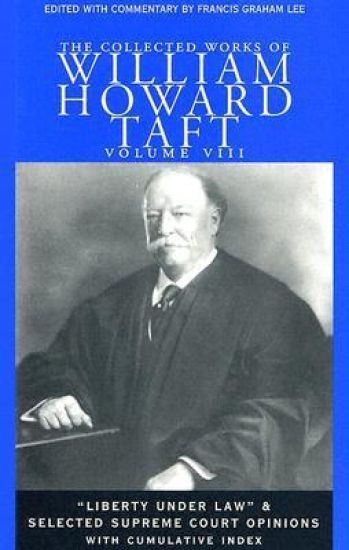
The Collected Works of William Howard Taft, Volume VIII
William Howard Taft's presidency (1909-1913), succeeding Theodore Roosevelt's, was mired in bitter partisan fighting, and Taft sometimes blundered politically. However, this son of Cincinnati assumed his true calling when President Warren G. Harding appointed him to the U.S. Supreme Court in 1921. Taft remains the only person to have served both as president of the United States and as chief justice of the Supreme Court. The Collected Works of William Howard Taft, Volume VIII, consists of "Liberty under Law" and selected Supreme Court opinions, among the most instructive accomplishments of Taft's ten years at the helm of the court. The writings reveal the sober judgments of a federalist who viewed state regulation with suspicion, championed national government, and saw an independent and powerful judiciary as the bulwark protecting the "vested rights" that the framers of the U.S. Constitution sought to guarantee. Whatever his failings as a politician, Taft was an intellectual powerhouse who knew how to use the law as a lever to encourage society to move toward more stable and productive ends. Although Taft is considered an average president at best, historians and political scientists rank him among fifteen "near greats" who have served on the high court. His ability and his love for the law shine through in Volume VIII, the concluding volume of The Collected Works of William Howard Taft. As Taft reportedly said to President Harding upon his appointment as chief justice, "I love judges and I love courts. They are my ideals on earth of what we shall meet afterward in heaven under a just God."
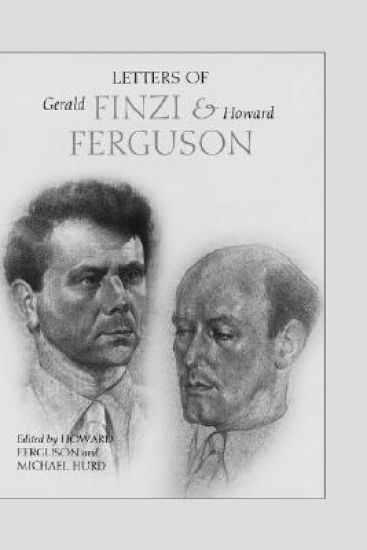
Letters of Gerald Finzi and Howard Ferguson
Biographical insights into two outstanding musical personalities and commentary on the vitality of the British musical scene of the period. The letters that passed, on an almost daily basis, between the composers Howard Ferguson and Gerald Finzi provide not only a fascinating commentary on the British musical scene of the period 1926-1956, but also what amounts to a unique dual-biography of two remarkable, though very different, personalities. Their lives, their loves, their enthusiasms and their prejudices are laid bare with a rare degree of candour, so that we learn not only what it was liketo be witness to an art that was enjoying an unprecedented explosion of creative vitality, but also how they came to explore and consolidate their own exceptional talents. Biographical background narratives provide links that make clear what intimate correspondents inevitably take for granted, and explanations are given for references that the passage of time has made obscure. Their lives are thus revealed in all their diversity - tragedy and comedy, achievement and frustration, justifiable pride and unreasoning prejudice playing equal parts in this absorbing tale of two outstanding musical personalities of the twentieth century.