Kirjojen hintavertailu. Mukana 12 390 323 kirjaa ja 12 kauppaa.

Kirjahaku

Etsi kirjoja tekijän nimen, kirjan nimen tai ISBN:n perusteella.

1000 tulosta hakusanalla Ian Ruxton (Ed )

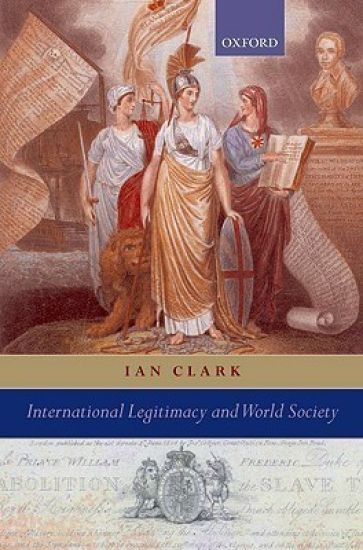
International Legitimacy and World Society

International Legitimacy and World Society

Ian Clark

Oxford University Press
2007
sidottu
The conventional view of international society is that it is interested only in co-existence and order amongst states. This creates a puzzle. When the historical record is examined, we discover that international society has repeatedly signed up to normative principles that go well beyond this purpose. When it has done so, it has built new normative constraints into international legitimacy, and this is most conspicuously so when it has espoused broadly humanitarian principles. This suggests that the norms adopted by international society might be encouraged from the distinct constituency of world society. The book traces a series of historical case studies which issued in international affirmation of such principles: slave-trade abolition in 1815; the public conscience in 1899; social justice (but not racial equality) in 1919; human rights in 1945; and democracy as the only acceptable form of state in 1990. In each case, evidence is presented of world-society actors (transnational movements, advocacy networks, and INGOs) making the political running in support of a new principle, often in alliance with a leading state. At the same time, world society has mounted a normative case, and this can be seen as a degree of normative integration between international and world society. Each of the cases tells a fascinating story in its own right. Collectively, they contribute to the growing IR literature on the role of norms, and especially that written from a broadly English School or constructivist perspective. The book thereby puts some real historical flesh on the concept of world society, while forcing us to reconsider traditional views about the 'essential' nature of international society.
Genetic Counseling Research: A Practical Guide

Genetic Counseling Research: A Practical Guide

Ian M. MacFarlane; Patricia McCarthy Veach; Bonnie S. LeRoy

Oxford University Press Inc
2014
nidottu
Genetic Counseling Research: A Practical Guide is the first text devoted to research methodology in genetic counseling. This text offers step-by-step guidance for conducting research, from the development of a question to the publication of findings. Genetic counseling examples, user-friendly worksheets, and practical tips guide readers through the research and publication processes. With a highly accessible, pedagogical approach, this book will help promote quality research by genetic counselors and research supervisors--and in turn, increase the knowledge base for genetic counseling practice, other aspects of genetic counseling service delivery, and professional education. It will be an invaluable resource to the next generation of genetic counseling and its surrounding disciplines.
How and Why Thoughts Change

How and Why Thoughts Change

Ian M. Evans

Oxford University Press Inc
2015
sidottu
Cognitive therapy, a core approach within a collection of psychotherapeutic techniques known as cognitive behavioral therapy (CBT), is fundamentally about changing peoples' thoughts-helping them overcome difficulties by recognizing and changing dysfunctional thinking styles. Among other strategies, it requires encouraging the development of skills for rehearsing new habits of thought, modifying biases in judging and interpreting social and emotional information, and for testing assumptions underlying dysfunctional and negative, distorted thinking. In How and Why Thoughts Change, Dr. Ian Evans deconstructs the nature of cognitive therapy by examining the cognitive element of CBT, that is, how and why thoughts change behavior and emotion. There are a number of different approaches to cognitive therapy, including the classic Beck approach, the late Albert Ellis's rational-emotive psychotherapy, Young's schema-focused therapy, and newer varieties such as mindfulness training, Acceptance and Commitment Therapy (ACT), and problem-solving strategies. Evans identifies the common principles underlying these methods, attempts to integrate them, and makes suggestions as to how our current cognitive therapies might be improved. He draws on a broad survey of contemporary research on basic cognitive processes and integrates these with therapeutic approaches. While it may seem obvious that how and what we think determines how and in what manner we behave, the relationship between thought and action is not a simple one. Evans addresses questions such as: What is the difference between a thought and a belief? How do we find the cause of a thought? And can it really be that thought causes behavior and emotion, or could it be the other way around? In a reader-friendly style that avoids jargon, this innovative book answers some pertinent questions about cognitive therapy in a way that clarifies exactly how and why thoughts change. Evans demonstrates that understanding these concepts is a linchpin to providing and improving therapy for clients.
Pakistan: A New History

Pakistan: A New History

Ian Talbot

Oxford University Press
2015
nidottu
If Pakistan is to preserve all that is good about its country--the generosity and hospitality of its people, the dynamism of its youth--it must face the deterioration of its social and political institutions. Sidestepping easy headlines to identify Pakistan's true dangers, this volume revisits the major turning points and trends of Pakistani history over the past six decades, focusing on the increasing entrenchment of Pakistan's army in its political and economic arenas; the complex role of Islam in public life; the tensions between central and local identities and democratic impulses; and the effect of geopolitical influences on domestic policy and development. While Ian Talbot's study centres on Pakistan's many failures--the collapse of stable governance, the drop in positive political and economic development, and, most of all, the unrealised goal of securing a separate Muslim state--his book unequivocally affirms the country's potential for a positive reawakening. These failures were not preordained, Talbot argues, and such a fatalistic reading does not respect the complexity of historical events, individual actors, and the state's own rich resources. While he acknowledges grave crises still lie ahead for Pakistan, Talbot's sensitive historical approach makes it clear that favourable opportunities still remain for Pakistan, in which the state has a chance to reclaim its priorities and institutions and reestablish political and economic sustainability.
The Complete Annotated Gilbert & Sullivan

The Complete Annotated Gilbert & Sullivan

Ian Bradley

Oxford University Press Inc
2016
nidottu
Ian Bradley's Complete Annotated Gilbert and Sullivan has established itself across the world as the authorized and definitive 'Bible' for all those interested in the Savoy operas. Originally published in two Penguin paperbacks in the 1980's, a single-volume comprehensive compendium, hailed widely as "easily the best annotated Gilbert & Sullivan available" (Gayden Wren, New York Times) was published by Oxford University Press in 1996. This brand new 20th anniversary edition includes Thespis, Gilbert and Sullivan's first collaboration which is now being increasingly performed, despite the loss of the vocal and orchestral scores. It also features a completely new introduction, reflecting on the state of Gilbert and Sullivan nearly 150 years after the pair began their legendary collaboration, and new annotations addressing recent performance history, newly discovered 'lost' songs and dialogue, and, for the first time, Gilbert and Sullivan references in contemporary popular culture. Scholars, performers, and fans are sure to rejoice in this indispensable companion to the Gilbert and Sullivan repertoire, newly updated for the present day.
The Oxford Dictionary of Art and Artists

The Oxford Dictionary of Art and Artists

Ian Chilvers

Oxford University Press
2009
nidottu
Covering Western art from the ancient Greeks to the present day, this best-selling and authoritative dictionary is more wide-ranging than any comparable reference work. It contains over 2,500 clear and concise entries on styles and movements, materials and techniques, and museums and galleries. It also includes biographical entries for artists, critics, collectors, dealers, and patrons, with places and full dates of birth and death (in many instances correcting misinformation that has found its way into other sources). For this new edition, entries have been thoroughly revised and updated, and more than fifty new entries have been added, for example Tracey Emin and Jack Vettriano. Browsers and readers with an interest in a particular area will benefit from the classified list of all the entries in the book - an invaluable innovation that makes it easy to see immediately which collectors, for example, or 18th-century French artists, or printmaking terms, are included in the dictionary. Written in an engaging manner with many entries enlivened by quotations from artists and critics, this dictionary is a pleasure to browse, whilst its A-Z structure and classified list makes it perfect for quick reference. Previously entitled The Concise Oxford Dictionary of Art and Artists, this major new edition is essential for students and teachers of art, design, art theory, and art history, and it is ideal for artists, visitors to art exhibitions and galleries, and anyone with an interest in art.
Greening Business

Greening Business

Ian Worthington

Oxford University Press
2012
sidottu
Environmental protection has increasingly become a business issue at both the strategic and operational level for businesses of all sizes and across all continents. Greening Business is a comprehensive and highly contemporary analysis of the business/natural environment interface. Supported by numerous examples of current environmental practices in industry and commerce, the book examines why, when, and how businesses have responded to the growing pressures from governments, citizens, and other stakeholders to improve on their environmental performance. Focusing on the firm as the primary unit of analysis, the book examines the major drivers of corporate ecological responsiveness and critically investigates the nature and range of business responses in both theory and practice. It offers a detailed analysis of the contested business case for corporate greening, using insights from current strategy and management theory, including the resource-based view of the firm, and discusses the ways in which a firm can incorporate its concern for environmental protection into its day-to-day operations and decisions and through its strategic posture. It concludes with a discussion of the notion of the ecologically sustainable enterprise.
Greening Business

Greening Business

Ian Worthington

Oxford University Press
2012
nidottu
Environmental protection has increasingly become a business issue at both the strategic and operational level for businesses of all sizes and across all continents. Greening Business is a comprehensive and highly contemporary analysis of the business/natural environment interface. Supported by numerous examples of current environmental practices in industry and commerce, the book examines why, when, and how businesses have responded to the growing pressures from governments, citizens, and other stakeholders to improve on their environmental performance. Focusing on the firm as the primary unit of analysis, the book examines the major drivers of corporate ecological responsiveness and critically investigates the nature and range of business responses in both theory and practice. It offers a detailed analysis of the contested business case for corporate greening, using insights from current strategy and management theory, including the resource-based view of the firm, and discusses the ways in which a firm can incorporate its concern for environmental protection into its day-to-day operations and decisions and through its strategic posture. It concludes with a discussion of the notion of the ecologically sustainable enterprise.
The Life of Adam Smith

The Life of Adam Smith

Ian Simpson Ross

Oxford University Press
2010
sidottu
This new edition of The Life of Adam Smith remains the only book to give a full account of Smith's life whilst also placing his work into the context of his life and times. Updated to include new scholarship which has recently come to light, this full-scale biography of Adam Smith examines the personality, career, and social and intellectual circumstances of the Scottish moral philosopher regarded as the founder of scientific economics, whose legacy of thought - most notably about the free market and the role of the state - concerns us all. Ian Simpson Ross draws on correspondence, archival documents, the reports of contemporaries, and the record of Smith's publications to fashion a lively account of Adam Smith as a man of letters, moralist, historian, and critic, as well as an economist. Supported with full scholarly apparatus for students and academics, the book also offers 20 halftone illustrations representing Smith and the world in which he lived.
Revolutionaries of the Cosmos

Revolutionaries of the Cosmos

Ian Glass

Oxford University Press
2008
nidottu
Galileo, Newton, Herschel, Huggins, Hale, Eddington, Shapley and Hubble: these astronomers applied ideas drawn from physics to astronomy and made dramatic changes to the world-pictures that they inherited. They showed that celestial objects are composed of the same materials as the earth and that they behave in the same way. They displaced successively the earth, the sun and finally the milky way galaxy from being the centre of the universe. This book contains their biographies and outlines their greatest discoveries. Hard work, physical insight, desire for fame and a strong belief in the rightness of their own ideas were characteristics of all eight. Their often quirky personalities led them into bitter controversies with their contemporaries. But their successes arose from the outstanding clarity of their thoughts, their practical ability and their strong sense of direction in science.
Hegemony in International Society

Hegemony in International Society

Ian Clark

Oxford University Press
2011
sidottu
Can international legitimacy operate even in a deformed balance of power, and when there is only one dominant state? Conventionally, hegemony has been perceived as a threat to international society. But how then is international order to be maintained, if this still requires a managerial role on the part of the great powers? IR theory has not taken that problem sufficiently seriously. This study makes a sharp distinction between primacy, denoting merely a form of material power, and hegemony, understood as a legitimate practice, and as giving rise to a form of social power. Adopting an English School approach, the author suggests hegemony be considered as one potential institution of international society, and hence as one possible mechanism of international order. The book reviews some relevant historical cases (the Concert of Europe, Pax Britannica and Pax Americana) and argues that, instead of one model of hegemony, these represent several different variants: importantly, each displays its own distinctive legitimacy dynamics. Once these are appreciated, they can help us identify the possible institutional forms of hegemony in contemporary international society. This is done through three cases, examining in turn US policy on the UN Security Council, in East Asia, and on climate change. The overall argument challenges the limited post-Cold War debate about primacy, and the equally simplistic projections about the future distribution of power to which it gives rise. In doing so, it offers a major re-thinking of the concept of hegemony in international relations.
Digital Government at Work

Digital Government at Work

Ian McLoughlin; Rob Wilson

Oxford University Press
2013
sidottu
Over the past decade, putting public services on-line has been a focus of huge policy and financial investments aimed at providing more joined-up service delivery. For some this is part of a transformation that is bringing about a new era of integrated digital government. For others digitalization means threats to privacy and security and a strengthening of bureaucracy. In the UK and beyond, front-line service providers and citizens have been slow to take up digital services whilst major projects have floundered. This book takes a fresh look at this vital area for public policy and practice. Informed by over ten years of original research on the 'inside' of projects to put local services on-line, the authors combine cross-disciplinary insights to provide a new social informatics perspective on digital government. Experiences in areas such as health and social care are used to illustrate the dangers of 'over-integration' when key decisions are left to system designers, as they seek to integrate information in centralized systems. The authors argue for a new 'architectural discourse' to change the way that systems are deployed, evolve, and are governed. This leads to the conclusion that increased coordination of public services in a digital economy is better achieved through federated rather than integrated services that recognize the infrastructural nature of information systems and the essential role of co-production in their future evolution
Elegance in Science

Elegance in Science

Ian Glynn

Oxford University Press
2010
sidottu
The idea of elegance in science is not necessarily a familiar one, but it is an important one. The use of the term is perhaps most clear-cut in mathematics - the elegant proof - and this is where Ian Glynn begins his exploration. Scientists often share a sense of admiration and excitement on hearing of an elegant solution to a problem, an elegant theory, or an elegant experiment. The idea of elegance may seem strange in a field of endeavour that prides itself in its objectivity, but only if science is regarded as a dull, dry activity of counting and measuring. It is, of course, far more than that, and elegance is a fundamental aspect of the beauty and imagination involved in scientific activity. Ian Glynn, a distinguished scientist, selects historical examples from a range of sciences to draw out the principles of science, including Kepler's Laws, the experiments that demonstrated the nature of heat, and the action of nerves, and of course the several extraordinary episodes that led to Watson and Crick's discovery of the structure of DNA. With a highly readable selection of inspiring episodes highlighting the role of beauty and simplicity in the sciences, the book also relates to important philosophical issues of inference, and Glynn ends by warning us not to rely on beauty and simplicity alone - even the most elegant explanation can be wrong.
Blackstone's Guide to the Borders, Citizenship and Immigration Act 2009

Blackstone's Guide to the Borders, Citizenship and Immigration Act 2009

Ian Macdonald QC; Laurie Fransman QC; Adrian Berry; Alison Harvey; Hina Majid; Ronan Toal

Oxford University Press
2009
nidottu
The Blackstone's Guide Series delivers concise and accessible books covering the latest legislative changes and amendments. Published soon after enactment, they offer expert commentary by leading names on the scope, extent and effects of the legislation, plus a full copy of the Act itself. They offer a cost-effective solution to key information needs and are the perfect companion for any practitioner needing to get up to speed with the latest changes. The Blackstone's Guide to the Borders, Citizenship, and Immigration Act 2009 provides an essential tool for understanding the important changes in border control, citizenship, and immigration law found in the Act. The Guide provides a clear explanation of developments in the acquisition of British citizenship by automatic acquisition, naturalisation and registration; the introduction of new immigration measures concerning students, children, trafficking, and other matters; and the new customs functions at UK borders and connected supervisory powers. The Guide provides a commentary that puts the new provisions into the context of existing laws, while explaining the significance of the innovations introduced. The constitutional significance of the new measures is considered, together with an emphasis on the implications of the measures for the protection of rights under the European Convention for the Protection of Human Rights and Fundamental Freedoms. The Guide is a clear exposition of the development of the law. This new Blackstone's Guide combines the full text of the Act with an expert narrative. It brings practitioners up-to-date with this complex piece of legislation. Presented in a straightforward layout, it enables ease of use as a reference source.
The Light Fantastic: A Modern Introduction to Classical and Quantum Optics
A thorough introduction to modern classical and quantum optics, appropriate for advanced undergraduates or beginning graduates. The emphasis is on building an understanding in straightforward steps. Digital cameras, LCD screens, laser welding, and the optical fibre-based internet illustrate the penetration of optics in twenty-first century life: many such modern applications are presented from first principles. Self-contained themes covered in the book include: - Paraxial ray optics for devices including matrix methods and aberrations. - Interference, coherence and interferometry. - Diffraction, spectrometry and Gaussian optics. - Fourier optics, holography and information processing. - Astronomical telescopes, adaptive optics and aperture synthesis. - Maxwell's theory; scattering, absorption and dispersion in bulk materials; multilayer filters. - Quantum phenomena, wave-particle duality and the uncertainty principle. - Schroedinger's analysis of spectra, photon properties. - Laser principles; He:Ne to MQW lasers and applications. - Detectors: photodiodes, CCDs, PMs and image intensifiers; response, noise and linearity. - Fibre optics: single mode fibre analysis; the modern data highway; fibre sensors. - Photon-atom interactions, optical cooling and optical clocks. - Second quantization, photon correlations, SPDC, entanglement. This thoroughly revised and updated edition includes new coverage of photonic crystals and Bloch waves, as well as quantum dots and microcavities.
The Light Fantastic: A Modern Introduction to Classical and Quantum Optics
A thorough introduction to modern classical and quantum optics, appropriate for advanced undergraduates or beginning graduates. The emphasis is on building an understanding in straightforward steps. Digital cameras, LCD screens, laser welding, and the optical fibre-based internet illustrate the penetration of optics in twenty-first century life: many such modern applications are presented from first principles. Self-contained themes covered in the book include: - Paraxial ray optics for devices including matrix methods and aberrations. - Interference, coherence and interferometry. - Diffraction, spectrometry and Gaussian optics. - Fourier optics, holography and information processing. - Astronomical telescopes, adaptive optics and aperture synthesis. - Maxwell's theory; scattering, absorption and dispersion in bulk materials; multilayer filters. - Quantum phenomena, wave-particle duality and the uncertainty principle. - Schroedinger's analysis of spectra, photon properties. - Laser principles; He:Ne to MQW lasers and applications. - Detectors: photodiodes, CCDs, PMs and image intensifiers; response, noise and linearity. - Fibre optics: single mode fibre analysis; the modern data highway; fibre sensors. - Photon-atom interactions, optical cooling and optical clocks. - Second quantization, photon correlations, SPDC, entanglement. This thoroughly revised and updated edition includes new coverage of photonic crystals and Bloch waves, as well as quantum dots and microcavities.
Politics and Anti-Realism in Athenian Old Comedy

Politics and Anti-Realism in Athenian Old Comedy

Ian Ruffell

Oxford University Press
2011
sidottu
The collision of politics and claims of political intervention with the fantastic, absurd, and impossible is characteristic of the Athenian comic drama of the late fifth and early fourth century BCE, and has proved persistently problematic for critics. This book sets the impossible centre-stage and argues that comic impossibility should not be ignored in political readings or, conversely, used as a reason for excluding comedy from political interventions, but that anti-realism and the absurd are precisely the mechanisms through which this sort of comedy had political and social effects, manipulated its audience, and maintained its position in an environment of many competing political claims. Drawing on a variety of theoretical paradigms, from semiotics and humour theory through to ancient literary criticism, this book seeks to articulate a model of comic narrative and argument that can be applied equally both to the impossible worlds of Old Comedy and those of related forms of comedy in other traditions. This model emphasizes complex and provisional conceptual development over the linear and inflexible models of traditional models of comic narrative, and makes the joke and routine the base elements of comic plot. Pervasive comic self-reflexivity ('metatheatre') is presented as a special case of comic impossibility and one that intensifies and consolidates audience response. The on-going dialogue with comic rivals and performance forms provides both foundational matter for comic worlds and a competitive dimension to those worlds, an argument about the best kind of comic world and a demonstration that comic anti-realism has the political and conceptual measure of its more widely-recognized and supposedly realist rivals.
Hittite Texts and Greek Religion

Hittite Texts and Greek Religion

Ian Rutherford

Oxford University Press
2020
sidottu
Our knowledge of ancient Greece has been transformed in the last century by an increased understanding of the cultures of the Ancient Near East. This is particularly true of ancient religion. This book looks at the relationship between the religious systems of Ancient Greece and the Hittites, who controlled Turkey in the Late Bronze Age (1400-1200 BC). The cuneiform texts preserved in the Hittite archives provide a particularly rich source for religious practice, detailing festivals, purification rituals, oracle-consultations, prayers, and myths of the Hittite state, as well as documenting the religious practice of neighbouring Anatolian states in which the Hittites took an interest. Hittite religion is thus more comprehensively documented than any other ancient religious tradition in the Near East, even Egypt. The Hittites are also known to have been in contact with Mycenaean Greece, known to them as Ahhiyawa. The book first sets out the evidence and provides a methodological paradigm for using comparative data. It then explores cases where there may have been contact or influence, such as in the case of scapegoat rituals or the Kumarbi-Cycle. Finally, it considers key aspects of religious practices shared by both systems, such as the pantheon, rituals of war, festivals, and animal sacrifice. The aim of such a comparison is to discover clues that may further our understanding of the deep history of religious practices and, when used in conjunction with historical data, illuminate the differences between cultures and reveal what is distinctive about each of them.
Medical Genetics

Medical Genetics

Ian D. Young

Oxford University Press
2010
nidottu
Highly Commended in the 2006 BMA Medical Book Competition (Basic and clinical sciences) Medical Genetics provides medical and biomedical science students with an understanding of the basic principles of human genetics as they relate to clinical practice. Each of the initial chapters focuses on a traditional cornerstone of human genetics (molecular genetics, cytogenetics, Mendelian inheritance, polygenic inheritance, population genetics) with a major emphasis on clinical relevance. These are followed by consideration of subjects of specific medical importance such as the haemoglobinopathies, developmental genetics, cancer genetics and pharmacogenetics, with due attention to topical and evolving issues such as pharmacogenomics, gene therapy and therapeutic cloning. The final chapters provide an explanation of the genetically related clinical skills and competencies expected of a medical student, together with an overview of the principles of clinical genetics, a rapidly developing clinical specialty which now impinges on almost every aspect of medical practice. Online Resource Centre Medical Genetics is accompanied by an extensive Online Resource Centre, which offers a wealth of additional materials, including: · Multiple Choice Questions and Extended Matching Questions, to help you test your knowledge of each chapter of the book · Hyperlinked bibliography offering direct links to online articles cited in the book · Case Celebres: additional case celebres to those in the book · OMIM Database Links, providing hyperlinks to the NIH's database of genetic diseases · Pedigree Examples, giving guidance on constructing family trees · Bonus material from other seminal genetics titles published by Oxford University Press
G. K. Chesterton

G. K. Chesterton

Ian Ker

Oxford University Press
2011
sidottu
G. K. Chesterton is remembered as a brilliant creator of nonsense and satirical verse, author of the Father Brown stories and the innovative novel, The Man who was Thursday, and yet today he is not counted among the major English novelists and poets. However, this major new biography argues that Chesterton should be seen as the successor of the great Victorian prose writers, Carlyle, Arnold, Ruskin, and above all Newman. Chesterton's achievement as one of the great English literary critics has not hitherto been fully recognized, perhaps because his best literary criticism is of prose rather than poetry. Ian Ker remedies this neglect, paying particular attention to Chesterton's writings on the Victorians, especially Dickens. As a social and political thinker, Chesterton is contrasted here with contemporary intellectuals like Bernard Shaw and H. G. Wells in his championing of democracy and the masses. Pre-eminently a controversialist, as revealed in his prolific journalistic output, he became a formidable apologist for Christianity and Catholicism, as well as a powerful satirist of anti-Catholicism. This full-length life of G. K. Chesterton is the first comprehensive biography of both the man and the writer. It draws on many unpublished letters and papers to evoke Chesterton's joyful humour, his humility and affinity to the common man, and his love of the ordinary things of life.