
Kirjahaku
Etsi kirjoja tekijän nimen, kirjan nimen tai ISBN:n perusteella.
1000 tulosta hakusanalla Ida Gelbart


I hope that this manuscript will bring a great light into your life. If happiness still seems to be a mystery in your view, look after yourself, not after the mystery ! Connect yourself to joy. Don't feel frightened of being happy. Do merely live your life up by fulfilling your dreams. Get out of the sea of the unconscious. Try to understand the centrality of your being and sail towards the river of the universal spirit, full of love and surprising joys. This book will make you aware of the richness of universal harmony which leads to the improvement of everyone's life towards the positive. Eventually, you'll behold the beauty of the world and will turn our earth, as well as your life, into wonderful reality. Ida Lucia


I was eighteen and diagnosed with polio. My only symptoms were a headache, high temperature, and the inability to eat. I soon discovered I was unable to move my arms. After a time, I was moved to Newington Home and Hospital for Crippled Children for treatment by physiotherapists, making friends in a ward of twelve girls, attending high school in a bed, and graduating from High School. During that time, I recovered the ability to use my arms, but not my legs, and met my husband-to-be. Using a wheelchair, I became independent enough to leave the hospital and return to my parents' home. The second part tells of my life in a wheelchair. I attended college, married, and had two children. My husband and I lived in eight different states and in British Columbia, Canada. The need to find accessible housing with each move was a challenge. In the last chapter I tell of the changes in views about what people with disabilities can accomplish and the changes in legislation that make all aspects of life more accessible.
This work has been selected by scholars as being culturally important, and is part of the knowledge base of civilization as we know it. This work was reproduced from the original artifact, and remains as true to the original work as possible. Therefore, you will see the original copyright references, library stamps (as most of these works have been housed in our most important libraries around the world), and other notations in the work.This work is in the public domain in the United States of America, and possibly other nations. Within the United States, you may freely copy and distribute this work, as no entity (individual or corporate) has a copyright on the body of the work.As a reproduction of a historical artifact, this work may contain missing or blurred pages, poor pictures, errant marks, etc. Scholars believe, and we concur, that this work is important enough to be preserved, reproduced, and made generally available to the public. We appreciate your support of the preservation process, and thank you for being an important part of keeping this knowledge alive and relevant.
This work has been selected by scholars as being culturally important, and is part of the knowledge base of civilization as we know it. This work was reproduced from the original artifact, and remains as true to the original work as possible. Therefore, you will see the original copyright references, library stamps (as most of these works have been housed in our most important libraries around the world), and other notations in the work.This work is in the public domain in the United States of America, and possibly other nations. Within the United States, you may freely copy and distribute this work, as no entity (individual or corporate) has a copyright on the body of the work.As a reproduction of a historical artifact, this work may contain missing or blurred pages, poor pictures, errant marks, etc. Scholars believe, and we concur, that this work is important enough to be preserved, reproduced, and made generally available to the public. We appreciate your support of the preservation process, and thank you for being an important part of keeping this knowledge alive and relevant.

This work has been selected by scholars as being culturally important, and is part of the knowledge base of civilization as we know it. This work was reproduced from the original artifact, and remains as true to the original work as possible. Therefore, you will see the original copyright references, library stamps (as most of these works have been housed in our most important libraries around the world), and other notations in the work.This work is in the public domain in the United States of America, and possibly other nations. Within the United States, you may freely copy and distribute this work, as no entity (individual or corporate) has a copyright on the body of the work.As a reproduction of a historical artifact, this work may contain missing or blurred pages, poor pictures, errant marks, etc. Scholars believe, and we concur, that this work is important enough to be preserved, reproduced, and made generally available to the public. We appreciate your support of the preservation process, and thank you for being an important part of keeping this knowledge alive and relevant.
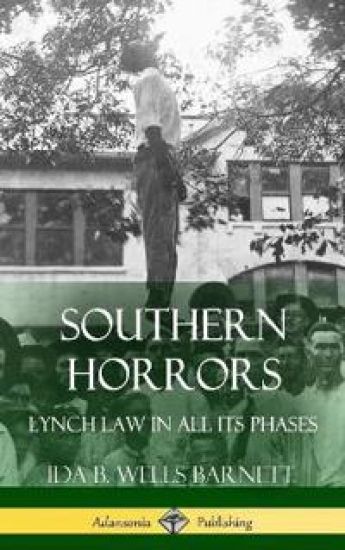
These shocking accounts of lynching within the Southern States during the late nineteenth century remain no less poignant today than when they were first recorded. A terrible reminder of the violent consequences which ingrained racism has upon society, this book unflinchingly tells of the various laws throughout the USA which allowed crowds to hunt, beat and hang black Americans. This process of lynching persisted for decades, with several communities purposely photographing and publicising their aftermath. Prefaced with a letter from the anti-slavery and black rights campaigner Frederick Douglass, this book describes the various incidents which resulted from authorities turning a blind eye to the violence building in the Southern United States. It is an unabashed exposure of the depravity to which the indulgence of prejudiced attitudes leads by Ida B. Wells-Barnett, in the brutally honest style for which she became both famous and remembered.
These shocking accounts of lynching within the Southern States during the late nineteenth century remain no less poignant today than when they were first recorded. A terrible reminder of the violent consequences which ingrained racism has upon society, this book unflinchingly tells of the various laws throughout the USA which allowed crowds to hunt, beat and hang black Americans. This process of lynching persisted for decades, with several communities purposely photographing and publicising their aftermath. Prefaced with a letter from the anti-slavery and black rights campaigner Frederick Douglass, this book describes the various incidents which resulted from authorities turning a blind eye to the violence building in the Southern United States. It is an unabashed exposure of the depravity to which the indulgence of prejudiced attitudes leads by Ida B. Wells-Barnett, in the brutally honest style for which she became both famous and remembered.
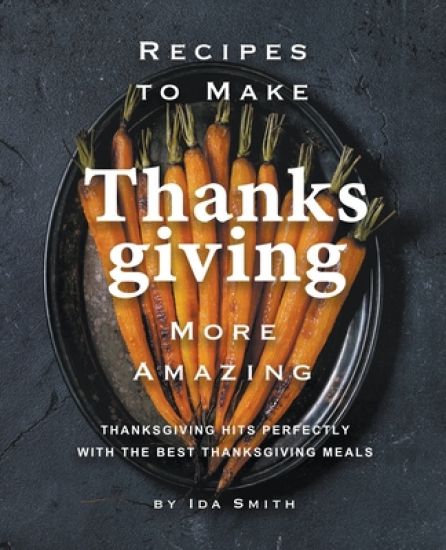


Amazing Must-Try Fun Fest Recipes: Amazing Food Fest Recipes from around the World
Ida Smith
Ida Smith
2020
nidottu