Kirjojen hintavertailu. Mukana 11 244 527 kirjaa ja 12 kauppaa.

Kirjahaku

Etsi kirjoja tekijän nimen, kirjan nimen tai ISBN:n perusteella.

1000 tulosta hakusanalla Ivan Marcelo Pretti

Andrés Bello

Andrés Bello

Ivan Jaksic

Cambridge University Press
2006
pokkari
This book-length intellectual biography of Andrés Bello, first published in 2001, is the first to appear in English. Bello, the most important intellectual of nineteenth-century Latin America, made enduring contributions to the fields of international law, civil legislation, grammar and philology. He was also a poet of note, a literary critic and an influential statesman whose contributions to nation-building and Spanish American identity are widely recognized across the region. In this book, Jaksic provides an archival-based critical account that challenges the celebratory literature that has dominated Bello studies. He demonstrates how knowledge of Bello's contributions illuminate not only Latin American history, but also current issues of imperial fragmentation, nationalism and language.
The Hungarian Economic Reforms 1953–1988

The Hungarian Economic Reforms 1953–1988

Ivan T. Berend

Cambridge University Press
2009
pokkari
Professor Berend presents a comprehensive inside account of Hungary's economic reforms since the 1950s. Working from Communist Party archives, which have hitherto partially remained closed to scholars, Berend situates the history of these economic reforms within their political context, looking in particular at the role of the Soviet Union. He examines the theoretical background to reform, the obstacles that arose during implementation and the gradual realisation that minor reforms of the old system could no longer work. The Hungarian Economic Reforms 1953–1988 comes at a time when many centrally planned economies are examining their performance and structure and seeking suitable forms of change. The Hungarian reforms have attracted those countries wishing to rid themselves of their Stalinist command economies. Thus the book indirectly sheds light upon Chinese economic reforms and on Gorbachev's Soviet perestroika. It will be of interest to specialists and students of East European studies, with special reference to the EMEA, planned economies and economic reform.
Voice and the Victorian Storyteller

Voice and the Victorian Storyteller

Ivan Kreilkamp

Cambridge University Press
2009
pokkari
The nineteenth-century novel has always been regarded as a literary form pre-eminently occupied with the written word, but Ivan Kreilkamp shows it was deeply marked by and engaged with vocal performances and the preservation and representation of speech. He offers a detailed account of the many ways Victorian literature and culture represented the human voice, from political speeches, governesses' tales, shorthand manuals, and staged authorial performances in the early- and mid-century, to mechanically reproducible voice at the end of the century. Through readings of Charlotte Brontë, Browning, Carlyle, Conrad, Dickens, Disraeli and Gaskell, Kreilkamp re-evaluates critical assumptions about the cultural meanings of storytelling, and shows that the figure of the oral storyteller, rather than disappearing among readers' preference for printed texts, persisted as a character and a function within the novel. This 2005 study will change the way readers consider the Victorian novel and its many ways of telling stories.
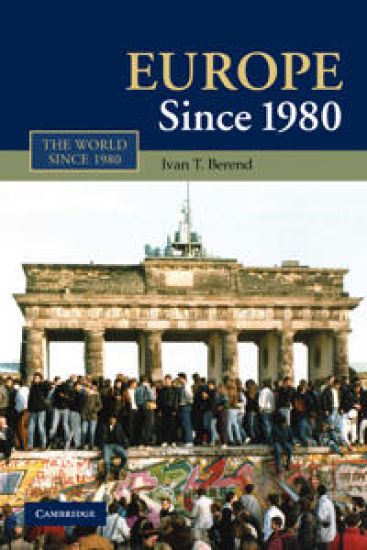
Europe Since 1980

Europe Since 1980

Ivan T. Berend

Cambridge University Press
2010
pokkari
This book tells the dramatic story of the economic, social, political, and cultural transformation of Europe during the transition from the Cold War to the European Union. Ivan Berend charts, in particular, the overwhelming impact of the collapse of communism on every aspect of European life. Europe became safer and more united, and Central and Eastern Europe started on the difficult road to economic modernization. However, the western half of Europe also changed. European integration gained momentum. The single market and the common currency were introduced, and the Union enlarged from nine to twenty-seven countries. This period also saw a revolution in information and communication technology, the increasing impact of globalization and the radical restructuring of the political system. The book explores the impact of all of these changes as well as the new challenges posed by the economic crisis of 2008–9 and asks which way now for Europe?
Adaptation in Dynamical Systems

Adaptation in Dynamical Systems

Ivan Tyukin

Cambridge University Press
2011
sidottu
In the context of this book, adaptation is taken to mean a feature of a system aimed at achieving the best possible performance, when mathematical models of the environment and the system itself are not fully available. This has applications ranging from theories of visual perception and the processing of information, to the more technical problems of friction compensation and adaptive classification of signals in fixed-weight recurrent neural networks. Largely devoted to the problems of adaptive regulation, tracking and identification, this book presents a unifying system-theoretic view on the problem of adaptation in dynamical systems. Special attention is given to systems with nonlinearly parameterized models of uncertainty. Concepts, methods and algorithms given in the text can be successfully employed in wider areas of science and technology. The detailed examples and background information make this book suitable for a wide range of researchers and graduates in cybernetics, mathematical modelling and neuroscience.
A Local Spectral Theory for Closed Operators

A Local Spectral Theory for Closed Operators

Ivan N. Erdelyi; Wang Shengwang

Cambridge University Press
1985
pokkari
This book, which is almost entirely devoted to unbounded operators, gives a unified treatment of the contemporary local spectral theory for unbounded closed operators on a complex Banach space. While the main part of the book is original, necessary background materials provided. There are some completely new topics treated, such as the complete spectral duality theory with the first comprehensive proof of the predual theorem, in two different versions. Also covered are spectral resolvents of various kinds (monotomic, strongly monotonic, almost localized, analytically invariant), and spectral decompositions with respect to the identity. The book concludes with an extensive reference list, including many papers published in the People’s Republic of China, here brought to the attention of Western mathematicians for the first time. Pure mathematicians, especially those working in operator theory and functional analysis, will find this book of interest.
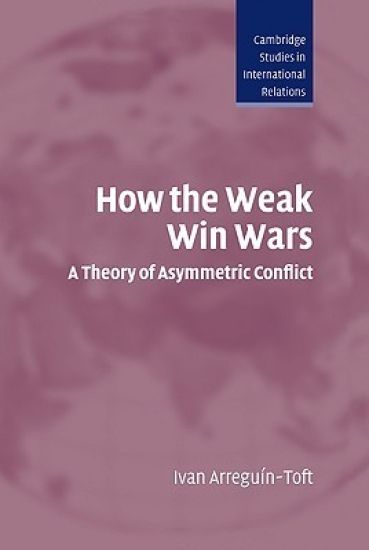
How the Weak Win Wars

How the Weak Win Wars

Ivan Arreguín-Toft

Cambridge University Press
2005
pokkari
How do the weak win wars? The likelihood of victory and defeat in asymmetric conflicts depends on the interaction of the strategies weak and strong actors use. Using statistical and in-depth historical analyses of conflicts spanning two hundred years, in this 2005 book Ivan Arregúin-Toft shows that, independent of regime type and weapons technology, the interaction of similar strategic approaches favors strong actors, while opposite strategic approaches favors the weak. This approach to understanding asymmetric conflicts allows us to makes sense of how the United States was able to win its war in Afghanistan (2002) in a few months, while the Soviet Union lost after a decade of brutal war (1979–89). Arreguín-Toft's strategic interaction theory has implications not only for international relations theory, but for policy makers grappling with interstate and civil wars, as well as terrorism.
Central and Eastern Europe, 1944–1993

Central and Eastern Europe, 1944–1993

Ivan Berend

Cambridge University Press
1996
sidottu
In this wide-ranging account, Ivan Berend traces the post-war fortunes of the countries lying between Germany and the former Soviet Union. Professor Berend draws both on his academic expertise and personal involvement in many of the events which he describes to produce a synthesis of a huge array of materials. His study stretches beyond the confines of economic history to provide insights into the complex interplay of ideological, social and political forces in the ‘Eastern Bloc’ countries over the last fifty years of revolutionary change. In particular Berend’s analysis of totalitarianism, the development of nationalism, and the personalities at the centre of political life in eastern Europe offers a new perspective on the economies of the state-socialist regimes at the periphery of the western industrialised world.
Central and Eastern Europe, 1944–1993

Central and Eastern Europe, 1944–1993

Ivan Berend

Cambridge University Press
1999
pokkari
In this wide-ranging account, Ivan Berend traces the post-war fortunes of the countries lying between Germany and the former Soviet Union. Professor Berend draws both on his academic expertise and personal involvement in many of the events which he describes to produce a synthesis of a huge array of materials. His study stretches beyond the confines of economic history to provide insights into the complex interplay of ideological, social and political forces in the 'Eastern Bloc' countries over the last fifty years of revolutionary change. In particular Berend's analysis of totalitarianism, the development of nationalism, and the personalities at the centre of political life in eastern Europe offers an alternative perspective on the economies of the state-socialist regimes at the periphery of the western industrialised world.
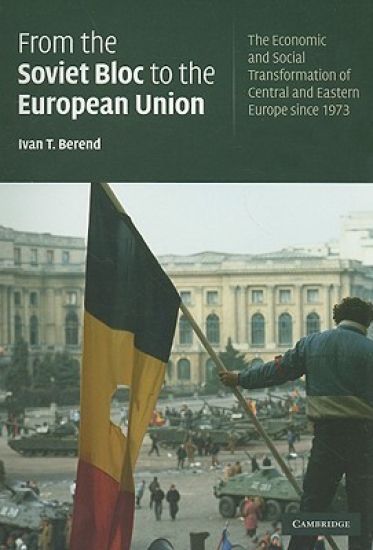
From the Soviet Bloc to the European Union

From the Soviet Bloc to the European Union

Ivan T. Berend

Cambridge University Press
2009
pokkari
The Soviet Union's dramatic collapse in 1989 was a pivotal moment in the complex history of Central and Eastern Europe, and Ivan Berend here offers a magisterial new account of the dramatic transformation that culminated in ten former Soviet Bloc countries joining the European Union. Taking the OPEC oil crisis of 1973 as his starting point, he charts the gradual unravelling of state socialism in Central and Eastern Europe, its ultimate collapse in the revolutions of 1989, and the economic restructuring and lasting changes in income, employment, welfare, education and social structure which followed. He pays particular attention to the crucial role of the European Union as well as the social and economic hurdles that continue to face former Eastern-bloc nations as they try to catch up with their Western neighbours. This will be essential reading for scholars and students of European and economic history, European politics and economics.
Digital Satellite Navigation and Geophysics

Digital Satellite Navigation and Geophysics

Ivan G. Petrovski; Toshiaki Tsujii

Cambridge University Press
2012
sidottu
Bridge the gap between theoretical education and practical work experience with this hands-on guide to GNSS, which features: • A clear, practical presentation of GNSS theory, with emphasis on GPS and GLONASS • All the essential theory behind software receivers and signal simulators • Key applications in navigation and geophysics, including INS aiding, scintillation monitoring, earthquake studies and more • Physical explanations of various important phenomena, including the similarity of code delay and phase advance of GNSS signals, and negative cross-correlation between scintillation intensity and phase variations. Whether you are a practising engineer, a researcher or a student, you will gain a wealth of insights from the authors' twenty-five years of experience. You can explore numerous practical examples and case studies and get hands-on user experience with a bundled real-time software receiver, signal simulator and a set of signal data, enabling you to create your own GNSS lab for research or study.
Andrés Bello

Andrés Bello

Ivan Jaksic

Cambridge University Press
2001
sidottu
This book-length intellectual biography of Andrés Bello, first published in 2001, is the first to appear in English. Bello, the most important intellectual of nineteenth-century Latin America, made enduring contributions to the fields of international law, civil legislation, grammar and philology. He was also a poet of note, a literary critic and an influential statesman whose contributions to nation-building and Spanish American identity are widely recognized across the region. In this book, Jaksic provides an archival-based critical account that challenges the celebratory literature that has dominated Bello studies. He demonstrates how knowledge of Bello's contributions illuminate not only Latin American history, but also current issues of imperial fragmentation, nationalism and language.
How the Weak Win Wars

How the Weak Win Wars

Ivan Arreguín-Toft

Cambridge University Press
2005
sidottu
How do the weak win wars? The likelihood of victory and defeat in asymmetric conflicts depends on the interaction of the strategies weak and strong actors use. Using statistical and in-depth historical analyses of conflicts spanning two hundred years, in this 2005 book Ivan Arregúin-Toft shows that, independent of regime type and weapons technology, the interaction of similar strategic approaches favors strong actors, while opposite strategic approaches favors the weak. This approach to understanding asymmetric conflicts allows us to makes sense of how the United States was able to win its war in Afghanistan (2002) in a few months, while the Soviet Union lost after a decade of brutal war (1979–89). Arreguín-Toft's strategic interaction theory has implications not only for international relations theory, but for policy makers grappling with interstate and civil wars, as well as terrorism.
Voice and the Victorian Storyteller

Voice and the Victorian Storyteller

Ivan Kreilkamp

Cambridge University Press
2005
sidottu
The nineteenth-century novel has always been regarded as a literary form pre-eminently occupied with the written word, but Ivan Kreilkamp shows it was deeply marked by and engaged with vocal performances and the preservation and representation of speech. He offers a detailed account of the many ways Victorian literature and culture represented the human voice, from political speeches, governesses' tales, shorthand manuals, and staged authorial performances in the early- and mid-century, to mechanically reproducible voice at the end of the century. Through readings of Charlotte Brontë, Browning, Carlyle, Conrad, Dickens, Disraeli and Gaskell, Kreilkamp re-evaluates critical assumptions about the cultural meanings of storytelling, and shows that the figure of the oral storyteller, rather than disappearing among readers' preference for printed texts, persisted as a character and a function within the novel. This 2005 study will change the way readers consider the Victorian novel and its many ways of telling stories.
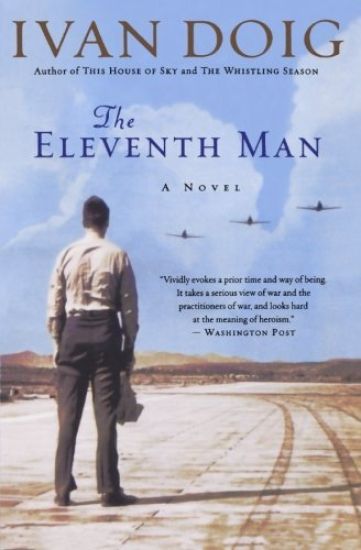
The Eleventh Man

The Eleventh Man

Ivan Doig

Mariner Books
2009
nidottu
Driven by the memory of a fallen teammate, TSU's 1941 starting lineup went down as legend in Montana football history, charging through the season undefeated. Two years later, the "Supreme Team" is caught up in World War II. Ten of them are scattered around the globe in the war's various lonely and dangerous theaters. The eleventh man, Ben Reinking, has been plucked from pilot training by a military propaganda machine hungry for heroes. He is to chronicle the adventures of his teammates, man by man, for publication in small-town newspapers across the country like the one his father edits. Ready for action, he chafes at the assignment, not knowing that it will bring him love from an unexpected quarter and test the law of averages, which holds that all but one of his teammates should come through the conflict unscathed. A deeply American story, The Eleventh Man is Ivan Doig's most powerful novel to date.