Kirjojen hintavertailu. Mukana 11 342 296 kirjaa ja 12 kauppaa.

Kirjahaku

Etsi kirjoja tekijän nimen, kirjan nimen tai ISBN:n perusteella.

1000 tulosta hakusanalla J. C. Alfred Prost

L'eau dans les espaces et les pratiques funéraires d'Alexandrie aux époques grecque et romaine (IVe siècle av. J.-C. - IIIe siècle ap. J.-C.)
In the cemeteries of Graeco-Roman Alexandria in Egypt, archaeological investigations initiated more than a century ago discovered various water systems adapted for specific funerary purposes. From the foundation of the city in 332 B.C. to the third century A.C., over fifty hydraulic installations have been noted within the records of Alexandria itself and its vicinity. From a corpus that inventories the hydraulic structures identified to this day in the archaeological literature, the different water management systems are described and reasons put forward to explain the presence of these devices (wells, cisterns, basins, etc.). The results show that the cemeteries should not just be considered as a cities for the dead but also as places of rebirth and life. Some of the devices discovered within the funerary context have echoes in the libation systems already known in the Mediterranean and lead towards an evaluation, from textual and iconographical documents, of the role of water in the offerings to the Alexandrian dead. French text.
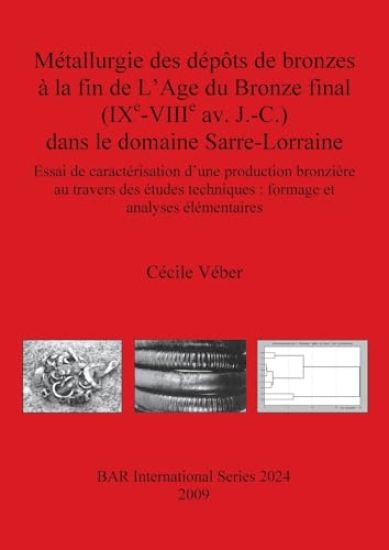
Métallurgie des dépôts de bronzes à la fin de L'Age du Bronze final (IXe-VIIIe av. J.-C.) dans le domaine Sarre-Lorraine
THis study re-evaluates discoveries of deposits of bronze artefacts in the Lorraine, the Saar and Luxemburg during the late Bronze Age. It studies the objects typologically and in terms of their manufacture, combining this with statistical analysis of hoard composition, and the condition of the objects when deposited. There is also metallurgical analysis of the artefacts. French text.
Old Songs, New Tunes: Book Two in "The Reverend Mr. J. C." Series
The Reverend Mr. J.C. has done a great job of turning his life around - so good, in fact, that now he's the mentor. But is he ready for someone like young Pastor Franklin Roosevelt Milsap Junior?Prophetstown is still a hard sell. And the tough love that transformed JC isn't working for young Frank at all. In fact, his attitude makes it hard for JC to hold onto his own changes.What - or who - can teach Frank the joy of ministry?How can you sing when the old songs have new tunes?
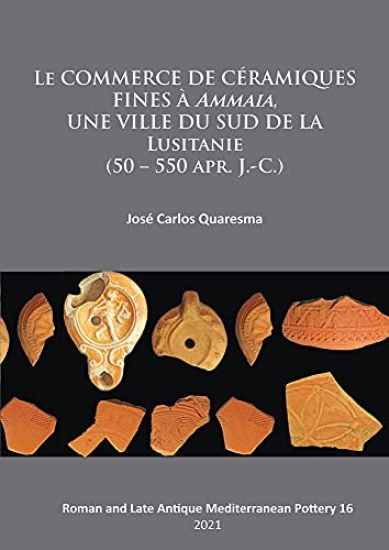
Le commerce de céramiques fines à ammaia, une ville du sud de la Lusitanie (50 – 550 apr. J.-c.)
This volume presents the entire assemblage of fine wares (terra sigillata, lamps and thin-walled wares) from Ammaia, a Roman and Late Antique town located in the hinterland of southern Lusitania (presently in Portuguese territory). Despite its distance from the Atlantic coast, Ammaia took advantage of its proximity to Augusta Emerita, the capital of Lusitania. This aspect is particularly strong between c. AD 50 and c. AD 150, when the local market imported large quantities of fine wares from the capital. The Late Antique phase reveals a balanced capacity of importation at Ammaia, whose fine wares, essentially related to terra sigillata, were provided by wares from northern Hispania (Douro and Ebro valleys) and North Africa (Tunisia). Moreover, recent research at Ammaia has provided excellent stratigraphic contexts dated to between c. AD 50 and c. AD 150, crucial for the understanding of the chronological evolution of Italian, South-Gaulish and Hispanic terra sigillata. In the final chapter, the author undertakes a wide-ranging analysis of southern Lusitania with regard to the consumption of fine wares and amphorae. Several chronological phases have been established, based on stratigraphic and typological evidence, for the period between c. AD 50 and c. AD 550: that is the Early Empire (from the Claudio-Neronian period onwards) and its transition into the Late Roman period and the post-Roman phase. In the final sub-chapters, this analysis focuses on the problematic 5th century and up to the latest Lusitanian stratigraphic evidence of around the middle of the 6th century AD.
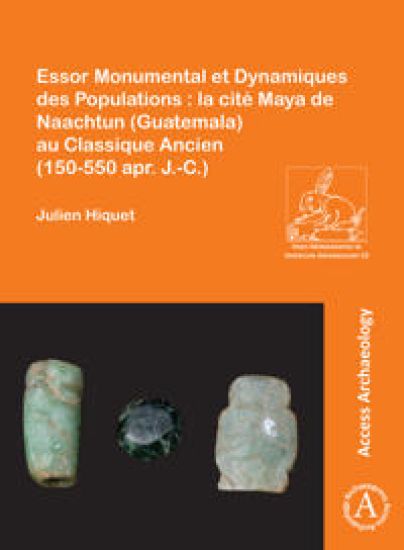
Essor Monumental et Dynamiques des Populations : la cité Maya de Naachtun (Guatemala) au Classique Ancien (150-550 apr. J.-C.)
La cité Maya de Naachtun, au Guatemala, fut, à la période Classique (150-950 apr. J.-C.), une capitale politique et économique de premier ordre, dotée d’une architecture monumentale et publique majestueuse et siège d’une puissante dynastie. C’est au cours du Classique ancien (150-550 apr. J.-C.) que cette monumentalité a trouvé son apogée, avec la construction de la majorité des pyramides les plus volumineuses du site, de nombreuses plates-formes, de chaussées, d’un terrain de jeu de balle, de temples. Pourtant, on sait que dans les Basses Terres centrales Mayas, c’est au Classique récent (550-830 apr. J.-C.) que la population était, de loin, la plus nombreuse. Un paradoxe semble donc se dessiner : l’investissement massif dans l’architecture monumentale fut consenti par une population relativement bien plus réduite que ce qu’elle deviendrait au cours des siècles suivants. Quelles furent les implications de ces programmes architecturaux en termes de mobilisation de la main-d’œuvre au sein de la population ? Comment l’investissement dans l’architecture s’articule-t-il avec la démographie urbaine ? La présence d’une population nombreuse est-elle une condition, un facteur, ou une conséquence de la construction monumentale ? Pour répondre à ces questions, cet ouvrage s’attache à deux défis méthodologiques majeurs : celui de l’estimation de la population du site, pour une période dont les vestiges résidentiels sont majoritairement invisibles et inaccessibles, et celui de la quantification (en jours-personnes de travail) du coût énergétique d’une centaine d’épisodes de construction monumentale. En croisant ces données, il apparaît que les premiers très grands chantiers correspondant à la « création d’un lieu » ont demandé la mobilisation d’une main-d’œuvre assez largement supérieure à la population demeurant sur place au cours du premier siècle de la cité. C’est donc probablement la monumentalité de la capitale nouvellement créée, avec ce que cela implique d’interactions et d’opportunités sociales et économiques, qui a attiré et surtout fixé la population autour de la cité au cours du Classique ancien. Une fois cette étape de fondation monumentale passée, la population sur place était amplement suffisante pour poursuivre les projets architecturaux.
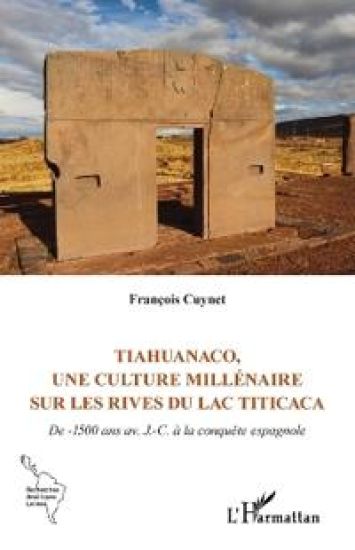
Tiahuanaco, une culture millénaire sur les rives du lac Titicaca: De -1500 ans av. J.-C. à la conquête espagnole
En Am rique du Sud, au sein de la Cordill re des Andes, le bassin du lac Titicaca incarne, partir du XVIe si cle av. J.-C., un haut lieu de sacralit qui, entre 300 et 1100 de notre re, voit l' mergence du pouvoir Tiahuanaco, un lieu mythique o les Incas, qui lui succ d rent, pla aient la cr ation du monde... Les vestiges de la cit arch ologique sont les indices r v lateurs des interactions culturelles d velopp es et re ues par ce territoire au fil des si cles. En d cloisonnant les diff rentes p riodes chronologiques, l'analyse permet de percevoir au sein de ces soci t s pr hispaniques l'existence d'une intense continuit culturelle qui unit innovations techniques et lecture symbolique. Dans une nouvelle approche des t moignages monumentaux pr sents qui interrogent aujourd'hui, Fran ois Cuynet remonte aux origines d'une pens e ayant conduit la mise en place fulgurante du Tahuantinsuyu inca, le plus grand empire de l'Am rique pr hispanique. Forte de plus de quinze ans de recherches dans l'Altiplano, cette lecture interpr tative du ph nom ne civilisationnel andin et de sa complexit marque le renouveau de l'arch ologie fran aise dans le bassin du lac Titicaca. Un livre qui allie rigueur scientifique et richesse iconographique. Un plaisir pour les lecteurs