Kirjojen hintavertailu. Mukana 12 016 292 kirjaa ja 12 kauppaa.

Kirjahaku

Etsi kirjoja tekijän nimen, kirjan nimen tai ISBN:n perusteella.

1000 tulosta hakusanalla J. Edwards

Overcoming the Trauma of Your Motor Vehicle Accident

Overcoming the Trauma of Your Motor Vehicle Accident

Edward J. Hickling; Edward B. Blanchard

Oxford University Press Inc
2006
nidottu
It is estimated that over 3 million people per year are injured in motor vehicle accidents. Whether or not a fatality or injury occurs, many people develop posttraumatic stress disorder as a result. Written by the creators of an empirically supported cognitive-behavioral therapy program, this Workbook includes all the information necessary for a client to learn the appropriate skills to overcome their MVA-related PTSD. When used in conjunction with the corresponding therapist guide, this book provides a complete treatment package with a proven success rate. Through the use of this workbook, clients will become active participants in their supervised treatment. Clients will learn to alleviate their suffering through a variety of skills including relaxation techniques and exposure exercises. In addition, this workbook gives clients the opportunity to deal with other issues that may have resulted from the accident such as anger, numbness, estrangement, and others. Overcoming the Trauma of Your Motor Vehicle Accident: Workbook comes complete with assessments to be completed at various stages throughout treatment, as well as blank forms used to monitor progress that can be photocopied or downloaded from the Treatments That Work website. It is a one-of-a-kind resource that allows clients to work alongside their therapist to personalise their treatment strategy and overcome their PTSD.

Arms Watch

Arms Watch

Edward J. Laurance; Siemon T. Wezeman; Herbert Wulf

Oxford University Press
1993
nidottu
This report documents the government submissions to the UN on the transfer of arms in seven weapons categories in 1992 and compares this data with information published by SIPRI in its arms trade register. It assesses the results of the UN register and the prospects for improving it in 1994.
Market Abuse Regulation

Market Abuse Regulation

Edward J. Swan; John Virgo

Oxford University Press
2019
sidottu
Market Abuse Regulation is a wide-ranging and insightful analysis of the market abuse regime and the applications of the regulations in the UK and European Union. It provides detailed discussion of the implementation and interpretation of the regulation, the conduct of investigations, the defences and appeals available against a finding of market abuse, and overlapping United States regulation. The new edition explains and evaluates the changes introduced by the Markets in Financial Instruments Directive , the Market Abuse Directive, the Market Abuse Regulation, and the implementation of the Regulation on Wholesale Market Integrity and Transparency, which have resulted in dramatic expansion of the coverage of EU market abuse regulation. It addresses the regulation of additional financial instruments, the expansion to include new markets and trading facilities, and changes to the coverage of commodity derivatives and physical commodities. It discusses the dramatic changes to the format of regulation as a result of the restructuring of UK regulators; as well as the addition of new EU supervisory bodies with revised powers over national regulation within the EU. Beyond the EU, it discusses international protocols and treaties which have also added to the regulatory structure.
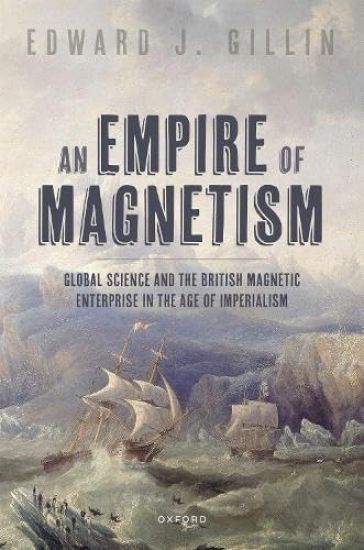
An Empire of Magnetism

An Empire of Magnetism

Edward J. Gillin

Oxford University Press
2023
sidottu
During the 1840s and 1850s, the British government financed a world-wide investigation into how the Earth's magnetic phenomena operated, consisting of a network of naval expeditions and colonial observatories. Questions surrounding terrestrial magnetism were not just philosophical, but engendered urgent concerns over accurate navigation, on which Britain's commercial and colonial power relied. The British Magnetic Survey was celebrated at the time as the most extensive state-orchestrated scientific enterprise ever conducted. Yet although it was a fundamentally global endeavour, both in terms of its scale and its impact, the experimental instruments and techniques required were to be found amid Britain's booming local industry, where the harnessing of coal and iron, and use of steam power, shaped a scientific culture prominently concerned with the relationship between heat, pressure, and motion. In particular, it was philosophical apparatus fashioned within the mines of Cornwall that the government was able to conscript within this world-wide magnetic investigation. These locally produced experimental techniques and technologies proved capable of transformation into a system for obtaining magnetic measurements from over great expanses of time and space. As An Empire of Magnetism demonstrates, this not only sustained an immense world-wide scientific investigation, but became inseparable from the proliferation of empire, sustaining colonial expansion and unprecedented multi-cultural exchanges as British naval crews and natural philosophers surveyed previously unknown regions in the search for magnetic data. In so doing, Edward Gillin argues that the British Magnetic Survey had broader implications over the formation of the 'modern state', the expansion of nineteenth-century empire, and the development of global science.
Proust, Class, and Nation

Proust, Class, and Nation

Edward J. Hughes

Oxford University Press
2011
sidottu
Writing in 1927, Julien Benda described France as being afflicted by the twin scourges of narrow, class-based politics and rabid nationalism. He nevertheless identified Marcel Proust (who had died in 1922) as a writer who had refused to embrace the ideological narrowness of his age. Edward J. Hughes seeks to assess how Proust and his novel A la recherche du temps perdu might be understood in relation to issues of class and nation. A la recherche was produced in momentous times. As an extended textual construction, first conceived of in 1908 and the last tranche of which appeared posthumously almost two decades later, it was assembled against a backdrop of major historical events: pre-war tensions in the wake of the Dreyfus Affair and the Separation of Church and State (issues on which Proust had campaigned publicly); the First World War and the atmosphere of narrow nationalism and Germanophobia which the conflict generated; and the continuing polarization in class politics in the years after the First World War. These all find echoes in A la recherche and Hughes establishes how the exposure given to questions of class and nation needs to be understood historically. He demonstrates that the frequently entrenched positions of Proust's contemporaries at times square with the language and images of social conservativism to be found in A la recherche. Yet alongside that, Hughes unearths evidence that points to Proust as a free-floating, often playful, iconoclast and radical commentator who, as Theodor Adorno observed, resisted bourgeois compartmentalization.
Taxing Women

Taxing Women

Edward J. McCaffery

University of Chicago Press
1997
sidottu
The US tax system was designed in the 1930s and 1940s, when the typical American household was a single-income family featuring a male breadwinner and a female homemaker. Writing for an audience with no prior knowledge of tax, this study shows how the modern tax system penalizes two-earner families, pressuring some families to break up and many mothers to stay at home. The author illustrates how working wives are hard hit by tax law inequalities. As secondary earners under a joint filing system, wives enter the workforce at a high tax rate dictated by their husband's salary. Using real-life examples, Mccaffery shows how many wives actually lose money by working; why social security is a pure tax, with no benefits, on most working wives; and why part-time work is often not a viable option for married mothers. The book seeks to find solutions to these entrenched gender-based problems in the tax code, which affect all aspects of social life. Mccaffery proposes simple, but effective, changes in the tax system to alleviate the stresses facing women. In fact, standard economic theory has long recommended taxing married women less than men - exactly the opposite of what the USA does at present.
Taxing Women

Taxing Women

Edward J. McCaffery

University of Chicago Press
1999
nidottu
Taxing Women comprises both an insightful, critical analysis of the gender biases in current tax laws and a wake-up call for all those concerned with gender justice to pay more attention to the pervasive impact of such laws. Providing real-life examples, Edward McCaffery shows how tax laws are actually written to punish married couples who file jointly. No dual-income household can afford not to read this book before filing their taxes."Taxing Women is a must-have primer for any woman who wants to understand how our current tax system affects her family's economic condition. In plain English, McCaffery explains how the tax code stacks the deck against women and why it's in women's economic interest to lead the next great tax rebellion."—Patricia Schroeder"McCaffery is an expert on the interplay between taxes and social policy. . . . Devastating in his analysis. . . . Intriguing."—Harris Collingwood, Working Women"A wake-up call regarding the inequalities of an archaic system that actually penalizes women for working."—Publishers Weekly
Fair Not Flat

Fair Not Flat

Edward J. McCaffery

University of Chicago Press
2006
nidottu
Everyone knows that the current tax system is unfair. Some of the richest people in America pay no tax, while a huge share of the tax burden falls on the rest of us. A mere glance at the tax code confirms that it is far too complex, with volumes of rules that no ordinary person could possibly comprehend. What is to be done? Some conservatives have called for a so-called flat tax. But a flat tax is not necessarily a simple tax, and "flat" means "more" for most taxpayers: a rise in middle-class taxes to finance tax cuts for the rich. Is there another choice? In clear, easy-to-understand language, Edward J. McCaffery proposes a straightforward and fair alternative. A "fair not flat" tax that is consistent and progressive would tax spending, not income and savings. And if it were collected at its lower levels through a national sales tax, most people would not have to file a return. A supplemental tax on spending for the wealthiest individuals would make the national sales tax progressive. Under McCaffery's system, a family of four would pay no tax on their first $20,000 in spending, and 15 percent on the next $60,000. Only the few families who spend more than $80,000 a year would be subject to the supplemental tax. Necessities would be taxed less than ordinary and luxury items. No one would be taxed directly on savings. The estate and gift or so-called death tax would be abolished, for the simple reason that dead people don't spend. The "fair not flat" tax would fall on heirs when and as they spend their good fortune. Perhaps best of all, most Americans would not have to fill out tax returns.Simpler, more efficient, fairer, and more reflective of America's current social values, McCaffery's "fair not flat" tax could help get us out of the tax mess that politicians and special interests have gotten us into, improving the whole country in the process. Read Fair Not Flat to find out how. “In Fair Not Flat, Mr. McCaffery lays out the case for a consumption tax. He does so in a reader-friendly way, presenting his argument with very few footnotes, equations or technical terms. The consumption of the book, so to speak, is not at all taxing. And its argument is well worth pondering.”—Bruce Bartlett, Wall Street Journal
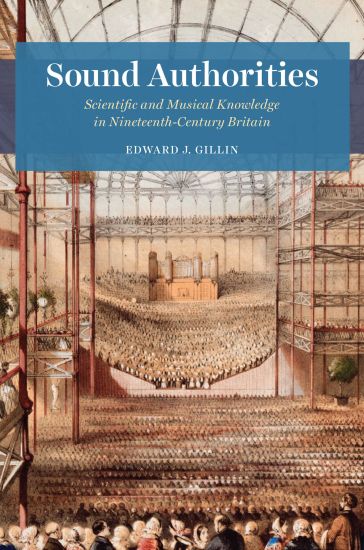
Sound Authorities

Sound Authorities

Edward J. Gillin

University of Chicago Press
2022
sidottu
Sound Authorities shows how experiences of music and sound played a crucial role in nineteenth-century scientific inquiry in Britain. In Sound Authorities, Edward J. Gillin focuses on hearing and aurality in Victorian Britain, claiming that the development of the natural sciences in this era cannot be understood without attending to the study of sound and music. During this time, scientific practitioners attempted to fashion themselves as authorities on sonorous phenomena, coming into conflict with traditional musical elites as well as religious bodies. Gillin pays attention to sound in both musical and nonmusical contexts, specifically the cacophony of British industrialization. Sound Authorities begins with the place of acoustics in early nineteenth-century London, examining scientific exhibitions, lectures, spectacles, workshops, laboratories, and showrooms. He goes on to explore how mathematicians mobilized sound in their understanding of natural laws and their vision of a harmonious ordered universe. In closing, Gillin delves into the era’s religious and metaphysical debates over the place of music (and humanity) in nature, the relationship between music and the divine, and the tensions between spiritualist understandings of sound and scientific ones.
Cold War Poetry

Cold War Poetry

Edward J. Brunner

University of Illinois Press
2004
nidottu
Mainstream American poetry of the 1950s has long been dismissed as deliberately indifferent to its cultural circumstances. In this penetrating study, Edward Brunner breaks the placid surface of the hollow decade to reveal a poetry sharply responsive to issues of its time. Cold War Poetry considers the fifties poem as part of a dual cultural project: as proof of the competency of the newly professionalized poet and as a user-friendly way of initiating a newly educated, upwardly mobile postwar audience into high culture. Brunner revisits Richard Wilbur, Randall Jarrell, and other acknowledged leaders of the period as well as neglected writers such as Rosalie Moore, V. R. Lang, Katherine Hoskins, Melvin B. Tolson, and Hyam Plutzik. He also examines the one-sided authority of the (male-dominated) book review process, the ostracizing of female and minority poets, poetic fads such as the ubiquitous sestina, and the power of the classroom anthology to establish criteria for reading. Attributing the gradual change in poetic style during the 1950s to the slow collapse of the authority of the state, Brunner shows how a secretive, anxious poetics developed in the shadow of a disabled government. He recontextualizes the much-maligned domestic verse of the 1950s, reading its shift toward the private sphere and the recurrent image of the child as a reflection of the powerlessness of the post-nuclear citizen. Through a close examination of poetry written about the Bomb, he delineates how poets registered their growing sense of cosmic disorder in coded language, resorting to subterfuge to continue their critique in the face of sanctions levied against those who questioned government policies. Brilliantly decoding the politics embedded in the poetry of an ostensibly apolitical time, Cold War Poetry provides a powerful rereading of a pivotal decade.
The Smart Mission

The Smart Mission

Edward J. Hoffman; Matthew Kohut

MIT PRESS LTD
2022
sidottu
Why human skills and expertise, not technical tools, are what make projects succeed.The project is the basic unit of work in many industries. Software applications, antiviral vaccines, launch-ready spacecraft: all were produced by a team and managed as a project. Project management emphasizes control, processes, and tools—but, according to The Smart Mission, that is not the right way to run a project. Human skills and expertise, not technical tools, are what make projects successful. Projects run on knowledge. This paradigm-shifting book—by three project management experts, all of whom have decades of experience at NASA and elsewhere—challenges the conventional wisdom on project management, focusing on the human dimension: learning, collaboration, teaming, communication, and culture.The authors emphasize three themes: projects are fundamentally about how teams work and learn together to get things done; the local level—not an organization’s upper levels—is where the action happens; and projects don’t operate in a vacuum but exist within organizations that are responsible to stakeholders. Drawing on examples and case studies from NASA and other organizations, the authors identify three project models—micro, macro, and global—and their different knowledge needs. Successful organizations have a knowledge-based culture. Successful project management guides the interplay of knowledge, projects, and people.
Magnetohydrodynamic Shock Waves

Magnetohydrodynamic Shock Waves

Edward J. Anderson

MIT Press
2003
pokkari
Studies based on the Rankine-Hugoniot relations have classified MHO shock waves as fast, switch-on, intermediate, switch-off, and slow. Any waves found in nature must also: (a) possess steady-state structures and (b) be stable in the presence of small-flow disturbances. In this monograph, Dr. Anderson examines these criteria in relation to plane shocks for which the collision frequency is large compared with cyclotron frequency. It contains a three-dimensional graphic representation of shock end states and presents an exact solution for the shock adiabatic curve in a convenient form. An MIT Press Research Monograph.
The Smart Mission

The Smart Mission

Edward J. Hoffman; Matthew Kohut; Laurence Prusak

MIT PRESS LTD
2023
pokkari
Why human skills and expertise, not technical tools, are what make projects succeed.The project is the basic unit of work in many industries. Software applications, antiviral vaccines, launch-ready spacecraft: all were produced by a team and managed as a project. Project management emphasizes control, processes, and tools—but, according to The Smart Mission, that is not the right way to run a project. Human skills and expertise, not technical tools, are what make projects successful. Projects run on knowledge. This paradigm-shifting book—by three project management experts, all of whom have decades of experience at NASA and elsewhere—challenges the conventional wisdom on project management, focusing on the human dimension: learning, collaboration, teaming, communication, and culture.The authors emphasize three themes: projects are fundamentally about how teams work and learn together to get things done; the local level—not an organization’s upper levels—is where the action happens; and projects don’t operate in a vacuum but exist within organizations that are responsible to stakeholders. Drawing on examples and case studies from NASA and other organizations, the authors identify three project models—micro, macro, and global—and their different knowledge needs. Successful organizations have a knowledge-based culture. Successful project management guides the interplay of knowledge, projects, and people.
Dignity and Liberty

Dignity and Liberty

Edward J. Eberle

Praeger Publishers Inc
2001
sidottu
Striking a balance between the aspirations of individual freedom and the demands of organized society is a central quest of constitutional law. Germany and America provide different paths toward accomplishment of this equilibrium, revealing two paths to freedom and its relation to community. This work is addressed to philosophers of law, political theorists, constitutional lawyers, and everyone interested in protecting human rights and learning the meaning of human personality and freedom as expressed in democratic constitutional regimes. Eberle challenges current thinking in the field by setting out alternative visions of human freedom, dignity, personality and expression; demonstrating that use of comparative methodology has much to offer critical examination of major constitutional and public policy issues; and showing that different conceptions of fundamental ideas are possible.Exploring the nature of human personality as reflected in the constitutional law of two important constitutional democracies, Eberle inquires into human values and human freedom, across national borders, in pursuit of a better understanding of human potential and the nature and limit of freedom. The central personality traits examined comprise human dignity; autonomy; self-determination and identity, including privacy, computer privacy, control over personal information, and maintenance of one's image, words, and reputation; abortion; and freedom of expression, including defamation, offensive speech, hate speech, and burning of the flag. The book weaves between German and American law in examining these questions, providing a unique comparative perspective on the idea of human personality and freedom.
Dignity and Liberty

Dignity and Liberty

Edward J. Eberle

Praeger Publishers Inc
2001
nidottu
Striking a balance between the aspirations of individual freedom and the demands of organized society is a central quest of constitutional law. Germany and America provide different paths toward accomplishment of this equilibrium, revealing two paths to freedom and its relation to community. This work is addressed to philosophers of law, political theorists, constitutional lawyers, and everyone interested in protecting human rights and learning the meaning of human personality and freedom as expressed in democratic constitutional regimes. Eberle challenges current thinking in the field by setting out alternative visions of human freedom, dignity, personality and expression; demonstrating that use of comparative methodology has much to offer critical examination of major constitutional and public policy issues; and showing that different conceptions of fundamental ideas are possible. Exploring the nature of human personality as reflected in the constitutional law of two important constitutional democracies, Eberle inquires into human values and human freedom, across national borders, in pursuit of a better understanding of human potential and the nature and limit of freedom. The central personality traits examined comprise human dignity; autonomy; self-determination and identity, including privacy, computer privacy, control over personal information, and maintenance of one's image, words, and reputation; abortion; and freedom of expression, including defamation, offensive speech, hate speech, and burning of the flag. The book weaves between German and American law in examining these questions, providing a unique comparative perspective on the idea of human personality and freedom.
Defeat in Detail

Defeat in Detail

Edward J. Erickson

Praeger Publishers Inc
2003
sidottu
No critical analysis has ever examined the specific reasons for the Ottoman defeat. Erickson's study fills this gap by studying the operations of the Ottoman Army from October 1912 through July 1913, and by providing a comprehensive explanation of its doctrines and planning procedures. This book is written at an operational level that details every campaign at the level of the army corps. More than 30 maps, numerous orders of battle, and actual Ottoman Army operations orders illustrate how the Turks planned and fought their battles. Of particular note is the inclusion of the only detailed history in English of the Ottoman X Corps' Sarkoy amphibious invasion. Also included are definitive appendix about Ottoman military aviation and a summary of the Turks' efforts to incorporate the lessons learned from the war into their military structure in 1914. The Ottoman Empire fought the Balkan Wars of 1912-1913 against the joint forces of Bulgaria, Greece, Montenegro, and Serbia—and was decisively defeated. The Ottoman Army is frequently depicted as a mob of poorly clad, faceless Turks inept in their attempts to fight a modern war. Yet by 1912, the Ottoman Army, which was constructed on the German model, was in many ways more advanced than certain European armies.