Kirjojen hintavertailu. Mukana 11 342 296 kirjaa ja 12 kauppaa.

Kirjahaku

Etsi kirjoja tekijän nimen, kirjan nimen tai ISBN:n perusteella.

1000 tulosta hakusanalla J.B. Morrison

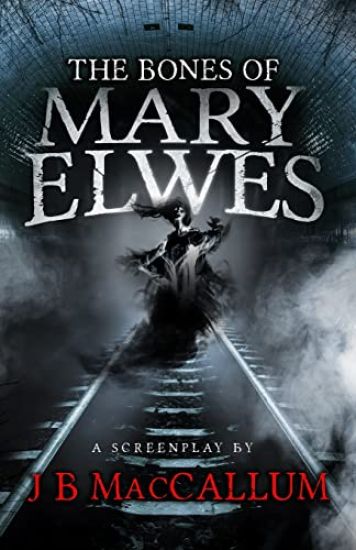
The Bones of Mary Elwes

The Bones of Mary Elwes

J B MacCallum

Stormy Monday Publishing
2022
pokkari
Broom Street, an underground railway station with a tragic history and abandoned since the 1950's, is surveyed by a present day maintenance crew. After one of them is seriously injured, claiming to have been pushed by unseen hands, and video footage captures strange light phenomena, two of the crew make contact with a small team of paranormal investigators. Acting without official permission, the paranormal team, including a powerful psychic, are taken down into the eerie dilapidated station, and adjoining tunnels, to conduct an all night investigation. After making a gruesome discovery that horrifies them all, it soon becomes apparent that a dark force is present.
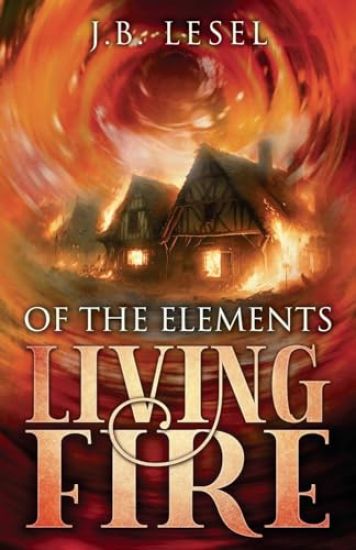
Living Fire

Living Fire

J B Lesel

Vulpine Press
2024
pokkari
The fire is coming... Warix villages are mysteriously exploding, but nobody knows what's turning them to cinder. Meleena, an aquatic girl from the coastline far away, braces herself when she is summoned to the Warix city to help solve the mystery. She teams up with her old friend Flax, but is caught off-guard when she realizes how much of an outsider she is. The city was not designed for someone who cannot fly or harness the power of the winds. The attacks begin to escalate, and it's not long before Meleena and Flax discover that someone is deliberately causing the destruction. A war is brewing, and Meleena may be caught in the middle. Secrets begin to spill out, and Meleena realizes she's being targeted. She must decide quickly if Flax can be trusted. The danger is great. The looming war threatens Meleena's people and the innocent Warix on both sides of the chasm.
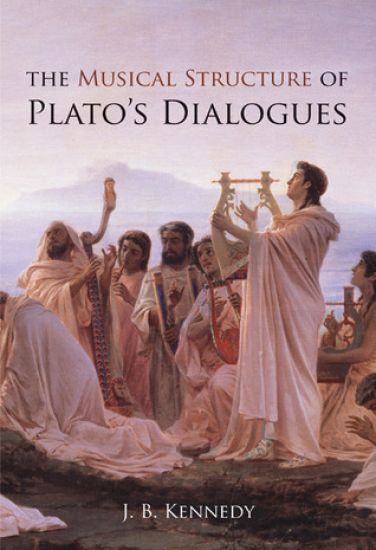
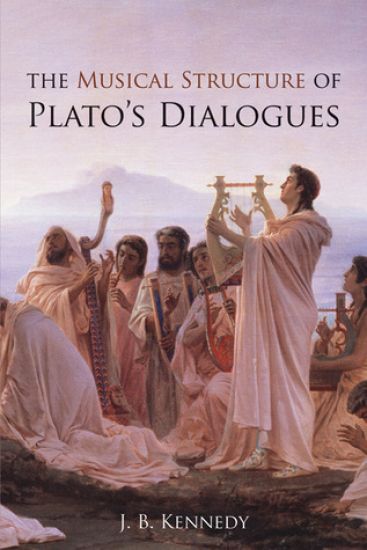
The Musical Structure of Plato's Dialogues

The Musical Structure of Plato's Dialogues

J.B. Kennedy

Acumen Publishing Ltd
2011
sidottu
J. B. Kennedy argues that Plato's dialogues have an unsuspected musical structure and use symbols to encode Pythagorean doctrines. The followers of Pythagoras famously thought that the cosmos had a hidden musical structure and that wise philosophers would be able to hear this harmony of the spheres. Kennedy shows that Plato gave his dialogues a similar, hidden musical structure. He divided each dialogue into twelve parts and inserted symbols at each twelfth to mark a musical note. These passages are relatively harmonious or dissonant, and so traverse the ups and downs of a known musical scale. Many of Plato's ancient followers insisted that Plato used symbols to conceal his own views within the dialogues, but modern scholars have denied this. Kennedy, an expert in Pythagorean mathematics and music theory, now shows that Plato's dialogues do contain a system of symbols. Scholars in the humanities, without knowledge of obsolete Greek mathematics, would not have been able to detect these musical patterns. This book begins with a concise and accessible introduction to Plato's symbolic schemes and the role of allegory in ancient times. The following chapters then annotate the musical symbols in two of Plato's most popular dialogues, the Symposium and Euthyphro, and show that Plato used the musical scale as an outline for structuring his narratives.
The Musical Structure of Plato's Dialogues

The Musical Structure of Plato's Dialogues

J.B. Kennedy

Acumen Publishing Ltd
2011
nidottu
J. B. Kennedy argues that Plato's dialogues have an unsuspected musical structure and use symbols to encode Pythagorean doctrines. The followers of Pythagoras famously thought that the cosmos had a hidden musical structure and that wise philosophers would be able to hear this harmony of the spheres. Kennedy shows that Plato gave his dialogues a similar, hidden musical structure. He divided each dialogue into twelve parts and inserted symbols at each twelfth to mark a musical note. These passages are relatively harmonious or dissonant, and so traverse the ups and downs of a known musical scale. Many of Plato's ancient followers insisted that Plato used symbols to conceal his own views within the dialogues, but modern scholars have denied this. Kennedy, an expert in Pythagorean mathematics and music theory, now shows that Plato's dialogues do contain a system of symbols. Scholars in the humanities, without knowledge of obsolete Greek mathematics, would not have been able to detect these musical patterns. This book begins with a concise and accessible introduction to Plato's symbolic schemes and the role of allegory in ancient times. The following chapters then annotate the musical symbols in two of Plato's most popular dialogues, the Symposium and Euthyphro, and show that Plato used the musical scale as an outline for structuring his narratives.
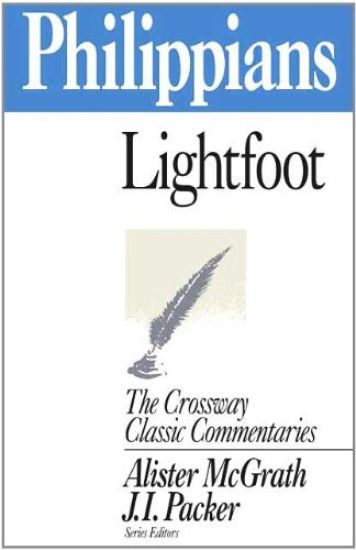
Philippians

Philippians

J B Lightfoot

Crossway Books
2009
nidottu
Many Christians consider the apostle Paul's letter to the Philippians a special treasure. Its grand themes of spiritual joy and vitality, the self-humbling Saviour who gave his life for us, the good news of a salvation that is superior to the boastings of the flesh - these and other gems still nurture followers of Jesus Christ today. This classic commentary will deeply encourage all who long to draw closer to God.
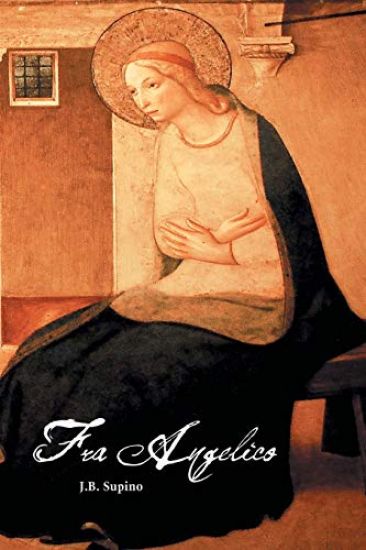
Fra Angelico

Fra Angelico

J B Supino

Crescent Moon Publishing
2017
pokkari
FRA ANGELICO BY J.B. SUPINO Translated by Leader Scott An introduction to the art of Fra Angelico, exploring each period in the painter's career, including his work in Perugia, Orvieto, Rome and Florence. Fully illustrated. Fra Angelico, known by several names, including Fra Giovanni Beato Angelico da Fiesole (1399?-1455), is one of the very few painters of the Italian Renaissance who painted religious pictures exclusively. Almost all Angelico's paintings are religious - he did not paint secular portraits, like, say, Giovanni Bellini or Ghirlandaio. It was Vasari who stressed Angelico's purity, holiness, faith, humility and devout nature, and this description of Angelico as a holy monk-like painter persists throughout the centuries. John Ruskin called Angelico 'an inspired saint'. Fra Angelico stands at the transition between the mediaeval and Renaissance worlds. Angelico's 'feelings are in the Middle Ages', Bernard Berenson wrote, yet he was distinctly a Quattrocento, Renaissance painter. His art combines the timelessness and rigidity of icon painting, where figures are caught in bright, static, hieratic motions, with the new painterly explorations (in form, style and space) of the Quattrocento period. Fra Angelico's paintings seem simple, but their simplicity is deceptive: they are the products of training and skill. Giulio Carlo Argan reminds us that 'everything points to Fra Angelico's being in touch with the most advanced artists of his early day'. The deep spiritual feeling and tenderness of Fra Angelico's art seems 'simple' or 'innocent'. It does not seem cynical and world-weary. Yes, but the simplicity is not so much childish as child-like, as a regaining of the freshness of the spirit of childhood. A reactivation of the maternal realm, perhaps, which Fra Angelico manages to accomplish with a directness most other painters are incapable of reproducing. Fully illustrated, including contemporaries of Fra Angelico. Includes references. 164 pp. www.crmoon.com
The Monastic Breviary of Hyde Abbey, Winchester

The Monastic Breviary of Hyde Abbey, Winchester

J.B.L. Tolhurst

Henry Bradshaw Society
1938
pokkari
Third of 6 volumes. The project to edit the Hyde Breviary was a considerable one that was to occupy the HBS for a deczde. Hyde Abbey hadbeen founded alongside New Minster, Winchester un 965 by St Ethelwold [c. 908-984], Bishop if Winchester, and a former Abbot of Abingdon, with Abingdon Monks. In 1110 the community moved from its cramped premises to Hyde Meadow, just outside the city walls. The breviary MSS edited were most probably written during thre abbacy of Symon de Kanings [1292-1304]. The Hyde Breviary is one of a small number of surviving MS witneses to the form of the English Benedictine breviary, supplemented by what Tolhurst thought was a single surviving volume of a 1528 printed breviary or portiforium of Abingdon [pars aestivalis, Cambridge, Emmanuel College; there is in fact a full copy at Exeter College, Oxford; STC 15792]. The Hyde relics were here cosen as the most typical and informative. The Rawlinson and Gough MSS [SC 15842, 18338] were written by different scribes but on virtuallly indistinguishable vellum and with illuminations from the same hand.Here they are collated with survivg witnesses to the English Benedictine breviary of the period: yhe breviaries of Durham Cathedral Priory [London, British Library, Harley MSS 4664, c. 1270], Ely Cathedral Priory [Cambridge University Library, Ii.4.20 [c. 1275], Muchelny Abbey, Somerset [London, British Library, Additional 43405-43506, c. 1280].1 The only other non-fragmentary breviary is that of Barttle Abbey in Sussex [Cambridge, Trinity College, MS O.7.31, c. 1500], but this is probably an importation from Marmoutier, and hence is not collated here.
The Customary of the Cathedral Priory Church of Norwich

The Customary of the Cathedral Priory Church of Norwich

J.b.l. Tolhurst

Henry Bradshaw Society
1948
pokkari
The Henry Bradshaw Society was established in 1890 in commemoration of Henry Bradshaw, University Librarian in Cambridge and a distinguished authority on early medieval manuscripts and liturgies, who died in 1886. The Society was founded for the editing of rare liturgical texts'; its principal focus is on the Western (Latin) Church and its rites, and on the medieval period in particular, from the sixth century to the sixteenth (in effect, from the earliest surviving Christian books until the Reformation). Liturgy was at the heart of Christian worship, and during the medieval period the Christian Church was at the heart of Western society. Study of medieval Christianity in its manifold aspects - historical, ecclesiastical, spiritual, sociological - inevitably involves study of its rites, and for that reason Henry Bradshaw Society publications have become standard source-books for an understanding of all aspects of the middle ages. Moreover, many of the Society's publications have been facsimile editions, and these facsimiles have become cornerstones of the science of palaeography. The society was founded for the editing of rare liturgical texts; its principal focus is on the Western (Latin) Church and its rites, and on the medieval period in particular, from the sixth century to the Reformation. Study of medieval Christianity - at the heart of Western society - inevitably involves study of its rites, and the society's publications are essential to an understanding of all aspects (historical, ecclesiastical, spiritual, sociological) of the middle ages.
The Monastic Breviary of Hyde Abbey, Winchester

The Monastic Breviary of Hyde Abbey, Winchester

J.B.L. Tolhurst

Henry Bradshaw Society
1931
pokkari
Second of 6 volumes. The project to edit the Hyde Breviary was a considerable one that was to occupy the HBS for a decade. Hyde Abbey hadbeen founded alongside New Minster, Winchester un 965 by St Ethelwold [c. 908-984], Bishop if Winchester, and a former Abbot of Abingdon, with Abingdon Monks. In 1110 the community moved from its cramped premises to Hyde Meadow, just outside the city walls. The breviary MSS edited were most probably written during thre abbacy of Symon de Kanings [1292-1304]. The Hyde Breviary is one of a small number of surviving MS witneses to the form of the English Benedictine breviary, supplemented by what Tolhurst thought was a single surviving volume of a 1528 printed breviary or portiforium of Abingdon. The Hyde relics were here cosen as the most typical and informative. The Rawlinson and Gough MSS were written by different scribes but on virtuallly indistinguishable vellum and with illuminations from the same hand. Here they are collated with survivg witnesses to the English Benedictine breviary of the period. The sixth volume of the set is 'Introduction to the English Monastic Breviaries', volume 80 in the series.
The Monastic Breviary of Hyde Abbey, Winchester

The Monastic Breviary of Hyde Abbey, Winchester

J.B.L. Tolhurst

Henry Bradshaw Society
1932
pokkari
Fifth of 6 volumes.. The project to edit the Hyde Breviary was a considerable one that was to occupy the HBS for a decade. Hyde Abbey hadbeen founded alongside New Minster, Winchester un 965 by St Ethelwold [c. 908-984], Bishop if Winchester, and a former Abbot of Abingdon, with Abingdon Monks. In 1110 the community moved from its cramped premises to Hyde Meadow, just outside the city walls. The breviary MSS edited were most probably written during thre abbacy of Symon de Kanings [1292-1304]. The Hyde Breviary is one of a small number of surviving MS witneses to the form of the English Benedictine breviary, supplemented by what Tolhurst thought was a single surviving volume of a 1528 printed breviary or portiforium of Abingdon. The Hyde relics were here cosen as the most typical and informative. The Rawlinson and Gough MSS were written by different scribes but on virtuallly indistinguishable vellum and with illuminations from the same hand. Here they are collated with survivg witnesses to the English Benedictine breviary of the period. The final volume of the set is 'Introduction to the English Monastic Breviaries', volume 80 in the series.
The Monastic Breviary of Hyde Abbey, Winchester

The Monastic Breviary of Hyde Abbey, Winchester

J.B.L. Tolhurst

Henry Bradshaw Society
1939
pokkari
Fourth of 6 volumes. The project to edit the Hyde Breviary was a considerable one that was to occupy the HBS for a decade. Hyde Abbey hadbeen founded alongside New Minster, Winchester un 965 by St Ethelwold [c. 908-984], Bishop if Winchester, and a former Abbot of Abingdon, with Abingdon Monks. In 1110 the community moved from its cramped premises to Hyde Meadow, just outside the city walls. The breviary MSS edited were most probably written during thre abbacy of Symon de Kanings [1292-1304]. The Hyde Breviary is one of a small number of surviving MS witneses to the form of the English Benedictine breviary, supplemented by what Tolhurst thought was a single surviving volume of a 1528 printed breviary or portiforium of Abingdon. The Hyde relics were here cosen as the most typical and informative. The Rawlinson and Gough MSS were written by different scribes but on virtuallly indistinguishable vellum and with illuminations from the same hand. Here they are collated with survivg witnesses to the English Benedictine breviary of the period. The sixth volume of the set is 'Introduction to the English Monastic Breviaries', volume 80 in the series.
The Ordinale and Customary of the Benedictine Nuns of Barking Abbey I
The Ordinal and Customary of Barking Abbey was written on the instructions of Sibille Fenton, who was abbess from 1394 to 1419, and the manuscript was presented to the abbey in 1404. The liturgical usages regulated are almost entirely limited to the functioning of the choir. The text is one of a number of liturgical manuscripts which survive from Barking Abbey.
Space, Time and Einstein

Space, Time and Einstein

J.B. Kennedy

Acumen Publishing Ltd
2003
sidottu
This introduction to one of the liveliest and most popular fields in philosophy is written specifically for a beginning readership with no background in philosophy or science. Step-by-step analyses of the key arguments are provided and the philosophical heart of the issues is revealed without recourse to jargon, maths, or logical formulas. The book introduces Einstein's revolutionary ideas in a clear and simple way, along with the concepts and arguments of philosophers, both ancient and modern that have proved of lasting value. Specifically, the theories of the ancient Greek philosophers, Zeno, Euclid and Parmenides are considered alongside the ideas of Newton, Leibniz and Kant as well as the giants of twentieth-century physics, Einstein and Lorentz. The problems at the heart of the philosophy of space and time, such as change, motion, infinity, shape, and inflation, are examined and the seismic impact made by relativity theory and quantum theory is assessed in the light of the latest research. The writing is lucid and entertaining, allowing a beginning readership to grasp some difficult concepts while offering the more experienced reader a succinct and illuminating presentation of the state of the debate. "Space, Time and Einstein" shows the reader the excitement of scientific discovery and the beauty of theory in the search for answers to these fundamental questions.
Space, Time and Einstein

Space, Time and Einstein

J.B. Kennedy

Acumen Publishing Ltd
2003
nidottu
This introduction to one of the liveliest and most popular fields in philosophy is written specifically for a beginning readership with no background in philosophy or science. Step-by-step analyses of the key arguments are provided and the philosophical heart of the issues is revealed without recourse to jargon, maths, or logical formulas. The book introduces Einstein's revolutionary ideas in a clear and simple way, along with the concepts and arguments of philosophers, both ancient and modern that have proved of lasting value. Specifically, the theories of the ancient Greek philosophers, Zeno, Euclid and Parmenides are considered alongside the ideas of Newton, Leibniz and Kant as well as the giants of twentieth-century physics, Einstein and Lorentz. The problems at the heart of the philosophy of space and time, such as change, motion, infinity, shape, and inflation, are examined and the seismic impact made by relativity theory and quantum theory is assessed in the light of the latest research. The writing is lucid and entertaining, allowing a beginning readership to grasp some difficult concepts while offering the more experienced reader a succinct and illuminating presentation of the state of the debate. "Space, Time and Einstein" shows the reader the excitement of scientific discovery and the beauty of theory in the search for answers to these fundamental questions.