Kirjojen hintavertailu. Mukana 11 244 527 kirjaa ja 12 kauppaa.

Kirjahaku

Etsi kirjoja tekijän nimen, kirjan nimen tai ISBN:n perusteella.

1000 tulosta hakusanalla Jacques Derrida

Jean-Jacques

Jean-Jacques

Maurice Cranston

University of Chicago Press
1991
nidottu
In the first volume of his trilogy, noted political philosopher Maurice Cranston draws from original manuscript sources to trace Rousseau's life from his birth in provincial obscurity in Geneva, through his youthful wanderings, to his return to Geneva in 1754 as a celebrated writer and composer."[An] admirable biography which is as meticulous, calm, reasonable, and judicious as its subject is passionate and tumultuous."—Keith Michael Baker, Washington Post Book World"The definitive biography, as scholarly as it is entertaining."—The Economist"Exceptionally fresh . . . . [Cranston] seems to know exactly what his readers need to know, and thoughtfully enriches the background—both physical and intellectual—of Rousseau's youthful peregrinations . . . . He makes the first part of Rousseau's life as absorbing as a picaresque novel. His fidelity to Rousseau's ideas and to his life as it was lived is a triumph of poise."—Naomi Bliven, The New Yorker"The most outstanding achievement of Professor Cranston's own distinguished career."—Robert Wokler, Times Literary SupplementMaurice Cranston (1920-1993), a distinguished scholar and recipient of the James Tait Black Memorial Prize for his biography of John Locke, was professor of political science at the London School of Economics. His numerous books include The Romantic Movement and Philosophers and Pamphleteers, and translations of Rousseau's The Social Contract and Discourse on the Origins of Inequality.
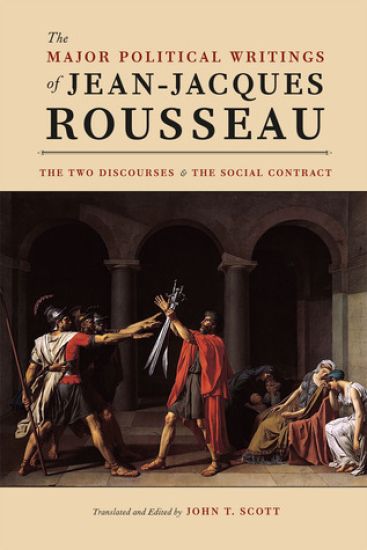
The Major Political Writings of Jean-Jacques Rousseau

The Major Political Writings of Jean-Jacques Rousseau

Jean-Jacques Rousseau

University of Chicago Press
2014
nidottu
Few philosophers have been the subject of as much or as intense debate, yet almost everyone agrees on one thing: Jean-Jacques Rousseau is among the most important and influential thinkers in the history of political philosophy. This new edition of his major political writings renews attention to the perennial importance of his work. The book brings together superb new translations of three of Rousseau's works: the Discourse on the Sciences and the Arts, the Discourse on the Origin and Foundations of Inequality Among Men, and On the Social Contract. The two Discourses show Rousseau developing his well-known conception of the natural goodness of man and the problems posed by life in society. With the Social Contract, Rousseau became the first major thinker to argue that democracy is the only legitimate form of political organization. Translation and editorial notes clarify ideas and terms that might not be immediately familiar to most readers.
The Major Political Writings of Jean-Jacques Rousseau

The Major Political Writings of Jean-Jacques Rousseau

Jean-Jacques Rousseau

University of Chicago Press
2012
sidottu
Individualist and communitarian. Anarchist and totalitarian. Classicist and romanticist. Progressive and reactionary. Since the eighteenth century, Jean-Jacques Rousseau has been said to be all of these things. Few philosophers have been the subject of as much or as intense debate, yet almost everyone agrees that Rousseau is among the most important and influential thinkers in the history of political philosophy. This new edition of his major political writings, published in the year of the three-hundredth anniversary of his birth, renews attention to the perennial importance of Rousseau's work. The book brings together superb new translations of three of Rousseau's works: the "Discourse on the Sciences and Arts", the "Discourse on the Origin and Foundations of Inequality Among Men", and "On the Social Contract". The two discourses show Rousseau developing his well-known conception of the natural goodness of man and the problems posed by life in society. With the "Social Contract", Rousseau became the first major thinker to argue that democracy is the only legitimate form of political organization. Translation and editorial notes clarify ideas and terms that might not be immediately familiar to most readers. The three works collected in "The Major Political Writings of Jean-Jacques Rousseau" represent an important contribution to eighteenth-century political theory that has exerted an extensive influence on generations of thinkers, beginning with the leaders of the French Revolution and continuing to the present day.
Jean-Jacques Rousseau

Jean-Jacques Rousseau

C.H. Dobinson

Routledge
2021
sidottu
This book, first published in 1969, is a detailed consideration of Rousseau’s ideas on education, and an examination of how they grew out of his own experiences in childhood. With particular reference to the Confessions and Emile, this book emphasises the practical application of Rousseau’s theories and traces them through each stage of education. Professor Dobinson clearly analyses Rousseau’s views on the general upbringing of children from early infancy to late adolescence, and on the teaching of such subjects as science, history and religion. This book demonstrates throughout the relevance of Rousseau’s thought to the fundamental issues in contemporary education.
Jean-Jacques Rousseau

Jean-Jacques Rousseau

C.H. Dobinson

TAYLOR FRANCIS LTD
2023
nidottu
This book, first published in 1969, is a detailed consideration of Rousseau’s ideas on education, and an examination of how they grew out of his own experiences in childhood. With particular reference to the Confessions and Emile, this book emphasises the practical application of Rousseau’s theories and traces them through each stage of education. Professor Dobinson clearly analyses Rousseau’s views on the general upbringing of children from early infancy to late adolescence, and on the teaching of such subjects as science, history and religion. This book demonstrates throughout the relevance of Rousseau’s thought to the fundamental issues in contemporary education.
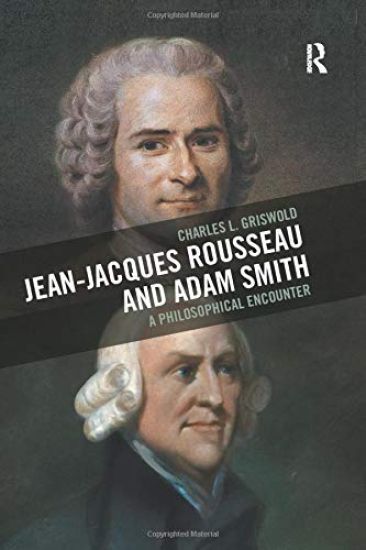
Jean-Jacques Rousseau and Adam Smith

Jean-Jacques Rousseau and Adam Smith

Charles L Griswold

Routledge
2019
nidottu
Jean-Jacques Rousseau and Adam Smith are giants of eighteenth century thought. The heated controversy provoked by their competing visions of human nature and society still resonates today. Smith himself reviewed Rousseau's Discourse on Inequality, and his perceptive remarks raise an intriguing question: what would a conversation between these two great thinkers look like?In this outstanding book Charles Griswold analyzes, compares and evaluates some of the key ways in which Rousseau and Smith address what could be termed "the question of the self". Both thinkers discuss what we are by nature (in particular, whether we are sociable or not), who we have become, whether we can know ourselves or each other, how best to articulate the human condition, what it would mean to be free, and whether there is anything that can be done to remedy our deeply imperfect condition. In the course of examining their rich and contrasting views, Griswold puts Rousseau and Smith in dialogue by imagining what they might say in reply to one another. Griswold’s wide-ranging exploration includes discussion of issues such as narcissism, self-falsification, sympathy, the scope of philosophy, and the relation between liberty, religion and civic order.A superb exploration of two major philosophers, Jean-Jacques Rousseau and Adam Smith: A Philosophical Encounter is essential reading for students and scholars of these two figures, eighteenth century philosophy, the Enlightenment, moral philosophy, and the history of ideas. It will also be of interest to those in related disciplines such as political theory, economics, and religion.
Jean-Jacques Rousseau
Jean-Jacques Rousseau (1712-1778) was a pivotal thinker in the history of political philosophy, and in that of thought and literature more generally. Making major contributions in a variety of areas, he brought his political theory to bear on subjects such as the novel, music, education, and autobiography, amongst others.Bringing together critical assessments of the broad range of Rousseau’s thought, with a particular emphasis on his political theory, this important collection includes translations of a number of influential interpretations of Rousseau’s work that were not previously available in English and were prepared especially for this set, such as those of Lanson, de Jouvenal, Weil, Wahl, and Baczko.Organized thematically, and including an initial new introduction by the editor, as well as brief introductions to each individual volume, this systematic collection is undoubtedly an essential resource for a wide variety of students and scholars.
Jean-Jacques Rousseau and the 'Well-Ordered Society'

Jean-Jacques Rousseau and the 'Well-Ordered Society'

Maurizio Viroli

Cambridge University Press
2003
pokkari
This book studies a central but hitherto neglected aspect of Rousseau’s political thought: the concept of social order and its implications for the ideal society which he envisages. The antithesis between order and disorder is a fundamental theme in Rousseau’s work, and the author takes it as the basis for this study. In contrast with a widely held interpretation of Rousseau’s philosophy, Professor Viroli argues that natural and political order are by no means the same for Rousseau. He explores the differences and interrelations between the different types of order which Rousseau describes, and shows how the philosopher constructed his final doctrine of the just society, which can be based only on every citizen’s voluntary and knowing acceptance of the social contract and on the promotion of virtue above ambition. The author also shows the extent of Rousseau’s debt to the republican tradition, and above all to Machiavelli, and revises the image of Rousseau as a disciple of the natural-law school.
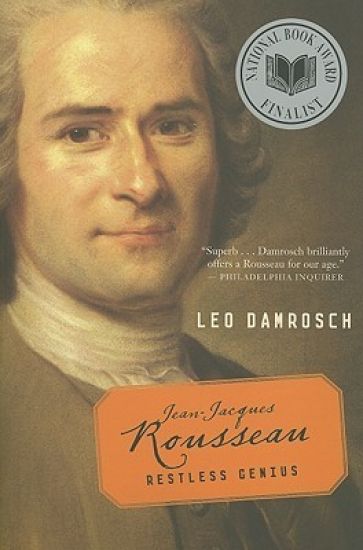
Jean-Jacques Rousseau: Restless Genius

Jean-Jacques Rousseau: Restless Genius

Leo Damrosch

Mariner Books
2007
nidottu
The philosopher Jean-Jacques Rousseau burst unexpectedly onto the eighteenth-century literary scene as a provocateur whose works electrified readers. An autodidact who had not written anything of significance by age thirty, Rousseau seemed an unlikely candidate to become one of the most influential thinkers in history. Yet the power of his ideas is felt to this day in our political and social lives. In a masterly and definitive biography, Leo Damrosch traces the extraordinary life of Rousseau with novelistic verve. He presents Rousseau's books -- The Social Contract, one of the greatest works on political theory; Emile, a groundbreaking treatise on education; and the Confessions, which created the genre of introspective autobiography -- as works uncannily alive and provocative even today. Jean-Jacques Rousseau offers a vivid portrait of the visionary's tumultuous life.
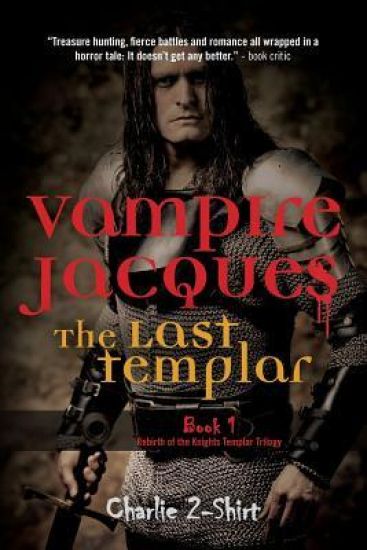
Vampire Jacques the Last Templar: Book 1 Rebirth of the Knights Templar

Vampire Jacques the Last Templar: Book 1 Rebirth of the Knights Templar

Charlie 2-Shirt

Vampire Jacques the Last Templar
2015
nidottu
In 1314, King Philip of France desperately needs the Templar treasure to save his country from financial ruin. Jacques de Molay accepts the secret mission to find and deliver his country's salvation. But his most trusted friend's betrayal soon leads to the king sentencing Jacques to be burned to death. With a bitter heart and nothing to lose, Jacques offers his soul to Mithras, the vampire god, and devotes the rest of his existence to converting legions of mortals to his following. Fate, however, has a different plan for Jacques. The beautiful gypsy Violca plants the spark of human emotion inside him, and she tells him it may be possible for him to become mortal once again. But to do so, he must resist the urge to consume human blood-until he finds his true love, and she allows him to drink freely of hers. This first Epic of a trilogy chronicles Jacques quest across five centuries, through the world's darkest places and fiercest battles, to find true love. When all seems hopeless, will his human emotions overpower his immortality and force him to give up? Or will he overcome impossible odds to regain his humanity in this sinister game of life and death, plagued with dark forces, fierce battles, and a dangerous romance between divergent worlds. Take heed, a violent storm is rising in the universe. The Vampire horde, destroyer of civilizations and worlds has awakened./p>
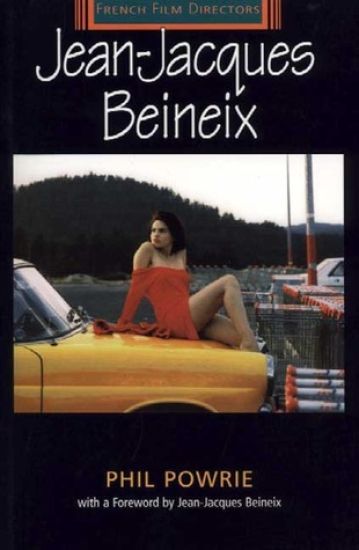
Jean-Jacques Beineix

Jean-Jacques Beineix

Philip Powrie

Manchester University Press
2001
nidottu
This volume is the first to examine, in either French or English, the films of Jean-Jacques Beineix, often seen as the best example of the 1980s cinéma du look, with cult films, such as Diva and Betty Blue (37º 2 le matin).. After an introduction which places Beineix in the context of the 1980s and the arguments centering on a postmodern cinema, the volume devotes a chapter to each of Beineix’s feature films, including the film which marked his return to feature film making after a break of a decade, Mortel Transfert (2001). Prefaced by an excellent foreword by the director himself, which includes a broad condemnation of French critics. Includes many illustrations direct from the director's own collection, complementing the interviews Powrie made with him and his collaborators.
Jean-Jacques Dortour de Mairan and the Geneva Connection

Jean-Jacques Dortour de Mairan and the Geneva Connection

Ellen McNiven Hine

Voltaire Foundation
1996
sidottu
This study illustrates the significance of Jean-Jacques Dortous de Mairan’s networking in the spread of Enlightenment thought. It focuses primarily on the unpublished correspondence between Mairan and the Geneva scientists, Firmin Abauzit, Gabriel Cramer, Jean Jallabert and Charles Bonnet. Mairan was an assiduous correspondent whose letters reveal the progress of scientific thought in the first three quarters of the eighteenth century. Despite the high regard in which of his contemporaries, he has been, until recently, relatively neglected by Enlightenment scholars. This is the first full-length study devoted to Mairan’s relations with scientists in other countries, to the process of cross-fertilisation in the production of scientific knowledge, and to his considerable influence on the development of scientific thought on key issues. The topics covered in the letters range from the Shape of the Earth and vis vivacontroversies and the medical powers of electricity, to the nature of the Seichesin the Lac du Léman and the origin of monsters. One of the major interests of the correspondence is Mairan’s obvious fascination with Newton. Neglect of his contribution to the history of ideas can be partly explained by the fact that he was unfairly considered a ‘last-ditch’ Cartesian in a triumphantly Newtonian world. The detailed analysis of the letters in this study amply shows a constant preoccupation with both the Opticks and the Principiaand a fairly sophisticated understanding of scientific method. The letters abound in references to other scientists, such as the Bernoullis, Nollet, Dufay and Maupertuis. They provide an exciting, unguarded and ‘behind-the-scenes’ view of scientific developments before they were finalised and appeared in published works. It is particularly revealing, therefore, to compare the letters to Mairan’s contributions to the Mémoires de l’Académie royale des sciences, his early dissertations, and his mature works. Mairan’s unpublished correspondence with Geneva scientists is a treasure-house of information on personalities, ideas and controversies of crucial importance to the international scientific community from 1717 to 1769.
Jean-Jacques Rousseau et la Lecture
Rousseau et la lecture est un livre collectif, fruit d’un séminaire de l’Equipe J.-J. Rousseau anime par Tanguy L’Aminot à l’Université de Paris IV-Sorbonne. Compose d’une vingtaine d’articles, il se propose d’examiner le rapport que Jean-Jacques Rousseau a entretenu avec les livres, la littérature, la philosophie, la science et l’esthétique de son temps.Plus que les sources de son œuvre ce qui est analyse ici, c’est le dialogue qui s’établit dans les écrits de Jean-Jacques avec un ou plusieurs auteurs ou avec un sujet particulier, Celui qui dans l’Emile déclarait haïr tous les livres, s’est révélé un lecteur étonnant, au fait de la pensée et de l’art sous leurs aspects les plus divers. Les auteurs de ce recueil se sont donc demande non seulement quels étaient les ouvrages qui avaient marqué Rousseau et quelle valeur ou quel intérêt présentait telle ou telle lecture pour lui, mais aussi comment Rousseau souhaitait être lu lui-meme.Lire apparaît comme un véritable révélateur de tout l’être et peut avoir des conséquences funestes ou perverses dont il convient de se prémunir. En aucun cas, chez Rousseau, la lecture n’est un rite innocent ou gratuit.Quatre études présentent d’ailleurs quelques-unes des lectures qui ont été faites de Rousseau depuis sa mort. De Sade à Jean Starobinski, Pierre Burgelin, Jacques Derrida, Paul de Man et au lecteur ordinaire des années 1980, on peut apprécier les multiples portraits qui ont été faits d’un auteur qui tenait à ce qu’on le voit, le lise et le comprenne à sa façon. Rousseau qui avait lu Leibniz, Spinoza ou Helvétius selon son cœur et son système, n’etait-il pas a son tour victime de la trahison de ses lecteurs? Mais lire, ne serait-ce pas avant tout trahir, traduire et contredire celui qui est lu? Le conduire au-delà de lui dans l’univers d’autrui?