Leadership is an activity that not only manifests itself in formal positions, but also bubbles up in various places within an organization. Perhaps given the importance of leadership to any endeavor, the literature on this topic has burgeoned. Yet among these titles, Learning to Lead stands out as one of the best texts available on leadership for college and university administrators. Critical skills such as managing people, resolving conflict, and making rational (and legal) decisions are explored within the context of the campus. The book also addresses the needs of those who facilitate leadership workshops, serve as mentors to potential leaders, and teach courses on higher education leadership and administration. While presenting all sides of key issues, the author calls for the reader to define his or her own position through a series of provocative reflection questions in each chapter. Thus the book invites interaction and teaches administrators not what to think about leadership, but how to think about it.
The clash of religion and politics has been a persistent source of polarization in North America. In order to think wisely and constructively about the spiritual dimension of our political life, there is need for an approach that can both maintain the diversity of belief and foster values founded on the principles of religion. In Spiritualizing Politics without Politicizing Religion, James R. Price and Kenneth R. Melchin provide a possible framework, approaching issues in politics via a profile of Sargent Shriver (1915–2011), an American diplomat, politician, and a driving force behind the creation of the Peace Corps. Focusing on the speeches Shriver delivered in the course of his work to advance civil rights and build world peace, Price and Melchin highlight the spiritual component of his efforts to improve institutional structures and solve social problems. They contextualize Shriver’s approach by contrasting it with contemporary, landmark decisions of the U.S. Supreme Court on the role of religion in politics. In doing so, Spiritualizing Politics without Politicizing Religion explains that navigating the relationship of religion and politics requires attending to both the religious diversity that politics must guard and the religious involvements that politics needs to do its work.
In a world where evil abounds and the paranormal becomes normal to many, a world where many think the dead can speak and demons possess the souls of innocents, people everywhere claim these are the works of Satan. But is Satan real?'Imagine There's No Satan' takes an in depth look at who and what Satan is. Where does the idea of a cosmic Satan come from? Does the God of the Bible really allow an evil being to harm humans and torture dead souls in hell?You will be guaranteed to see the existence of Satan from a new and liberating perspective after you've read Imagine There's No Satan - Volume 2 of Satan Christianity's Other God.Satan is exposed as a myth of ancient cultures; repackaged, mishandled, seasoned with mysticism, and woven into the fabric of Christianity. Today you and I are offered the traditional view of Satan, a view that leaves little room for logic. The other option is to find for ourselves that Satan never was real. Satan only exists in the imagination of man and lives in the lore of storytellers from the past.If you have ever wondered how God can allow Satan to exist, where dead souls go, if a psychic can truly contact the dead using the power of Satan, or if Hell really exists, then you will want to read every word of 'Imagine There's No Satan'.Get ready; because Satan is about to disappear forever and you'll see that God can exist without Satan.All you have to do to get started is 'Imagine There's No Satan'
Measurement and Evaluation in Human Performance, Fifth Edition With Web Study Guide, leads students through the fundamentals of collecting and analyzing data of human performance and applying their results to real-life situations. Focusing on the core concepts of reliability and validity of data, the text provides all the necessary tools for evidence-based decision making that can be applied to physical therapy, allied health professions, kinesiology, sport and exercise science, physical education, health, and fitness. The fifth edition of Measurement and Evaluation in Human Performance provides students with a logical progression of information in a straightforward manner. Introductory algebraic concepts are combined with the technological capabilities of Microsoft Excel and IBM’s Statistical Package for the Social Sciences (SPSS) to aid students in calculations and data analysis. The text expands on previous editions and includes the following enhancements: • Additional sport-specific and exercise examples, as well as physical education examples focusing on motor skill abilities and psychological skills, that provide real-world application of the material • Updated examples for use and practice with Excel and SPSS calculations and techniques that illustrate data analyses • Expanded emphasis on evidence-based decision making to guide students in making appropriate decisions • 52 video interviews of top researchers who offer greater insight into the field as students work through the text The text is divided into four easy-to-follow parts. Part I introduces the concepts of measurement and evaluation and their importance to decision making in human performance with specific attention to applications of measurement, testing, and evaluation. Part II explores statistics as core tools and resources for these evaluations and decisions and explains the various forms of statistical procedures often used in measurement. Part III takes the skills gained from parts I and II and extends them into applied issues in human performance, such as evaluating a person’s aerobic capacity or muscular strength. The importance of reliability and validity in data is also covered in detail. Part IV provides information on practical applications that apply all of the information from the previous sections. Learning aids for this text, including a robust and newly updated web study guide with activities and questions for active learning and engagement, enhance student comprehension and retention. Chapter objectives highlight main points that students should focus on throughout the chapters, and key terms are highlighted and defined in the glossary. Mastery Items include problems and activities that test student knowledge, while Measurement and Evaluation Challenge sidebars provide scenarios that can be tackled with the information gathered throughout the chapter. Additional data sets for each chapter are also provided in the web study guide for practice and mastery of techniques in Excel and SPSS. To aid instructors, Measurement and Evaluation in Human Performance, Fifth Edition, includes a suite of ancillary materials: instructor guide, presentation package plus image bank, test package, chapter quizzes, and instructor videos. Measurement and Evaluation in Human Performance, Fifth Edition, continues to providee students with the tools and confidence they will need to gather reliable data, analyze it, and apply it in their work with clients. With its emphasis on understanding and applying sound measurement techniques, this fifth edition prepares students and professionals to identify problems and make solid decisions in the realm of human performance.
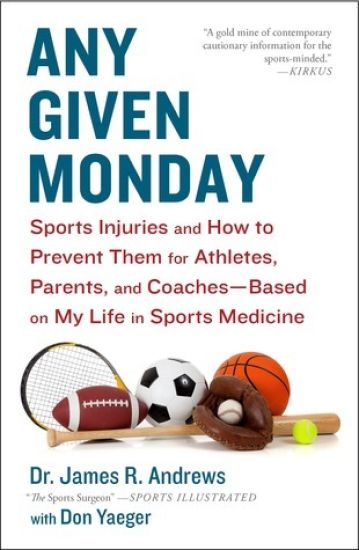
From the most renowned sports surgeon in the country, "a gold mine of contemporary cautionary information for the sports-minded" (Kirkus Reviews) to promote the prevention of sports injuries, especially among young people--featured on CBS This Morning. Every year more than 3.5 million children will require medical treatment for sports-related injuries, the majority of which are avoidable through proper training and awareness. Dr. James Andrews, an orthopedic surgeon, sports medicine pioneer, and consultant to some of the fiercest teams in college and professional sports, distills his practical wisdom and professional advice to combat a growing epidemic of injury among sports' most vulnerable population: its young athletes. Any Given Monday is a sport-by-sport guide to injury prevention and treatment, written specifically for the parents, grandparents, and coaches of young athletes. Dr. Andrews covers every major sport, including football, gymnastics, judo, basketball, tennis, baseball, cheerleading, wrestling, and more. From identifying eating disorders to preventing career-ending ACL tears and concussions, Dr. Andrews reveals how young athletes can maximize their talent and maintain a lifetime of health--both on the field and off.
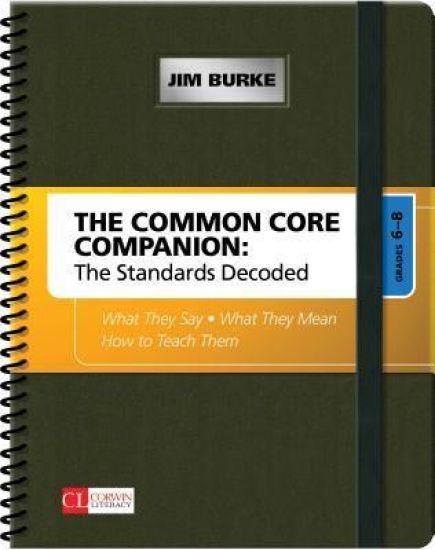
That version of the 6-8 standards you wish you had Don't spend another minute poring over the standards. Jim Burke has already done the hard work for you with this roadmap of what each standard says, what each standard means, and how precisely to put that standard into practice across English Language Arts, Social Studies, Science, and Technical Subjects. Jim clearly lays out: Grades 6-8 standards side by side with key distinctions Different content-area versions of each standard Explanations of each standard, with student prompts Content to cover, lesson ideas, and instructional techniques Glossary and adaptations for ELL students