

Kirjahaku
Etsi kirjoja tekijän nimen, kirjan nimen tai ISBN:n perusteella.
1000 tulosta hakusanalla Jamie Smart

Are you ready for a revolution?For years, the Church has taught holiness as renunciation instead of relationship: listing things that good Christians must give up, rather than all that we gain by choosing Jesus.Author, artist, and podcaster, Jamie Lyn Wallnau tackles the topic of holiness for her fellow millennials. She makes the bold claim that a life set apart is the only path to true, abiding fulfilment.Jamie Lyn teaches that the Jesus-devoted life treasures Him as the greatest good, and pursues Him above all else.Written from a heart abandoned to God, Holy Revolution teaches readers to: Enjoy Jesus' Presence over distraction.Trust and experience the Promise Keeper in the midst of delay and discouragement.Experience the freedom of friendship with God.Use simple, conversational prayer as a powerful weapon.Live in victory over temptation through total satisfaction in Jesus.Influence culture through words and example.Discover the freedom and joy of a life set apart. Will you choose Jesus today?



Walk in the Spirit "God has placed inside each one of us a spiritual dream. It's what God has breathed into us-a little bit of Himself. And it's that part that is calling us unto Him."So states Jamie Buckingham in this remarkable recounting of his own personal journey with the Holy Spirit.From his strict moral upbringing through his salvation experience, his "dark pit" days as a disgraced Southern Baptist pastor, and his highly successful writing career, Jamie shares how God broke down his resistance to the baptism of the Holy Spirit and taught him how to be led by the Spirit day by day. With characteristic transparency, humor, and insight, he uses his own story to encourage each one of us to discover our unique identity, purpose, and power-to realize our God-given dream through a personal experience with the Spirit of God.Reminiscing on Jamie's life and ministry is like walking through a magnificent museum where marvels of accomplishment shine in seemingly endless array. When the history of our era is written, Jamie Buckingham's place will most certainly be noted with distinction-and with praise to God. -JACK HAYFORD, pastorJamie touched multitudes of people, both those in the body of Christ and those not. He touched everyone, even children, with his uncommon sermons, his stories, his reminiscings-with his totally honest and unaffected approach. -ORAL ROBERTS, healing evangelist

What Every Woman in Ministry Needs to KnowHer Calling is a mentor in a book. Dr. Jamie Morgan uses her decades of experience and insightful leadership to inspire women to fulfill their God-given destinies. All women called to ministry will be blessed by the practical guidance and wisdom shared by Jamie Morgan. Regardless of what God has called you to do in your ministry, this book will become one of your most valuable resources.
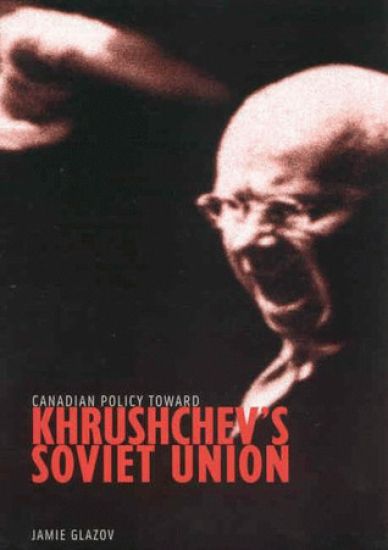
Canadian Policy toward Khrushchev's Soviet Union
Jamie Glazov
McGill-Queen's University Press
2003
nidottu
He details how the St Laurent government backed the shrewd calculations of the Department of External Affairs and emphasized the wisdom of the containment-accommodation approach, an approach that, Glazov claims, would help win the Cold War thirty-five years later. Glazov shows that the strategy of accommodation, the main difference between Canadian and American Soviet policy, was ultimately vindicated by the eventual ascendancy of a liberal Soviet leader (Gorbachev), which led to increased East-West contact and Soviet liberalization, phenomena that led directly to the West's victory in the Cold War. Glazov's new assessment of Western policies toward Khrushchev's Russia is critical to our understanding of present-day Russia, since Gorbachev's democratization, which led to the disintegration of the Soviet Union in 1991, had its origins in the Khrushchev thaw. Canadian Policy toward Khrushchev's Soviet Union provides vital information to help answer the question of how the West should deal with Russia, especially in the context of globalization - one of the most urgent issues facing Canada and the Western world.

Sometimes image, sometimes word, and often both or neither, concrete poetry emerged out of an era of groundbreaking social and technological developments. Television, nuclear weapons, radio transistors, space travel, and colour photography all combined to drastically alter the representation of the world in the period following the Second World War. While never fully embraced as poetry or as visual art, and often criticized for an aesthetic that veers too close to commercial design, concrete poetry is an ambitious critical project that strives to break free of national languages and narrow literary traditions. Crossing national and disciplinary borders to highlight connections between poems and a variety of other cultural material, Jamie Hilder shows how the movement's international character predates and initiates some trends now associated with globalization. Hilder places concrete poetry alongside such transformative projects as the modernist city of Brasilia, the development of computers, and the rise of conceptual art in order to accentuate its significance as one of the major poetic movements of the twentieth century. Heavily illustrated with examples of poems that exhibit the politically engaged, complex, and varied aspects of the movement, Designed Words for a Designed World illuminates how a group of poets fascinated by the possibilities of a rapidly transforming cultural geography operated within an emerging global imaginary.

Sometimes image, sometimes word, and often both or neither, concrete poetry emerged out of an era of groundbreaking social and technological developments. Television, nuclear weapons, radio transistors, space travel, and colour photography all combined to drastically alter the representation of the world in the period following the Second World War. While never fully embraced as poetry or as visual art, and often criticized for an aesthetic that veers too close to commercial design, concrete poetry is an ambitious critical project that strives to break free of national languages and narrow literary traditions. Crossing national and disciplinary borders to highlight connections between poems and a variety of other cultural material, Jamie Hilder shows how the movement's international character predates and initiates some trends now associated with globalization. Hilder places concrete poetry alongside such transformative projects as the modernist city of Brasilia, the development of computers, and the rise of conceptual art in order to accentuate its significance as one of the major poetic movements of the twentieth century. Heavily illustrated with examples of poems that exhibit the politically engaged, complex, and varied aspects of the movement, Designed Words for a Designed World illuminates how a group of poets fascinated by the possibilities of a rapidly transforming cultural geography operated within an emerging global imaginary.
Between 1900 and 1945, Britain and its empire experienced significant technological and social changes that altered its media and entertainment landscape. One aspect of British culture that underwent these changes was pornography. While illegal and socially reviled, the pornography trade adapted and flourished during this period. In The Thorny Path Jamie Stoops situates changes within the pornography trade in the context of an increasingly transnational world. Those who traded in pornography circled the globe, journeying from Britain to its colonies, from colonial holdings to continental Europe, from Europe to North America. In the process, pornographers and their customers developed new vocabularies and norms with which to negotiate their trade. Based on extensive archival research, this book grounds questions of transnationalism and heteronormativity in the day-to-day lives of low-level pornographers and consumers. Stoops’s focus on street-level interactions within the trade is balanced with an analysis of state policies, legal regulations, and debates about obscenity, illustrating the interplay between enforcers of mainstream moral standards and those who represented deviant sexual practices. Raising questions of queerness and sexual normativity, The Thorny Path links these issues to contemporary conversations about pornography, obscenity, and sexuality. It offers timely historical context for current and vibrant debates surrounding marginalized sexualities, gender roles, and pornography in a time of rapid technological and social change.
To most, the flush of a toilet is routine: the way we banish waste and ensure cleanliness. It is safe, efficient, necessary, nonpolitical, and utterly unremarkable. Yet Jamie Benidickson's examination of the social and legal history of sewage in Canada, the United States, and the United Kingdom demonstrates that the uncontroversial reputation of flushing is deceptive. The Culture of Flushing is particularly relevant in a time when community water quality can no longer be taken for granted, as it investigates and clarifies the murky evolution of waste treatment.The Culture of Flushing is essential reading for specialists in environmental history, environmental law, public health, engineering, and public policy. Those concerned with protecting water quality and the environment will also find it unique, comprehensive, and accessible.
To most, the flush of a toilet is routine: the way we banish waste and ensure cleanliness. It is safe, efficient, necessary, nonpolitical, and utterly unremarkable. Yet Jamie Benidickson's examination of the social and legal history of sewage in Canada, the United States, and the United Kingdom demonstrates that the uncontroversial reputation of flushing is deceptive. The Culture of Flushing is particularly relevant in a time when community water quality can no longer be taken for granted, as it investigates and clarifies the murky evolution of waste treatment.The Culture of Flushing is essential reading for specialists in environmental history, environmental law, public health, engineering, and public policy. Those concerned with protecting water quality and the environment will also find it unique, comprehensive, and accessible.
We all know what water is, and we often take it for granted. Because it seems so natural, we seldom question how we see water. But the spectre of a worldwide water crisis suggests that there might be something fundamentally wrong with the way we think about water. Jamie Linton dives into the history of the modern concept of water, that water can be stripped of its wider environmental, social, and cultural contexts and reduced to a scientific abstraction – to mere H20. This abstraction has given modern society licence to dam, divert, and manipulate water with impunity, giving rise to a growing suite of problems. Linton argues that part of the solution to the water crisis involves deliberately reinvesting water with social content.
We all know what water is, and we often take it for granted. Because it seems so natural, we seldom question how we see water. But the spectre of a worldwide water crisis suggests that there might be something fundamentally wrong with the way we think about water. Jamie Linton dives into the history of the modern concept of water, that water can be stripped of its wider environmental, social, and cultural contexts and reduced to a scientific abstraction – to mere H20. This abstraction has given modern society licence to dam, divert, and manipulate water with impunity, giving rise to a growing suite of problems. Linton argues that part of the solution to the water crisis involves deliberately reinvesting water with social content.

Stretching across Ontario, Manitoba, and Minnesota, the Lake of the Woods and Rainy Lake basin spans boundaries and jurisdictions. Levelling the Lake explores a century and a half of social, economic, and legal arrangements through which the resources and environment of the Lake of the Woods and Rainy Lake watershed have been harnessed and harmed. Jamie Benidickson traces the environmental consequences of mining, forest industries, commercial fishing, hydro-electricity production, and recreation, as well as their often unanticipated impacts on local residents, including Indigenous communities, which encouraged new legal and institutional responses. Assessing the transition from primary resource extraction toward sustainable development at a watershed level, Levelling the Lake also shows how interjurisdictional and transboundary issues – many involving the Canada-US International Joint Commission – continue to play a significant role throughout the region.
Stretching across Ontario, Manitoba, and Minnesota, the Lake of the Woods and Rainy Lake basin spans boundaries and jurisdictions. Levelling the Lake explores a century and a half of social, economic, and legal arrangements through which the resources and environment of the Lake of the Woods and Rainy Lake watershed have been harnessed and harmed. Jamie Benidickson traces the environmental consequences of mining, forest industries, commercial fishing, hydro-electricity production, and recreation, as well as their often unanticipated impacts on local residents, including Indigenous communities, which encouraged new legal and institutional responses. Assessing the transition from primary resource extraction toward sustainable development at a watershed level, Levelling the Lake also shows how interjurisdictional and transboundary issues – many involving the Canada-US International Joint Commission – continue to play a significant role throughout the region.
As many Indigenous communities return to self-governance and self-determination, they are taking their own approaches to property rights and community development. Based on case studies in four Indigenous communities – the Westbank, Membertou, Nisga'a, and James Bay Cree nations – Jamie Baxter traces how local leaders have set the course for land rights and development during formative periods of legal and economic upheaval. Drawing on new research about institutional change in organizational settings, Baxter explores when and how community leaders have sustained inalienable land rights without turning to either persuasion or coercive force – the two levers of power normally associated with political leadership.Inalienable Properties challenges the view that liberalized land markets are the inevitable result of legal and economic change. It shows how inalienability can result from intentional choices and is linked to structures of decision-making that have long-lasting consequences for communities.
As many Indigenous communities return to self-governance and self-determination, they are taking their own approaches to property rights and community development. Based on case studies in four Indigenous communities – the Westbank, Membertou, Nisga'a, and James Bay Cree nations – Jamie Baxter traces how local leaders have set the course for land rights and development during formative periods of legal and economic upheaval. Drawing on new research about institutional change in organizational settings, Baxter explores when and how community leaders have sustained inalienable land rights without turning to either persuasion or coercive force – the two levers of power normally associated with political leadership.Inalienable Properties challenges the view that liberalized land markets are the inevitable result of legal and economic change. It shows how inalienability can result from intentional choices and is linked to structures of decision-making that have long-lasting consequences for communities.

A knitting retreat gets knotty in this humorous and poignant novel about love, second chances, and the unyielding bonds between mothers and daughters.Maggie Hodges and her daughter Piper are looking forward to a restful knitting retreat in the picturesque village of New Hope, Pennsylvania. But instead, they are surprised to find themselves sharing their charming riverside inn with a rowdy bushcraft bachelor party. Undaunted by the clash of interests and personalities, Maggie suggests a lighthearted competition--a battle of crafts--that sparks a rivalry between the two groups, and perhaps something more. But as the weekend unfolds, old mistakes and buried resentments begin to surface, threatening to destroy Maggie and Piper's cherished connection.In knitting, one can easily fix mistakes by picking apart each stitch and starting anew. But life's tangles aren't so easily mended. With tensions rising and the retreat coming to a close, Maggie must act quickly before she loses everything she holds dear. Can she repair what's been broken before everything unravels?

"The perfect summer beach read Rival bookshops, second chance romance, friend drama, it was the perfect book to curl up and escape to the Cape."--Pamela Kelley, bestselling author of Bookshop by the BayA bestselling author finds love and second chances in the stacks of a quaint beach town bookshop Author Shelby Archer found inspiration for her first novel while living on the picturesque shores of Provincetown on Cape Cod. When she comes to the town to celebrate her new bestseller, she is expecting a warm homecoming. But instead she is confronted with the cold shoulders of friends and neighbors who feel exposed and betrayed.Heartbroken, Shelby tries to move on and focus on her next novel. But then an unexpected call comes: her dear friend who owns the beloved Land's End bookshop needs help for the summer. Shelby reluctantly returns to the Cape to manage the store.Back at the beach, Shelby sets her focus on the tiny seaside shop, getting lost in the shelves of steamy romance novels and dusty classics and trying to right the wrongs of her past. With every page turned and every customer served, Shelby comes closer to gaining back the trust of those she hurt. But as her manuscript deadline nears, she is again forced to choose between her own success and a second chance at love and belonging.