Kirjojen hintavertailu. Mukana 11 244 527 kirjaa ja 12 kauppaa.

Kirjahaku

Etsi kirjoja tekijän nimen, kirjan nimen tai ISBN:n perusteella.

1000 tulosta hakusanalla Janis A. Spring

Collective Skill Formation in Liberal Market Economies?

Collective Skill Formation in Liberal Market Economies?

Janis Vossiek

Peter Lang AG, Internationaler Verlag der Wissenschaften
2018
nidottu
The book captures the development and variety of vocational training institutions in Australia, Ireland and the United Kingdom since World War II from a comparative perspective. While all three countries have undertaken several attempts to reform training from classical craft apprenticeships towards modern dual apprenticeships, their reform processes have yielded divergent results: In the United Kingdom training became largely organized around a publicly financed "training market" with little influence for employers and unions in training politics. Conversely, the social partners were included in reform processes and the provision of training in Ireland and Australia, which enabled the development of dual apprenticeships. These differences, which have been largely neglected in political science and education studies alike, are explained by the interaction between partisan governments and organized interests. Only non-right governments managed to bring together employers and unions in training reforms, which was the main political prerequisite for the development of dual apprenticeships.

Das Anerkennungsprinzip im Kollisionsrechtssystem des internationalen Privatrechts
Die Freizügigkeit innerhalb der Europäischen Union nimmt stetig zu. Damit einher geht die Möglichkeit, im europäischen Ausland beispielsweise die Ehe zu schließen, eine Lebenspartnerschaft zu begründen oder einen Namen einzutragen. So selbstverständlich diese Optionen im immer enger zusammenwachsenden Europa heutzutage scheinen, so wenig geklärt ist bisher die Frage, ob die im europäischen Ausland begründeten Statusverhältnisse in Deutschland Wirksamkeit entfalten. Janis Leifeld geht diesem Problem sowohl aus europarechtlicher als auch aus international-privatrechtlicher Perspektive nach. Im Mittelpunkt stehen folgende Fragen: Sind in einem Mitgliedstaat begründete Statusverhältnisse von den anderen Staaten der Europäischen Union anzuerkennen? Wie kann die durch die europäischen Grundfreiheiten begründete Anerkennungspflicht kollisionsrechtlich umgesetzt werden? Wie fügt sich das Anerkennungsprinzip in die Dogmatik des internationalen Privatrechts ein?
Komplexität des Rechts

Komplexität des Rechts

Janis Beckedorf

Mohr Siebeck
2025
nidottu
Janis Beckedorf untersucht aus theoretischer, methodischer und praktischer Perspektive, wie Komplexität im Recht quantifiziert werden kann. Als theoretische Grundlage gibt er einen systematischen Überblick über die Verwendung des Begriffs "Komplexität" in der Rechtswissenschaft. Der Schwerpunkt liegt auf dem interdisziplinären Forschungsbereich der Komplexitätstheorie und deren Rezeption in der Rechtswissenschaft. Es werden verschiedene Methoden vorgestellt, mittels derer Aspekte dieser Komplexität gemessen werden können. Mit Hilfe der Netzwerkforschung und der Graphentheorie kann Komplexität über die Struktur des Rechts quantifiziert werden. Der Autor wendet diesen Ansatz auf deutsche und U.S.-amerikanische Gesetze sowie auf deutsche Gerichtsentscheidungen an. Die Ergebnisse ermöglichen neue Sichtweisen auf das Recht, ergänzen quantitativ Erkenntnisse der Rechtswissenschaft und unterstützen die Normsetzung und Rechtsanwendung.
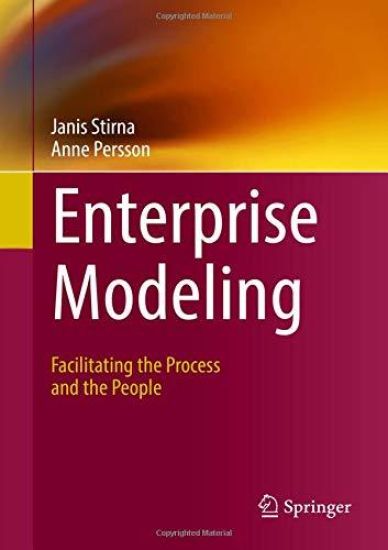
Enterprise Modeling

Enterprise Modeling

Janis Stirna; Anne Persson

Springer International Publishing AG
2018
sidottu
This book offers practical advice on managing enterprise modeling (EM) projects and facilitating participatory EM sessions. Modeling activities often involve groups of people, and models are created in a participatory way. Ensuring that this is done efficiently requires dedicated individuals who know how to organize modeling projects and sessions, how to manage discussions during these sessions, and what aspects influence the success and efficiency of modeling in practice.The book also includes a summary of the theoretical background to EM, although participatory modeling can also be used in conjunction with other methods that are not made for EM, such as those made for goal-oriented requirements engineering and information systems analysis.The first four chapters present an overview of enterprise modeling from various viewpoints (including methods, processes and organizational challenges), providing a background for those that need to refresh their basic knowledge. The next six chapters form the core of the book and detail the roles and competences needed in an EM project, typical stakeholder behaviors and how to handle them, tools and methods for managing participatory modeling and facilitation, and how to train modeling experts for these social aspects of modeling. Lastly, a concluding chapter presents a summary and an outlook on current research in participatory EM.This book is intended for anybody who wants to learn more about how to facilitate participatory modeling in practice and how to set up and carry out EM projects. It does not require any in-depth knowledge about specific EM methods and tools, and can be used by students and lecturers for courses on participatory modeling, and by practitioners wanting to extend their knowledge of social and organizational topics to become an experienced facilitator and EM project manager.