Kirjojen hintavertailu. Mukana 11 244 527 kirjaa ja 12 kauppaa.

Kirjahaku

Etsi kirjoja tekijän nimen, kirjan nimen tai ISBN:n perusteella.

1000 tulosta hakusanalla Jeff V. Cook

Japan's Quiet Transformation

Japan's Quiet Transformation

Jeff Kingston

Routledge
2004
nidottu
The 1990s have been termed as 'Japan's lost decade' to describe how the phenomenal growth in the Japanese economy ground to a halt and the country was crippled by enormous and ongoing political, economic and social problems. In responding to these unprecedented difficulties, wide-ranging reforms have been adopted including NPO, information disclosure and judicial reform legislation. Controversially, this book argues that such reforms are creating a more robust civil society and demonstrate that Japan is far more dynamic than is generally recognized.
Privatization in Malaysia

Privatization in Malaysia

Jeff Tan

Routledge
2007
sidottu
In recent years, privatisation has fallen out of favour in many countries because the underlying political factors have not been well understood. This book examines Malaysia’s privatisation programme, focusing on how political constraints resulted in the failure of four major privatisations: the national sewerage company (IWK), Kuala Lumpur Light Rail Transit (LRT), national airline (MAS), and national car company (Proton). It considers why developing countries such as Malaysia might want to embark on privatisation, the factors that lead to policy failure, and what is needed to make it work. It shows clearly that political motives driving privatisation often dominate purely economic considerations, and thus it is necessary to analyse privatisation within the specific country context. It argues that failure in the Malaysian case was due to political considerations that compromised institutional design and regulatory enforcement, leading to problems associated with corruption. It concludes that privatisation does not necessarily improve incentives for efficiency or enhance the finance available for capital investment, and that successful privatisation depends on the state’s institutional and political capacity to design and manage an appropriate set of subsidies. Overall, this book is a comprehensive examination of privatisation in Malaysia, providing important insights for understanding the political economy of this process in other developing countries.
American Foreign Policy and Postwar Reconstruction
On the eve of the invasion of Iraq, President G.W. Bush argued that if setting up democracy in Japan and Germany after WW II was successful, then it should also be successful in Iraq. This book provides a detailed comparison of the reconstruction of Japan from 1945 to 1952 with the current reconstruction of Iraq, evaluating the key factors affecting the success or failure of such projects. The book seeks to understand why American officials believed that extensive social reengineering aiming at seeding democracy and economic development is replicable, through identifying factors explaining the outcome of U.S.-led post-conflict reconstruction projects. The analysis reveals that in addition to the effective use of material resources of power, the outcome of reconstruction projects depends on a variety of other intertwined factors, and Bridoux provides a new analytical framework relying on a Gramscian concept of power to develop a greater understanding of these factors, and the ultimate success or failure of these reconstruction projects. Appraising the effectiveness of American power in the contemporary international structure, this work is a significant contribution to the field and will be of great interest to all scholars of foreign policy, international relations and conflict studies.
Privatization in Malaysia

Privatization in Malaysia

Jeff Tan

Routledge
2011
nidottu
In recent years, privatisation has fallen out of favour in many countries because the underlying political factors have not been well understood. This book examines Malaysia’s privatisation programme, focusing on how political constraints resulted in the failure of four major privatisations: the national sewerage company (IWK), Kuala Lumpur Light Rail Transit (LRT), national airline (MAS), and national car company (Proton). It considers why developing countries such as Malaysia might want to embark on privatisation, the factors that lead to policy failure, and what is needed to make it work. It shows clearly that political motives driving privatisation often dominate purely economic considerations, and thus it is necessary to analyse privatisation within the specific country context. It argues that failure in the Malaysian case was due to political considerations that compromised institutional design and regulatory enforcement, leading to problems associated with corruption. It concludes that privatisation does not necessarily improve incentives for efficiency or enhance the finance available for capital investment, and that successful privatisation depends on the state’s institutional and political capacity to design and manage an appropriate set of subsidies. Overall, this book is a comprehensive examination of privatisation in Malaysia, providing important insights for understanding the political economy of this process in other developing countries.
American Foreign Policy and Postwar Reconstruction
On the eve of the invasion of Iraq, President G.W. Bush argued that if setting up democracy in Japan and Germany after WW II was successful, then it should also be successful in Iraq. This book provides a detailed comparison of the reconstruction of Japan from 1945 to 1952 with the current reconstruction of Iraq, evaluating the key factors affecting the success or failure of such projects. The book seeks to understand why American officials believed that extensive social reengineering aiming at seeding democracy and economic development is replicable, through identifying factors explaining the outcome of U.S.-led post-conflict reconstruction projects. The analysis reveals that in addition to the effective use of material resources of power, the outcome of reconstruction projects depends on a variety of other intertwined factors, and Bridoux provides a new analytical framework relying on a Gramscian concept of power to develop a greater understanding of these factors, and the ultimate success or failure of these reconstruction projects. Appraising the effectiveness of American power in the contemporary international structure, this work is a significant contribution to the field and will be of great interest to all scholars of foreign policy, international relations and conflict studies.
Religion, Politics and International Relations
A leading authority in the discipline, Jeffrey Haynes has contributed to many of the most significant debates in the fields of religion & politics and religion & international relations in the last twenty years. This book brings together many of his most influential essays, offering a comprehensive analysis of religious actors and their political goals. In recent years, scholars have identified a range of religious actors with a variety of political goals. The aim of this collection is to identify and examine political activities of selected religious actors in both domestic and international contexts. The introductory chapter sets the scene for the collection, providing a clear understanding of why, how and when religious actors act politically both within and between countries. Over the course of 15 essays, Jeffrey Haynes presents a survey of the interaction of religion and politics, both domestically and internationally, in relation to a variety of issues, and draws the findings together in a new conclusion written for the volume. This work will be of great interest to the growing number of scholars and students and practitioners internationally who work on religion and politics, in both domestic and international contexts.
Religion, Politics and International Relations
A leading authority in the discipline, Jeffrey Haynes has contributed to many of the most significant debates in the fields of religion & politics and religion & international relations in the last twenty years. This book brings together many of his most influential essays, offering a comprehensive analysis of religious actors and their political goals. In recent years, scholars have identified a range of religious actors with a variety of political goals. The aim of this collection is to identify and examine political activities of selected religious actors in both domestic and international contexts. The introductory chapter sets the scene for the collection, providing a clear understanding of why, how and when religious actors act politically both within and between countries. Over the course of 15 essays, Jeffrey Haynes presents a survey of the interaction of religion and politics, both domestically and internationally, in relation to a variety of issues, and draws the findings together in a new conclusion written for the volume. This work will be of great interest to the growing number of scholars and students and practitioners internationally who work on religion and politics, in both domestic and international contexts.
Multimodality, Learning and Communication

Multimodality, Learning and Communication

Jeff Bezemer; Gunther Kress

Routledge
2015
sidottu
This state-of-the-art account of research and theorizing brings together multimodality, learning and communication through detailed analyses of signmakers and their meaning-making in museums, hospitals, schools and the home environment.By analyzing video recordings, photographs, screenshots and print materials, Jeff Bezemer and Gunther Kress go well beyond the comfortable domains of traditional sites of (social) semiotic and multimodal research. They steer away from spurious invention and naming of ever more new and exciting domains, focusing instead on fundamentals in assembling a set of tools for current tasks: namely, describing and analyzing learning and communication in the contemporary world as one integrated field. The theory outlined in the book is grounded in the findings of the authors’ wide-ranging empirical investigations. Each chapter evaluates the work that is being done and has been done, challenging accepted wisdom and standing much of it on its head.With extensive illustrations and many examples presented to show the reach and applicability of the theory, this book is essential reading for all those working in multimodality, semiotics, applied linguistics and related areas. Images from the book are also available to view online at www.routledge.com/9780415709620/
Multimodality, Learning and Communication

Multimodality, Learning and Communication

Jeff Bezemer; Gunther Kress

Routledge
2015
nidottu
This state-of-the-art account of research and theorizing brings together multimodality, learning and communication through detailed analyses of signmakers and their meaning-making in museums, hospitals, schools and the home environment.By analyzing video recordings, photographs, screenshots and print materials, Jeff Bezemer and Gunther Kress go well beyond the comfortable domains of traditional sites of (social) semiotic and multimodal research. They steer away from spurious invention and naming of ever more new and exciting domains, focusing instead on fundamentals in assembling a set of tools for current tasks: namely, describing and analyzing learning and communication in the contemporary world as one integrated field. The theory outlined in the book is grounded in the findings of the authors’ wide-ranging empirical investigations. Each chapter evaluates the work that is being done and has been done, challenging accepted wisdom and standing much of it on its head.With extensive illustrations and many examples presented to show the reach and applicability of the theory, this book is essential reading for all those working in multimodality, semiotics, applied linguistics and related areas. Images from the book are also available to view online at www.routledge.com/9780415709620/
Creativity and Democracy in Education

Creativity and Democracy in Education

Jeff Adams; Allan Owens

Routledge
2015
sidottu
The struggle to establish more democratic education pedagogies has a long history in the politics of mainstream education. This book argues for the significance of the creative arts in the establishment of social justice in education, using examples drawn from a selection of contemporary case studies including Japanese applied drama, Palestinian teacher education and Room 13 children’s contemporary art. Jeff Adams and Allan Owens use their research in practice to explore creativity conceptually, historically and metaphorically within a variety of UK and international contexts, which are analysed using political and social theories of democratic and relational education. Each chapter discusses the relationship between models of democratic creativity and the cultural conditions in which they are practised, with a focus on new critical pedagogies that have developed in response to neoliberalism and marketization in education. The book is structured throughout by the theories, practices and the ideals that were once considered to be foundational for education: democratic citizenship and a just society.Creativity and Democracy in Education will be of key interest to postgraduate students, researchers, and academics in the field of education, especially those interested in the arts and creativity, democratic learning, teacher education, cultural and organisational studies, and political theories of education.
The Ethics of Place

The Ethics of Place

Jeff Malpas

Routledge
2024
sidottu
Jeff Malpas is one of the world's leading thinkers on the philosophy of space and place. The Ethics of Place is a major examination of the ethical and political dimensions of place, hitherto neglected in much of the literature. Place is regarded by many theorists with suspicion and it is often associated with conservative and reactionary politics, in contrast to a cosmopolitan ethics more aligned with universal values. However, place occupies a crucial position in forms of thought and movements such as communitarianism, , as well as playing an inescapable role in shaping human experience, identity and belonging. Jeff Malpas considers these questions and more. Rather than reject or deny place, he argues that we need to reassess place, and explicitly to reconsider the ethics and politics that may be proper to it. He examines the following topics: the rhetoric that often underpins negative assessments of place; the necessity of place in human experience; the relation between place and communitya conception of the political that can only be understood topographically, and that is itself the proper basis for notions of political community. While philosophical in orientation, The Ethics of Place draws on a range of disciplines as well as elements from both the analytic and continental philosophical traditions, notably Donal Davidson and Martin Heidegger.
The Ethics of Place

The Ethics of Place

Jeff Malpas

Routledge
2024
nidottu
Jeff Malpas is one of the world's leading thinkers on the philosophy of space and place. The Ethics of Place is a major examination of the ethical and political dimensions of place, hitherto neglected in much of the literature. Place is regarded by many theorists with suspicion and it is often associated with conservative and reactionary politics, in contrast to a cosmopolitan ethics more aligned with universal values. However, place occupies a crucial position in forms of thought and movements such as communitarianism, , as well as playing an inescapable role in shaping human experience, identity and belonging. Jeff Malpas considers these questions and more. Rather than reject or deny place, he argues that we need to reassess place, and explicitly to reconsider the ethics and politics that may be proper to it. He examines the following topics: the rhetoric that often underpins negative assessments of place; the necessity of place in human experience; the relation between place and communitya conception of the political that can only be understood topographically, and that is itself the proper basis for notions of political community. While philosophical in orientation, The Ethics of Place draws on a range of disciplines as well as elements from both the analytic and continental philosophical traditions, notably Donal Davidson and Martin Heidegger.
The Environment in American History
From pre-European contact to the present day, people living in what is now the United States have constantly manipulated their environment. The use of natural resources – animals, plants, minerals, water, and land – has produced both prosperity and destruction, reshaping the land and human responses to it. The Environment in American History is a clear and comprehensive account that vividly shows students how the environment played a defining role in the development of American society.Organized in thirteen chronological chapters, and extensively illustrated, the book covers themes including: Native peoples’ manipulation of the environment across various regions The role of Old World livestock and diseases in European conquests Plantation agriculture and slavery Westward expansion and the exploitation of natural resources Environmental influences on the Civil War and World War II The emergence and development of environmental activism Industrialization, and the growth of cities and suburbs Ecological restoration and climate changeEach chapter includes a selection of primary documents, and the book is supported by a robust companion website that provides further resources for students and instructors. Drawing on current scholarship, Jeff Crane has created a vibrant and engaging survey that is a key resource for all students of American environmental history.
The Environment in American History
From pre-European contact to the present day, people living in what is now the United States have constantly manipulated their environment. The use of natural resources – animals, plants, minerals, water, and land – has produced both prosperity and destruction, reshaping the land and human responses to it. The Environment in American History is a clear and comprehensive account that vividly shows students how the environment played a defining role in the development of American society.Organized in thirteen chronological chapters, and extensively illustrated, the book covers themes including: Native peoples’ manipulation of the environment across various regions The role of Old World livestock and diseases in European conquests Plantation agriculture and slavery Westward expansion and the exploitation of natural resources Environmental influences on the Civil War and World War II The emergence and development of environmental activism Industrialization, and the growth of cities and suburbs Ecological restoration and climate changeEach chapter includes a selection of primary documents, and the book is supported by a robust companion website that provides further resources for students and instructors. Drawing on current scholarship, Jeff Crane has created a vibrant and engaging survey that is a key resource for all students of American environmental history.
Rhetoric and Ethics in the Cybernetic Age
It has become increasingly difficult to ignore the ways that the centrality of new media and technologies — from the global networking of information systems and social media to new possibilities for altering human genetics — seem to make obsolete our traditional ways of thinking about ethics and persuasive communication inherited from earlier humanist paradigms. This book argues that rather than devoting our critical energies towards critiquing humanist touchstones, we should instead examine the ways in which media and technologies have always worked as crucial cultural forces in shaping ethics and rhetoric. Pruchnic combines this historical itinerary with critical interrogations of diverse cultural and technological sites — the logic of video games and artificial intelligence, the ethics of life extension in contemporary medicine, the transition to computer-automated trading in world stock markets, the state of critical theory in the contemporary humanities — along with innovative analyses of the works of such figures as the Greek Sophists, Kenneth Burke, Martin Heidegger, Michel Foucault, Friedrich Nietzsche, and Gilles Deleuze. This book argues that our best strategies for crafting persuasive communication and producing ethical relations between individuals will be those that creatively replicate and appropriate, rather than resist, the logics of dominant forms of media and technology.
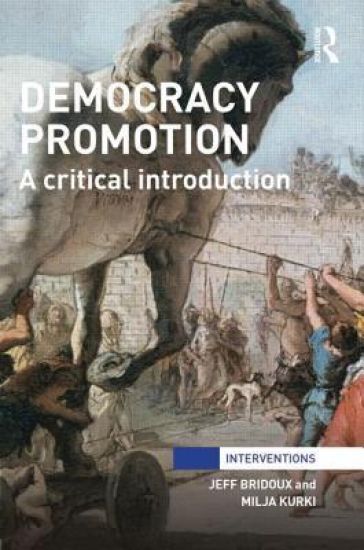
Democracy Promotion

Democracy Promotion

Jeff Bridoux; Milja Kurki

Routledge
2014
sidottu
This critical introduction to democracy promotion seeks to provide students with an understanding of some of the key dynamics and contentions revolving around this controversial policy agenda.Specifically, this textbook examines democracy promotion through seeking to answer, from the perspective of an approach informed by ‘critical theory’, a set of important questions often posed to democracy promoters, such as: Who is involved in democracy promotion today and what kinds of power relations are embedded in it? Is democracy promotion driven by the values or interests of key actors? Is democracy promotion regime-change by another name? Is democracy promotion ‘context-sensitive’ or an imposition of Western powers? Is democracy promotion about achieving liberal economic reform in target states? Is democracy promotion a tool of the powerful, a form of hegemonic control of target populations?The book suggests a set of provocative answers to these questions and also puts forward a set of challenges for democracy promoters and supporters to take on today.Democracy Promotion serves as an effective introduction to an increasingly topical policy agenda for students and general readers and, at the same time, seeks to advance an important set of new critical perspectives for practitioners and policy-makers of democracy promotion to consider.
Democracy Promotion

Democracy Promotion

Jeff Bridoux; Milja Kurki

Routledge
2014
nidottu
This critical introduction to democracy promotion seeks to provide students with an understanding of some of the key dynamics and contentions revolving around this controversial policy agenda.Specifically, this textbook examines democracy promotion through seeking to answer, from the perspective of an approach informed by ‘critical theory’, a set of important questions often posed to democracy promoters, such as: Who is involved in democracy promotion today and what kinds of power relations are embedded in it? Is democracy promotion driven by the values or interests of key actors? Is democracy promotion regime-change by another name? Is democracy promotion ‘context-sensitive’ or an imposition of Western powers? Is democracy promotion about achieving liberal economic reform in target states? Is democracy promotion a tool of the powerful, a form of hegemonic control of target populations?The book suggests a set of provocative answers to these questions and also puts forward a set of challenges for democracy promoters and supporters to take on today.Democracy Promotion serves as an effective introduction to an increasingly topical policy agenda for students and general readers and, at the same time, seeks to advance an important set of new critical perspectives for practitioners and policy-makers of democracy promotion to consider.
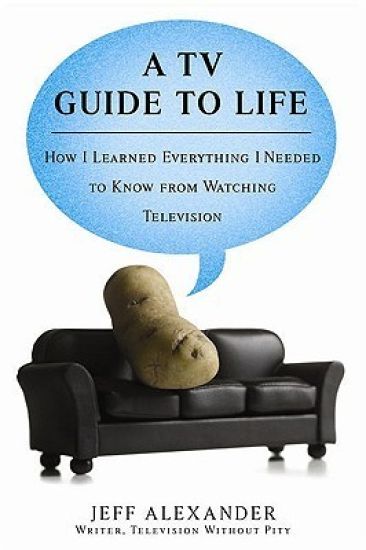
A TV Guide to Life: How I Learned Everything I Needed to Know from Watching Television
Read Jeff Alexander's posts on the Penguin Blog. A couch potato's book of wisdom-- 100% commercial free Some say that entire generations of Americans are being raised by the television...like that's a bad thing. Not so, says author Jeff Alexander, long-time television writer, advocate of education by television, and recapper for the popular website Television Without Pity. Here, he offers the ultimate in life lessons as seen on TV. Topics include: - Saved by the Bell: School on TV - Somebody Save Me: Super Powers and Magic Spells - Tell Me Why I Love You Like I Do: Relationships on TV - Making A Living: The Workplace - And more With a smart, snarky style, Alexander guides readers through important lessons gleaned from years of TV reviewing (now in convenient book form ), freeing up a whole new generation to learn other things, like how to cure cancer or solve world hunger...or anything more useful than watching TV (Author's note: Just joking... there is no such thing).
Glorious

Glorious

Jeff Guinn

Berkley Publishing Corporation,U.S.
2015
pokkari
The New York Times bestselling author of The Last Gunfight turns his eye for evocative detail to a sweeping novel of the American West that "will delight historical fiction fans longing for the return of classic Westerns" (Library Journal). Cash McLendon has always had an instinct for self-preservation, honed by an impoverished childhood with an alcoholic father on the streets of St. Louis. He eventually builds himself up to become the son-in-law and heir apparent to industrial mogul Rupert Douglass. But when tragedy strikes and his life falls apart, his instinct for survival kicks in and he flees St. Louis before Douglass and his enforcer can track him down. With nothing to lose, McLendon decides to search out an old flame. He's heard through the grapevine that Gabrielle and her father moved their dry goods store out west, to a speck-on-the-map mining town named Glorious, in Arizona Territory. There, as he tries to win her back, he discovers a new life and community. But he can't outrun his past forever...
Buffalo Trail

Buffalo Trail

Jeff Guinn

Putnam Publishing Group,U.S.
2016
nidottu
The New York Times bestselling author of Silver City brings history to life as Cash McLendon takes refuge in Dodge City and falls in with some of the most famous men in the American West... After barely escaping nemesis Killer Boots in the tiny Arizona Territory town of Glorious, Cash McLendon is in desperate need of a safe haven somewhere on the frontier. Fleeing to Dodge City, he meets an intrepid band of buffalo hunters determined to head south to forbidden Indian Territory in the Texas panhandle. In the company of such colorful Western legends as Bat Masterson and Billy Dixon, Cash helps establish a hunting camp known as Adobe Walls. When a massive migration of buffalo arrives, and newly hopeful that he may yet patch things up with Gabrielle Tirrito back in Arizona, Cash thinks his luck has finally changed. But no good can come of entering the prohibited lands they've crossed into. Little do Cash and his fellows know that their camp is targeted by a new coalition of the finest warriors among the Comanche, Cheyenne, and Kiowa. Led by fierce Comanche war chief Quanah and eerie tribal mystic Isatai, an enormous force of 2,000 is about to descend on the camp and will mark one of the fiercest, bloodiest battles in frontier history. Cash McLendon is in another fight for his life, and this time, running is not an option...