Kirjojen hintavertailu. Mukana 11 717 486 kirjaa ja 12 kauppaa.

Kirjahaku

Etsi kirjoja tekijän nimen, kirjan nimen tai ISBN:n perusteella.

1000 tulosta hakusanalla Jeffrey B. Perry

Josef Albers, Late Modernism, and Pedagogic Form

Josef Albers, Late Modernism, and Pedagogic Form

Jeffrey Saletnik

THE UNIVERSITY OF CHICAGO PRESS
2022
sidottu
An incisive analysis of the pedagogy of influential artist and teacher Josef Albers. An extraordinary teacher whose influence continues today, Josef Albers helped shape the Bauhaus school in Germany and established the art and design programs at Black Mountain College in North Carolina and Yale University. His books about color theory have informed generations, and his artworks are included in the canon of high-modernist non-representational art. The pedagogy Albers developed was a dynamic approach to teaching that transcended the modernist agendas and cultivated a material way of thinking among his students. With this book, Jeffrey Saletnik explores the origins of Albers’s teaching practices and their significance in conveying attitudes about form, material, and sensory understanding to artists Eva Hesse and Richard Serra. He demonstrates how pedagogy is a framework that establishes the possibility for artistic discourse and how the methods through which artists learn are manifested in their individual practices. Tracing through lines from Albers’s training in German educational traditions to his influence on American postwar art, Josef Albers, Late Modernism, and Pedagogic Form positions Albers’s pedagogy as central to the life of modernism.
Collective Memory and the Historical Past

Collective Memory and the Historical Past

Jeffrey Andrew Barash

University of Chicago Press
2020
nidottu
There is one critical way we honor great tragedies: by never forgetting. Collective remembrance is as old as human society itself, serving as an important source of social cohesion, yet as Jeffrey Andrew Barash shows in this book, it has served novel roles in a modern era otherwise characterized by discontinuity and dislocation. Drawing on recent theoretical explorations of collective memory, he elaborates an important new philosophical basis for it, one that unveils profound limitations to its scope in relation to the historical past. Crucial to Barash’s analysis is a look at the radical transformations that symbolic configurations of collective memory have undergone with the rise of new technologies of mass communication. He provocatively demonstrates how such technologies’ capacity to simulate direct experience—especially via the image—actually makes more palpable collective memory’s limitations and the opacity of the historical past, which always lies beyond the reach of living memory. Thwarting skepticism, however, he eventually looks to literature—specifically writers such as Walter Scott, Marcel Proust, and W. G. Sebald—to uncover subtle nuances of temporality that might offer inconspicuous emblems of a past historical reality.
The Superhumanities

The Superhumanities

Jeffrey J. Kripal

THE UNIVERSITY OF CHICAGO PRESS
2022
sidottu
A bold challenge to rethink the humanities as intimately connected to the superhuman and to “decolonize reality itself.” What would happen if we reimagined the humanities as the superhumanities? If we acknowledged and celebrated the undercurrent of the fantastic within our humanistic disciplines, entirely new cultural worlds and meanings would become possible. That is Jeffrey J. Kripal’s vision for the future—to revive the suppressed dimension of the superhumanities, which consists of rare but real altered states of knowledge that have driven the creative processes of many of our most revered authors, artists, and activists. In Kripal’s telling, the history of the humanities is filled with precognitive dreams, evolving superhumans, and doubled selves. The basic idea of the superhuman, for Kripal, is at the core of who and what the human species has tried to become over millennia and around the planet. After diagnosing the basic malaise of the humanities—that the truth must be depressing—Kripal shows how it can all be done differently. He argues that we have to decolonize reality itself if we are going to take human diversity seriously. Toward this pluralist end, he engages psychoanalytic, Black critical, feminist, postcolonial, queer, and ecocritical theory. He works through objections to the superhumanities while also recognizing the new realities represented by the contemporary sciences. In doing so, he tries to move beyond naysaying practices of critique toward a future that can embrace those critiques within a more holistic view—a view that recognizes the human being as both a social-political animal as well as an evolved cosmic species that understands and experiences itself as something super.
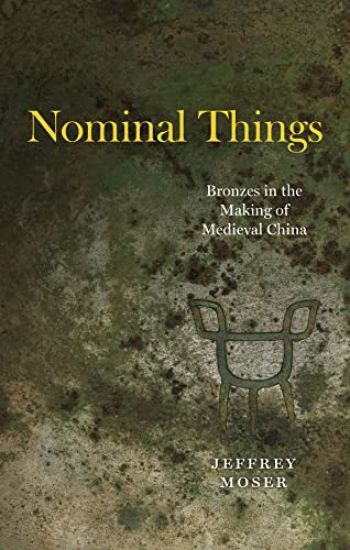
Nominal Things

Nominal Things

Jeffrey Moser

THE UNIVERSITY OF CHICAGO PRESS
2023
sidottu
How the medieval study of ancient bronzes influenced the production of knowledge and the making of things in East Asia. This book opens in eleventh-century China, where scholars were the first in world history to systematically illustrate and document ancient artifacts. As Jeffrey Moser argues, the visual, technical, and conceptual mechanisms they developed to record these objects laid the foundations for methods of visualizing knowledge that scholars throughout early modern East Asia would use to make sense of the world around them. Of the artifacts these scholars studied, the most celebrated were bronze ritual vessels that had been cast nearly two thousand years earlier. While working to make sense of the relationship between the bronzes’ complex shapes and their inscribed glyphs, they came to realize that the objects were “nominal things”—objects inscribed with names that identified their own categories and uses. Eleventh-century scholars knew the meaning of these glyphs from hallowed Confucian writings that had been passed down through centuries, but they found shocking disconnects between the names and the bronzes on which they were inscribed. Nominal Things traces the process by which a distinctive system of empiricism was nurtured by discrepancies between the complex materiality of the bronzes and their inscriptions. By revealing the connections between the new empiricism and older ways of knowing, the book explains how scholars refashioned the words of the Confucian classics into material reality.
Language and the Rise of the Algorithm

Language and the Rise of the Algorithm

Jeffrey M. Binder

THE UNIVERSITY OF CHICAGO PRESS
2022
sidottu
A wide-ranging history of the algorithm. Bringing together the histories of mathematics, computer science, and linguistic thought, Language and the Rise of the Algorithm reveals how recent developments in artificial intelligence are reopening an issue that troubled mathematicians well before the computer age: How do you draw the line between computational rules and the complexities of making systems comprehensible to people? By attending to this question, we come to see that the modern idea of the algorithm is implicated in a long history of attempts to maintain a disciplinary boundary separating technical knowledge from the languages people speak day to day. Here Jeffrey M. Binder offers a compelling tour of four visions of universal computation that addressed this issue in very different ways: G. W. Leibniz’s calculus ratiocinator; a universal algebra scheme Nicolas de Condorcet designed during the French Revolution; George Boole’s nineteenth-century logic system; and the early programming language ALGOL, short for algorithmic language. These episodes show that symbolic computation has repeatedly become entangled in debates about the nature of communication. Machine learning, in its increasing dependence on words, erodes the line between technical and everyday language, revealing the urgent stakes underlying this boundary. The idea of the algorithm is a levee holding back the social complexity of language, and it is about to break. This book is about the flood that inspired its construction.
How to Think Impossibly

How to Think Impossibly

Jeffrey J. Kripal

THE UNIVERSITY OF CHICAGO PRESS
2024
sidottu
A mind-bending invitation to experience the impossible as fundamentally human. From precognitive dreams and telepathic visions to near-death experiences, UFO encounters, and beyond, so-called impossible phenomena are not supposed to happen. But they do happen—all the time. Jeffrey J. Kripal asserts that the impossible is a function not of reality but of our everchanging assumptions about what is real. How to Think Impossibly invites us to think about these fantastic (yet commonplace) experiences as an essential part of being human, expressive of a deeply shared reality that is neither mental nor material but gives rise to both. Thinking with specific individuals and their extraordinary experiences in vulnerable, open, and often humorous ways, Kripal interweaves humanistic and scientific inquiry to foster an awareness that the fantastic is real, the supernatural is super natural, and the impossible is possible.
Everyday Democracy

Everyday Democracy

Jeffrey M. Berry; James M. Glaser; Deborah J. Schildkraut

THE UNIVERSITY OF CHICAGO PRESS
2025
sidottu
How the everyday habits and attitudes of ordinary liberals and conservatives shape the health of American democracy. In Everyday Democracy, Jeffrey M. Berry, James M. Glaser, and Deborah J. Schildkraut study Americans’ views of several manifestations of “everyday democracy,” which they define as the attitudes, behaviors, and processes that people experience in daily life and their routine considerations of politics and community. Examples include engaging in dialogue with political opponents and giving politicians license to compromise. Ordinary political moments like these constitute much of politics, and they can lay the foundation that shapes if, when, and how crisis moments unfold. Paying particular attention to the role of ideology in shaping how Americans emulate daily democratic ideals, this book considers such questions as: How do liberals and conservatives support different aspects of democratic practice, and are there ideological asymmetries between the two groups? If and when asymmetries emerge, what factors might explain them? The authors consider what their findings mean for the health of American democracy broadly.
Everyday Democracy

Everyday Democracy

Jeffrey M. Berry; James M. Glaser; Deborah J. Schildkraut

THE UNIVERSITY OF CHICAGO PRESS
2025
nidottu
How the everyday habits and attitudes of ordinary liberals and conservatives shape the health of American democracy. In Everyday Democracy, Jeffrey M. Berry, James M. Glaser, and Deborah J. Schildkraut study Americans’ views of several manifestations of “everyday democracy,” which they define as the attitudes, behaviors, and processes that people experience in daily life and their routine considerations of politics and community. Examples include engaging in dialogue with political opponents and giving politicians license to compromise. Ordinary political moments like these constitute much of politics, and they can lay the foundation that shapes if, when, and how crisis moments unfold. Paying particular attention to the role of ideology in shaping how Americans emulate daily democratic ideals, this book considers such questions as: How do liberals and conservatives support different aspects of democratic practice, and are there ideological asymmetries between the two groups? If and when asymmetries emerge, what factors might explain them? The authors consider what their findings mean for the health of American democracy broadly.
The Superhumanities

The Superhumanities

Jeffrey J. Kripal

THE UNIVERSITY OF CHICAGO PRESS
2025
nidottu
A bold challenge to rethink the humanities as intimately connected to the superhuman and to “decolonize reality itself.” What would happen if we reimagined the humanities as the superhumanities? If we acknowledged and celebrated the undercurrent of the fantastic within our humanistic disciplines, entirely new cultural worlds and meanings would become possible. That is Jeffrey J. Kripal’s vision for the future—to revive the suppressed dimension of the superhumanities, which consists of rare but real altered states of knowledge that have driven the creative processes of many of our most revered authors, artists, and activists. In Kripal’s telling, the history of the humanities is filled with precognitive dreams, evolving superhumans, and doubled selves. The basic idea of the superhuman, for Kripal, is at the core of who and what the human species has tried to become over millennia and around the planet. After diagnosing the basic malaise of the humanities—that the truth must be depressing—Kripal shows how it can all be done differently. He argues that we have to decolonize reality itself if we are going to take human diversity seriously. Toward this pluralist end, he engages psychoanalytic, Black critical, feminist, postcolonial, queer, and ecocritical theory. He works through objections to the superhumanities while also recognizing the new realities represented by the contemporary sciences. In doing so, he tries to move beyond naysaying practices of critique toward a future that can embrace those critiques within a more holistic view—a view that recognizes the human being as both a social-political animal as well as an evolved cosmic species that understands and experiences itself as something super.
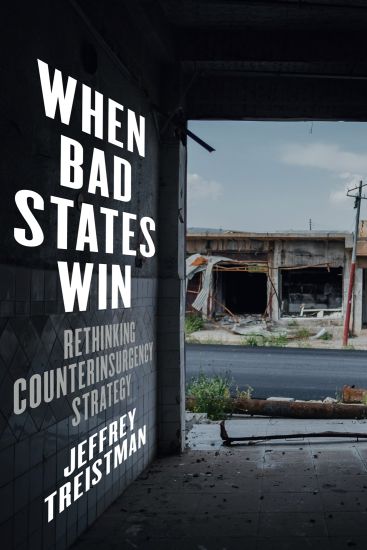
When Bad States Win

When Bad States Win

Jeffrey Treistman

MCGILL-QUEEN'S UNIVERSITY PRESS
2022
sidottu
There is a common assumption that the promotion of democracy and economic development are the most effective means of quelling widespread political unrest within a country. Many believe that free and fair elections, health care, education, and employment will help secure the hearts and minds of citizens. By contrast, the violation of human rights and international law is presumed to be counterproductive, engendering political protest and violent rebellion.When Bad States Win challenges the belief that democratic institutions and economic growth are effectual tools in countering insurgencies. Jeffrey Treistman uses a mixed-methods approach to examine the conditions in which governments have violated human rights and attacked civilians to effectively suppress political dissent. His research suggests that moderate levels of violence against civilians tend to backfire and only provoke widespread resentments that lead to the overthrow of a central government; however, when pursued to extremes, brutal repression and indiscriminate violence against civilians can effectively defeat a rebellion. As a result, bad states may sometimes win.As the number of democratic states in the world continues to decline, violence and authoritarian rule are on the rise. A thought-provoking and timely analysis, When Bad States Win offers important insight into how democratic states can respond to human rights violations in regions in crisis.
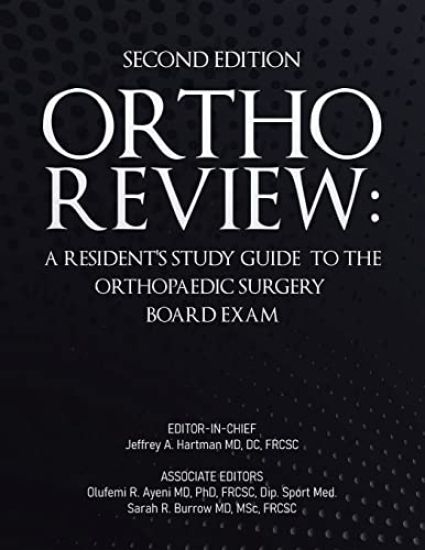
Ortho Review

Ortho Review

Jeffrey Hartman; Sarah Burrow; Olufemi Ayeni

Tellwell Talent
2019
pokkari
Ortho Review: A Resident's Study Guide to the Orthopaedic Surgery Board Exam covers all relevant topics encountered by the Orthopaedic Surgery Resident throughout their training. This text serves as a reliable primary resource while on rotations and will carry residents through to studying for the board licensing examinations. Built around commonly encountered examination questions, this text provides the answers from the most relevant and up-to-date resources. Ortho Review is an essential resource for the time-strapped resident to study effectively and efficiently.
Ortho Review

Ortho Review

Jeffrey Hartman; Sarah Burrow; Olufemi Ayeni

Tellwell Talent
2019
sidottu
Ortho Review: A Resident's Study Guide to the Orthopaedic Surgery Board Exam covers all relevant topics encountered by the Orthopaedic Surgery Resident throughout their training. This text serves as a reliable primary resource while on rotations and will carry residents through to studying for the board licensing examinations. Built around commonly encountered examination questions, this text provides the answers from the most relevant and up-to-date resources. Ortho Review is an essential resource for the time-strapped resident to study effectively and efficiently.
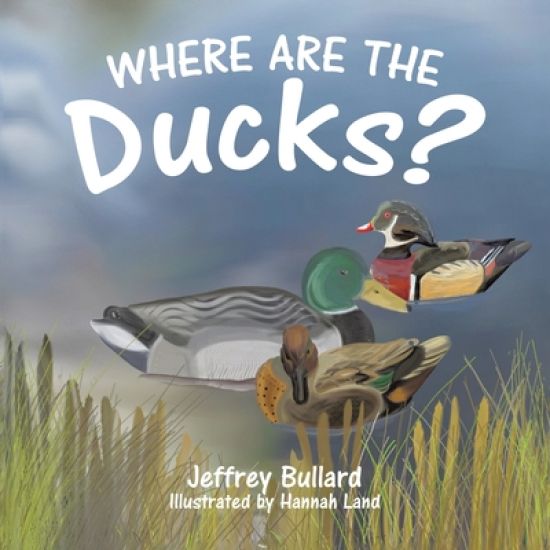
Where Are the Ducks?

Where Are the Ducks?

Jeffrey Bullard

TellWell Press
2022
pokkari
Where Are the Ducks? was inspired by many mornings sitting in a duck blind, patiently waiting for ducks. A lot of us, children especially, get excited and sometimes impatient while waiting for something to occur. This is a beautifully illustrated children's book about being still, waiting expectantly, and seeing the good things in God's creation. "Be still, and know that I am God. I will be exalted among the nations, I will be exalted in the earth " Psalms 46:10
Where Are the Ducks?

Where Are the Ducks?

Jeffrey Bullard

TellWell Press
2022
sidottu
Where Are the Ducks? was inspired by many mornings sitting in a duck blind, patiently waiting for ducks. A lot of us, children especially, get excited and sometimes impatient while waiting for something to occur. This is a beautifully illustrated children's book about being still, waiting expectantly, and seeing the good things in God's creation. "Be still, and know that I am God. I will be exalted among the nations, I will be exalted in the earth " Psalms 46:10
Critical Approaches to the Films of M. Night Shyamalan

Critical Approaches to the Films of M. Night Shyamalan

Jeffrey Andrew Weinstock

Palgrave Macmillan
2010
sidottu
Critical Approaches to the Films of M. Night Shyamalan represents the first serious academic engagement with auteur director M. Night Shyamalan and his work. The essays, including contributions from established film scholars David Sterritt, Murray Pomerance, Emmanuel Burdeau, R. Barton Palmer, Matt Hills, and Katherine Fowkes, explore the Hollywood blockbusters from The Sixth Sense to The Happening in terms of their themes, aesthetics, and marketing. Taken together, the collection recognizes and explores Shyamalan s "star status" and offers the concerted analysis that this cultural phenomenon requires.
Paris Under Water

Paris Under Water

Jeffrey H. Jackson

Palgrave Macmillan
2011
nidottu
In the winter of 1910, the river that brought life to Paris quickly became a force of destruction. Torrential rainfall saturated the soil, and faulty engineering created a perfect storm of conditions that soon drowned Parisian streets, homes, businesses, and museums. The city seemed to have lost its battle with the elements. Given the Parisians' history of deep-seated social, religious, and political strife, it was questionable whether they could collaborate to confront the crisis. Yet while the sewers, Metro, and electricity failed around them, Parisians of all backgrounds rallied to save the city and one another. Improvising techniques to keep Paris functioning and braving the dangers of collapsing infrastructure and looters, leaders and residents alike answered the call to action. This newfound ability to work together proved a crucial rehearsal for an even graver crisis four years later, when France was plunged into World War I. On the occasion of the hundredth anniversary of the flood, Jeffrey H. Jackson captures here for the first time the drama and ultimate victory of man over nature.
Interpreting Clifford Geertz

Interpreting Clifford Geertz

Jeffrey C. Alexander; Philip Smith

Palgrave Macmillan
2011
sidottu
Theorist Clifford Geertz's influence extends far beyond Anthropology. This volume reflects the breadth of his influence, looking at Geertz as a theorist rather than as an anthropologist. To date there has been no impartial, comprehensive, and authoritative work published on this critical figure.
Interpreting Clifford Geertz

Interpreting Clifford Geertz

Jeffrey C. Alexander; Philip Smith

Palgrave Macmillan
2011
nidottu
Theorist Clifford Geertz's influence extends far beyond Anthropology. This volume reflects the breadth of his influence, looking at Geertz as a theorist rather than as an anthropologist. To date there has been no impartial, comprehensive, and authoritative work published on this critical figure.