The most consistent of all series in terms of language control, length, and quality of story. David R. Hill, Director of the Edinburgh Project on Extensive Reading.
The most consistent of all series in terms of language control, length, and quality of story. David R. Hill, Director of the Edinburgh Project on Extensive Reading.
The most consistent of all series in terms of language control, length, and quality of story. David R. Hill, Director of the Edinburgh Project on Extensive Reading.
The Mouse and Me! Teacher's Resource Pack provides colourful resources to support your teaching, including a Storybook containing all the stories from each level, flashcards - including photographic CLIL flashcards, 'Mouse' the puppet, and 10 large posters per level.
Q: Skills for Success is renowned for helping students to achieve academic success in English.The Third Edition helps students to develop the techniques and critical thinking skills they need for academic study with new Critical Thinking Strategies, updated texts and topics and 100% new assessment.
Q: Skills for Success is renowned for helping students to achieve academic success in English.The Third Edition helps students to develop the techniques and critical thinking skills they need for academic study with new Critical Thinking Strategies, updated texts and topics and 100% new assessment.
Providing a comprehensive picture of the design, conduct, analysis, and interpretation of non-experimental studies of both infectious and non-infectious diseases, the Second Edition of this widely used text has been thoroughly updated to take into account the numerous developments in epidemiology over the past decade. Since the first edition was published in 1986, additional sources of data have become available through the increasing use of computerized records for health-related purposes. Also, a better understanding of the uses and limitations of certain epidemiologic concepts has been gained. Modifications of traditional study designs, including nested case-control studies and case-cohort studies, are now more frequently employed. Biological markers of exposure, disease susceptibility, and disease itself are used in many studies and methods of statistical analysis have been further developed. All of these developments have been considered in writing the Second Edition. The authors cover the full scope of observational studies, describing in detail cohort studies, case-control studies, cross-sectional studies, and epidemic investigation. The use of statistical procedures is described in easy-to-understand terms. Sample size estimation, sampling, measurement, and measurement error are fully discussed. Each chapter in the second edition has been updated and several chapters have been expanded. Chapter 3, which summarizes sources of data on disease occurrence, includes several additional sources of data. Chapter 5, which describes modifications of traditional study designs, now contains nested case-control and case-cohort studies. Chapter 15, on other types of measurement, has been expanded to include sections on measurement in epidemiologic studies of the elderly and on biological markers since these have become major areas of epidemiologic research in recent years. Much of the material in Chapters 6, 7, and 9 on the analysis of data from epidemiologic studies is also new to this edition. Perhaps the greatest challenge for the authors in writing this Second Edition was to make some of the modern, frequently used methods of statistical analysis understandable to readers with a limited mathematical or statistical background. Although this book is intended for readers who have had introductory courses in epidemiology and biostatistics, even readers who do not fully comprehend the theory behind some of the techniques should understand the rationale for their use and be able to interpret results when they appear on a computer printout or in the literature. The Second Edition of this widely used text will serve as a practical resource for students and practitioners of epidemiology, public health and biostatistics.
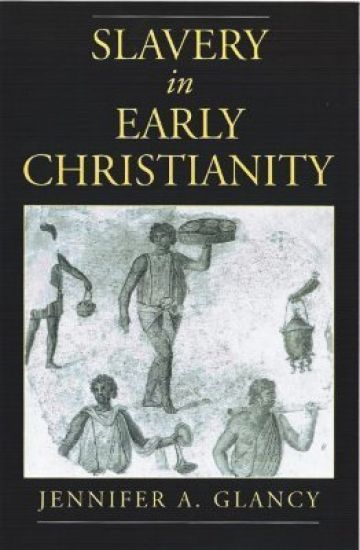
Slavery was widespread throughout the Mediterranean lands where Christianity was born and developed. Though Christians were both slaves and slaveholders, there has been surprisingly little study of what early Christians thought about the realities of slavery. How did they reconcile slavery with the Gospel teachings of brotherhood and charity? Slaves were considered the sexual property of their owners: what was the status within the Church of enslaved women and young male slaves who were their owners' sexual playthings? Is there any reason to believe that Christians shied away from the use of corporal punishments so common among ancient slave owners? Jennifer A. Glancy brings a multilayered approach to these and many other issues, offering a comprehensive re-examination of the evidence pertaining to slavery in early Christianity. Drawing on a wide variety of sources, Glancy situates early Christian slavery in its broader cultural setting. She argues that scholars have consistently underestimated the pervasive impact of slavery on the institutional structures, ideologies, and practices of the early churches and of individual Christians. The churches, she shows, grew to maturity with the assumption that slaveholding was the norm, and welcomed both slaves and slaveholders as members. Glancy draws attention to the importance of the body in the thought and practice of ancient slavery. To be a slave was to be a body subject to coercion and violation, with no rights to corporeal integrity or privacy. Even early Christians who held that true slavery was spiritual in nature relied, ultimately, on bodily metaphors to express this. Slavery, Glancy demonstrates, was an essential feature of both the physical and metaphysical worlds of early Christianity. The first book devoted to the early Christian ideology and practice of slavery, this work sheds new light on the world of the ancient Mediterranean and on the development of the early Church.
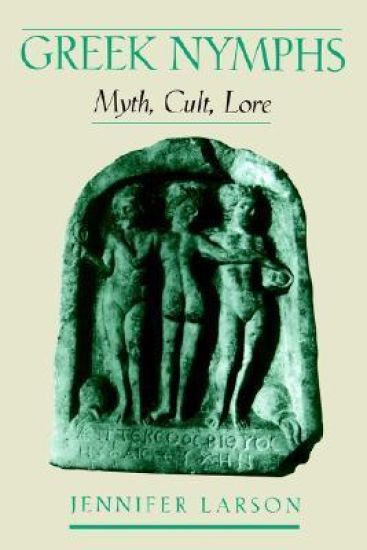
Greek Nymphs: Myths, Cult, Lore is the first comprehensive study of the nymph in the ancient Greek world. This well-illustrated book examines nymphs as both religious and mythopoetic figures, tracing their development and significance in Greek culture from Homer through the Hellenistic period. Drawing upon a broad range of literary and archaeological evidence, Jennifer Larson discusses sexually powerful nymphs in ancient and modern Greek folklore, the use of dolls representing nymphs in the socialization of girls, the phenomenon of nympholepsy, the nymphs' relations with other deities in the Greek pantheon, and the nymphs' role in mythic narratives of city-founding and colonization. The book includes a survey of the evidence for myths and cults of the nymphs arranged by geographical region, and a special section of the worship of nymphs in caves throughout the Greek world.
Autonomy is one of the core concepts of legal and political thought, yet also one of the least understood. The prevailing theory of liberal individualism characterizes autonomy as independence, yet from a social perspective, this conception is glaringly inadequate. In this brilliantly innovative work, Jennifer Nedelsky claims that we must rethink our notion of autonomy, rejecting the usual vocabulary of control, boundaries, and individual rights. If we understand that we are fundamentally in relation to others, she argues, we will recognize that we become autonomous with others--with parents, teachers, employers, and the state. We should not therefore regard autonomy as merely a conceptual tool for assigning rights, but as a capacity that can be fostered or undermined throughout one's life through the relationships and the societal structures we inhabit. The political project thus should not only be to protect the individual from the state and keep the state out, but to use law to construct relations with the state that enhance autonomy. Law's Relations includes many concrete legal applications of her theory of relational autonomy, offering new insights into the debates over due process, judicial review, violence against women, and private versus public law
The American Dream and the Public Schools examines issues that have excited and divided Americans for years, including desegregation, school funding, testing, vouchers, bilingual education, and ability grouping. While these are all separate problems, much of the contention over them comes down to the same thing—an apparent conflict between policies designed to promote each student's ability to succeed and those designed to insure the good of all students or the nation as a whole. The authors show how policies to promote individual success too often benefit only those already privileged by race or class, and often conflict with policies that are intended to benefit everyone. They propose a framework that builds on our nation's rapidly changing population in order to help Americans get past acrimonious debates about schooling. Their goal is to make public education work better so that all children can succeed.
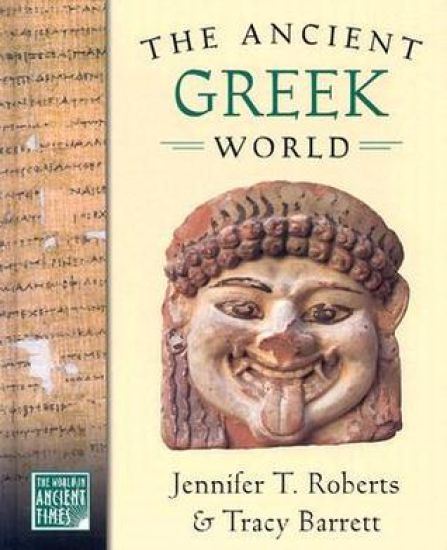
Jennifer Roberts and Tracy Barrett bring together their respective mastery of scholarship and storytelling to tell the history of a place, a people, and a culture that has left some of the most beautiful art, the greatest stories, and the most magnificent cities and buildings that the world has ever known. The Ancient Greek World uses primary sources such as Homer's Odyssey, Herodotus' Histories, a Minoan drinking cup, and a child's grave epitaph to present a balanced and lively narrative history of ancient Greece. A chronology, cast of characters, maps, pronunciation table, further reading, and index supplement the main text.
The American Dream and the Public Schools examines issues that have excited and divided Americans for years, including desegregation, school funding, testing, vouchers, bilingual education, and ability grouping. While these are all separate problems, much of the contention over them comes down to the same thing--an apparent conflict between policies designed to promote each student's ability to succeed and those designed to insure the good of all students or the nation as a whole. The authors show how policies to promote individual success too often benefit only those already privileged by race or class, and often conflict with policies that are intended to benefit everyone. They propose a framework that builds on our nation's rapidly changing population in order to help Americans get past acrimonious debates about schooling. Their goal is to make public education work better so that all children can succeed.
The Teaching Guide to The Ancient Greek World is a complete, all-in-one resource that provides teachers with the support they need to help all their students access the content of the books. It contains a collection of important instructional tools for the teacher: -Recommended Teaching Units that organize the chapters into a common theme or focus, such as the civilization's origins, government, religion, economy, daily life, rise, and fall. -Unit Overviews that outline the content of the unit, list the primary sources featured in the unit, and provide a wide variety of flexible teaching suggestions that teachers can use to differentiate instruction to meet the needs of a diverse student population. -Chapter-by-chapter two-page Lesson Plans that are filled with activities to help teachers get the most out of every chapter in the book - with a chapter activity in blackline master form and a chapter assessment.
The Student Study Guide is an important and unique component that is available for each of the eight books in The World in Ancient Times series. Each of the Student Study Guides is designed to be used with the student book at school or sent home for homework assignments. The activities in the Student Study Guide will help students get the most out of their history books. Each Student Study Guide includes chapter-by-chapter two-page lessons that use a variety of interesting activities to help a student master history and develop important reading and study skills.
Christian tradition holds that an individual's ability to respond to God's graceto love both God and neighboris not wholly vulnerable to earthly contingencies, such as victimization. Today, however, trauma theory insists that situations of overwhelming violence can permanently damage a person's capacity for responsive agency. For Christians, this theory raises the very troubling possibility that humans can inflict ultimate harm on each other, such that some individuals' eternal destiny can be determined not by themselves but by those who do great harm. Jennifer Beste addresses the challenges that contemporary trauma theory and feminist theory pose to deeply-held theological convictions about human freedom and divine grace. Do our longstanding, widespread beliefs regarding ones access to Gods grace remain credible in light of recent social scientific research on the effects of interpersonal injury? With an eye toward the concrete experiences of trauma survivors, Best carefully considers the possibility that one can be victimized in such a way that his or her receptiveness to Gods grace is severely diminished, or even destroyed. Drawing on insights present in feminist and trauma theory, Beste articulates a revised Rahnerian theology of freedom and grace responsive to trauma survivors in need of healing. Her thinking is characterized by two interconnected claims; that human freedom to respond to Gods grace can in fact be destroyed by severe interpersonal harm, and that Gods love can be mediated, at least in part, through loving interpersonal relations. Offering crucial insights that lead to a more adequate understanding of the relation between Gods grace and human freedom, Bestes important theory reconfigures our visions of God and humanity and alters our perceptions of what it means to truly love ones neighbor.
Worshipped by her fans, denounced by her enemies, and forever shadowed by controversy and scandal, the novelist and philosopher Ayn Rand was a powerful thinker whose views on government and markets shaped the conservative movement from its earliest days. Drawing on unprecedented access to Rand's private papers and the original, unedited versions of Rand's journals, Jennifer Burns offers a groundbreaking reassessment of this key cultural figure, examining her life, her ideas, and her impact on conservative political thought. Goddess of the Market follows Rand from her childhood in Russia through her meteoric rise from struggling Hollywood screenwriter to bestselling novelist, including the writing of her wildly successful The Fountainhead and Atlas Shrugged. Burns highlights the two facets of Rand's work that make her a perennial draw for those on the right: her promotion of capitalism, and her defense of limited government. Both sprang from her early, bitter experience of life under Communism, and became among the most deeply enduring of her messages, attracting a diverse audience of college students and intellectuals, business people and Republican Party activists, libertarians and conservatives. The book also traces the development of Rand's Objectivist philosophy and her relationship with Nathaniel Branden, her closest intellectual partner, with whom she had an explosive falling out in 1968. This extraordinary book captures the life of the woman who was a tireless champion of capitalism and the freedom of the individual, and whose ideas are still devoured by eager students, debated on blogs, cited by political candidates, and promoted by corporate tycoons.
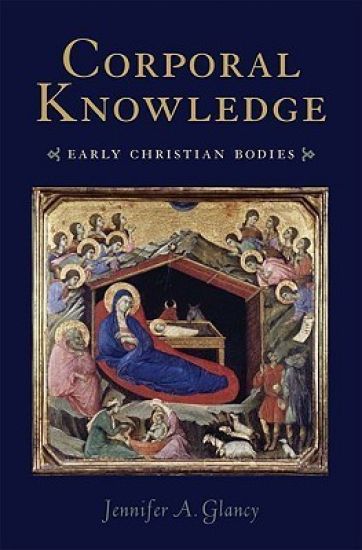
At the heart of the Christian proclamation is the problematic body of Jesus: problematic because His crucified form conveyed shame rather than glory, problematic because Christian communities argued about whether Jesus' body shared in the corruptible and tactile qualities of other human bodies. Jesus' message-bearing body is not the only storytelling body we encounter in early Christian writings. Paul, for example, invited recipients of his letters to read the gospel story in his scarred body. In the second and early third centuries, Christians argued about the perpetual virginity of the body of Mary, the mother of Jesus, and those on both sides of the question saw Mary's body as a meaningful, expressive matrix. Jennifer Glancy argues that ordinary Christians, like others in the Roman Empire, saw all human bodies as expressing such things as social status and gender, honor and abjection. All human bodies were matrices of communication. Glancy draws on a variety of theoretical approaches, particularly the practice-oriented theory of Pierre Bourdieu and the corporal phenomenology of Maurice Merleau-Ponty, to explore what early Christians understood bodies to communicate. Among the specific examples she considers are those of Jesus, Mary, and Paul, those of the entire class of people held in slavery, and those subjected to torture.
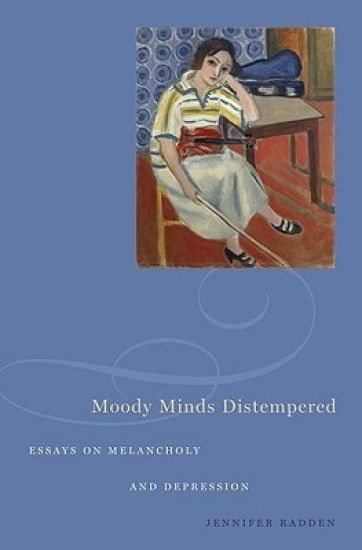
In Moody Minds Distempered philosopher Jennifer Radden assembles several decades of her research on melancholy and depression. The chapters are ordered into three categories: those about intellectual and medical history of melancholy and depression; those that emphasize aspects of the moral, psychological and medical features of these concepts; and finally, those that explore the sad and apprehensive mood states long associated with melancholy and depressive subjectivity. A newly written introduction maps the conceptual landscape, and draws out the analytic and thematic interconnections between the chapters. Radden emphasizes and develops several new themes: the implications, theoretical phenomenological and moral, of recognizing melancholy and depressive states as mood states; questions of method, as they affect how we understand and characterize claims about melancholy and depression; and the persistence and force of cultural tropes linking such states to brilliance, creativity, and sagacity. Insights from literature and the history of medicine, psychology, and psychiatry are woven together with those from the more recent disciplines of feminist theory and cultural studies. This is interdisciplinary writing at its best-part analytic philosophy, and part history of ideas.
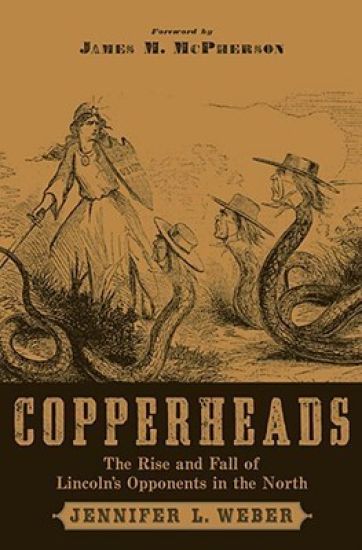
If Civil War battlefields saw vast carnage, the Northern home-front was itself far from tranquil. Fierce political debates set communities on edge, spurred secret plots against the Union, and triggered widespread violence, such as the New York City draft riots. And at the heart of all this turmoil stood Northern anti-war Democrats, nicknamed "Copperheads." Now, Jennifer L. Weber offers the first full-length portrait of this powerful faction to appear in almost half a century. Weber reveals how the Copperheads came perilously close to defeating Lincoln and ending the war in the South's favor. Indeed, by the summer of 1864, they had grown so strong that Lincoln himself thought his defeat was "exceedingly likely." Passionate defenders of civil liberties and states' rights - and often virulent racists - the Copperheads deplored Lincoln's suspension of habeas corpus, his liberal interpretation of the Constitution, and, most vehemently, his moves toward emancipation. Weber reveals how the battle over these issues grew so heated, particularly in the Midwest, that Northerners feared their neighbors would destroy their livestock, burn their homes, even kill them. Indeed, some Copperheads went so far as to conspire with Confederate forces and plan armed insurrections, including an attempt to launch an uprising during the Democratic convention in Chicago. Finally, Weber illuminates the role of Union soldiers, who, furious at Copperhead attacks on the war effort, moved firmly behind Lincoln. The soldiers' support for the embattled president kept him alive politically in his darkest times, and their victories on the battlefield secured his re-election. Disgraced after the war, the Copperheads melted into the shadows of history. Here, Jennifer L. Weber illuminates their dramatic story. Packed with sharp observation and fresh interpretations, Copperheads is a gripping account of the fierce dissent that Lincoln called "the fire in the rear."