Wide Angle is the course that helps your adult learners to uncover and master the hidden rules of English, so when it comes to communicating in the real world, they know what to say and how to say it. The Student Book with Online Practice presents content from the real world to motivate learning, and offers students plenty of opportunities to practice responding appropriately to everyday situations.
Wide Angle is the course that helps your adult learners to uncover and master the hidden rules of English, so when it comes to communicating in the real world, they know what to say and how to say it. The Student Book with Online Practice presents content from the real world to motivate learning, and offers students plenty of opportunities to practice responding appropriately to everyday situations.
Wide Angle is the course that helps your adult learners to uncover and master the hidden rules of English, so when it comes to communicating in the real world, they know what to say and how to say it. Multi-Pack A combines units 1-6 from the Student Book with units 1-6 from the Workbook in one book - ideal for shorter courses. Online Practice provides students with extra practice of the skills, grammar and vocabulary taught in every lesson.
Wide AngleA six-level international English course for Adult and Young adult learnersA real-world viewpointA course that empowers adult learners to join any conversation, and say the right thing at the right time.Wide Angle is the course that helps your students to uncover and master the hidden rules of English, so when it comes to communicating in the real world, they know what to say and how to say it.With lessons and interactive videos that guide students on how to respond appropriately in everyday situations, vibrant photos from around the world and video interviews with the photographers on the stories behind them, and authentic reading texts from Oxford Reference, Wide Angle provides real content that's underpinned by a comprehensive syllabus.
Wide Angle is the course that helps your adult learners to uncover and master the hidden rules of English, so when it comes to communicating in the real world, they know what to say and how to say it. Multi-Pack B combines units 7-12 from the Student Book with units 7-12 from the Workbook in one book - ideal for shorter courses. Online Practice provides students with extra practice of the skills, grammar and vocabulary taught in every lesson.
The most consistent of all series in terms of language control, length, and quality of story. David R. Hill, Director of the Edinburgh Project on Extensive Reading.
The most consistent of all series in terms of language control, length, and quality of story. David R. Hill, Director of the Edinburgh Project on Extensive Reading.
The most consistent of all series in terms of language control, length, and quality of story. David R. Hill, Director of the Edinburgh Project on Extensive Reading.
The most consistent of all series in terms of language control, length, and quality of story. David R. Hill, Director of the Edinburgh Project on Extensive Reading.
The most consistent of all series in terms of language control, length, and quality of story. David R. Hill, Director of the Edinburgh Project on Extensive Reading.
The most consistent of all series in terms of language control, length, and quality of story. David R. Hill, Director of the Edinburgh Project on Extensive Reading.
The most consistent of all series in terms of language control, length, and quality of story. David R. Hill, Director of the Edinburgh Project on Extensive Reading.
The most consistent of all series in terms of language control, length, and quality of story. David R. Hill, Director of the Edinburgh Project on Extensive Reading.
The most consistent of all series in terms of language control, length, and quality of story. David R. Hill, Director of the Edinburgh Project on Extensive Reading.
The most consistent of all series in terms of language control, length, and quality of story. David R. Hill, Director of the Edinburgh Project on Extensive Reading.
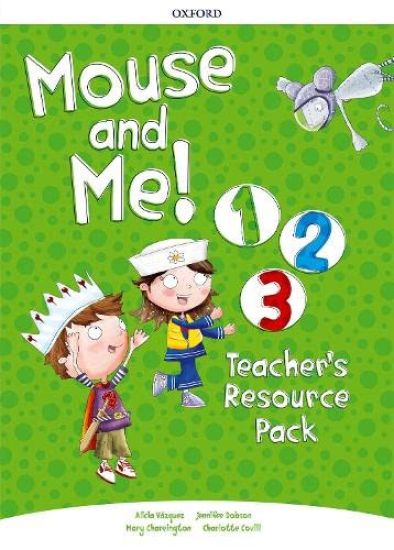
The Mouse and Me! Teacher's Resource Pack provides colourful resources to support your teaching, including a Storybook containing all the stories from each level, flashcards - including photographic CLIL flashcards, 'Mouse' the puppet, and 10 large posters per level.
Q: Skills for Success is renowned for helping students to achieve academic success in English.The Third Edition helps students to develop the techniques and critical thinking skills they need for academic study with new Critical Thinking Strategies, updated texts and topics and 100% new assessment.
Q: Skills for Success is renowned for helping students to achieve academic success in English.The Third Edition helps students to develop the techniques and critical thinking skills they need for academic study with new Critical Thinking Strategies, updated texts and topics and 100% new assessment.
Providing a comprehensive picture of the design, conduct, analysis, and interpretation of non-experimental studies of both infectious and non-infectious diseases, the Second Edition of this widely used text has been thoroughly updated to take into account the numerous developments in epidemiology over the past decade. Since the first edition was published in 1986, additional sources of data have become available through the increasing use of computerized records for health-related purposes. Also, a better understanding of the uses and limitations of certain epidemiologic concepts has been gained. Modifications of traditional study designs, including nested case-control studies and case-cohort studies, are now more frequently employed. Biological markers of exposure, disease susceptibility, and disease itself are used in many studies and methods of statistical analysis have been further developed. All of these developments have been considered in writing the Second Edition. The authors cover the full scope of observational studies, describing in detail cohort studies, case-control studies, cross-sectional studies, and epidemic investigation. The use of statistical procedures is described in easy-to-understand terms. Sample size estimation, sampling, measurement, and measurement error are fully discussed. Each chapter in the second edition has been updated and several chapters have been expanded. Chapter 3, which summarizes sources of data on disease occurrence, includes several additional sources of data. Chapter 5, which describes modifications of traditional study designs, now contains nested case-control and case-cohort studies. Chapter 15, on other types of measurement, has been expanded to include sections on measurement in epidemiologic studies of the elderly and on biological markers since these have become major areas of epidemiologic research in recent years. Much of the material in Chapters 6, 7, and 9 on the analysis of data from epidemiologic studies is also new to this edition. Perhaps the greatest challenge for the authors in writing this Second Edition was to make some of the modern, frequently used methods of statistical analysis understandable to readers with a limited mathematical or statistical background. Although this book is intended for readers who have had introductory courses in epidemiology and biostatistics, even readers who do not fully comprehend the theory behind some of the techniques should understand the rationale for their use and be able to interpret results when they appear on a computer printout or in the literature. The Second Edition of this widely used text will serve as a practical resource for students and practitioners of epidemiology, public health and biostatistics.
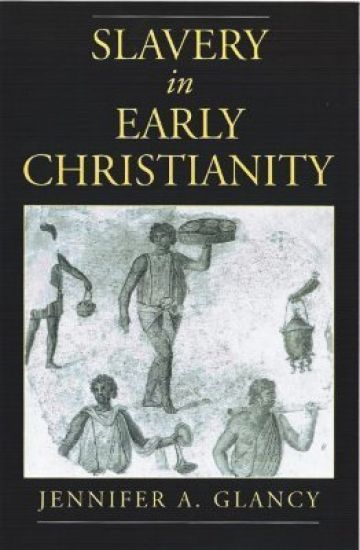
Slavery was widespread throughout the Mediterranean lands where Christianity was born and developed. Though Christians were both slaves and slaveholders, there has been surprisingly little study of what early Christians thought about the realities of slavery. How did they reconcile slavery with the Gospel teachings of brotherhood and charity? Slaves were considered the sexual property of their owners: what was the status within the Church of enslaved women and young male slaves who were their owners' sexual playthings? Is there any reason to believe that Christians shied away from the use of corporal punishments so common among ancient slave owners? Jennifer A. Glancy brings a multilayered approach to these and many other issues, offering a comprehensive re-examination of the evidence pertaining to slavery in early Christianity. Drawing on a wide variety of sources, Glancy situates early Christian slavery in its broader cultural setting. She argues that scholars have consistently underestimated the pervasive impact of slavery on the institutional structures, ideologies, and practices of the early churches and of individual Christians. The churches, she shows, grew to maturity with the assumption that slaveholding was the norm, and welcomed both slaves and slaveholders as members. Glancy draws attention to the importance of the body in the thought and practice of ancient slavery. To be a slave was to be a body subject to coercion and violation, with no rights to corporeal integrity or privacy. Even early Christians who held that true slavery was spiritual in nature relied, ultimately, on bodily metaphors to express this. Slavery, Glancy demonstrates, was an essential feature of both the physical and metaphysical worlds of early Christianity. The first book devoted to the early Christian ideology and practice of slavery, this work sheds new light on the world of the ancient Mediterranean and on the development of the early Church.