Kirjojen hintavertailu. Mukana 12 390 323 kirjaa ja 12 kauppaa.

Kirjahaku

Etsi kirjoja tekijän nimen, kirjan nimen tai ISBN:n perusteella.

1000 tulosta hakusanalla Jill Calderone

The Political Consequences of Motherhood

The Political Consequences of Motherhood

Jill Greenlee

The University of Michigan Press
2014
sidottu
American political activists and candidates have used motherhood to rally women’s interest, support, and participation throughout American history. Jill S. Greenlee investigates the complex relationship between motherhood and women’s political attitudes. Combining a historical overview of the ways motherhood has been used for political purposes with recent political opinion surveys and individual-level analysis, she explains how and when motherhood shapes women’s thoughts and preferences. Greenlee argues that two mechanisms account for the durability of motherhood politics. First, women experience attitudinal shifts when they become mothers. Second, “mother” is a broad-based identity, widely shared and ideologically unconstrained, that lends itself to appeals across the political spectrum to build support for candidates and policy issues.

Feeling the Future at Christian End-Time Performances

Feeling the Future at Christian End-Time Performances

Jill C. Stevenson

The University of Michigan Press
2022
sidottu
The End is always near. The Apocalypse has sparked imaginations for millennia, while in more recent times, highly publicized predictions have thrust End-Time theology briefly into the spotlight. In the 21st century, fictional depictions of various apocalyptic scenarios are found in an endless stream of films, TV shows, and novels, while real-world media coverage of global issues including climate change and the migrant crisis often features an apocalyptic tone. Feeling the Future at Christian End-Time Performances explores this prevalent human desire to envision the End by analyzing how various live End-Time performances allow people to live in and through future time. ? The book’s main focus is contemporary Christian End-Time performances and how they theatrically construct encounters with future time—not just images or ideas of a future, but viscerally and immediately real experiences of future time. Author Jill Stevenson’s examples are Hell Houses and Judgement Houses; Rapture House, a similarly styled “walk through drama” in North Carolina; Hell’s Gates, an “outdoor reality drama” in Dawsonville, Georgia; Ark Encounter, a full-size recreation of Noah’s Ark; and Tribulation Trail, an immersive thirteen-scene drama ministry based on the Book of Revelation. The book’s coda considers similarities between these Christian performances and secular survivalist prepper events, especially with respect to constructions of and language about time. In doing so, the author situates these performances within a larger tradition that challenges traditional secular/sacred distinctions and illuminates how the End Times has been employed in our current social and political moment.
Zeb's Search

Zeb's Search

Jill Batty

Paper Airplane Publishing
2019
nidottu
Zeb no longer wants to share his name with every boy in the herd. He wants a name that is his, and his alone. A name that describes the zebra he is. He goes on a search, asking all the animals he meets for their names. He finds that there are lots of different names and that some animals are more friendly than others. When Zeb's Search is over, will he know what name suits him best?
Oasis

Oasis

Jill Furmanovsky; Noel Gallagher

THAMES HUDSON LTD
2025
sidottu
‘It’s been an honour to have been associated with Jill for 30 years’ Noel Gallagher ‘If you look at Jill’s Oasis photographs they form one of the great essays in the history of photography’ Gail Buckland, author, curator, photo-historian Dramatic, iconic, tumultuous: this is the story of Oasis, as seen through the lens of legendary photographer Jill Furmanovsky and edited by Noel Gallagher. Jill has been documenting the phenomenon that is Oasis since 1994 and the Definitely Maybe tour, through the tense and difficult shows for Dig Out Your Soul in 2009 and, following a hiatus, to a new beginning in 2025. Featuring more than 500 exceptional photographs from her archive, this book includes acclaimed and classic shots alongside swathes of candid, behind-the-scenes images, many of which are published here for the very first time. With unprecedented access, Jill was able to capture strikingly emotive images, recording the band’s raw energy, humour and – at times – their vulnerability. ‘Oasis permitted closeness,’ she commented, ‘and that was a great gift to me as a photographer.’ Weaving sequences together to craft stories and stitch montages, the book brings you right into the room with the musicians. Noel’s foreword is followed by an introduction by Jill, while three expansive pieces by acclaimed author Simon Spence, publicist and writer Johnny Hopkins and music columnist and novelist Laura Barton chart Oasis’s early, mid and late eras. Jill and Noel’s reflections, alongside the photos, give the inside track on key moments, revealing the intimate friendship between band and photographer and reminding us of a remarkable era in music history, right to the edge of their 2025 reunion tour. This is a book to treasure long after the final encore.
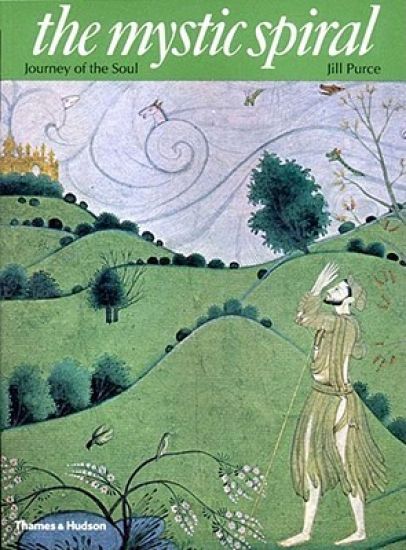
The Mystic Spiral

The Mystic Spiral

Jill Purce

Thames Hudson Ltd
1974
nidottu
The spiral is the natural form of growth, and has become, in every culture and in every age, man’s symbol of the progress of the soul towards eternal life. As the inward-winding labyrinth, it constitutes the hero’s journey to the still centre where the secret of life is found. As the spherical vortex, spiralling through its own centre, it combines the inward and outward directions of movement. In this original and engrossing book, Jill Purce traces the significance of one man’s central symbols from the double spirals of Stone Age art and the interlocking spirals of the Chinese Yin Yang symbol to the whorls of Celtic crosses, Maori tattoos and the Islamic arabesque. Many of the superb images here were intended as objects of contemplation; for the spiral is a cosmic symbol.
God, Harlem U.S.A.

God, Harlem U.S.A.

Jill Watts

University of California Press
1995
pokkari
How did an African-American man born in a ghetto in 1879 rise to such religious prominence that his followers addressed letters to him simply "God, Harlem U.S.A."? Using hitherto unknown materials, Jill Watts portrays the life and career of one of the twentieth century's most intriguing religious leaders, Father Divine. Starting as an itinerant preacher, Father Divine built an unprecedented movement that by the 1930s had attracted followers across the nation and around the world. As his ministry grew, so did the controversy surrounding his enormous wealth, flamboyant style, and committed "angels"--black and white, rich and poor alike. Here for the first time a full account of Father Divine's childhood and early years challenges previous contentions that he was born into a sharecropping family in the deep South. While earlier biographers have concentrated on Father Divine's social and economic programs, Watts focuses on his theology, which gives new meaning to secular activities that often appeared contradictory. Although much has been written about Father Divine, God, Harlem U.S.A. finally provides a balanced and intimate account of his life's work.
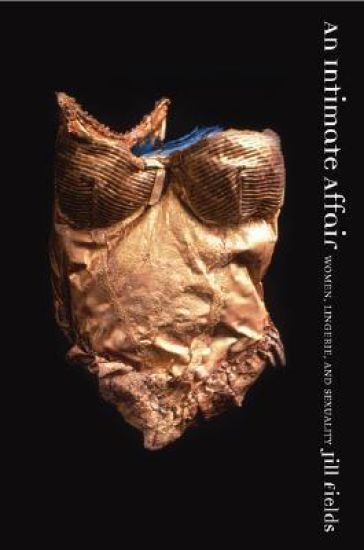
An Intimate Affair

An Intimate Affair

Jill Fields

University of California Press
2007
pokkari
Intimate apparel, a term in use by 1921, has played a crucial role in the development of the 'naughty but nice' feminine ideal that emerged in the twentieth century. Jill Fields' engaging, imaginative, and sophisticated history of twentieth-century lingerie tours the world of women's intimate apparel and arrives at nothing less than a sweeping view of twentieth-century women's history via the undergarments they wore. Illustrated throughout and drawing on a wealth of evidence from fashion magazines, trade periodicals, costume artifacts, Hollywood films, and the records of organized labor, "An Intimate Affair" is a provocative examination of the ways cultural meanings are orchestrated by the 'fashion-industrial complex,' and the ways in which individuals and groups embrace, reject, or derive meaning from these everyday, yet highly significant, intimate articles of clothing.
Consensual Violence

Consensual Violence

Jill D. Weinberg

University of California Press
2016
sidottu
In this novel approach to understanding consent, Jill D. Weinberg presents two case studies of activities in which participants engage in violent acts: competitive mixed martial arts (MMA) and sexual sadism and masochism (BDSM). Participants in both cases assent to injury and thereby engage in a form of social decriminalization, using the language of consent to render their actions legally and socially tolerable. Yet, these activities are treated differently under criminal battery law: sports, including MMA, are generally absolved from the charge of criminal battery, whereas BDSM often represents a violation of criminal battery law. Using interviews and ethnographic observation, Weinberg argues that where law authorizes a person's consent to an activity, as in MMA, consent is not meaningfully constructed or regulated by the participants themselves. In contrast, where law prohibits a person's consent to an activity, as in BDSM, participants actively construct and regulate consent. A synthesis of criminal law and ethnography, Consensual Violence is a fascinating account of how consent is framed among participants engaged in violent acts and lays the groundwork for a sociological understanding of the process of decriminalization.
Consensual Violence

Consensual Violence

Jill D. Weinberg

University of California Press
2016
pokkari
In this novel approach to understanding consent, Jill D. Weinberg presents two case studies of activities in which participants engage in violent acts: competitive mixed martial arts (MMA) and sexual sadism and masochism (BDSM). Participants in both cases assent to injury and thereby engage in a form of social decriminalization, using the language of consent to render their actions legally and socially tolerable. Yet, these activities are treated differently under criminal battery law: sports, including MMA, are generally absolved from the charge of criminal battery, whereas BDSM often represents a violation of criminal battery law. Using interviews and ethnographic observation, Weinberg argues that where law authorizes a person's consent to an activity, as in MMA, consent is not meaningfully constructed or regulated by the participants themselves. In contrast, where law prohibits a person's consent to an activity, as in BDSM, participants actively construct and regulate consent. A synthesis of criminal law and ethnography, Consensual Violence is a fascinating account of how consent is framed among participants engaged in violent acts and lays the groundwork for a sociological understanding of the process of decriminalization.
Stillbirth and the Law

Stillbirth and the Law

Jill Wieber Lens

University of California Press
2025
sidottu
Each year in the United States, about 1 in 170 births is a stillbirth, a rate that has remained stagnant for most of this century even as other high-income countries have dramatically reduced their already lower rates. Jill Wieber Lens, the nation’s foremost expert on stillbirth and the law, blends personal experience and legal analysis to bring us an original, essential guide to this all-too-often unrecognized public health crisis. By exposing how the law inhibits prevention, affects the experience of stillbirth for birthing parents, and shapes broader notions of unborn life, Lens argues for a series of pragmatic, data-driven changes to the legal landscape that could enjoy broad popular support and strengthen reproductive justice and reproductive rights.
Stillbirth and the Law

Stillbirth and the Law

Jill Wieber Lens

University of California Press
2025
pokkari
Each year in the United States, about 1 in 170 births is a stillbirth, a rate that has remained stagnant for most of this century even as other high-income countries have dramatically reduced their already lower rates. Jill Wieber Lens, the nation’s foremost expert on stillbirth and the law, blends personal experience and legal analysis to bring us an original, essential guide to this all-too-often unrecognized public health crisis. By exposing how the law inhibits prevention, affects the experience of stillbirth for birthing parents, and shapes broader notions of unborn life, Lens argues for a series of pragmatic, data-driven changes to the legal landscape that could enjoy broad popular support and strengthen reproductive justice and reproductive rights.
Visualizing Boccaccio

Visualizing Boccaccio

Jill M. Ricketts

Cambridge University Press
2011
pokkari
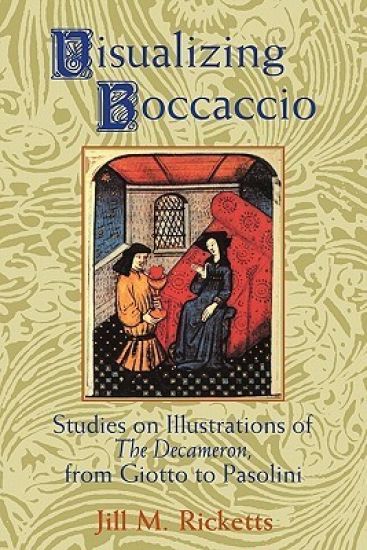
Originally published in 1997, Visualizing Boccaccio represents an intriguing approach to the interpretation of Boccaccio's classic book of erotic tales, The Decameron. Using literary, critical, psychoanalytic, and film theories, Jill Ricketts offers a feminist critique of these stories, exposing tensions generated by sexual difference that motivate privilege and investigating the possibilities of change in power relations associated with that privilege. In a comparison of selected tales from The Decameron with works by Cimabue and Giotto, fifteenth-century manuscript illumination, a series of paintings by Botticelli, and Pier Paolo Pasolini's cinematic interpretation of the tales, Ricketts also demonstrates how the juxtaposition of verbal and visual renditions permit new interpretation of each of these works.
Art and Patronage in the Medieval Mediterranean

Art and Patronage in the Medieval Mediterranean

Jill Caskey

Cambridge University Press
2011
pokkari
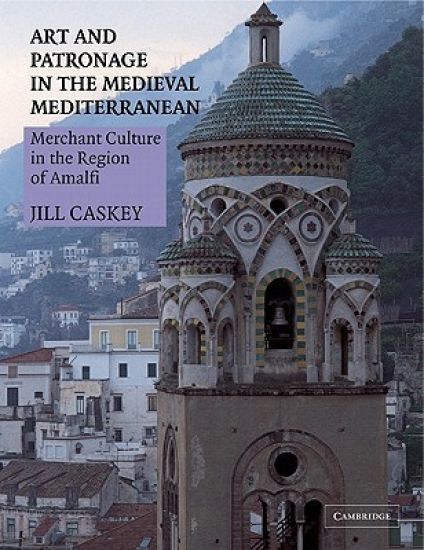
An important trade centre in the Medieval Mediterranean, Amalfi and the surrounding region of southern Italy sustained strong art production and patronage from the eleventh through to the thirteenth centuries. Merchant patrons realised a wide variety of religious and residential complexes that were evocative of Byzantine, Islamic, Western, and local traditions. With the rise of the Angevin kingdom, a demise of this eclectic art tradition took place and by the fourteenth century, Amalfitan painting and sculpture reflected compromises between local and Neapolitan styles, demonstrating the erosion of its autonomy. Originally published in 2004, this book evaluates the Amalfitan art production in terms of moral, economic, and social structures, including investment strategies, anxieties about wealth and salvation, and southern Italy's diverse religious communities. Historiographical analyses and postcolonial models of interpretation offer further insight into Amalfitan art and its ever-shifting relationship to the visual cultures of sovereign authorities in southern Italy.
Law and Empire in Late Antiquity

Law and Empire in Late Antiquity

Jill Harries

Cambridge University Press
1999
sidottu
This is the first systematic treatment in English by an historian of the nature, aims and efficacy of public law in late imperial Roman society from the third to the fifth century AD. Adopting an interdisciplinary approach, and using the writings of lawyers and legal anthropologists, as well as those of historians, the book offers new interpretations of central questions: What was the law of late antiquity? How efficacious was late Roman law? What were contemporary attitudes to pain, and the function of punishment? Was the judicial system corrupt? How were disputes settled? Law is analysed as an evolving discipline, within a framework of principles by which even the emperor was bound. While law, through its language, was an expression of imperial power, it was also a means of communication between emperor and subject, and was used by citizens, poor as well as rich, to serve their own ends.
Law and Empire in Late Antiquity

Law and Empire in Late Antiquity

Jill Harries

Cambridge University Press
2001
pokkari
This is the first systematic treatment in English by an historian of the nature, aims and efficacy of public law in late imperial Roman society from the third to the fifth century AD. Adopting an interdisciplinary approach, and using the writings of lawyers and legal anthropologists, as well as those of historians, the book offers new interpretations of central questions: What was the law of late antiquity? How efficacious was late Roman law? What were contemporary attitudes to pain, and the function of punishment? Was the judicial system corrupt? How were disputes settled? Law is analysed as an evolving discipline, within a framework of principles by which even the emperor was bound. While law, through its language, was an expression of imperial power, it was also a means of communication between emperor and subject, and was used by citizens, poor as well as rich, to serve their own ends.
Oil and Politics in the Gulf

Oil and Politics in the Gulf

Jill Crystal

Cambridge University Press
1995
pokkari
This book asks why in recent years the social and economic upheavals in Kuwait and Qatar have been accompanied by a remarkable political continuity. Professor Crystal investigates this apparent anomaly by examining the impact of oil on the formation and destruction of political coalitions and state institutions. Partly based on a year’s fieldwork in the Gulf and making full use of Arabic and Gulf sources, Oil and Politics in the Gulf goes far beyond previously published accounts of the region in its analysis of the effects of oil on domestic politics.
Visualizing Boccaccio

Visualizing Boccaccio

Jill M. Ricketts

Cambridge University Press
1997
sidottu
Visualizing Boccaccio represents a new approach to the interpretation of Boccaccio’s classic book of erotic tales, The Decameron. Using literary, critical, psychoanalytic, and film theories, Jill Ricketts offers a feminist critique of these stories, exposing tensions generated by sexual difference that motivate privilege and investigating the possibilities of change in power relations associated with that privilege. In a comparison of selected tales from The Decameron with works by Cimabue and Giotto, fifteenth-century manuscript illumination, a series of paintings by Botticelli, and Pier Paolo Pasolini’s cinematic interpretation of the tales, Ricketts also demonstrates how the juxtaposition of verbal and visual renditions permit new interpretation of each of these works.