Kirjojen hintavertailu. Mukana 11 342 296 kirjaa ja 12 kauppaa.

Kirjahaku

Etsi kirjoja tekijän nimen, kirjan nimen tai ISBN:n perusteella.

1000 tulosta hakusanalla John Absolon
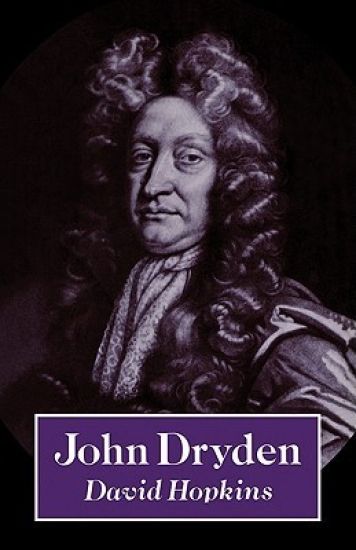
John Dryden

John Dryden

David Hopkins

Cambridge University Press
1986
sidottu
Dryden has sometimes been regarded as a writer narrowly of his period, a Restoration satirist whose work is largely concerned with the personalities, debates, and tastes of his own age. In this study David Hopkins shows him to be both a man of his time and a writer for all times - a great philosophical poet, the author of penetrating and exhilarating verse of general and permanent interest about love, the natural world, and the laws of human life. Dr Hopkins also analyses the personal, commercial, political, literary, and religious influences on his writing, and discusses in detail his major poetry, prose, and drama - paying special attention to the often neglected verse translations of his old age. With its emphasis on Dryden as a poet - as opposed simply to topical commentator or controversialist - the book will prove an ideal introduction for students of his work.
John Dryden

John Dryden

David Hopkins

Cambridge University Press
1986
pokkari
Dryden has sometimes been regarded as a writer narrowly of his period, a Restoration satirist whose work is largely concerned with the personalities, debates, and tastes of his own age. In this study David Hopkins shows him to be both a man of his time and a writer for all times - a great philosophical poet, the author of penetrating and exhilarating verse of general and permanent interest about love, the natural world, and the laws of human life. Dr Hopkins also analyses the personal, commercial, political, literary, and religious influences on his writing, and discusses in detail his major poetry, prose, and drama - paying special attention to the often neglected verse translations of his old age. With its emphasis on Dryden as a poet - as opposed simply to topical commentator or controversialist - the book will prove an ideal introduction for students of his work.
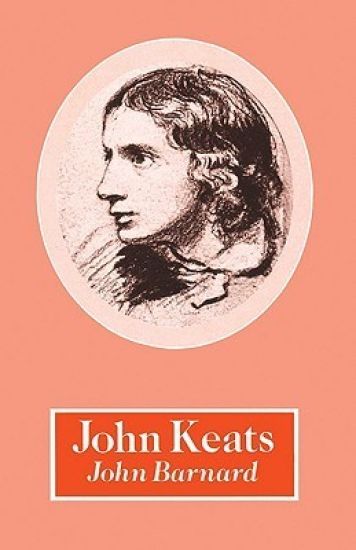
John Keats

John Keats

John Barnard

Cambridge University Press
1987
pokkari
This book offers a revaluation of Keats’ major poetry. It reveals how Keats’ work is both an oblique criticism of the dominant attitudes to literature, sexuality, religion and politics in his period, and a powerful critique of the claims of the imagination. For all that he shares the optimistic humanism of progressives like Hazlitt, Leigh Hunt, and Shelley, Keats nevertheless questions the sufficiency of either Art or Beauty. Professor Barnard shows how the notorious attack on Keats as a Cockney poet was motivated by class and political bias. He analyses the problems facing Keats as a second-generation Romantic, his continuing difficulty in finding an appropriate style for ‘Poesy’, and his uncertain judgement of his own work. The ambiguities and stresses evident in the poetry’s treatment of women and sexual love are seen to reflect divisions in Keats and his society. The maturing use of myth from Poems (1817) to The Fall of Hyperion, and the achievement of the major odes are set in relation to Keats’ whole career.
John of Salisbury: Policraticus

John of Salisbury: Policraticus

John of Salisbury

Cambridge University Press
1990
sidottu
John of Salisbury (c.1115–1180) was the foremost political theorist of his age. He was trained in scholastic theology and philosophy at Paris, and his writings are invaluable for summarising many of the metaphysical speculations of his time. The Policraticus is his main work, and is regarded as the first complete work of political theory to be written in the Latin Middle Ages. Cary Nederman's 1991 edition and translation is primarily aimed at undergraduate students of the history of political thought and medieval history. His translation shows how important this text is in understanding the mores, forms of conduct and beliefs of the most powerful and learned segments of twelfth-century Western Europe.
John of Salisbury: Policraticus

John of Salisbury: Policraticus

John of Salisbury

Cambridge University Press
1990
nidottu
John of Salisbury (c.1115–1180) was the foremost political theorist of his age. He was trained in scholastic theology and philosophy at Paris, and his writings are invaluable for summarising many of the metaphysical speculations of his time. The Policraticus is his main work, and is regarded as the first complete work of political theory to be written in the Latin Middle Ages. Cary Nederman’s new edition and translation, currently the only available version in English, is primarily aimed at undergraduate students of the history of political thought and medieval history. His new translation shows how important this text is in understanding the mores, forms of conduct and beliefs of the most powerful and learned segments of twelfth-century Western Europe.
John Steinbeck

John Steinbeck

Cambridge University Press
1996
sidottu
This volume is the first to collect the critical responses of Steinbeck’s generation to his many fiction and non-fiction works, as they appeared from the late 1920s onwards. The articles trace the record of Steinbeck’s progress through the 1930s and go on to reflect Steinbeck’s steady series of achievements through the 1960s, including his attainment of the Nobel Prize in 1967. These articles offer a means of seeing Steinbeck’s writings as they were perceived by his contemporaries, whose task it was first to evaluate and interpret them for an ever-growing readership.
John Oman and his Doctrine of God

John Oman and his Doctrine of God

Stephen Bevans

Cambridge University Press
1992
sidottu
The Scottish theologian John Oman (1860–1939) conceived of God in terms of a personal reality who calls forth - rather than inhibits - freedom, creativity, and responsibility. Although he never wrote a book on God as such, all Oman's thought is based on this conception of God's radically personal nature and gracious - though often challenging - dealing with humanity. This book systematizes the thoughts on God which are scattered throughout Oman's writings, and places Oman in his historical and cultural context of the late nineteenth and early twentieth centuries. In the picture which emerges, evil and suffering are the result of cosmic independence and human freedom; God's power is revealed not in his ability to override human freedom, but in the patience to deal with its consequences, which include the emergence of moral and physical evil. For Oman, God's face has been revealed most clearly in the life, death, and resurrection of Jesus, whose gracious dealing with men and women shows God to be both eternal Father and abiding Spirit.
Sir John Fortescue: On the Laws and Governance of England

Sir John Fortescue: On the Laws and Governance of England

John Fortescue

Cambridge University Press
1997
sidottu
Sir John Fortescue CJKB (c.1395–c.1477) was undoubtedly the foremost English political scientist of the fifteenth century. This convenient volume brings together for the first time new editions of his two major works - In Praise of the Laws of England and The Governance of England - with references and suggestions for further reading for the student. In her introduction, Shelley Lockwood presents a clear reassessment of the work of John Fortescue and places these key texts in their historical and intellectual contexts. These works, arguably the earliest in English political thought, were written from the perspective of a self-consciously analytical and highly experienced lawyer and government official during a time of war and political upheaval. They form a coherent argument for justice against tyranny and afford unique insights into the law and governance of fifteenth-century England.
John Clare in Context

John Clare in Context

Cambridge University Press
1994
sidottu
The marginalisation of John Clare, despite renewed interest in Romanticism and the literature of madness, is still an enigma. Perhaps more than any other poet of the period, Clare has never found the contexts in which his poetry can be read. This important collection of new critical essays locates Clare’s work from diverse points of view, identifying the obstacles to his reception as a major poet. It includes chapters on landscape and botany, Clare’s politics, his madness, Clare and the critics, and a remarkable essay by Seamus Heaney on Clare’s importance as a poetic precursor. This volume will be a landmark in the history of his reception, revealing the ways in which an appreciation of this unique poet revises the canon of Romantic and Victorian literature.
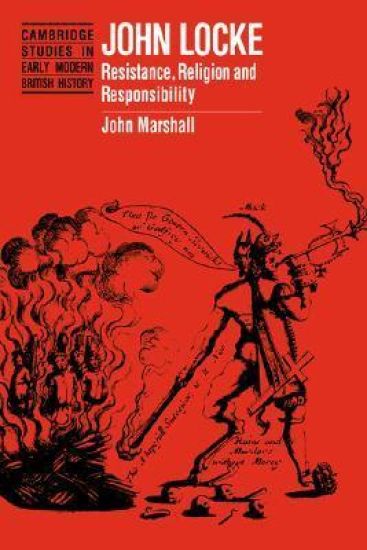
John Locke

John Locke

John Marshall

Cambridge University Press
1994
pokkari
This book provides a new contextual account of the development of John Locke’s political, religious, social and moral thought. It analyses many of Locke’s unpublished manuscripts and relatively neglected works as well as the Two Treatises, the Letter Concerning Toleration and the Essay Concerning Human Understanding. Professor Marshall studies the development of Locke’s political thought from absolutism to resistance, and provides significant revisions to current explanations of the immediate contexts and purposes of composition of the Two Treatises. He also sets out major new accounts of Locke’s moral, social and religious thought both as extremely important subjects in their own right and in order to challenge many scholars' interpretations of their influences on Locke’s political thought.
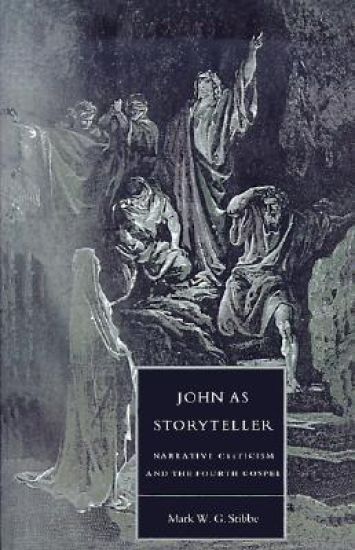
John as Storyteller

John as Storyteller

Mark W. G. Stibbe

Cambridge University Press
1994
pokkari
In this widely acclaimed study of John’s Gospel, Mark W. G. Stibbe shows how the fourth evangelist uses all the tactics of a skilled storyteller to promote his distinctive Christology. Literary and historical methodologies are integrated by the author in his narrative criticism, and a new, holistic approach to the gospel literature is suggested thereby.
John of Wales

John of Wales

Jenny Swanson

Cambridge University Press
2002
pokkari
This book examines the selected writings of John of Wales, a thirteenth-century Franciscan scholar. Though overshadowed historically by men like Thomas Aquinas and Bonaventure, John contributed significantly to the preaching explosion of the later Middle Ages, devoting his scholastic energies to the production of encyclopedic preaching aids for the growing number of the devout and learned emerging from the new universities. Through a detailed analysis of his world view, the author establishes John’s strong interest in politics and contemporary social issues and helps to explain why his writings appealed to young preachers and the popular imagination. John’s historic popularity and literary influence are also fully explored. His works seem to have been an important source of classical material for European literary texts of the period, and therefore, in addition to historians and theologians, this unprecedented book will appeal to those interested in the survival and transmission of Greek and Latin literature.
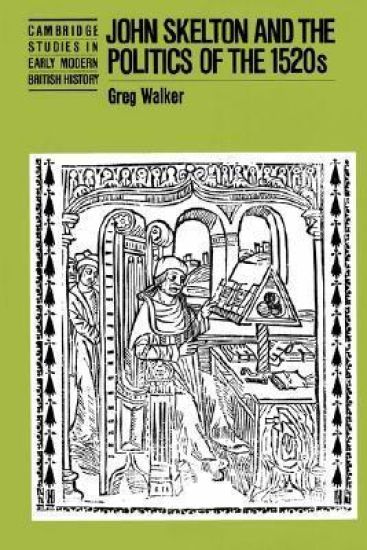
John Skelton and the Politics of the 1520s

John Skelton and the Politics of the 1520s

Greg Walker

Cambridge University Press
2002
pokkari
The series of satirical poems and invectives written against Thomas, Cardinal Wolsey, the chief minister of Henry VIII, by the poet John Skelton has long been used by scholars as evidence of the sins and follies of Wolsey’s regime. Yet the poems have never undergone serious political analysis. At the heart of this book is a detailed examination of these texts which aims to rectify that omission. For the first time they are subjected to a close reading which both elucidates their major themes and purpose, and sets them firmly in their political context. The book questions the orthodoxies of previous scholarship and challenges received opinions concerning the poet’s status at the court of Henry VIII, his employment by the noble house of Howard, and his motives for launching the satirical assault upon Wolsey. From this analysis emerges a very different Skelton to that provided by earlier accounts.
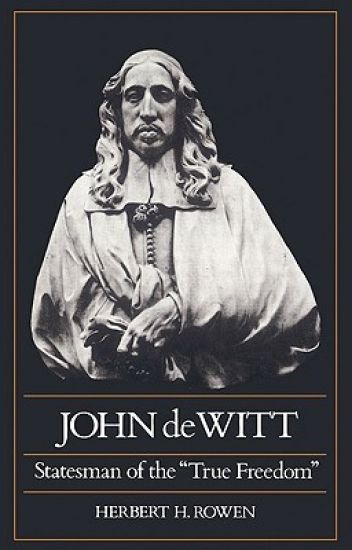
John de Witt

John de Witt

Herbert H. Rowen

Cambridge University Press
2003
pokkari
If the combination of superb political skills and a powerful intelligence were enough to make a ‘philosopher-king’ such as Plato dreamed of, the Dutch ‘Grand Pensionary’ John de Witt (1625–72) would fit the prescription as well as any statesman in history. Manoeuvring among the powers of Europe in the period of France’s growing ascendancy, and facing the bitter commercial and political rivalry of the English, he managed to preserve the eminent position the United Provinces had reached when Spain recognized their independence at Munster in 1648. Not until the kings of France and England combined against the Republic in 1672 did De Witt’s political system, called the ‘True Freedom’ and consisting of the maximum autonomy of the provinces and the exclusion of Prince William III of Orange from high office, collapse during the French invasion, an event accompanied by the horrific assassination of De Witt and his brother Cornelius.
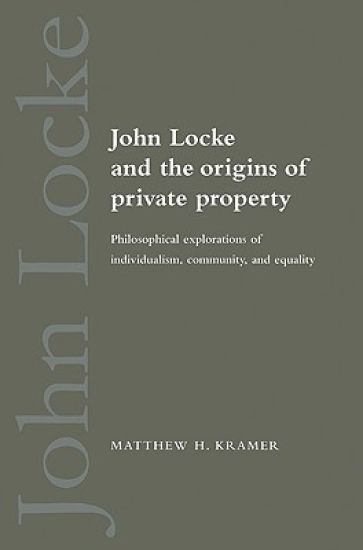
John Locke and the Origins of Private Property

John Locke and the Origins of Private Property

Matthew H. Kramer

Cambridge University Press
2004
pokkari
John Locke’s labor theory of property is one of the seminal ideas of political philosophy and served to establish its author’s reputation as one of the leading social and political thinkers of all time. Through it Locke addressed many of his most pressing concerns, and earned a reputation as an outstanding spokesman for political individualism - a reputation that lingers widely despite some partial challenges that have been raised in recent years. In this major new study Matthew Kramer offers an extensive critique of the labor theory and investigates the consequences of its downfall. With incisive analyses of the merits and failings of many aspects of Locke’s political thought, Kramer advances a powerful challenge to Locke’s image as an individualist. Employing a rigorously philosophical methodology, but remaining aware of the insights generated by historical approaches to Locke, Kramer concludes that Locke’s political vision was in fact profoundly communitarian.
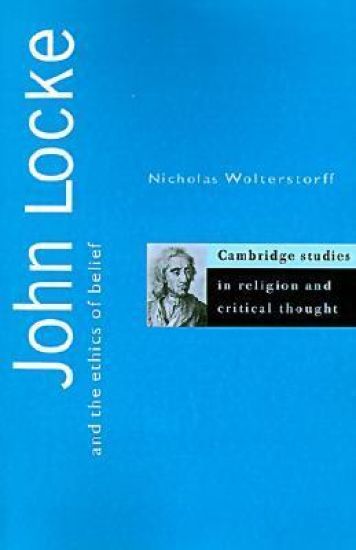
John Locke and the Ethics of Belief

John Locke and the Ethics of Belief

Nicholas Wolterstorff

Cambridge University Press
1996
pokkari
Nicholas Wolterstorff discusses the ethics of belief which Locke developed in Book IV of his Essay Concerning Human Understanding, where Locke finally argued his overarching aim: how we ought to govern our belief, especially on matters of religion and morality. Wolterstorff shows that this concern was instigated by the collapse, in Locke’s day, of a once-unified moral and religious tradition in Europe into warring factions. His was thus a culturally and socially engaged epistemology. This view of Locke invites a new interpretation of the origins of modern philosophy. He maintained that instead of following tradition we ought to let ‘reason be our guide.’ Accordingly, after discussing Hume’s powerful attack on Locke’s recommended practice, Wolterstorff argues for Locke’s originality and emphasizes his contribution to the ‘modernity’ of post-sixteenth-century philosophy.
John Locke and the Origins of Private Property

John Locke and the Origins of Private Property

Matthew H. Kramer

Cambridge University Press
1997
sidottu
John Locke’s labor theory of property is one of the seminal ideas of political philosophy and served to establish its author’s reputation as one of the leading social and political thinkers of all time. Through it Locke addressed many of his most pressing concerns, and earned a reputation as an outstanding spokesman for political individualism - a reputation that lingers widely despite some partial challenges that have been raised in recent years. In this major new study Matthew Kramer offers an extensive critique of the labor theory and investigates the consequences of its downfall. With incisive analyses of the merits and failings of many aspects of Locke’s political thought, Kramer advances a powerful challenge to Locke’s image as an individualist. Employing a rigorously philosophical methodology, but remaining aware of the insights generated by historical approaches to Locke, Kramer concludes that Locke’s political vision was in fact profoundly communitarian.
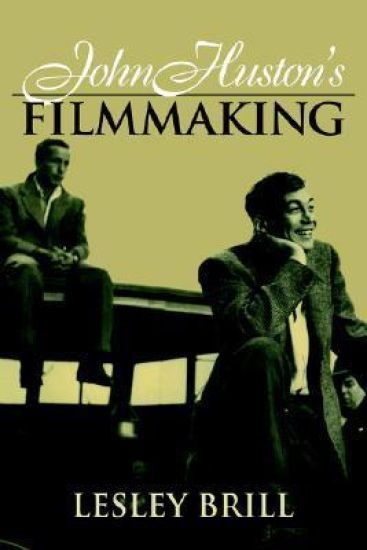
John Huston's Filmmaking

John Huston's Filmmaking

Brill Lesley

Cambridge University Press
1997
pokkari
John Huston’s Filmmaking offers an analysis of the life and work of one of the greatest American independent filmmakers. Always visually exciting, Huston’s films sensitively portray humankind in all its incarnations, chronicling the attempts by protagonists to conceive and articulate their identities. Fundamental questions of selfhood, happiness and love are intimately connected to the idea of home, which for the filmmaker also signified a congenial place among other people in the world. In this study, Lesley Brill shows Huston’s films to be far more than formulaic adventures of masculine failure, arguing instead that they demonstrate the close connection between humanity, the natural world, and divinity.