Kirjojen hintavertailu. Mukana 11 244 527 kirjaa ja 12 kauppaa.

Kirjahaku

Etsi kirjoja tekijän nimen, kirjan nimen tai ISBN:n perusteella.

1000 tulosta hakusanalla John Cheever

John Cassian

John Cassian

Owen Chadwick

Cambridge University Press
2008
pokkari
John Cassian is a study of the fifth-century monk who was one of the founders of western monasticism. Christian monasticism flowered in Egypt during the fourth century. Cassias spent several years in Egypt and his writings are important evidence of the earliest period of monastic life. Later in life Cassian came to Provence and adapted the Egyptian ideals and methods for Latin use. The Benedictine Rule owes much to his influence. Benedictine monks still look back upon Cassian as an authority for their way of life. He was the first guide to the contemplative ideal in the history of western thought. Cassias questioned the doctrine of predestination taught by Augustine. Dr Chadwick shows how this argument gave him an ambiguous reputation in medieval history. The first edition of this book was published in 1950. It established itself as a contribution to the history of monasticism and to the origins of the contemplative ideal in Christianity. This is a reprint of the 1968 second edition in which Dr Chadwick made changes to take account of important work published since the first edition.
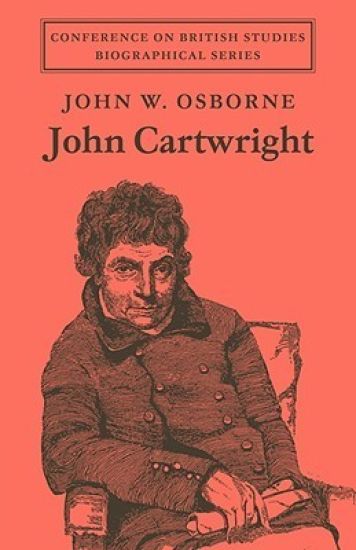
John Cartwright

John Cartwright

Osborne John W.

Cambridge University Press
2008
pokkari
This is a biography of Major John Cartwright (1740–1824), the English advocate of radical reform who had considerable influence in shaping the mainstream of reform in England in the nineteenth century, and whose ideas lay behind the working-class Chartist Movement. Known as the 'Father of Reform', Cartwright was the first person of importance to hold a literal belief in universal male suffrage and was venerated by generations of reformers. Dr Osborne's book clarifies and analyses Cartwright's extensive political plans and ideas against the background of contemporary English radicalism and of social and political change. He shows how Cartwright, as a member of the English landed gentry, tried to understand conditions which were changing at an unprecedented rate and still retained a high degree of traditionalism and conservatism.
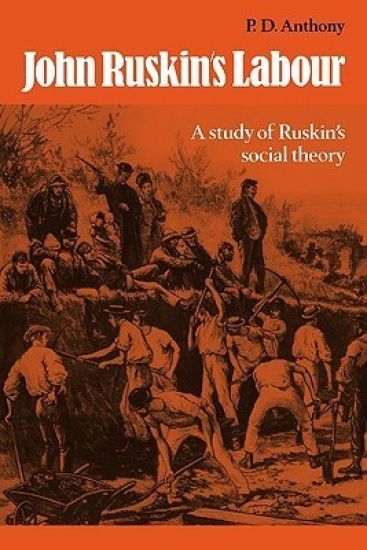
John Ruskin's Labour

John Ruskin's Labour

P. D. Anthony

Cambridge University Press
2008
pokkari
John Ruskin was one of the great Victorians established while still young as an arbiter of taste in painting and architecture and as one of the greatest of all writers of English prose. When he was forty he decided to abandon the field in which his reputation had been secured in order to awaken the world to the peril of devastation which, he believed, would follow its preoccupation with profit and its subservience to a false economic doctrine. He regarded his social criticism as a duty, reluctantly accepted, to a society which had abandoned the traditional and religious values that had been the foundation of its civilization. Ruskin's labour, to which he devoted the rest of his life, was to bring a searching intelligence, considerable learning and a moral concern to providing a ruthless criticism of the values of Victorian England.
John Keats

John Keats

Mayhead

Cambridge University Press
1967
pokkari
Keats is one of the most widely read and studied of the English poets, but there are few books about him for the student. Not surprisingly, most books give much space to the romantic life. Mr Mayhead resists the temptation: he writes only about the poems and the letters; and in this concise introduction he discusses them comprehensively and closely. The poems are discussed in broadly chronological order, with liberal quotation and much detailed analysis. This straightforward and businesslike study is also sensitive and sympathetic; it establishes more firmly in the reader's mind the nature of Keats's true achievement: the quality of the poetry.
John Milton: Introductions

John Milton: Introductions

Cambridge University Press
1973
pokkari
At the head of the Cambridge Milton series stand two general books: John Milton: Introductions and Paradise Lost: Introduction. These set the tone for and give the background to the editions of individual books. John Broadbent and the contributors to the present volume provide original studies on different aspects of John Milton's life, times, work and ideas. There are chapters on his relation to the music, science and visual arts of the age and there is ample material to stimulate further reading, thought and research. The book can be used by a wide range of readers and students of Milton as an original work of reference - a bank of ideas and resources on which to draw and to develop.
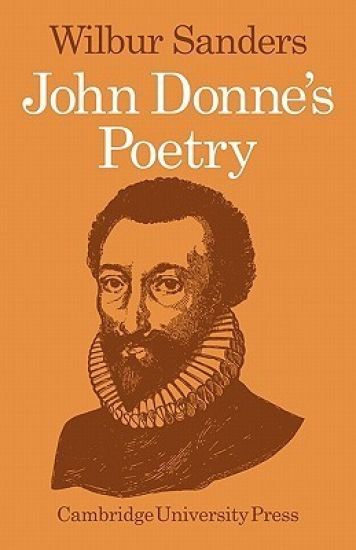
John Donne's Poetry

John Donne's Poetry

Wilbur Sanders

Cambridge University Press
1975
pokkari
In this 1975 text, Dr Sanders approaches John Donne, beginnings with his arresting voice; individual and often puzzling. He asks of the live poetry and religious poetry alike, where is Donne speaking his own voice, when is he adopting a persona, what is the effect of his irony? And, he goes on, what affects us as true and fine when is Donne the prey of his own manner and self-irony; when is he conventionally amorous, cynical or pious? From this consideration Dr Sanders returns with a central body of poems which he considers great and unique. Many readers of Donne ask themselves uncomfortably whether their admiration is merely fashionable, or their dissatisfaction merely a reaction against fashion. Dr Sanders's calm examination proceeds from a disinterested wish to to find what is admirable, but not to lose sight of common-sense judgements exemplified in the past by Johnson.
John Steinbeck

John Steinbeck

Cambridge University Press
2009
pokkari
This volume is the first to collect the critical responses of Steinbeck's generation to his many fiction and nonfiction works, as they appeared from the late 1920s on. The articles trace the record of Steinbeck's progress through the 1930s and go on to reflect his steady series of achievements through the 1960s, including his attainment of the Nobel Prize in 1962. These articles offer at last a means of seeing Steinbeck's writings as they were perceived by his contemporaries, whose task it was first to evaluate and interpret them for an ever-growing readership.
John Lydgate and the Making of Public Culture

John Lydgate and the Making of Public Culture

Nolan Maura

Cambridge University Press
2009
pokkari
Inspired by the example of his predecessors Chaucer and Gower, John Lydgate articulated in his poetry, prose and translations many of the most serious political questions of his day. In the fifteenth century Lydgate was the most famous poet in England, filling commissions for the court, the aristocracy, and the guilds. He wrote for an elite London readership that was historically very small, but that saw itself as dominating the cultural life of the nation. Thus the new literary forms and modes developed by Lydgate and his contemporaries helped shape the development of English public culture in the fifteenth century. Maura Nolan offers a major re-interpretation of Lydgate's work and of his central role in the developing literary culture of his time. Moreover, she provides a wholly new perspective on Lydgate's relationship to Chaucer, as he followed Chaucerian traditions while creating innovative new ways of addressing the public.
John Milton's Aristocratic Entertainments

John Milton's Aristocratic Entertainments

Cedric C. Brown

Cambridge University Press
2009
pokkari
This book is a comprehensive account of Milton's two aristocratic entertainments, Arcades and Comus in the context of their original occasions and in the light of Milton's developing sense of vocation as a poet in the earlier part of his career. The book is especially original in the amount of socio-historical information it offers about the relationship between the independent and pastorly poet and his aristocratic patrons, and about the degree to which Milton was prepared to work within the constraints and decorum of the Caroline masque and country-house entertainment. A particular feature of the book is the analysis of changes in the texts of the two entertainments, from the earliest version in the Trinity College manuscript through to the first printings, considering Milton's changing manner of address to the different occasions of performance and publication. A degree of tension is discovered between the poet and the organisers of the Ludlow masque, and an explanation is given for a kind of censorship in the Bridgewater manuscript of Comus.
John Ford: Critical Re-Visions

John Ford: Critical Re-Visions

Neill Michael

Cambridge University Press
2010
pokkari
Originally published in 1988, John Ford: Critical Re-Visions offers a wholesale reconsideration of the reputation of a major Caroline playwright. The volume takes an historical perspective and offers a better understanding of Ford's achievement in the light of the theatrical and social conditions of his own day. The collection of essays was assembled for the 400th anniversary of the playwright's birth. The contributors, well known scholars in the field, work from a variety of critical positions: insights associated with a new historicist, feminist, structuralist and post-structuralist theory are represented, together with more traditional approaches. The essays range from detailed readings of the individual plays, including 'Tis Pity She's a Whore, Perkin Warbeck, Love's Sacrifice and The Lady's Trial to more wide-ranging studies of imagery and theatrical convention; several help to illuminate our understanding of Ford's plays in the theatre of his own time, while another offers a detailed account of post-war stage, film and television productions.
John Locke, Toleration and Early Enlightenment Culture

John Locke, Toleration and Early Enlightenment Culture

John Marshall

Cambridge University Press
2010
pokkari
This book is a major intellectual and cultural history of intolerance and toleration in early modern and early Enlightenment Europe. John Marshall offers an extensive study of late seventeenth-century practices of religious intolerance and toleration in England, Ireland, France, Piedmont and the Netherlands and the arguments that John Locke and his associates made in defence of 'universal religious toleration'. He analyses early modern and early Enlightenment discussions of toleration, debates over toleration for Jews and Muslims as well as for Christians, the limits of toleration for the intolerant, atheists, 'libertines' and 'sodomites', and the complex relationships between intolerance and resistance theories including Locke's own Treatises. This study is a significant contribution to the history of the 'republic of letters' of the 1680s and the development of early Enlightenment culture and is essential reading for scholars of early modern European history, religion, political science and philosophy.
John Bell, 1745–1831: A Memoir

John Bell, 1745–1831: A Memoir

Stanley Morison

Cambridge University Press
2009
pokkari
John Bell (1745–1831) was an English publisher. The Dictionary of National Biography has Charles Knight calling Bell a 'mischievous spirit, the very Puck of booksellers'. His 109-volume, literature-for-the-masses Poets of Great Britain Complete from Chaucer to Churchill, which rivalled Samuel Johnson's Lives of the Most Eminent English Poets (1781), was published from 1777 to 1783. Each volume cost just six shillings, at a time when similar volumes usually cost many times that. The drawings and illustrations with which Bell adorned his publications influenced later publishers, as did his abandonment of the long S. Most notable, perhaps, was Bell's joint-stock organisation of his publishing company, which defied 'the trade' – at the time, forty dominant publishing companies – in order to establish a monopoly on the best publications. In addition to the immense Poets of Great Britain, Bell also published similar volumes on Shakespeare and the British Theatre, as well as the Sunday newspaper Bell's Weekly Messenger and other periodicals.
The Theatres of Inigo Jones and John Webb

The Theatres of Inigo Jones and John Webb

John Orrell

Cambridge University Press
2010
pokkari
The English stage of Shakespeare's day was a place superbly fitted for the rhetorical drama of the times; by the Restoration it had been replaced by a kind of playhouse better suited to the 'Scenes and Machines' which dealt in spectacles. The seventeenth century was therefore a crucial one in the history of the stage, yet concrete evidence of the playhouses constructed during this time has been scarce and elusive. The best of it lies in the drawing which Inigo Jones, Surveyor of the King's Works, and his pupil, John Webb, made for a succession of playhouses and Court theatres. Jones was responsible for the visual aspects of the masques performed at the various royal palaces, and both he and Webb designed a number of regular theatres at Court. In this 1985 book, the author establishes Jones and Webb as the most effective London theatre builders and scene designers of the seventeenth century.
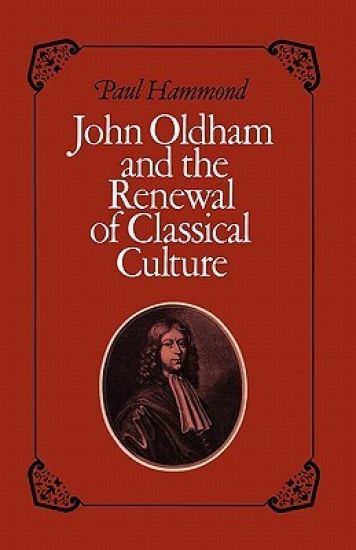
John Oldham and the Renewal of Classical Culture

John Oldham and the Renewal of Classical Culture

Paul Hammond

Cambridge University Press
2010
pokkari
John Oldham (1653–1883) was one of the most important English poets of the later seventeenth century. He was largely responsible for the development of the classical imitation and was much admired by Dryden, Pope and Johnson. However, he has suffered much critical neglect, and this 1983 book was the first critical study devoted to his poetry. In the first two chapters Dr Hammond covers Oldham's early years and his first attempts at writing poetry. Since the manuscript drafts of his poems survive, we have the rare opportunity to watch a poet's mind at work, and we can follow him as he restrains his addiction to harsh rhythms and crude language. Subsequent chapters consider Oldham's recreative translations of Horace, Juvenal and Boileau. Apart from showing how these came to invigorate English poetry, the author explores the ways in which Latin and French culture was handled in the Restoration period.
John Locke: Problems and Perspectives

John Locke: Problems and Perspectives

Cambridge University Press
2011
pokkari
Originally published in 1969, the impetus for this collection came from a conference on the Thought of John Locke held at York University, Toronto in 1966. Written in the co-operative spirit of the conference, the essays collected here were intended to reflect Locke's position as a polymath and recontextualise his ideas through the juxtaposition of various academic approaches. In doing so, they provide a challenging perspective on Locke which perhaps comes closer to the original character of his thought than more traditional approaches. This book will be of value to anyone with an interest in Locke's ideas on philosophy, politics, science or religion.
John Baskerville: A Bibliography

John Baskerville: A Bibliography

Philip Gaskell

Cambridge University Press
2011
pokkari
This 1959 bibliography lists and describes everything that came from the press of John Baskerville of Birmingham, who was appointed Printer to the University of Cambridge in 1758. After an introduction in which Dr Gaskell describes the methods that he has adopted and the conclusions that he has drawn from the investigation, there are two main parts: Specimens, Proposals and other Ephemera, and Books. Each entry contains a quasi-facsimile transcription of the title page, and gives details of formula contents amongst several other things. This, which was the first full bibliography of Baskerville's work, will be an essential tool for Baskerville collectors and for historians of printing and typography as well as for bibliographers. There are twelve collotype plates, most of which illustrate unique copies of Baskerville's ephemera; and there is in addition a full-size facsimile of Baskerville's last type specimen.
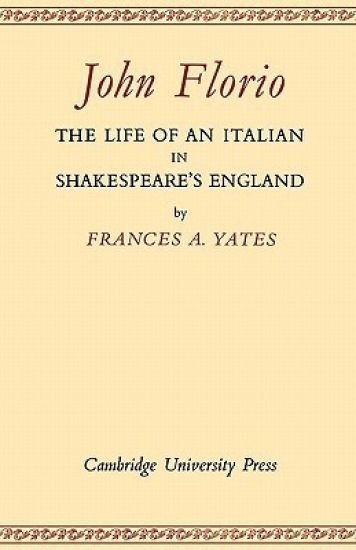
John Florio: The Life of an Italian in Shakespeare's England

John Florio: The Life of an Italian in Shakespeare's England

Frances A. Yates

Cambridge University Press
2011
pokkari
John Florio is best known to the present day for his great translation of Montaigne's Essays. To his contemporaries he was one of the most conspicuous figures of the literary and social cliques of the time. By her reconstruction of Florio's life and character, Frances Yates' 1934 text throws light upon the vexed question of his relations with Shakespeare.
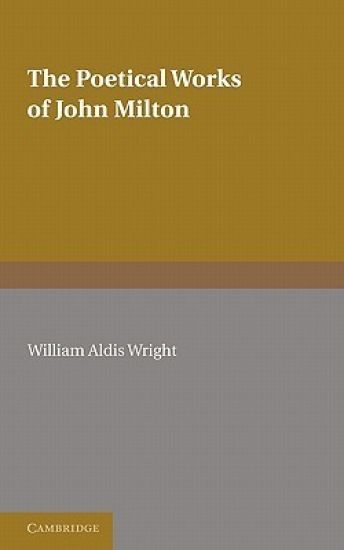
The Poetical Works of John Milton

The Poetical Works of John Milton

John Milton

Cambridge University Press
2011
pokkari
Originally published in 1903, this collection gathers together the poetry of John Milton in a single volume. The text is carefully edited by William Aldis Wright (1831–1914), a renowned scholar of the time and a Milton specialist. In the preface Wright explains the reasons behind favouring particular editions and various editorial judgements, the end result being an attempt to remain as close to Milton's original vision as possible. There are numerous critical notes, but in accordance with a generally unobtrusive approach, these are contained towards the end of the text. This remains a fine edition that will be of value to anyone with an interest in Milton scholarship and the history of English literature.
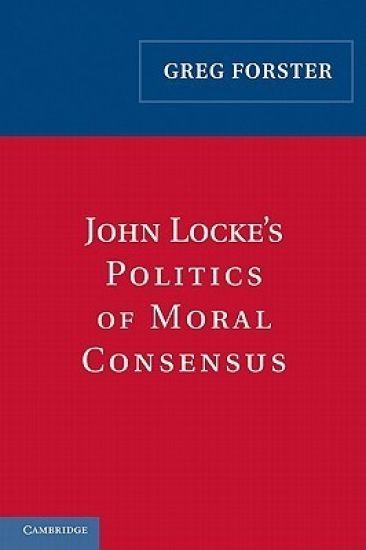
John Locke's Politics of Moral Consensus

John Locke's Politics of Moral Consensus

Greg Forster

Cambridge University Press
2010
pokkari
The aim of this book is twofold: to explain the reconciliation of religion and politics in the work of John Locke, and to explore the relevance of that reconciliation for politics in our own time. Confronted with deep social divisions over ultimate beliefs, Locke sought to unite society in a single liberal community. Reason could identify divine moral laws that would be acceptable to members of all cultural groups, thereby justifying the authority of government. Greg Forster demonstrates that Locke's theory is liberal and rational but also moral and religious, providing an alternative to the two extremes of religious fanaticism and moral relativism. This account of Locke's thought will appeal to specialists and advanced students across philosophy, political science and religious studies.
John Locke and Modern Life

John Locke and Modern Life

Lee Ward

Cambridge University Press
2010
sidottu
Recovers a sense of John Locke's central role in the making of the modern world. It demonstrates that his vision of modern life was constructed on a philosophy of human freedom that is the intellectual nerve connecting the various strands of his thought. By revealing the depth and originality of Locke's critique of the metaphysical assumptions and authoritative institutions of pre-modern life, this book rejects the notion of Locke as an intellectual anachronism. Indeed, the radical core of Locke's modern project was the 'democratization of mind', according to which he challenged practically every previous mode of philosophical analysis by making the autonomous individual the sole determinant of truth. It was on the basis of this new philosophical dispensation that Locke crafted a modern vision not only of government but also of the churches, the family, education, and the conduct of international relations.