Kirjojen hintavertailu. Mukana 11 244 527 kirjaa ja 12 kauppaa.

Kirjahaku

Etsi kirjoja tekijän nimen, kirjan nimen tai ISBN:n perusteella.

1000 tulosta hakusanalla John Perry

John Dryden

John Dryden

Oxford University Press
2020
sidottu
This volume in the 21st Century Oxford Authors series offers students an authoritative, comprehensive selection of the poetry and prose of John Dryden, the most important poet, dramatist, translator, and literary theorist of the later seventeenth century. He wrote across the tumultuous decades of political and cultural revolution — years stretching from the end of the Cromwellian Protectorate in 1659 through the reign of William III — and he addressed the crucial events of those decades. These were years of unprecedented political revolution, and of a remarkable transformation of English literary culture, with John Dryden at the literary centre. He invented new literary modes including the theatre of spectacle known as heroic drama; he perfected the heroic couplet, a form that became the chief instrument of public poetry; he adapted works of Shakespeare and Milton; he wrote excoriating satire; he brought the translation of classical poetry to new levels of perfection; and throughout his career he wrote works of literary theory that defined his own practices and the literary ethos of his age. By the time that Dryden died in 1700 he had redefined English literary culture; his work recalled and embodied all the genres and modes of early modern literature and anticipated the brilliance of eighteenth-century satire. This edition represents the span of a long career in its remarkable variety. All the genres in which Dryden wrote are represented: panegyrics, lyrics, odes, epigrams, verse epistles, historical poems, commendatory verse, commemorative poems, religious poems, satires, plays, prologues and epilogues, translations, critical prose, dedications, prefaces, biography, and letters. Explanatory notes and commentary enhance the study, understanding, and enjoyment of these works, and the edition includes an Introduction to the life and works of Dryden, a Chronology and a Biographical Appendix.
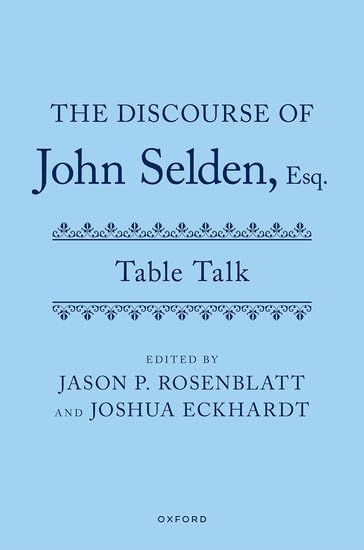
The Discourse of John Selden, Esq. (Table Talk)

The Discourse of John Selden, Esq. (Table Talk)

John Selden

Oxford University Press
2025
sidottu
This is the first fully annotated edition of The Discourse of John Selden, Esq. (previously known as Table Talk) since 1892, the very first based on a critical scrutiny of twenty-one surviving manuscripts, fifteen more than any previous editor knew existed. This expanded census of manuscripts demonstrates robust scribal publication. Selden's extraordinary talent for lucidly expressed analogy and his mordant wit and wise opinions on 155 topics earned him praise from Dr. Johnson and Coleridge. The work, composed in the 1650s, was considered so irreverent that it remained in manuscript for more than thirty years before it could be printed. A long-serving member of Parliament and a minority lay member of the Westminster Assembly of Divines, Selden provides intimate access to the political and religious debates of mid-seventeenth-century England, but he also addresses its high and low culture. Some of the topics are complex and require extensive contextual annotation, but the paragraphs that provide the greatest pleasure are the timeless and still timely ones that require only light annotation or none at all.
John Keats

John Keats

Oxford University Press
2017
sidottu
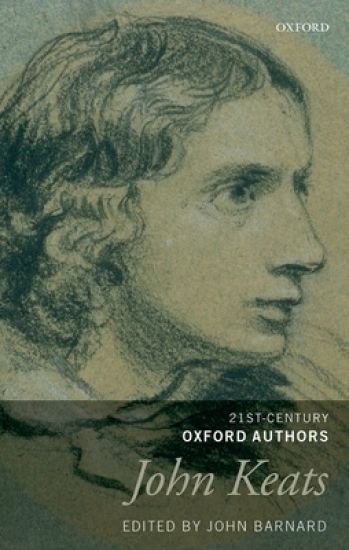
This new edition in the 21st-Century Oxford Authors series presents a substantial selection of Keats's writings arranged chronologically as his contemporary readers first encountered them. Its backbone is provided by the poems published in Keats's lifetime--the three volumes, Poems (1817), Endymion (1818), and Lamia, Isabella, The Eve of St. Agnes, and Other Poems (1820), together with the small number of poems he published elsewhere. But a much larger body of Keats's writing was seen only in manuscript, if at all, by Keats's friends and family-the unpublished poems which include the dream vision, The Fall of Hyperion, his annotations of Shakespeare and Milton, and, above all, his extraordinary letters. These are placed at the date on which they were written or at their probable date. This selection of poems, prose, and letters therefore creates a double time scheme. It places the poetry by which Keats was known to a frequently antagonistic reading public in his lifetime within the extensive biographical context provided by his unpublished poems and letters. This substantial body of manuscript evidence, some of it not discovered until the twentieth-century and none of it known to Keats's reading public, is now part of our understanding of his life and work, and allows us to follow his extraordinary intellectual, emotional, and artistic self-making in the three short years between Poems (1817) and 1820.
John Duns Scotus

John Duns Scotus

Oxford University Press
2017
sidottu
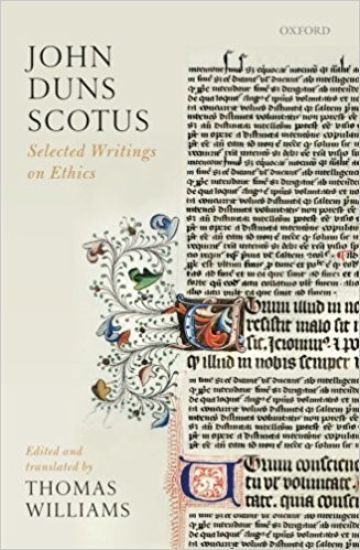
Thomas Williams presents the most extensive collection of John Duns Scotus's work on ethics and moral psychology available in English. John Duns Scotus: Selected Writings on Ethics includes extended discussions-and as far as possible, complete questions-on divine and human freedom, the moral attributes of God, the relationship between will and intellect, moral and intellectual virtue, practical reasoning, charity, the metaphysics of goodness and rightness, the various acts, affections, and passions of the will, justice, the natural law, sin, marriage and divorce, the justification for private property, and lying and perjury. Relying on the recently completed critical edition of the Ordinatio and other critically edited texts, this collection presents the most reliable and up-to-date versions of Scotus's work in an accessible and philosophically informed translation.
John Duns Scotus

John Duns Scotus

Oxford University Press
2017
nidottu
Thomas Williams presents the most extensive collection of John Duns Scotus's work on ethics and moral psychology available in English. John Duns Scotus: Selected Writings on Ethics includes extended discussions-and as far as possible, complete questions-on divine and human freedom, the moral attributes of God, the relationship between will and intellect, moral and intellectual virtue, practical reasoning, charity, the metaphysics of goodness and rightness, the various acts, affections, and passions of the will, justice, the natural law, sin, marriage and divorce, the justification for private property, and lying and perjury. Relying on the recently completed critical edition of the Ordinatio and other critically edited texts, this collection presents the most reliable and up-to-date versions of Scotus's work in an accessible and philosophically informed translation.
John Donne and the Conway Papers

John Donne and the Conway Papers

Daniel Starza Smith

Oxford University Press
2014
sidottu
How and why did men and women send handwritten poetry, drama, and literary prose to their friends and social superiors in the seventeenth century-and what were the consequences of these communications? Within this culture of manuscript publication, why did John Donne (1572-1631), an author who attempted to limit the circulation of his works, become the most transcribed writer of his age? John Donne and the Conway Papers examines these questions in great detail. Daniel Starza Smith investigates a seventeenth-century archive, the Conway Papers, in order to explain the relationship between Donne and the archive's owners, the Conway family. Drawing on an enormous amount of primary material, he situates Donne's writings within the broader workings of manuscript circulation, from the moment a scribe identified a source text, through the process of transcription and onwards to the social ramifications of this literary circulation. John Donne and the Conway Papers offers the first full-length analysis of three generations of the Conway family between Elizabeth's succession and the end of the Civil War, explaining what the Conway Papers are and how they were amassed, how the archive came to contain a concentration of manuscript poetry by Donne, and what the significance of this fact is, in terms of seventeenth-century politics, patronage, and culture. Answers to these questions cast new light on the early transmission of Donne's verse and prose. Throughout, John Donne and the Conway Papers emphasizes the importance of Donne's closest friends and earliest readers--such as George Garrard, Rowland Woodward, and Sir Henry Goodere--in the dissemination of his poetry. Goodere in particular emerges as a key agent in the early circulation of Donne's verse, and this book offers the first sustained account of his literary activities.
John Locke and Natural Philosophy

John Locke and Natural Philosophy

Peter R. Anstey

Oxford University Press
2013
nidottu
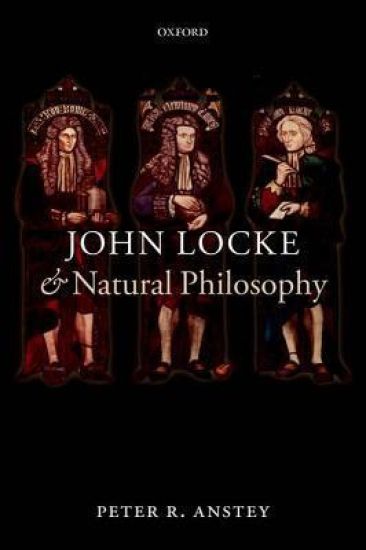
Peter Anstey presents a thorough and innovative study of John Locke's views on the method and content of natural philosophy. Focusing on Locke's Essay concerning Human Understanding, but also drawing extensively from his other writings and manuscript remains, Anstey argues that Locke was an advocate of the Experimental Philosophy: the new approach to natural philosophy championed by Robert Boyle and the early Royal Society who were opposed to speculative philosophy. On the question of method, Anstey shows how Locke's pessimism about the prospects for a demonstrative science of nature led him, in the Essay, to promote Francis Bacon's method of natural history, and to downplay the value of hypotheses and analogical reasoning in science. But, according to Anstey, Locke never abandoned the ideal of a demonstrative natural philosophy, for he believed that if we could discover the primary qualities of the tiny corpuscles that constitute material bodies, we could then establish a kind of corpuscular metric that would allow us a genuine science of nature. It was only after the publication of the Essay, however, that Locke came to realize that Newton's Principia provided a model for the role of demonstrative reasoning in science based on principles established upon observation, and this led him to make significant revisions to his views in the 1690s. On the content of Locke's natural philosophy, it is argued that even though Locke adhered to the Experimental Philosophy, he was not averse to speculation about the corpuscular nature of matter. Anstey takes us into new terrain and new interpretations of Locke's thought in his explorations of his mercurialist transmutational chymistry, his theory of generation by seminal principles, and his conventionalism about species.
John Aubrey: Brief Lives with An Apparatus for the Lives of our English Mathematical Writers
This is the first scholarly edition of Aubrey's Brief Lives since 1898, the first to include the complete text of the three Brief Lives manuscripts (including censored and deleted material, title-pages, antiquarian notes, and the indices), and the first to provide a full general and critical introduction and comprehensive commentary. This edition is the first to respect the original arrangement of the Lives in Aubrey's manuscripts. Brief Lives is presented as an antiquarian and collaborative text, containing the autograph papers of biographical subjects, the annotations of those among whom the manuscripts circulated, and wax seals. As well as 25 facsimile pages, there are over 160 images, reproducing for the first time all Aubrey's horoscopes, pedigrees, coats of arms, and topographical sketches as they are found in the manuscripts. The text respects the mise-en-page of the manuscript and its status as an incomplete and heavily revised work-in-progress while presenting an edited, rather than a diplomatic, text. The commentary presents extensive new research on manuscript sources including much material not previously known to be Aubrey's or associated with him. It also reflects the state of current scholarship. Each life is introduced by a headnote placing the life in context. This gives the dates and sequence of composition and an account of Aubrey's relationship with the biographical subject, the circulation of knowledge of that subject in Aubrey's circle, and a full account of Aubrey's notes on the subject of the life in other manuscripts and correspondence. Aubrey's biographical informants also have a long note, as do uncompleted or missing Lives. Winner of the Rose Mary Crawshay Prize 2017 and Times Literary Supplement Book of the Year 2015
Minor Poets of the Caroline Period: Volume III: John Cleveland, Thomas Stanley, Henry King, Thomas Flatman, Nathaniel Whiting

Minor Poets of the Caroline Period: Volume III: John Cleveland, Thomas Stanley, Henry King, Thomas Flatman, Nathaniel Whiting

John Cleveland; Thomas Stanley; Henry King; Thomas Flatman; Nathaniel Whiting

Oxford University Press
1968
sidottu
A scholarly edition of poems by John Cleveland, Thomas Stanley, Henry King, Thomas Flatman, and Nathaniel Whiting. The edition presents an authoritative text, together with an introduction, commentary notes, and scholarly apparatus.