Kirjojen hintavertailu. Mukana 11 627 220 kirjaa ja 12 kauppaa.

Kirjahaku

Etsi kirjoja tekijän nimen, kirjan nimen tai ISBN:n perusteella.

1000 tulosta hakusanalla John Perry Miller

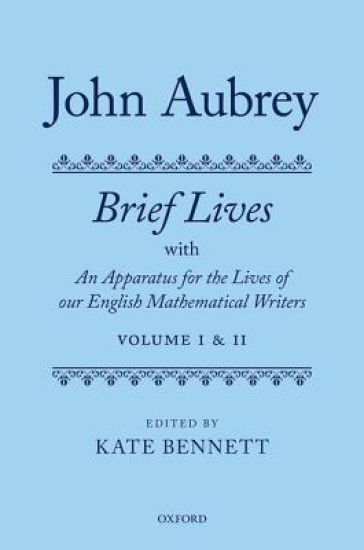
John Aubrey: Brief Lives with An Apparatus for the Lives of our English Mathematical Writers
This is the first scholarly edition of Aubrey's Brief Lives since 1898, the first to include the complete text of the three Brief Lives manuscripts (including censored and deleted material, title-pages, antiquarian notes, and the indices), and the first to provide a full general and critical introduction and comprehensive commentary. This edition is the first to respect the original arrangement of the Lives in Aubrey's manuscripts. Brief Lives is presented as an antiquarian and collaborative text, containing the autograph papers of biographical subjects, the annotations of those among whom the manuscripts circulated, and wax seals. As well as 25 facsimile pages, there are over 160 images, reproducing for the first time all Aubrey's horoscopes, pedigrees, coats of arms, and topographical sketches as they are found in the manuscripts. The text respects the mise-en-page of the manuscript and its status as an incomplete and heavily revised work-in-progress while presenting an edited, rather than a diplomatic, text. The commentary presents extensive new research on manuscript sources including much material not previously known to be Aubrey's or associated with him. It also reflects the state of current scholarship. Each life is introduced by a headnote placing the life in context. This gives the dates and sequence of composition and an account of Aubrey's relationship with the biographical subject, the circulation of knowledge of that subject in Aubrey's circle, and a full account of Aubrey's notes on the subject of the life in other manuscripts and correspondence. Aubrey's biographical informants also have a long note, as do uncompleted or missing Lives. Winner of the Rose Mary Crawshay Prize 2017 and Times Literary Supplement Book of the Year 2015
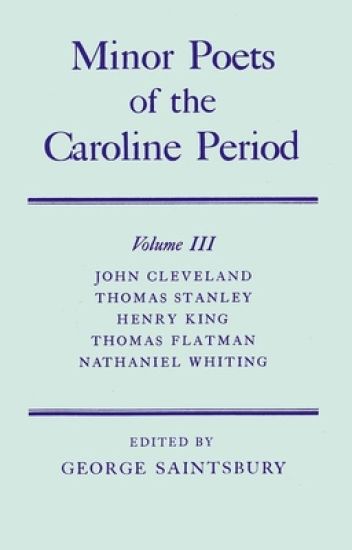
Minor Poets of the Caroline Period: Volume III: John Cleveland, Thomas Stanley, Henry King, Thomas Flatman, Nathaniel Whiting

Minor Poets of the Caroline Period: Volume III: John Cleveland, Thomas Stanley, Henry King, Thomas Flatman, Nathaniel Whiting

John Cleveland; Thomas Stanley; Henry King; Thomas Flatman; Nathaniel Whiting

Oxford University Press
1968
sidottu
A scholarly edition of poems by John Cleveland, Thomas Stanley, Henry King, Thomas Flatman, and Nathaniel Whiting. The edition presents an authoritative text, together with an introduction, commentary notes, and scholarly apparatus.
John F. Kennedy

John F. Kennedy

Robert Dallek

Oxford University Press Inc
2011
sidottu
Robert Dallek's masterful John F. Kennedy: An Unfinished Life was a number one national bestseller, and it remains the most widely read one-volume biography of the 35th President. Now, in this marvelous short biography of John F. Kennedy, Dallek achieves a miracle of compression, capturing in a small space the essence of his renowned full-length masterpiece. Here readers will find the fascinating insights and groundbreaking revelations found in An Unfinished Life. The heart of the book focuses on Kennedy's political career, especially the presidency. The book sheds light on key foreign affairs issues such as the Bay of Pigs debacle, Khrushchev's misguided bullying of Kennedy in Vienna, the Cuban Missile crisis, the nuclear test ban, the race for space, and the initial dealings with Southeast Asia, especially Laos. It also highlights the difficulties Kennedy faced getting a domestic agenda passed, from a tax cut to spur the economy, to federal aid to education, Medicare, and civil rights. Dallek reveals the thinking behind Robert Kennedy's appointment as Attorney General and convincingly argues that Kennedy would never have expanded the war in Vietnam the way that Lyndon Johnson did. The book also addresses questions about Kennedy's assassination and concludes with his presidential legacy and why he remains so popular despite serving only a thousand days in office.
John Henry: Roark Bradford's Novel and Play
Roark Bradford's 1931 novel and 1939 play dealing with the legendary folk-hero John Henry (both titled John Henry) were extremely influential in their own time, but have since then been nearly forgotten. Steven C. Tracy has united these hard-to-find works in a single critical edition that helps contextualize-and revive-both texts. An expansive introduction explores Bradford's life; recounts critical responses to his works; and surveys John Henry's pervasiveinfluence in folk, literary, and popular culture. The volume also features a wide array of supplementary materials including a selected bibliography and discography, transcriptions of folksong texts and recordings available during the 1930s, and a chronology of the lives of both Bradford and Henry. As Tracy'sintroduction makes clear, such a consideration of Bradford-set in the context of writers, both black and white, drawing upon African American folklore and using dialects along with stereotypical and non-stereotypical portrayals-is long overdue. This new edition is a windfall for scholars and students of folklore and African American literature.
John Owen and English Puritanism

John Owen and English Puritanism

Crawford Gribben

Oxford University Press Inc
2016
sidottu
John Owen was a leading theologian in 17th-century England. As vice-chancellor of Oxford University, he was a man of immense intellectual and cultural significance. Through his association with Oliver Cromwell in particular, he exercised considerable influence on central government, and became the premier religious statesman of the Interregnum. The restoration of the monarchy pushed Owen into dissent, criminalizing his religious practice and inspiring his writings in defense of high Calvinism and religious toleration. But Owen transcended his many experiences of defeat, and his claims to quietism were frequently undermined by rumors of his involvement in anti-government conspiracies. Crawford Gribben's biography documents Owen's interactions with the intellectual and print cultures of his social, political and religious environments; its narrative is structured around Owen's own publications. In contrast to the current scholarly consensus, this book emphasizes Owen's importance as a controversial theologian deeply involved with his social and political environment. Far from personifying the Reformed tradition, he helped to undermine it, offering an individualist account of Christian faith which downplayed the significance of the Church's means of grace. His work contributed to the formation of the new religious movement known as evangelicalism, where his influence still can be seen today.
John Stuart Mill and the Art of Life

John Stuart Mill and the Art of Life

Oxford University Press Inc
2012
nidottu
The "Art of Life" is John Stuart Mill's name for his account of practical reason. In this volume, eleven leading scholars elucidate this fundamental, but widely neglected, element of Mill's thought. Mill divides the Art of Life into three "departments": "Morality, Prudence or Policy, and Aesthetics." In the volume's first section, Rex Martin, David Weinstein, Ben Eggleston, and Dale E. Miller investigate the relation between the departments of morality and prudence. Their papers ask whether Mill is a rule utilitarian and, if so, whether his practical philosophy must be incoherent. The second section contains papers by Jonathan Riley and Wendy Donner, who explore the relation between the departments of morality and aesthetics. They discuss issues ranging from supererogation to aesthetic pleasure and humanity's relationship with nature. The papers in the third section consider the Art of Life's axiological first principle, the principle of utility. Elijah Millgram contends that Mill's own life refutes his claim that the Art of Life has a single axiological first principle. Philip Kitcher maintains that Mill has a dynamic axiology requiring us to continually refine our conception of the good. In the final section, three papers address what it means to put the Art of Life into practice. Robert Haraldsson locates an 'Art of Ethics' in On Liberty that is in tension with the Art of Life. Nadia Urbinati plumbs the classical roots of Mill's view of the good life. Finally, Colin Heydt develops Mill's suggestion that we regard our own lives as works of art.
John Quincy Adams and the Politics of Slavery

John Quincy Adams and the Politics of Slavery

David Waldstreicher; Matthew Mason

Oxford University Press Inc
2017
sidottu
John Quincy Adams's remarkable diary is an unusually accessible window into the thinking of a president long before, during, and well after his own administration. It is enormous in scope--examining all subjects that came to Adams's interest and stretching from the late 1780s to his death in 1848. David Waldstreicher and Matthew Mason produce an edition of the diary that is not only of accessible length but also focused on one issue: the politics of slavery. Adams's long journey from nationalist diplomacy to culture war with the southern plantocracy is not well understood. How did the man who in 1795 told a British cabinet officer not to speak to him of the Virginians, the Southern people, the democrats, whom he considered in no other light than as Americans, come to predict a grand struggle between slavery and freedom? How could an expansionist who had left his party and lost his U.S. Senate seat rather than attack the Jeffersonian slave power, later come to declare the Mexican War the apoplexy of the Constitution, a hijacking of the republic by slaveholders? What changed? Entries in the diary touching on the politics of slavery increased over time and reflect national events as well as Adams' changes in attitude. The diary enables the reader to perceive and weigh the relative importance and interaction of ideology, politics, and personal ambition in one highly consequential life. The editors provide a lucid introduction to the collection as a whole and illuminate the individual documents with brief and engaging comments, deftly placing Adams's public statements alongside his private reflections. By juxtaposing Adams's personal reflections on slavery with what he said--and did not say--publicly on the issue, the editors offer a unique perspective on a topic historians of the early republic, and especially of Jacksonian democracy, have trouble integrating into their stories: the complicated politics of slavery.
The Philosophy of John Dewey

The Philosophy of John Dewey

John Dewey

University of Chicago Press
1981
nidottu
John J. McDermott's anthology, The Philosophy of John Dewey, provides the best general selection available of the writings of America's most distinguished philosopher and social critic. This comprehensive collection, ideal for use in the classroom and indispensable for anyone interested in the wide scope of Dewey's thought and works, affords great insight into his role in the history of ideas and the basic integrity of his philosophy. This edition combines in one book the two volumes previously published separately. Volume 1, "The Structure of Experience," contains essays on metaphysics, the logic of inquiry, the problem of knowledge, and value theory. In volume 2, "The Lived Experience," Dewey's writings on pedagogy, ethics, the aesthetics of the "live creature," politics, and the philosophy of culture are presented. McDermott has prefaced each essay with a helpful explanatory note and has written an excellent general introduction to the anthology.
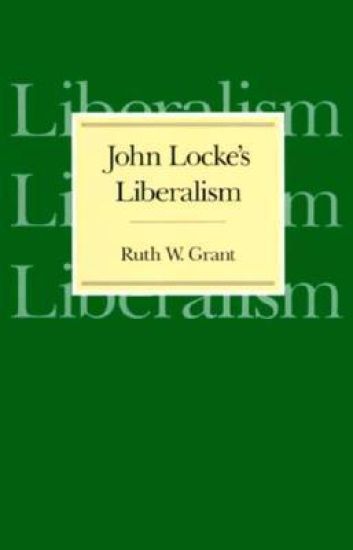
John Locke's Liberalism

John Locke's Liberalism

Ruth W. Grant

University of Chicago Press
1991
nidottu
In this work, Ruth W. Grant presents a new approach to John Locke's familiar works. Taking the unusual step of relating Locke's Two Treatises to his Essay Concerning Human Understanding, Grant establishes the unity and coherence of Locke's political arguments. She analyzes the Two Treatises as a systematic demonstration of liberal principles of right and power and grounds it in the epistemology set forth in the Essay.
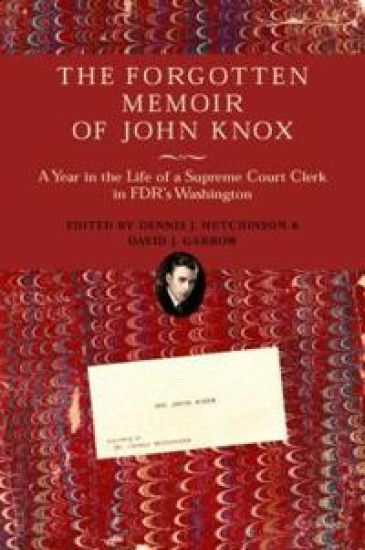
The Forgotten Memoir of John Knox

The Forgotten Memoir of John Knox

John Knox

University of Chicago Press
2002
sidottu
This book is the first of its kind - the personal memoir of a law clerk to a member of the Supreme Court of the United States. John Knox (1907-1997) served as private secretary and law clerk to Justice James C. McReynolds, arguably one of the most disagreeable justices ever to sit on the bench, during the tumultuous year when FDR attempted to "pack the court" with judges who would approve his New Deal agenda. The epitome of the overzealous young man, Knox kept a meticulous daily record of his life and surroundings, a practice he had begun as a lonley high school student and continued through his studies at the University of Chicago, Northwestern, and Harvard. Part scrapbook, part social commentary, and part recollection, his memoir reveals an unprecedented insider's view of the showdown between Roosevelt and the Court. At the same time, it marvellously portrays a Washington culture now long gone, in which most justices worked from their homes, supported by a small staff. This unlikely cast of characters includes Knox, who continually fears for his job under the notoriously rude (and nakedly racist) justice; Harry Parker, the messenger who does "everything but breathe" for the justice; and the maid, Mary Diggs, who with the others plots and schemes around her employer's idiosyncracies to keep the household running. A substantial foreword by Dennis J. Hutchinson and David J. Garrow sets the stage, and a gallery of period photos of Knox, McReynolds and other figures of the time gives life to this remarkable document, which like no other recaptures life in Washington, D.C., when it was still a genteel Southern town.
The Forgotten Memoir of John Knox

The Forgotten Memoir of John Knox

John Knox

University of Chicago Press
2004
nidottu
"My name will survive as long as man survives, because I am writing the greatest diary that has ever been written. I intend to surpass Pepys as a diarist."When John Frush Knox (1907-1997) wrote these words, he was in the middle of law school, and his attempt at surpassing Pepys—part scrapbook, part social commentary, and part recollection—had already reached 750 pages. His efforts as a chronicler might have landed in a family attic had he not secured an eminent position after graduation as law clerk to Justice James C. McReynolds—arguably one of the most disagreeable justices to sit on the Supreme Court—during the tumultuous year when President Franklin D. Roosevelt tried to "pack" the Court with justices who would approve his New Deal agenda. Knox's memoir instead emerges as a record of one of the most fascinating periods in American history.The Forgotten Memoir of John Knox—edited by Dennis J. Hutchinson and David J. Garrow—offers a candid, at times naïve, insider's view of the showdown between Roosevelt and the Court that took place in 1937. At the same time, it marvelously portrays a Washington culture now long gone. Although the new Supreme Court building had been open for a year by the time Knox joined McReynolds' staff, most of the justices continued to work from their homes, each supported by a small staff. Knox, the epitome of the overzealous and officious young man, after landing what he believes to be a dream position, continually fears for his job under the notoriously rude (and nakedly racist) justice. But he soon develops close relationships with the justice's two black servants: Harry Parker, the messenger who does "everything but breathe" for the justice, and Mary Diggs, the maid and cook. Together, they plot and sidestep around their employer's idiosyncrasies to keep the household running while history is made in the Court.A substantial foreword by Dennis Hutchinson and David Garrow sets the stage, and a gallery of period photos of Knox, McReynolds, and other figures of the time gives life to this engaging account, which like no other recaptures life in Washington, D.C., when it was still a genteel southern town.
John Kenneth Galbraith

John Kenneth Galbraith

Richard Parker

University of Chicago Press
2006
nidottu
John Kenneth Galbraith (1908-2006) was one of America's most famous economists for good reason. From his acerbic analysis of America's "private wealth and public squalor" to his denunciation of the wars in Vietnam and Iraq, Galbraith consistently challenged "conventional wisdom" (a phrase he coined). He did so as a witty commentator on America's political follies and as a versatile author of bestselling books--such as The Affluent Society and The New Industrial State--that warn of the dangers of deregulated markets, corporate greed, and inattention to the costs of our military power. Here, in the first full-length biography of Galbraith and his times, Richard Parker provides not only a nuanced portrait of this extraordinary man, but also an important reinterpretation of twentieth-century public policy and economic practices."Whatever you may think of his ideas, John Kenneth Galbraith has led an extraordinary life. . . . Doing justice to this life story requires an outsize biography, one that not only tells Mr. Galbraith's tale but sets it on the broader canvas of America's political and economic evolution. And Richard Parker's book does just that."--Economist"Parker's book is more than a chronicle of Galbraith's life; it's a history of American politics and policy from FDR through George W. Bush. . . . It will make readers more economically and politically aware."--USA Today "The most readable and instructive biography of the century."--William F. Buckley, National Review"The story of this man's life and work is wonderfully rendered in this magnum opus, and offers an antidote to the public ennui, economic cruelty, and government malfeasance that poison life in America today."--James Carroll, Boston Globe
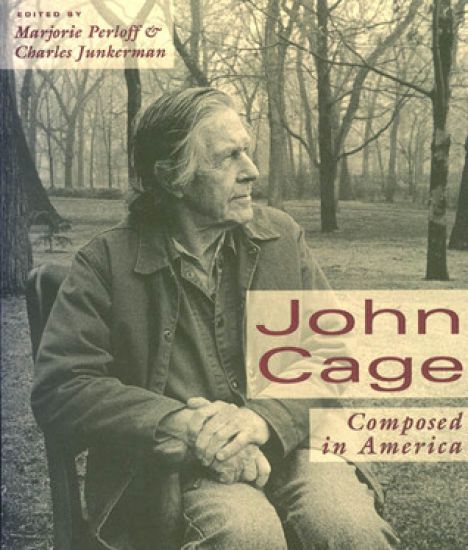
John Cage

John Cage

University of Chicago Press
1994
nidottu
When the avant-gardist John Cage died, he was already the subject of many interviews, memoirs and discussions of his contribution to music, music theory and performance practice. This text includes a revisionist treatment of the way Cage himself has composed and been "composed" in America. A disciple of Duchamp and Schoenberg, Satie and Joyce, Cage created compositions that undercut some of these artists' central principles and then attributed his own compositional theories to their "tradition." Following the text of Cage's "Overpopulation and Art," delivered at Stanford shortly before his death, ten critics respond to the complexity and contradiction exhibited in his work. In keeping with Cage's own interdisciplinarity, the critics approach the work from a variety of disciplines: philosophy (Daniel Herwitz, Gerald L. Bruns), biography and cultural history (Thomas S. Hines), game and chaos theory (N. Katherine Hayles), music culture (Jann Pasler), opera history (Herbert Lindenberger), literary and art criticism (Marjorie Perloff), cultural poetics (Gordana P. Crnkovic, Charles Junkerman), and poetic practice (Joan Retallack).