Kirjahaku
Etsi kirjoja tekijän nimen, kirjan nimen tai ISBN:n perusteella.
1000 tulosta hakusanalla John Stuart
The legal subordination of one sex to the other is wrong itself, and now one of the chief hindrances to human improvement.In this powerful and revolutionary argument for the equality of the sexes, John Stuart Mill accuses society of wasting the potential of an entire sex. From his vantage point in 19th-century England, he observes that historically women have been treated little better than slaves. Mill discusses marriage, education, and law as the chief obstacles to the progress of humanity. Eloquently written and passionately argued, The Subjection of Women was a clarion call to progressives everywhere as Mill set out a path toward a more equal society.ABOUT THE SERIES: The Arcturus Classics series brings together high-quality paperback editions of classics works, presented with contemporary graphic cover designs. Together they make a wonderful collection which is perfect for any home library.
Supernatural Stories: True or Not, You Decide
John Stuart Watkins
Independently Published
2018
nidottu
These are stories of dreams and events I was told. They include visits by spirits of dead pets, experiences with ESP and seances, dreams of future events that came true. I only corrected spellings when I felt it was important. If you do not believe in spirits or the ability to dream events that happen in the future, you may become a believer after reading theses events.

How can the individual be both free and happy? What are freedom and happiness and how do they relate to each other? These are the questions that Mill aims to answer from both a political and a philosophical perspective.

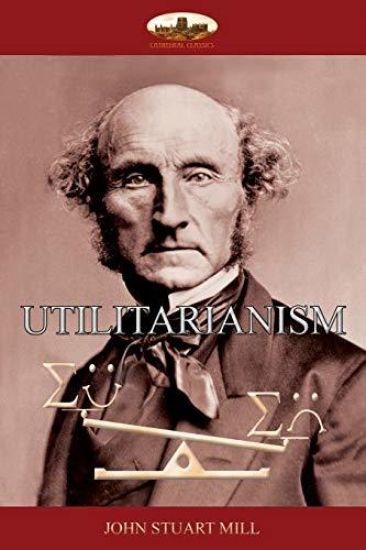
Born in 1806, John Stuart Mill was a prodigy: at six he had had written a history of Rome and by eight he was reading both Plato and Sophocles in the original Greek. Open-minded and magnanimous, in early adulthood John Stuart Mills was far ahead of his time, espousing just about every progressive ideal, from total sexual equality, through slave emancipation and votes for the working classes, to the absolute right to contraception. In 'Utilitarianism', Mill argues for the rightness of this philosophy, which is based on the principle that "actions are right in proportion as they tend to promote happiness, wrong as they tend to produce the reverse of happiness," and originates from the social nature of humanity. In five chapters he clearly sets forth a more nuanced and complex idea of this important moral and social theory.



In John Stuart Mill's classic restatement of the utilitarianism of Jeremy Bentham, he continued a philosophical perspective that continues to be appolied to this day. The 'principle of utility', otherwise known as 'the greatest happiness principle' has surfaced over and over again throughout history since then, and has often been the basis for important public policy discussions. As an ethical system that tends to view suffering as the highest, and perhaps the only, evil, it is no surprise that proponents of this perspective include philosophers such as Peter Singer, who has applied it to animals rights, euthanasia, infanticide, and other controversial issues. This edition is based on the first edition which was originally released in installments in "Fraser's Magazine" in 1861 and then by the same publishers, "Parker, Son, and Bourn, West Strand," in 1863.
The Subjection of Women is an essay by English philosopher, political economist and civil servant John Stuart Mill published in 1869, with ideas he developed jointly with his wife Harriet Taylor Mill. Mill submitted the finished manuscript of their collaborative work On Liberty (1859) soon after her untimely death in late 1858, and then continued work on The Subjection of Women until its completion in 1861. At the time of its publication, the essay's argument for equality between the sexes was an affront to European conventional norms regarding the status of men and women. In his Autobiography, Mill describes his indebtedness to his wife, and his daughter Helen Taylor for the creation of The Subjection of Women: As ultimately published it was enriched with some important ideas of my daughter's and some passages of her writing. But all that is most striking and profound in what was written by me belongs to my wife, coming from the fund of thought that had been made common to us both by our innumerable conversations and discussions on a topic that filled so large a place in our minds