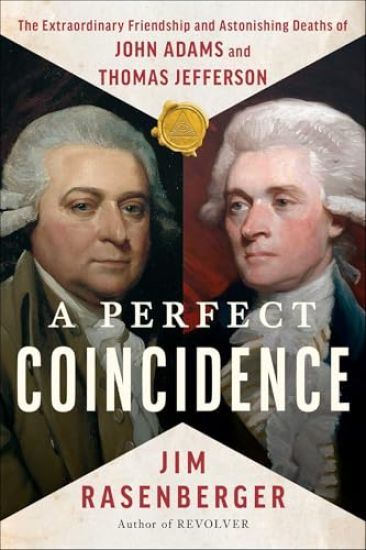
Great friendships are not always easy. The friendship between Founding Fathers John Adams and Thomas Jefferson was downright rocky, so much so that they're sometimes called the "Founding Frenemies." With this unique book, readers will learn about the relationship, friendly and otherwise, between two of the United States' most well-known founders. Readers follow along from their first meeting as delegates in the Continental Congress in 1775 to their deaths on the same day in 1826. Primary sources offer insight into their often-adversarial friendship. Historical photographs provide a window into the era.
Thomas Aquinas and John Duns Scotus are arguably the most celebrated representatives of the 'Golden Age' of scholasticism. Primarily, they are known for their work in natural theology, which seeks to demonstrate tenets of faith without recourse to premises rooted in dogma or revelation. Scholars of this Golden Age drew on a wealth of tradition, dating back to Plato and Aristotle, and taking in the Arabic and Jewish interpretations of these thinkers, to produce a wide variety of answers to the question 'How much can we learn of God?' Some responded by denying us any positive knowledge of God. Others believed that we have such knowledge, yet debated whether its acquisition requires some action on the part of God in the form of an illumination bestowed on the knower. Scotus and Aquinas belong to the more empirically minded thinkers in this latter group, arguing against a necessary role for illumination. Many scholars believe that Aquinas and Scotus exhaust the spectrum of answers available to this circle, with Aquinas maintaining that our knowledge is quite confused and Scotus that it is completely accurate. In this study, Alexander Hall argues that the truth about Aquinas and Scotus lies somewhere in the middle. Hall's book recommends itself to the general reader who is looking for an overview of this period in Western philosophy as well as to the specialist, for no other study on the market addresses this long-standing matter of interpretation in any detail.
This is a philosophical/historical examination of natural theology in the 'Golden Age' of scholastic philosophy, involving fundamental issues in metaphysics, the philosophy of language and the philosophy of religion. Thomas Aquinas and John Duns Scotus are arguably the most celebrated representatives of the 'Golden Age' of scholasticism. Primarily, they are known for their work in natural theology, which seeks to demonstrate tenets of faith without recourse to premises rooted in dogma or revelation. Scholars of this Golden Age drew on a wealth of tradition, dating back to Plato and Aristotle, and taking in the Arabic and Jewish interpretations of these thinkers, to produce a wide variety of answers to the question 'How much can we learn of God?' Some responded by denying us any positive knowledge of God. Others believed that we have such knowledge, yet debated whether its acquisition requires some action on the part of God in the form of an illumination bestowed on the knower. Scotus and Aquinas belong to the more empirically minded thinkers in this latter group, arguing against a necessary role for illumination. Many scholars believe that Aquinas and Scotus exhaust the spectrum of answers available to this circle, with Aquinas maintaining that our knowledge is quite confused and Scotus that it is completely accurate. In this study, Alexander Hall argues that the truth about Aquinas and Scotus lies somewhere in the middle. Hall's book recommends itself to the general reader who is looking for an overview of this period in Western philosophy as well as to the specialist, for no other study on the market addresses this long-standing matter of interpretation in any detail. "Continuum Studies in Philosophy" presents cutting-edge scholarship in all the major areas of research and study. The wholly original arguments, perspectives and research findings in titles in this series make it an important and stimulating resource for students and academics from a range of disciplines across the humanities and social sciences.
This book has been considered important throughout the human history, and so that this work is never forgotten we have made efforts in its preservation by republishing this book in a modern format for present and future generations. This whole book has been reformatted, retyped and designed. These books are not made of scanned copies of their original work and hence the text is clear and readable.
The 18th century was a wealth of knowledge, exploration and rapidly growing technology and expanding record-keeping made possible by advances in the printing press. In its determination to preserve the century of revolution, Gale initiated a revolution of its own: digitization of epic proportions to preserve these invaluable works in the largest archive of its kind. Now for the first time these high-quality digital copies of original 18th century manuscripts are available in print, making them highly accessible to libraries, undergraduate students, and independent scholars.Delve into what it was like to live during the eighteenth century by reading the first-hand accounts of everyday people, including city dwellers and farmers, businessmen and bankers, artisans and merchants, artists and their patrons, politicians and their constituents. Original texts make the American, French, and Industrial revolutions vividly contemporary.++++The below data was compiled from various identification fields in the bibliographic record of this title. This data is provided as an additional tool in helping to insure edition identification: ++++British LibraryT096499With a prefatory letter signed: R. W. London?, 1708] 2],23, 1]p.; 4
Studienarbeit aus dem Jahr 2010 im Fachbereich Politik - Politische Theorie und Ideengeschichte, Note: 2,0, Johannes Gutenberg-Universit t Mainz (Institut f r Politikwissenschaft), Veranstaltung: Politische Theorie, Sprache: Deutsch, Abstract: Die Begr ndung und Legitimierung politischer Herrschaft ist bis heute eine bedeutende Frage in der politischen Philosophie. Der Grund ist eindeutig: Es l sst sich kein Zustimmungsakt des Menschen ausmachen, in welchem er dem Staat, in den er hineingeboren wird, zustimmt und sich seiner Macht unterwirft. Der Gesellschaftsvertrag als ein Vertrag, in dem die Menschen der Gr ndung eines Staates zugestimmt haben oder zustimmen w rden, ist die bedeutendste Argumentationsfigur der neuzeitlichen politischen Philosophie, mit deren Hilfe die Staatsgewalt begr ndet werden soll. Der Philosoph und Vertragstheoretiker Thomas Hobbes hat in seinem bis heute viel diskutierten Werk "Leviathan" dieses Vertragsargument ebenso zur Legitimation des Staates genutzt wie der Vertragstheoretiker John Locke, der 49 Jahre nach Erscheinung des Leviathan im Jahr 1689 das Werk "Zwei Abhandlungen ber die Regierung" ver ffentlichte. Die Theorien des Gesellschaftsvertrags von Hobbes und Locke beginnen beide mit der Beschreibung eines Naturzustandes, womit ein vorstaatlicher Zustand ohne politische Herrschaft gemeint ist. Dieser Naturzustand ist f r ihre Argumentationen von gro er Bedeutung, denn er zeigt zum einen die Notwendigkeit eines Staates und somit Gesellschaftsvertrages auf, und er legt zum anderen die Gegebenheiten fest, unter denen dieser Gesellschaftsvertrag abgeschlossen wird. Wie wichtig die Naturzustandsbeschreibung ist, zeigt sich letztlich daran, dass Hobbes auf dessen Grundlage eine absolutistische, Locke hingegen eine liberal-demokratische Herrschaftsordnung begr ndet. Aufgrund dieser Bedeutsamkeit wird in dieser Hausarbeit ein Vergleich der Naturzustandskonzeptionen von Hobbes und Locke vorgenommen.
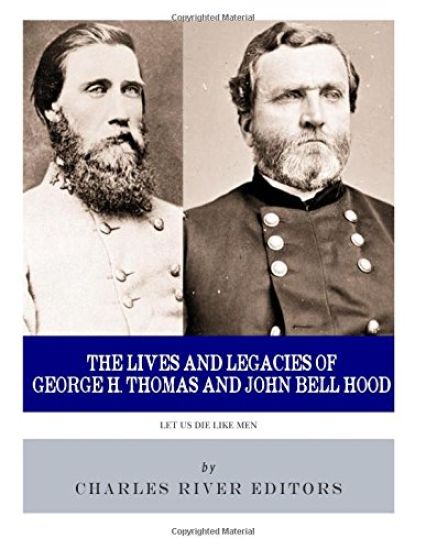
*Includes maps and pictures of Hood, Thomas, and important people, places, and events. *Includes quotes from Hood's memoir describing his fighting in major battles like Antietam and Gettysburg. *Discusses the relationship between Thomas and Hood. " Ulysses S. Grant and George H. Thomas deserve] monuments like those of Nelson and Wellington in London, well worthy to stand side by side with the one which now graces our capitol city of 'George Washington.'" - William Tecumseh Sherman "It could scarcely be said that any of the officers in Longstreet's corps] ... save one had by this date displayed qualities that would dispose anyone to expect a career of eminence. The exception was Hood. ... Anyone who had followed the operations of the Army after Gaines's Mill would have said that of all the officers under Longstreet, the most likely to be a great soldier was Hood." - Douglas Southall Freeman, Lee's Lieutenants The lives and legacies of George H. Thomas and John Bell Hood have been tied to each other for nearly 150 years, and no two Civil War generals could provide a more stark juxtaposition. Hood was an adopted son and a popular figure in the South, where he was widely viewed as both gallant and chivalrous (Mary Chesnut wrote in her famous diary that he was "a beau-ideal of the wild Texans"). Thomas, a Native Virginian, was disowned by his own family and reviled throughout the South for staying with the Union. The intimidating Hood began to make a name for himself as a brigade commander in the Army of Northern Virginia under new commander Robert E. Lee during the Seven Days Battles in 1862, after which he was promoted to division command. For the next several campaigns, he distinguished himself while leading a division under General James Longstreet's I Corps., fighting at places like Antietam, Gettysburg and Chickamauga. Ultimately, Hood's reputation would be undone by his former artillery instructor and antebellum superior: George H. Thomas. Thomas scored almost inconceivable successes at Missionary Ridge, Franklin, and Nashville, and he also skillfully fought at Perryville, Stones River, and in Sherman's Atlanta Campaign. Despite all of those successes, however, Thomas is best remembered as "The Rock of Chickamauga" for an impromptu defensive stand on Horseshoe Ridge that prevented the destruction of the Union army and allowed it to successfully retreat to Chattanooga. Franklin and Nashville would come at Hood's expense. In 1864, Joseph E. Johnston continued to move in the face of Sherman's armies back toward Atlanta, eventually leading to Hood's promotion to command of the Army of Tennessee. Hood aggressively led a series of offensive attacks, failing to dislodge Sherman and only damaging his own army. Sherman eventually took Atlanta anyway. Hood's leadership only got worse during the final months of 1864, culminating in the Franklin-Nashville campaign in which he ordered a massive frontal attack at the Battle of Franklin that left many of his top officers, like Patrick Cleburne, dead on the field. Civil War historian Wiley Ford noted of the campaign, "Never had there been such an overwhelming victory during the Civil War-indeed, never in American military history." After his disgraceful finish, Hood managed to write an account of his service in the Civil War, most of which sought to defend his record while pinning the blame for the Atlanta campaign on General Johnston. Conversely, Thomas eschewed self-promotion and aggrandizement, burning his papers and thus letting his record (and others) determine his legacy. Let Us Die Like Men chronicles the amazing lives and careers of the two commanding generals who fought together before they fought against each other, and it analyzes how the two generals ultimately determined each other's legacy in 1864. Along with pictures, you will learn about Hood and Thomas like you never have before.