
Kirjahaku
Etsi kirjoja tekijän nimen, kirjan nimen tai ISBN:n perusteella.
1000 tulosta hakusanalla Jon Hansen
Catholic Catechism for Kids to Learn the Creed, Commandments & Sacraments
Ashley L Johansen
ASHLEY L. JOHANSEN
2026
pokkari
52 Weeks of Systematic Theology for Kids For Knowing God, Understanding Biblical Truths & Build Lasting Faith
Ashley L Johansen
ASHLEY L. JOHANSEN
2026
pokkari

Systematic Theology for Catholics Understanding Catholic Doctrine and Living Your Faith with Confidence
Ashley L Johansen
ASHLEY L. JOHANSEN
2026
pokkari

Endelig!Efter 30 års ventetid kan Liverpool FC igen kalde sig for engelske mestre. You Never Walked Alone er hyldestbogen, der analytisk kortlægger vejen til titlen, når forfatterne og mangeårige Liverpool-fans Karsten Krogh og Carsten Gottlieb Johansen dykker ned i den i sandhed mindeværdige sæson. En sæson der så Liverpool distancere alle andre med historisk eftertryk, men også oplevede fodbolden, det britiske samfund og resten af verden gå i stå. Liverpools mesterskab står ikke i skyggen af covid-19 udbruddet; at sæsonen overhovedet blev spillet færdig og de rødblusede kunne lade sig kåre som mere end fortjente vindere blev Premier Leagues vidnesbyrd om livets tilbagevenden. You Never Walked Alone går helt tæt på Jürgen Klopps forvandling af Liverpool FC fra at være de måske egnede til suveræne vindere. Sæsonen 2019/20 skal ikke ses eller forstås som et fodbold-år med en isoleret enestående præstation – det er en triumf, der står på skulderne af historien. Det perspektiv dykker You Never Walked Alone ned i og folder ud. Hvorfor gik det galt, hvordan endte det med en så langvarig mesterskabstørke, og hvordan fandt Liverpool hjem igen som Englands bedste hold med fans, der aldrig mistede troen på klubben, fællesskabet og hinanden.

“Et rimelig ambitiøst kor” – Sådan beskrev Jens Johansen det, da han sendte invitationer ud til den første optagelsesprøve i januar 1991.Mere end 30 år senere har det rytmiske a cappella-kor Vocal Line opnået langt mere, end den nu 71-årige dirigent og korleder havde turdet drømme om. Men hvor går man hen med sit livsværk, når man har nået alle sine milepæle og mere til? Og hvornår er det tid til at give stemmegaflen videre og lade nye kræfter tage over?Bogen giver et ærligt og kærligt indblik i Vocal Lines kultur og historie, men også et nuanceret portræt af manden bag det ikoniske musikfællesskab, som har skabt en helt ny genre af rytmisk vokalmusik, der er nået langt ud over Danmarks grænser.Historierne er fortalt til forfatter Maria Lya Leerbeck af bl.a. dirigent Jens Johansen, meddirigenterne Morten Kjær, Malene Rigtrup, Tine Fris-Ronsfeld, Line Groth, Gunnar Sigfusson, skiftende lydteknikere, bestyrelsesformænd og sangere gennem tiden, samt Jens' hustru og to døtre.

Social Media Across Everyday Contexts
Malene Charlotte Larsen og Stine Liv Johansen
SAMFUNDSLITTERATUR
2024
nidottu
More than anywhere else in the world, social media platforms are integrated into everyday life in the Nordic welfare states. This book examines the role of social media in the everyday lives of children and young people in the Nordics. Through a practice theoretical lens, the book offers a nuanced examination of the complex relationship between children, young people and social media.The book covers themes related to play, learning, social relations, identity, self-presentation, sexuality, gaming and datafication, and discusses these themes in the light of ongoing debates, including current as well as future ethical considerations. The book is co-authored by associate professors Malene Charlotte Larsen and Stine Liv Johansen, who both have extensive research experience in the field of social media and digital childhood and youth. The book includes contributions from guest authors, each possessing significant expertise in specific areas related to the overarching topic.Social Media Across Everyday Contexts – Digital Childhood and Youth in the Nordics is relevant for students and practitioners with an interest in children and young people’s digital media use.

Algoritmer og ansvar
Henrik Kragh Sørensen og Mikkel Willum Johansen
SAMFUNDSLITTERATUR
2025
nidottu
Vi har computere i vores biler og køleskabe, på vores håndled, skriveborde og i vores telefoner. Men hvordan og hvorfor er de blevet udviklet? Hvordan virker de – og kan vi stole på dem? Computere og informationsteknologi er rygraden i det moderne liv. Det har givet dataloger og it-professionelle en central rolle i samfundet, men også et større ansvar.Algoritmer og ansvar. De datalogiske fags videnskabsteori giver en sammenhængende fremstilling af datalogiens videnskabsteori. Bogen starter med at undersøge, hvilken form for videnskab datalogi egentlig er. Er det ingeniørkunst eller anvendt matematik? Bogen følger algoritmebegrebet fra babylonske stentavler til sociale medier, og den undersøger baggrunden for de programmeringssprog, vi bruger i dag. Bogen ser på computerens rolle i big data-modellering og på de forskellige forsøg, man siden 1950’erne har gjort for at få computere til at tænke. De erkendelsesteoretiske analyser af teknologien viser dens styrke, men afslører også nogle fundamentale begrænsninger i forhold til, hvor sikker computerteknologi kan blive. Med det afsæt diskuterer bogen i de sidste kapitler, hvilket etisk og socialt ansvar IT-professionelle har for den teknologi, de er med til at udvikle. Hvad gør man, hvis man er ansat til at udvikle et produkt, man ikke vil give til sine egne børn?

100 lærerige opgaver til Sigurd fortæller H.C. Andersens eventyr
Dennis Hornhave Jacobsen og Marie Louise Johansen
Forlaget Klim
2019
nidottu
Kreativt og lærerigt materiale til Sigurd fortæller H.C. Andersens eventyr til brug derhjemme eller i skolen. Materialet består af en hovedbog med opgaver til hvert eventyr, der varierer mellem kreative opgaver med formgivning og musik og fordybelsesopgaver, hvor barnet dykker ned i H.C. Andersens særlige måde at bruge sproget på. Det er kendetegnende for materialet, at fantasien og fortælleglæden er i fokus. Bogen indeholder desuden masser af ‘fun facts’ om H.C. Andersens liv. Skal bogen bruges i skolesammenhæng, kan læreren på materialets hjemmesidefinde en lærervejledning, der bygger på ‘Den Andersenske metode’, udviklet af Jacob Bøggild fra H.C. Andersen Centret på Syddansk Universitet og museumsinspektør Henrik Lübker, ansvarlig for formidlingen i H.C. Andersens Hus og Barndomshjem.

24 fortællinger fra og om Amager. Den populære bog – nu som paperback!Den ene halvdel af bogen består af de rene røverhistorier, og den anden halvdel er udvalgte fortællinger fra Amagers spændende historie. "For hele familien", hed det i lektørudtalelsen, da bogen udkom første gang i 2017. "Ideen med at mixe de to fortælleformer er ret genial," lød anmeldelsen på Fortidsformidling.dk Fortællingerne kommer vekselvis, og man kan undervejs selv bestemme, om det er en fiktiv eller en faktuel historie, man ønsker at læse. Eller at få læst højt. Bogen er velegnet for børn fra ca. 6 år. Det markeres tydeligt ved hjælp af farverne på siderne hvilken type historie, der er tale om: gul for falsk, grøn for sand. Der er dermed lagt i ovnen til munter, interaktiv læsning. Forfatterne har bestræbt sig på at komme godt omkring på øen og i århundrederne. Fra Kløvermarken til Kongelunden, fra Dragør til Islands Brygge. Fra oldtiden til nutiden.Bogen rummer masser af muntre farveillustrationer (de fleste lavet af Boris Boll-Johansen), hvortil kommer interessante og sjældne historiske Amager-fotos i sorthvid, der viser, hvordan øen engang så ud. Hvad de falske historier angår: Forfatter og tegner Boris Boll-Johansen lader en fiktiv figur, borgmesteren af Amager, opleve lidt af hvert på øen. Borgmesteren har tilsyneladende en finger med i spillet, da øen Prøvestenen dannes. Da Lufthavnen bliver til. Da Dragørborgerne har succes med at smide en drage på porten engang i middelalderen. Og meget andet. Man kender muligvis den gakkede tilgang til (lokal)historien fra Boll-Johansens bog- og podcast-serie: Sindssygt langt ude københavnske godnathistorier. Hvad de rigtige historier angår: Historiker Trine Jerichau Roslev beskæftiger sig i et ukompliceret, børnevenligt sprog med de mange spændende, dramatiske – men altså REELLE – historier, der har fundet sted på Amager. Fx dengang i 1658 da svenskerne fik tæsk på øen. Eller dengang Københavns toiletaffald blev lagret omkring Kløvermarken (og fødte udtrykket “Lorteøen”). Eller dengang dygtige hollandske bønder nærmest erobrede Store Magleby på Christian d. 2’s foranledning – og endte med at slå rødder så dybe, at deres spor stadig kan følges. Trine Jerichau Roslev har beskæftiget sig med historieformidling på populærhistoriske magasiner.

Det der ligger udenfor
Mei Hirschmann Bieber Karen Bue Alexandra Moltke Johansen Dorte Schou; Jonas Jaidane Julia Jayko Fossland Jacob Grønlykke Maria Hunsøe Emilie A. Haugaard Jette Thastum Maj-Britt Boa Tine Enger Maja Funch Maria Kleivan McIntyre
Gladiator
2022
nidottu
Jeg kalder det DEN LILLE FASCISME For jeg er kvindener fangener hustruen er barneter slavinden og jeggir ikke en krone for jeres politiske standpunkter.Bente Clods digt Privatlivets politiske potentiel fra 1976 slutter med fynd og klem. Det indrammer tidsånden ret præcist. Og genkender man lidt af dette tankegods her i nutiden, er det nok, fordi historien har det med at gentage sig selv.Digtet stod trykt i Gyldendals tidsskrift Fælleden (1976–79). Det var et tidskrift for “politisk kultur og kritisk kunst”, som det hed i det første nummers program erklæring. Fronterne var begyndt at fryse til i de år, det var det sprudlende ungdomsoprørs betontunge bagbrandert. Ideologikritik var et af nøgleordene. Kunsten skulle stå i en højere sags tjeneste. “Der hvor de to begreber ( jf. programerklæringen, red.) flyder sammen og bliver til samme sprog, har navnlig vores interesse,” fastslog redaktionen. Alligevel skulle der være “plads til mangt og meget”, men man frabad sig laksko og urkæder. Tidsskriftet endte som et ret iltfattigt foretagende, en klub for de indforståede, og efter bare tre år gik det ind. Nogenlunde samtidig var forfatteren Erik Aalbæk Jensen i gang med sit ottebindsværk om Livet på Øerne. Han gik mindre dogmatisk til værks; han var først og fremmest nysgerrig. Han betragtede efterkrigstidens Danmark fra et andet perspektiv: fra den yderste udkant, landets mange små øsamfund. Allerede dengang var de begyndt at gå i opløsning på grund af fraflytning og modernisering. Hans greb om stoffet er ganske enkelt: Han rejste rundt fra ø til ø og talte med de folk, han mødte på sin vej. Levnedsbeskrivelser, verden af i går. Hans eneste dagsorden var at lytte.Lidt nordvest for Marstal på Ærø, nær landsbyen Ommel sad den da 85-årige Peter Hansen på sin bænk i morgensolen og kiggede over på Halmø, hvor han som landmand havde boet og haft sit udkomme. Nu var den lille ø blevet købt af en udenlandsdansker, der kun dukkede op et par uger om sommeren og ellers overlod driften til en forvalter. Peter Hansen kunne ikke forstå, hvorfor den nye forvalter helt tankeløst pløjede i den gale retning hen over bankerne derovre, så mulden og regnvandet blev skyllet ned i dalen. Og forvalteren burde da også lette plovskæret en kende oppe på ryggen af øen, så det ikke skar så dybt, der hvor muldlaget lå tyndest. Det hele lignede dumt, tilfældigt hastværk, noget, der bare skulle overstås.Vi forsøger at forstå verden. Er det mon for at blive klogere på os selv? Eller er det, fordi vi i sidste ende ikke kan holde ud at tænke på livet som én stor ophobning af tilfældigheder? I hvilken retning vender vi blikket? Mod de store politiske forklaringsmodeller i pagt med tidsånden eller mod plovskæret på Halmø?Der må gemme sig en orden et sted. Som Inger Christensen bemærker i sit essay Tilfældighedens ordnende virkning (1994) : “Vi kunne måske også forestille os tilfældigheden som en diffus energikilde, som alene ved sin tilstedeværelse havde en ordnende virkning … Og forestille os, at vi gennem dette tilfældighedens medløb fik vi et værn mod vores egen overproduktion af orden.”“Mennesket skaber Historien i en forvirret blanding af bevidsthed og blindhed,” skriver hun et andet sted i essaysamlingen, og fortsætter: “At finde på en sandhed der gør tilfældigheden nødvendig/ og forestille sig et tegnsystem der transmitterer blindheden/ kort sagt jeg betragter det som forfatterens opgave/ at beskæftige sig med det umulige, det ufuldkomne, det der ligger udenfor”.Det er et godt sted at starte.

By shifting American security policy away from maximizing military power for the United States and toward maximizing human security for all, policymakers and citizens can also maximize national security for the United States and sustainable peace for the world. Why do war and political violence persist? Political realists argue that violent conflict and the struggle for power are inherent in the international system, and there is little we can do but manage it. However, as Robert Johansen argues in this path-breaking work, there are other ways forward. In Where the Evidence Leads, Johansen develops an "empirical realist" theory to enable the United Sates to respond more effectively to rising security threats. Together, peace research and security studies show that more security benefits are likely to result from maximizing the "causes" or correlates of peace than from maximizing military power. Ironically, a global grand strategy for human security, with national security folded into it, is likely to produce more security for the United States than a national security strategy. Peace reigns when states implement peace correlates, which range from addressing all nations' security fears to making life more predictable through better global governance. This approach, respectful of forgotten insights from Hans Morgenthau and others, revolutionizes thinking about national security policy by bringing it into a human security framework. The analysis shows that the anarchic, militarized balance-of-power system can be gradually changed with help from enhanced lawmaking, enforcement, and governance capacities. This thought-provoking book builds bridges between past policies-many of which have failed-and more deft ways of handling new realities that focus on building peace. In a world of threats, this book opens doors onto a future of sustainable peace, security, and hope.

By shifting American security policy away from maximizing military power for the United States and toward maximizing human security for all, policymakers and citizens can also maximize national security for the United States and sustainable peace for the world. Why do war and political violence persist? Political realists argue that violent conflict and the struggle for power are inherent in the international system, and there is little we can do but manage it. However, as Robert Johansen argues in this path-breaking work, there are other ways forward. In Where the Evidence Leads, Johansen develops an "empirical realist" theory to enable the United Sates to respond more effectively to rising security threats. Together, peace research and security studies show that more security benefits are likely to result from maximizing the "causes" or correlates of peace than from maximizing military power. Ironically, a global grand strategy for human security, with national security folded into it, is likely to produce more security for the United States than a national security strategy. Peace reigns when states implement peace correlates, which range from addressing all nations' security fears to making life more predictable through better global governance. This approach, respectful of forgotten insights from Hans Morgenthau and others, revolutionizes thinking about national security policy by bringing it into a human security framework. The analysis shows that the anarchic, militarized balance-of-power system can be gradually changed with help from enhanced lawmaking, enforcement, and governance capacities. This thought-provoking book builds bridges between past policies-many of which have failed-and more deft ways of handling new realities that focus on building peace. In a world of threats, this book opens doors onto a future of sustainable peace, security, and hope.
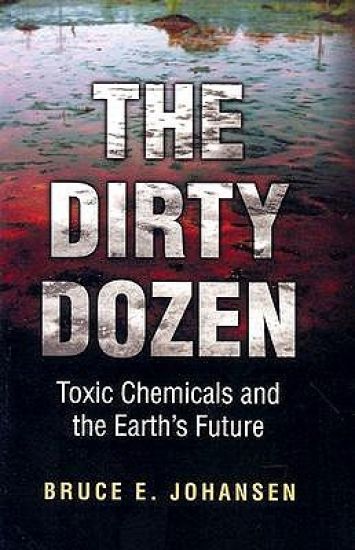
Forty years after the publication of Rachel Carson's Silent Spring, this important study examines the history, industrial uses, and harmful effects of the twelve most commonly used organochloride chemicals. All have been fully or partially banned by the Stockholm Protocol, an international treaty signed by about 120 countries in December 2000. Among the twelve are the dioxins (the active ingredient in Agent Orange) and polychlorinated byphenyls (PCBs), which are toxic in minute quantities. Johansen pays special attention to the Inuit of the Arctic, where these chemicals have been bio-accumulating to dangerous levels, moving up the food chain to a degree of toxicity that some Inuit mothers are no longer able to safely breast-feed their infants.The polar stratospheric ozone has been devastated by emissions of chlorofluorocarbons (CFCs), and new scientific findings connect global warming near the Earth's surface to significant cooling in the stratosphere. This synergy aggravates ozone depletion because the chemical reactions that destroy the ozone become more energetic as temperatures drop. Synthetic toxins have taken their toll on minority ethnic groups in the United States, and persistent organic pollutants have inflicted physiological damage on humans and other animals. Finally, Johansen explores the estrogenic effects of such chemicals. Sperm counts have declined as much as 50% in 50 years.

This book is about people whose beliefs and affiliations have opposed powerful interests in the present-day United States. This eclectic group of people and controversial issues, from climate-change scientists who have been censored by the Bush administration to Muslims accused of terrorism, have one thing in common. All of them straddle the limits of what Noam Chomsky has called permissible debate as defined by dominant political and economic institutions and individuals. The central thesis is that restriction of free inquiry is harmful to our culture because it inhibits the search for knowledge. Johansen presents case studies in the borderlands of free speech in a Jeffersonian cast—an intellectual framework assuming that open debate—even of unpopular ideas—is essential to accurate perception of reality.This book is about people whose ideological circumstances have found them opposing established beliefs in our times—scholars advocating the Palestinian cause in a very hostile intellectual environment, for example, as well as climate scientists defending themselves against the de-funding of their laboratories by defenders of fossil-fuel interests; opponents of creation science under assault for teaching what once was regarded as household-variety biology (a.k.a. Darwinism); Marxists in a political system dominated by neoconservatives. The central thesis that unites this diverse array of controversies is that shutting down free inquiry—most notably for points of view deemed unpopular—dumbs us all down by restraining the search for knowledge, which demands open inquiry.We have been told when going to war, as in Iraq, that freedom isn't free, the unstated assumption being that our armed forces are fighting and dying to safeguard our civil rights at home and abroad. During recent years, however, freedom to inquire and debate without retribution has been under assault in the United States. This assault has been carried out under a distinctly Orwellian cast, under Newspeak titles such as the Patriot Act, parts of which might as well be described more honestly as the Restriction of Freedom of Inquiry Act. The information gathered here will interest (and probably anger) anyone who is concerned with protecting robust, free inquiry in a nation that takes seriously its freedom to speak out, and to define truth through open debate.

Native American Political Systems and the Evolution of Democracy
Bruce E. Johansen
Greenwood Press
1996
sidottu
For more than a decade scholars have debated the question of whether American Indian confederacies, primarily the Iroquois, helped influence the formation of U.S. basic law. The idea has sparked lively debate in the public arena as well, with Canadian diplomat Durling Voyce-Jones contending it shows a paradigm shift in our thinking, Patrick Buchanan calling it idiocy, and George Will saying it's fiction. For the first time, this bibliography brings together some 450 citations on the debate. The work describes the debate in the words of one of its major participants, Bruce E. Johansen, author of three other books on the subject.The bibliography also takes the reader back to suggestions of the idea long before the contemporary debate. Lakota author Charles Eastman brought up the subject in 1919, Mohawk teacher Ray Fadden developed it in the 1940s, and John F. Kennedy touched on it in 1960. Bringing the debate to its full flower in the present day, the bibliography illustrates both fervent support and equally emphatic denial in the academy and the public press. The book is both a scholarly tool and a lively exploration of issues bearing on the study of history and multiculturalism.
Integrating American Indian law and Native American political and legal traditions, this encyclopedia includes detailed descriptions of nearly two dozen Native American Nations' legal and political systems such as the Iroquois, Cherokee, Choctaw, Navajo, Cheyenne, Creek, Chickasaw, Comanche, Sioux, Pueblo, Mandan, Wyandot, Powhatan, Mikmaq, and Yakima. Although not an Indian law casebook, this work does contain outlines of many major Indian law cases, congressional acts, and treaties. It also contains profiles of individuals important to the evolution of Indian law. This work will be of interest to scholars in several fields, including law, Native American studies, American history, political science, anthropology, and sociology.
Economic themes underlie many aspects of Native American history from the fur trade, the devastating impact of European diseases, and the taking of Native American land to the current issues of uranium mining on Navajo land and casino gambling. Yet this is the first encyclopedia to analyze Native American history against an economic background. Describing the impact of Euro-American settlement from a Native American perspective, the book profiles the economies of roughly forty Native American tribes and nations from pre-Columbian times to the present. Other entries focus on demographics, such historical issues as the Allotment Act of 1887, and modern efforts at economic development. The book provides a valuable guide to an important area in Native American Studies and American economic history.Basing entries on Native nations, the work includes peoples living in present-day Canada, Mexico, Guatemala, and the United States. Along with nation profiles, the book includes historical information on demographics, economic conditions on reservations, and the economic basis for present-day attempts to increase Native American sovereignty. It is a concise, readable account of Native American history in a format suitable for undergraduates.
Encyclopedia of the Haudenosaunee (Iroquois Confederacy)
Bruce E. Johansen; Barbara Alice Mann
Greenwood Press
2000
sidottu
A comprehensive reference work on the Haudenosaunee (Iroquois Confederacy), containing over 200 entries covering Haudenosaunee history, present-day issues, and contributions to general North American culture. Haudenosaunee (People of the Longhouse) is the name the Iroquois use for their confederacy (Iroquois is the name given them by the French). This encyclopedia surveys the histories of the six constituent nations of the confederacy (Seneca, Cayuga, Onondaga, Oneida, Mohawk, and Tuscarora, adopted about 1725). Several entries also trace ways in which the practices of the Iroquois have filtered into general North American society.