Kirjojen hintavertailu. Mukana 11 241 044 kirjaa ja 12 kauppaa.

Kirjahaku

Etsi kirjoja tekijän nimen, kirjan nimen tai ISBN:n perusteella.

1000 tulosta hakusanalla Jon Stratton

Flannery O'Connor and Cold War Culture

Flannery O'Connor and Cold War Culture

Jon Lance Bacon

Cambridge University Press
1994
sidottu
This book reconsiders Flannery O’Connor, known primarily for her Catholicism. By recovering the historical circumstances in which Flannery O’Connor wrote her fiction, Jon Lance Bacon reveals an artist concerned with the cultural effects of the conflict that dominated American political discourse after 1945: the Cold War. O’Connor resisted the consensus that demanded uncritical celebration of American life - including consumerism. Bacon relates her fiction to political texts, sociological studies, advertisements, movies, television programmes, paintings, editorial cartoons and comic books. This interdisciplinary approach transforms O’Connor from a regional writer, with a religious message that transcends social and political questions, into a national figure, with a secure place in literary histories that address such questions.
Speaking for the People

Speaking for the People

Jon Lawrence

Cambridge University Press
1998
sidottu
Speaking for the People, first published in 1998, draws our attention to the problematic nature of politicians' claims to represent others, and in doing so it challenges conventional ideas about both the rise of class politics, and the triumph of party between 1867 and 1914. The book emphasises the strongly gendered nature of party politics before the First World War, and suggests that historians have greatly underestimated the continuing importance of the 'politics of place'. Most importantly, however, Speaking for the People argues that we must break away from teleological notions such as the 'modernisation' of politics, the taming of the 'popular', or the rise of class. Only then will we understand the shifting currents of popular politics. Speaking for the People represents a major challenge to the ways in which historians and political scientists have studied the interaction between party politics and popular political cultures.
Institutional Design in Post-Communist Societies

Institutional Design in Post-Communist Societies

Jon Elster; Claus Offe; Ulrich K. Preuss

Cambridge University Press
1998
sidottu
The authors of this book have developed a new and stimulating approach to the analysis of the transitions of Bulgaria, the Czech Republic, Hungary, and Slovakia to democracy and a market economy. They integrate interdisciplinary theoretical work with elaborate empirical data on some of the most challenging events of the twentieth century. Three groups of phenomena and their causal interconnection are explored: the material legacies, constraints, habits and cognitive frameworks inherited from the past; the erratic configuration of new actors, and new spaces for action; and a new institutional order under which agency is institutionalized and the sustainability of institutions is achieved. The book studies the interrelations of national identities, economic interests, and political institutions with the transformation process, concentrating on issues of constitution making, democratic infrastructure, the market economy, and social policy.
Institutional Design in Post-Communist Societies

Institutional Design in Post-Communist Societies

Jon Elster; Claus Offe; Ulrich K. Preuss

Cambridge University Press
1998
pokkari
The authors of this book have developed a new and stimulating approach to the analysis of the transitions of Bulgaria, the Czech Republic, Hungary, and Slovakia to democracy and a market economy. They integrate interdisciplinary theoretical work with elaborate empirical data on some of the most challenging events of the twentieth century. Three groups of phenomena and their causal interconnection are explored: the material legacies, constraints, habits and cognitive frameworks inherited from the past; the erratic configuration of new actors, and new spaces for action; and a new institutional order under which agency is institutionalized and the sustainability of institutions is achieved. The book studies the interrelations of national identities, economic interests, and political institutions with the transformation process, concentrating on issues of constitution making, democratic infrastructure, the market economy, and social policy.
Alexis de Tocqueville, the First Social Scientist

Alexis de Tocqueville, the First Social Scientist

Jon Elster

Cambridge University Press
2009
sidottu
The book proposes a new interpretation of Alexis de Tocqueville that views him first and foremost as a social scientist rather than as a political theorist. Drawing on his earlier work on the explanation of social behavior, Elster argues that Tocqueville's main claim to our attention today rests on the large number of exportable causal mechanisms to be found in his work, many of which are still worthy of further exploration. Elster proposes a novel reading of Democracy in America in which the key explanatory variable is the rapid economic and political turnover rather than equality of wealth at any given point in time. He also offers a reading of The Ancien Régime and the Revolution as grounded in the psychological relations among the peasantry, the bourgeoisie, and the nobility. Consistently going beyond exegetical commentary, he argues that Tocqueville is eminently worth reading today for his substantive and methodological insights.
Closing the Books

Closing the Books

Jon Elster

Cambridge University Press
2004
pokkari
An analysis of transitional justice - retribution and reparation after a change of political regime - from Athens in the fifth century BC to the present. Part I, ‘The Universe of Transitional Justice’, describes more than thirty transitions, some of them in considerable detail, others more succinctly. Part II, ‘The Analytics of Transitional Justice’, proposes a framework for explaining the variations among the cases - why after some transitions wrongdoers from the previous regime are punished severely and in other cases mildly or not at all, and victims sometimes compensated generously and sometimes poorly or not at all. After surveying a broad range of justifications and excuses for wrongdoings and criteria for selecting and indemnifying victims, the book concludes with a discussion of three general explanatory factors: economic and political constraints, the retributive emotions, and the play of party politics.
Information Flow

Information Flow

Jon Barwise; Jerry Seligman

Cambridge University Press
1997
sidottu
Information is a central topic in computer science, cognitive science, and philosophy. In spite of its importance in the ‘information age,’ there is no consensus on what information is, what makes it possible, and what it means for one medium to carry information about another. Drawing on ideas from mathematics, computer science, and philosophy, this book addresses the definition and place of information in society. The authors, observing that information flow is possible only within a connected distribution system, provide a mathematically rigorous, philosophically sound foundation for a science of information. They illustrate their theory by applying it to a wide range of phenomena, from file transfer to DNA, from quantum mechanics to speech act theory.
Democracy from Above

Democracy from Above

Jon C. Pevehouse

Cambridge University Press
2005
pokkari
Since the momentous events of the late 1980s, democratic transition has been a widely studied phenomenon. Most scholars who have investigated the causes and implications of the global trend to democracy have argued that domestic politics is the leading determinant in the success or failure of transitions to democracy. In this book, Jon Pevehouse argues that international factors, specifically regional organizations, play an important role in the transition to and endurance of democracy. Domestic elites use membership of regional organizations to advance the cause of democracy since these organizations can manipulate the costs and benefits of democracy to important societal groups such as business elites or the military. Six cases (Hungary, Peru, Greece, Paraguay, Guatemala, and Turkey) examine the causal processes behind the statistical association between regional organizations and democratization. These findings bridge international relations and comparative politics while also providing guidelines for policy-makers who wish to use regional organizations to promote democracy.
EMBOSS Developer's Guide

EMBOSS Developer's Guide

Jon C. Ison; Peter M. Rice; Alan J. Bleasby

Cambridge University Press
2011
pokkari
The European Molecular Biology Open Software Suite (EMBOSS) is a high quality, well documented package of open source software tools for molecular biology. EMBOSS includes extensive and extensible C programming libraries, providing a powerful and robust toolkit for developing new bioinformatics tools from scratch. The EMBOSS Developer's Guide is the official and definitive guide to developing software under EMBOSS. It includes comprehensive reference information and guidelines, including step-by-step instructions and real-world code examples: • Learn how to write fully-featured tools guided by the people who developed EMBOSS • Step-by-step guide to writing EMBOSS applications, illustrated with functional, deployed code • ACD file development - learn how to customise existing tools without coding, or design and write entirely new application interfaces • EMBOSS API programming guidelines - quickly master application development • Wrapping and porting applications under EMBOSS - learn how to incorporate third-party tools
Alchemies of the Mind

Alchemies of the Mind

Jon Elster

Cambridge University Press
1999
sidottu
Jon Elster has written a comprehensive, wide-ranging book on the emotions in which he considers the full range of theoretical approaches. Drawing on history, literature, philosophy and psychology, Elster presents a complete account of the role of the emotions in human behaviour. While acknowledging the importance of neurophysiology and laboratory experiment for the study of emotions, Elster argues that the serious student of the emotions can learn more from the great thinkers and writers of the past, from Aristotle to Jane Austen. He attaches particular importance to the work of the French moralists, notably La Rochefoucauld, who demonstrated the way esteem and self-esteem shape human motivation. The book also maintains a running dialogue with economists and rational-choice theorists. Combining methodological and theoretical arguments with empirical case-studies and written with Elster's customary verve and economy, this book has great cross-disciplinary appeal.
Deception and Democracy in Classical Athens

Deception and Democracy in Classical Athens

Jon Hesk

Cambridge University Press
2000
sidottu
This book, first published in 2000, is a full-length study of the representation of deceit and lies in classical Athens. Dr Hesk traces the ways in which Athenian drama, democratic oratory and elite prose-writing construct and theorize a relationship between dishonesty and civic identity. He focuses on the ideology of military trickery, notions of the 'noble lie' and the developing associations of rhetorical language with deceptive communication. Deception and Democracy in Classical Athens combines close analysis of Athenian texts with lively critiques of modern theorists and classical scholars. Athenian democratic culture was crucially informed by a nuanced, anxious and dynamic discourse on the problems and opportunities which deception presented for its citizenry. Mobilizing comparisons with twentieth-century democracies, the author argues that Athenian literature made deception a fundamental concern for democratic citizenship. This ancient discourse on lying highlights the dangers of modern resignation and postmodern complacency concerning the politics and morality of deception.
Alchemies of the Mind

Alchemies of the Mind

Jon Elster

Cambridge University Press
1998
pokkari
Jon Elster has written a comprehensive, wide-ranging book on the emotions in which he considers the full range of theoretical approaches. Drawing on history, literature, philosophy and psychology, Elster presents a complete account of the role of the emotions in human behaviour. While acknowledging the importance of neurophysiology and laboratory experiment for the study of emotions, Elster argues that the serious student of the emotions can learn more from the great thinkers and writers of the past, from Aristotle to Jane Austen. He attaches particular importance to the work of the French moralists, notably La Rochefoucauld, who demonstrated the way esteem and self-esteem shape human motivation. The book also maintains a running dialogue with economists and rational-choice theorists. Combining methodological and theoretical arguments with empirical case-studies and written with Elster’s customary verve and economy, this book has great cross-disciplinary appeal.
Rawls's 'A Theory of Justice'

Rawls's 'A Theory of Justice'

Jon Mandle

Cambridge University Press
2009
pokkari
A Theory of Justice, by John Rawls, is widely regarded as the most important twentieth-century work of Anglo-American political philosophy. It transformed the field by offering a compelling alternative to the dominant utilitarian conception of social justice. The argument for this alternative is, however, complicated and often confusing. In this book Jon Mandle carefully reconstructs Rawls's argument, showing that the most common interpretations of it are often mistaken. For example, Rawls does not endorse welfare-state capitalism, and he is not a 'luck egalitarian' as is widely believed. Mandle also explores the relationship between A Theory of Justice and the developments in Rawls's later work, Political Liberalism, as well as discussing some of the most influential criticisms in the secondary literature. His book will be an invaluable guide for anyone seeking to engage with this ground-breaking philosophical work.
The Growth of the Italian Economy, 1820–1960

The Growth of the Italian Economy, 1820–1960

Jon Cohen; Giovanni Federico

Cambridge University Press
2001
sidottu
This volume in the New Studies in Economic and Social History series examines Italy's transformation from a largely rural state in the nineteenth century to today's industrial powerhouse. At the time of unification in 1861, much of the country was backward, poor, and agrarian: few would have believed that a hundred years later Italy would become one of the seven largest industrial countries, its people among the wealthiest in the world. This process of development and structural change has generated an enormous and evolving literature, alive with controversies and compelling insights. New research and reinterpretation of existing data have led to a reevaluation of the nature of Italian Dualism, while revisions to national income accounts are modifying the traditional picture of economic growth. Jon Cohen and Giovanni Federico provide a concise, up-to-date account of this literature, highlighting new views on old issues, and signalling areas in need of further research.
Ulysses Unbound

Ulysses Unbound

Jon Elster

Cambridge University Press
2000
sidottu
Common sense suggests that it is always preferable to have more options than fewer, and better to have more knowledge than less. This provocative book argues that, very often, common sense fails. Sometimes it is simply the case that less is more; people may benefit from being constrained in their options or from being ignorant. The three long essays that constitute this book revise and expand the ideas developed in Jon Elster's classic study Ulysses and the Sirens. It is not simply a new edition of the earlier book, though; many of the issues merely touched on before are explored here in much more detail. Elster shows how seemingly disparate examples which limit freedom of action reveal similar patterns, so much so that he proposes a new field of study: constraint theory. The book is written in Elster's characteristically vivid style and will interest professionals and students in philosophy, political science, psychology, and economics.
The Growth of the Italian Economy, 1820–1960

The Growth of the Italian Economy, 1820–1960

Jon Cohen; Giovanni Federico

Cambridge University Press
2001
pokkari
This volume in the New Studies in Economic and Social History series examines Italy’s transformation from a largely rural state in the nineteenth century to today’s industrial powerhouse. At the time of unification in 1861, much of the country was backward, poor, and agrarian: few would have believed that a hundred years later Italy would become one of the seven largest industrial countries, its people among the wealthiest in the world. This process of development and structural change has generated an enormous and evolving literature, alive with controversies and compelling insights. New research and reinterpretation of existing data have led to a reevaluation of the nature of Italian Dualism, while revisions to national income accounts are modifying the traditional picture of economic growth. Jon Cohen and Giovanni Federico provide a concise, up-to-date account of this literature, highlighting new views on old issues, and signalling areas in need of further research.
The Cambridge Introduction to Charles Dickens

The Cambridge Introduction to Charles Dickens

Jon Mee

Cambridge University Press
2010
pokkari
Charles Dickens became immensely popular early on in his career as a novelist, and his appeal continues to grow with new editions prompted by recent television and film adaptations, as well as large numbers of students studying the Victorian novel. This lively and accessible introduction to Dickens focuses on the extraordinary diversity of his writing. Jon Mee discusses Dickens's novels, journalism and public performances, the historical contexts and his influence on other writers. In the process, five major themes emerge: Dickens the entertainer; Dickens and language; Dickens and London; Dickens, gender, and domesticity; and the question of adaptation, including Dickens's adaptations of his own work. These interrelated concerns allow readers to start making their own new connections between his famous and less widely read works and to appreciate fully the sheer imaginative richness of his writing, which particularly evokes the dizzying expansion of nineteenth-century London.
Resource Economics

Resource Economics

Jon M. Conrad

Cambridge University Press
2010
pokkari
Resource Economics is a text for students with a background in calculus and intermediate microeconomics and a familiarity with the spreadsheet software Excel. The book covers basic concepts (Chapter 1), shows how to set up spreadsheets to solve simple dynamic allocation problems (Chapter 2), and presents economic models for fisheries, forestry, nonrenewable resources, and stock pollutants (Chapters 3–6). Chapter 7 examines the maximin utility criterion when the utility of a generation depends on consumption of a manufactured good, harvest from a renewable resource, and extraction from a nonrenewable resource. Within the text, numerical examples are posed and solved using Excel's Solver. Exercises are included at the end of each chapter. These problems help make concepts operational, develop economic intuition, and serve as a bridge to the study of real-world problems in resource management.
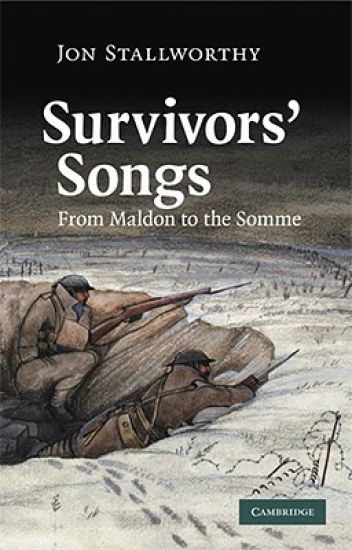
Survivors' Songs

Survivors' Songs

Jon Stallworthy

Cambridge University Press
2008
pokkari
From Homer to Heaney, the voices of men and women have seldom been more piercing, more poignant, than in time of conflict. For fifty years, Jon Stallworthy has been attuned to such voices. In Survivors' Songs he explores a series of poetic encounters with war, with essays on Rupert Brooke, Siegfried Sassoon, Wilfred Owen, and others. Beautifully written, this moving book sets the poetry and prose of the First World War and its aftermath in the wider context of writing about warfare from prehistoric Troy to Anglo-Saxon England; from Agincourt to Flanders; from El Alamein to Vietnam; from the wars of yesterday to the wars of tomorrow.
Alexis de Tocqueville, the First Social Scientist

Alexis de Tocqueville, the First Social Scientist

Jon Elster

Cambridge University Press
2009
pokkari
The book proposes a new interpretation of Alexis de Tocqueville that views him first and foremost as a social scientist rather than as a political theorist. Drawing on his earlier work on the explanation of social behavior, Elster argues that Tocqueville's main claim to our attention today rests on the large number of exportable causal mechanisms to be found in his work, many of which are still worthy of further exploration. Elster proposes a novel reading of Democracy in America in which the key explanatory variable is the rapid economic and political turnover rather than equality of wealth at any given point in time. He also offers a reading of The Ancien Régime and the Revolution as grounded in the psychological relations among the peasantry, the bourgeoisie, and the nobility. Consistently going beyond exegetical commentary, he argues that Tocqueville is eminently worth reading today for his substantive and methodological insights.