Kirjojen hintavertailu. Mukana 12 390 323 kirjaa ja 12 kauppaa.

Kirjahaku

Etsi kirjoja tekijän nimen, kirjan nimen tai ISBN:n perusteella.

1000 tulosta hakusanalla Jonathan F. S. Post

Who's Who in Verdi

Who's Who in Verdi

Jonathan Lewsey

Routledge
2021
nidottu
This title was first published in 2001. Concentrating exclusively on the dramatic content of Verdi's opera, this text illuminates the characters and plot scenarios that inspired one of the greatest composers of opera. Organized alphabetically, the reference contains over 250 entries, with synopses and first performance and cast details.
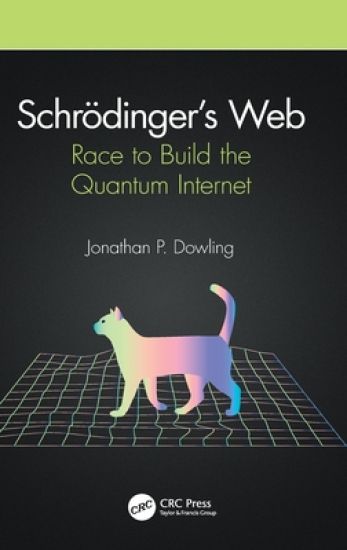
Schrödinger’s Web

Schrödinger’s Web

Jonathan P. Dowling

CRC Press
2020
nidottu
As the race to build the world’s first quantum computer is coming to an end, the race to build the quantum internet has just started. This book leverages the author’s unique insights into both the Chinese and American quantum programs. It begins with the physics and history of the quantum internet and ends with the latest results in quantum computing and quantum networks.The Chinese quantum Sputnik moment.The U.S. National Quantum Initiative.What’s up with Quantum Computing Supremacy?The Race to Build the Quantum Internet.Where will Quantum Technology be Tomorrow? Written by a renowned quantum physicist, this book is for everyone who is interested in the rapidly advancing field of Quantum Technology — The Second Quantum Revolution. The 2016 launch of the Chinese quantum satellite Mozi was a quantum Sputnik moment. The United States went from thinking it was ten years ahead of the Chinese to the realization that it was ten years behind them. This quantum gap led to the U.S. National Quantum Initiative, launched in 2018. Since then, the race to build the quantum internet has taken off at breakneck speed.
Schrödinger’s Web

Schrödinger’s Web

Jonathan P. Dowling

CRC Press
2020
sidottu
As the race to build the world’s first quantum computer is coming to an end, the race to build the quantum internet has just started. This book leverages the author’s unique insights into both the Chinese and American quantum programs. It begins with the physics and history of the quantum internet and ends with the latest results in quantum computing and quantum networks.The Chinese quantum Sputnik moment.The U.S. National Quantum Initiative.What’s up with Quantum Computing Supremacy?The Race to Build the Quantum Internet.Where will Quantum Technology be Tomorrow? Written by a renowned quantum physicist, this book is for everyone who is interested in the rapidly advancing field of Quantum Technology — The Second Quantum Revolution. The 2016 launch of the Chinese quantum satellite Mozi was a quantum Sputnik moment. The United States went from thinking it was ten years ahead of the Chinese to the realization that it was ten years behind them. This quantum gap led to the U.S. National Quantum Initiative, launched in 2018. Since then, the race to build the quantum internet has taken off at breakneck speed.
Reagan’s “Boys” and the Children of the Greatest Generation
During the 1980s and 1990s, aging Baby Boomer parents constructed a particular type of memory as they attempted to laud their own parents’ wartime accomplishments with the label "The Greatest Generation." This book is the first to tell the entire story of this particular type of U.S. World War II memory begun by U.S. President Ronald Reagan in 1984, and promoted the same year by newscaster Tom Brokaw. The story continues in 1994, when it was given academic credence by historian Stephen E. Ambrose, a sensory realism and ideal American character by director Steven Spielberg and actor Tom Hanks, sloganized by Tom Brokaw in 1998, and later interpreted in light of 9/11 and new wars.
China's Relations with the Gulf Monarchies
As China’s international political role grows, its relations with states outside of its traditional sphere of interests is evolving. This is certainly the case of the Gulf monarchies of Bahrain, Kuwait, Oman, Qatar, Saudi Arabia, and the United Arab Emirates, which together comprise the Gulf Cooperation Council (GCC). China’s levels of interdependence with these states has increased dramatically in recent years, spanning a wide range of interests. What motivating factors explain the Chinese leadership’s decision to forge closer ties to the GCC? Why have GCC leaders developed closer ties to China, and what kind of role can China be expected to play in the region as levels of interdependence intensify? This book uses neoclassical realism to analyse the evolution of Sino-GCC relations. Examining the pressures that shaped China’s policy toward the Gulf monarchies, it demonstrates that systemic considerations have been predominant since 1949, yet domestic political considerations were also always an important consideration. Relations are examined across diplomatic and political interactions, trade and investment, infrastructure and construction projects, people-to-people exchanges, and military and security cooperation. This book will appeal to scholars in the fields of International Relations and International Political Economy, as well as area specialists on China, the Gulf, the Gulf Monarchies, and those working on foreign policy issues.
Lorca’s Legacy

Lorca’s Legacy

Jonathan Mayhew

Routledge
2020
nidottu
In Lorca’s Legacy, Jonathan Mayhew explores multiple aspects of the creative and critical afterlife of Federico García Lorca, the most internationally recognized Spanish poet and playwright of the twentieth century. Lorca is an iconic and charismatic figure who has evoked the admiration and fascination of musicians, poets, painters, and playwrights across the world since his tragic assassination by right-wing forces in 1936, at the onset of the Spanish Civil War. This volume ranges widely, discussing his influence on American theater, his much-debated lecture on the duende, his delayed encounter with queer theory, his influence on contemporary Spanish poetry, and other relevant topics. The critical literature on Lorca is vast, and original contributions are comparatively rare, but Mayhew has found a way to shed fresh light on his legacy by looking with a critical eye at the creative transformations of his life and work, both in Spain and abroad. Lorca’s Legacy celebrates the wealth of material inspired by Lorca, bringing to bear a sophisticated, theoretically informed critical perspective. This book will be of enormous interest to anyone interested in the international projection of Spanish literature, or anyone who has felt the fascination of Lorca’s duende.
What's Not to Love?: The Adventures of a Mildly Perverted Young Writer
Perhaps all of Jonathan Ames' problems-and the genesis of this hilarious book-can be traced back to the late onset of his puberty. After all it can't be easy to be sixteen with a hairless "undistinguishable from that of a five year old's." This wonderfully entertaining memoir is a touching and humorous look at life in New York City. But this is life for an author who can proclaim "my first sexual experience was rather old-fashioned: it was with a prostitute"-an author who can talk about his desire to be a model for the Hair Club for Men and about meeting his son for the first time. Often insightful, sometimes tender, always witty and self-deprecating, What's Not to Love? is an engaging memoir from one of our most funny, most daring writers.
God's Soldiers: Adventure, Politics, Intrigue, and Power--A History of the Jesuits
Throughout history members of the Society of Jesus, popularly known as Jesuits, have been accused of killing kings and presidents, have traveled as missionaries to every corner of the globe, founded haciendas in Mexico, explored the Mississippi and Amazon rivers, and served Chinese emperors as map makers, painters, and astronomers. As well as the predictable roll call of saints and martyrs, the Society can also lay claim to the thirty-five craters on the moon named for Jesuit scientists. Jesuits have been despised and idolized on a scale unknown to members of any other religious order; they have died the most horrible deaths and done the most outlandish deeds. Whether loved or loathed, the Jesuits' dramatic and wide-ranging impact could never be ignored. By the mid-eighteenth century, they had established more than 650 educational institutions. They were also strongly committed to foreign missions, and like the secular explorers and settlers of the Age of Discovery, they traveled to the Far East, India, and the Americas to stake a claim. They were especially successful in Latin America, where they managed to put numerous villages entirely under Jesuit rule. The Jesuits' successes both in Europe and abroad, coupled with rumors of scandal and corruption within the order, soon drew criticism from within the Church and without. Writers such as Pascal and Voltaire wrote polemics against them, and the absolute monarchs of Catholic Europe sought to destroy them. Their power was seen as so threatening that hostility escalated into serious political feuds, and at various times they were either banned or harshly suppressed throughout Europe. God's Soldiers is a fascinating chronicle of this celebrated, mysterious, and often despised religious order. Jonathan Wright illuminates as never before their enduring contributions as well as the controversies that surrounded them. The result is an in-depth, unbiased, and utterly compelling history.
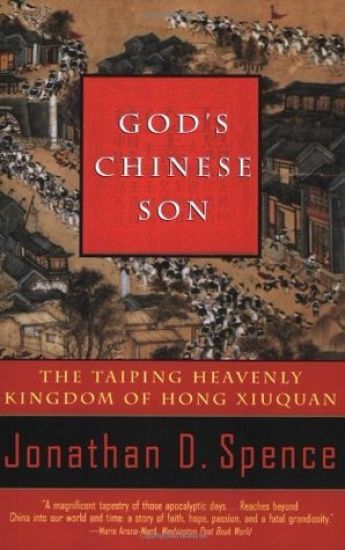
God's Chinese Son

God's Chinese Son

Jonathan D. Spence

WW Norton Co
1997
nidottu
Whether read for its powerful account of the largest uprising in human history, or for its foreshadowing of the terrible convulsions suffered by twentieth-century China, or for the narrative power of a great historian at his best, God's Chinese Son must be read. At the center of this history of China's Taiping rebellion (1845-64) stands Hong Xiuquan, a failed student of Confucian doctrine who ascends to heaven in a dream and meets his heavenly family: God, Mary, and his older brother, Jesus. He returns to earth charged to eradicate the "demon-devils," the alien Manchu rulers of China. His success carries him and his followers to the heavenly capital at Nanjing, where they rule a large part of south China for more than a decade. Their decline and fall, wrought by internal division and the unrelenting military pressures of the Manchus and the Western powers, carry them to a hell on earth. Twenty million Chinese are left dead.
Gulliver's Travels

Gulliver's Travels

Jonathan Swift

WW Norton Co
2002
nidottu
It is accompanied by detailed explanatory annotations. "Contexts" collects materials that influenced Swift's writing of the novel, as well as documents that suggest its initial reception, including Swift's correspondence, Alexander Pope's poems on Gulliver's Travels, and relevant passages from Gargantua and Pantagruel. "Criticism" includes fourteen assessments of Gulliver's Travels by the Earl of Orrery, Sir Walter Scott, Pat Rogers, Michael McKen, J.A. Downie, J. Paul Hunter, Laura Brown, Douglas Lane Patey, Dennis Todd, Richard H. Rodino. Irvin Ehrenpreis, Janine Barchas, Claude Rawson, and Howard D. Weinbrot. A Chronology and a Selected Bibliography are included.
Luke's Gospel

Luke's Gospel

Jonathan Knight

Routledge
1998
nidottu
Luke's Gospel provides a comprehensive and schematic reading of Luke's Gospel, one of the most important books detailing the life and works of Christ, in six main parts. Knight introduces the Gospel and the narrative theory on which the Gospel rests. He offers a detailed, chapter-by-chapter exposition of the Gospel and also alternative perspectives, such as feminism and deconstruction. He considers the principal motifs of the Gospel, particularly the theme of the temple, which has been previously overlooked in Luke scholarship, arguing that Jesus pronounces the present temple forsaken by God to introduce himself as the cornerstone of the eschatological temple. Finally, he examines earlier readings of Luke's Gospel.Jonathan Knight presents an accessible and jargon-free introduction to the Gospel and makes a valuable addition to the New Testament Readings series.
Europe's Green Revolution and Others Since
How best to foster agricultural development in the Third World has long been a subject of debate and from a European perspective the persistent failure to design peasant-friendly technology is puzzling. From the late 19th century, for example, various western European countries also underwent ‘green revolutions’ in which systematic attempts were made to promote the adoption of technological innovation by peasant-farmers. This book focuses on the development of public-sector plant-breeding in Germany from the late nineteenth century through its fate under National Socialism. Harwood uses this historical case study in order to argue that peasant-friendly research has an important role to play in future Green Revolutions.
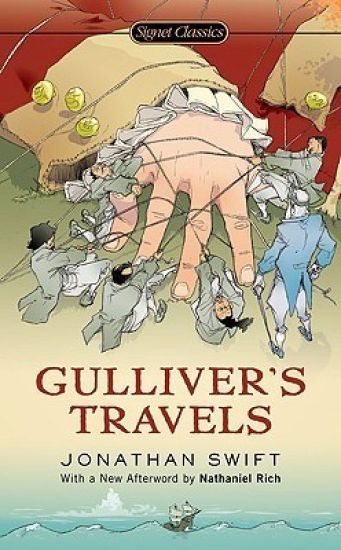
Gulliver's Travels

Gulliver's Travels

Jonathan Swift

Signet Classics
2008
nidottu
Read by children as an adventure story and by adults as a devastating satire of society, Gulliver and his four journeys make for a fascinating blend of travelogue, realism, symbolism, and fantastic voyage?all with a serious philosophical intent.
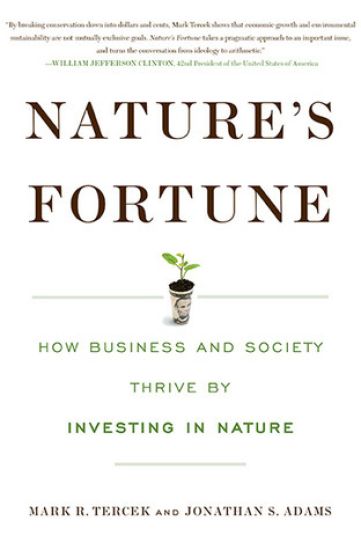
Nature's Fortune

Nature's Fortune

Jonathan S. Adams; Mark Tercek

Basic Books
2013
sidottu
What is nature worth? The answer to this question,which traditionally has been framed in environmental terms,is revolutionizing the way we do business.In Nature's Fortune , Mark Tercek, CEO of The Nature Conservancy and former investment banker, and science writer Jonathan Adams argue that nature is not only the foundation of human well-being, but also the smartest commercial investment any business or government can make. The forests, floodplains, and oyster reefs often seen simply as raw materials or as obstacles to be cleared in the name of progress are, in fact as important to our future prosperity as technology or law or business innovation.Who invests in nature, and why? What rates of return can it produce? When is protecting nature a good investment? With stories from the South Pacific to the California coast, from the Andes to the Gulf of Mexico and even to New York City, Nature's Fortune shows how viewing nature as green infrastructure allows for breakthroughs not only in conservation,protecting water supplies enhancing the health of fisheries making cities more sustainable, livable and safe and dealing with unavoidable climate change,but in economic progress, as well. Organizations obviously depend on the environment for key resources,water, trees, and land. But they can also reap substantial commercial benefits in the form of risk mitigation, cost reduction, new investment opportunities, and the protection of assets. Once leaders learn how to account for nature in financial terms, they can incorporate that value into the organization's decisions and activities, just as habitually as they consider cost, revenue, and ROI.A must-read for business leaders, CEOs, investors, and environmentalists alike, Nature's Fortune offers an essential guide to the world's economic,and environmental,well-being.
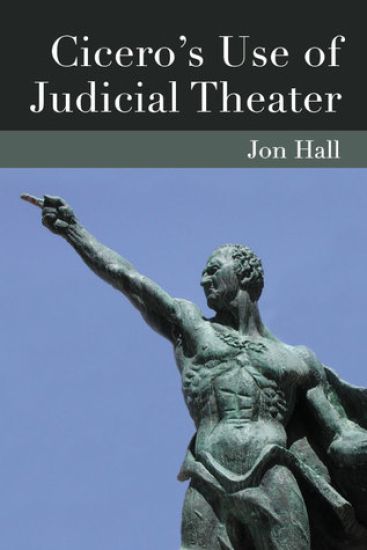
Cicero's Use of Judicial Theater

Cicero's Use of Judicial Theater

Jonathan Hall

The University of Michigan Press
2014
nidottu
In Cicero’s Use of Judicial Theater, Jon Hall examines Cicero's use of showmanship in the Roman courts, looking in particular at the nonverbal devices that he employs during his speeches as he attempts to manipulate opinion. Cicero's speeches in the law-courts often incorporate theatrical devices including the use of family relatives as props during emotional appeals, exploitation of tears and supplication, and the wearing of specially dirtied attire by defendants during a trial, all of which contrast strikingly with the practices of the modem advocate. Hall investigates how Cicero successfully deployed these techniques and why they played such a prominent part in the Roman courts. These "judicial theatrics" are rarely discussed by the ancient rhetorical handbooks, and Cicero’s Use of Judicial Theater argues that their successful use by Roman orators derives largely from the inherent theatricality of aristocratic life in ancient Rome—most of the devices deployed in the courts appear elsewhere in the social and political activities of the elite.While Cicero’s Use of Judicial Theater will be of interest primarily to professional scholars and students studying the speeches of Cicero, its wider analyses, both of Roman cultural customs and the idiosyncratic practices of the courts, will prove relevant also to social historians, as well as historians of legal procedure.
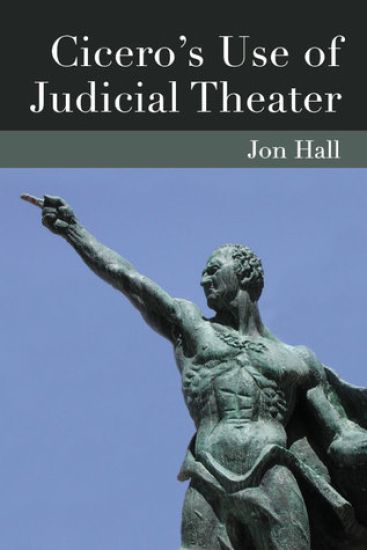
Cicero's Use of Judicial Theater

Cicero's Use of Judicial Theater

Jonathan Hall

The University of Michigan Press
2014
sidottu
In Cicero’s Use of Judicial Theater, Jon Hall examines Cicero's use of showmanship in the Roman courts, looking in particular at the nonverbal devices that he employs during his speeches as he attempts to manipulate opinion. Cicero's speeches in the law-courts often incorporate theatrical devices including the use of family relatives as props during emotional appeals, exploitation of tears and supplication, and the wearing of specially dirtied attire by defendants during a trial, all of which contrast strikingly with the practices of the modem advocate. Hall investigates how Cicero successfully deployed these techniques and why they played such a prominent part in the Roman courts. These "judicial theatrics" are rarely discussed by the ancient rhetorical handbooks, and Cicero’s Use of Judicial Theater argues that their successful use by Roman orators derives largely from the inherent theatricality of aristocratic life in ancient Rome—most of the devices deployed in the courts appear elsewhere in the social and political activities of the elite.While Cicero’s Use of Judicial Theater will be of interest primarily to professional scholars and students studying the speeches of Cicero, its wider analyses, both of Roman cultural customs and the idiosyncratic practices of the courts, will prove relevant also to social historians, as well as historians of legal procedure.
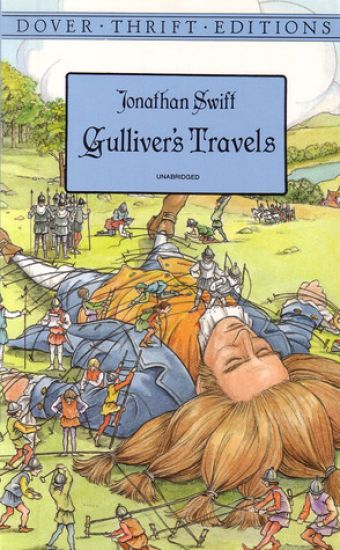
Gulliver'S Travels

Gulliver'S Travels

Jonathan Swift

Dover Publications Inc.
2003
nidottu
Great classic by preeminent prose satirist of the English language, written with disarming simplicity and careful attention to detail. An enchanting fantasy for children; for adults, a witty parody of political life in Swift''s time.
Kant's Analytic

Kant's Analytic

Jonathan Bennett

Cambridge University Press
1966
pokkari
‘Mr Bennett, as was to be expected, has written a first-rate book on Kant’s Analytic. It is vivid, entertaining, and extremely instructive. It will be found of absorbing interest both by those who already know the Critique and by those - if there are any such - who have a developed interest in philosophy, yet no direct acquaintance with Kant. These last it will surely drive to the text and, as surely, will drive them to approach it in a truly philosophical spirit. Bennett’s Kant is not a giant immersed, or frozen, in time. He is a great contemporary - a little out of touch, admittedly, with recent developments in mathematics and physics - but one with whom we can all argue, against him, at his side, or obliquely to him. And so Bennett does argue, continuously, fiercely, and fruitfully; and summons to join in the argument, at appropriate moments, those older contemporaries, Locke, Leibniz, Berkeley, and Hume, and those younger contemporaries, Wittgenstein, Ryle, Ayler, Quine, Quinton, Warnock, and others. This is splendid, and a necessary corrective to that extraordinary isolation in which Kant tends to be islanded, partly indeed, by his own unique qualities, but partly by oceans of the wrong kind of respect. Bennett, continuously engaging his great antagonist, shows the right kind.’