Kirjojen hintavertailu. Mukana 12 297 015 kirjaa ja 12 kauppaa.

Kirjahaku

Etsi kirjoja tekijän nimen, kirjan nimen tai ISBN:n perusteella.

1000 tulosta hakusanalla Jose Duarte

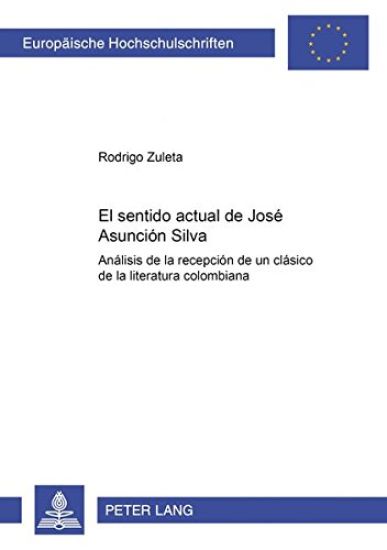
El Sentido Actual de José Asunción Silva
Jose Asuncion Silva (1865-1896) es la figura mas representiva de la literatura colombiana del siglo XIX. En este trabajo, no solo se busca dar una vision general de su obra sino tambien mostrar la manera como la posteridad fue creando una leyenda alrededor de la imagen del poeta cuyo suicidio se ha convertido en una metafora de la derrota del artista ante la sociedad moderna. Para la reconstruccion de la leyenda se recurre a un enfoque recepcionista que muestra la manera como Silva ha sido visto por distintos autores de este siglo como Juan Ramon Jimenez, Gabriela Mistral, Pablo Neruda y Gabriel Garcia Marquez. En el analisis de la obra, se le da especial importancia al topico decimononico de "la muerte de Dios", uno de los elementos fundamentales de la obra del escritor bogotano que estuvo entre los primeros intelectuales hispanoamericanos que se ocuparon del pensamiento de Nietzsche.
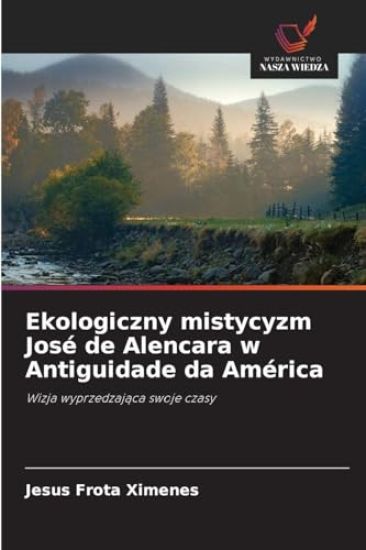
Ekologiczny mistycyzm José de Alencara w Antiguidade da América

Ekologiczny mistycyzm José de Alencara w Antiguidade da América

Jesus Frota Ximenes

Wydawnictwo Nasza Wiedza
2025
pokkari
Niniejsza praca ma na celu analizę mistycznego myślenia ekologicznego Jos de Alencara na podstawie dziela Antiguidade da Am rica, napisanym prawdopodobnie w 1877 roku, odnosząc się do niekt rych jego powieści, takich jak Iracema (1865), kt ra podkreśla postęp techniczno-naukowy, zwlaszcza w Brazylii, i jego wplyw na przyrodę. Następnie autor porusza kwestię relacji czlowieka z naturą, przedstawiając na podstawie tekst w Alencara i innych krytyk w związek między nimi, kt ry doprowadzi do calkowitej jedności czlowieka z Bogiem (Omega), dając w ten spos b początek trzeciemu światu, ale także pr bując wyjaśnic ideę Alencara związaną z pojawieniem się ludzkości, kt ra pojawiając się w Ameryce, przeprowadzi podr ż po kontynentach, aż powr ci do swojego źr dla, czyli kontynentu amerykańskiego, gdzie drugi świat, świat materii (historyczny), ustąpi miejsca trzeciemu, kt ry powstanie z potopu ognia, dając początek kosmicznej cywilizacji, o kt rej m wiliśmy, to znaczy: Bogu, czlowiekowi i naturze, kt re zaczną życ w doskonalej harmonii. Przedstawia r wnież, jak przebiega proces kosmicznej oczyszczenia w indiańskich dzielach Alencara i jego związek ze starożytnością Ameryki.
Der ökologische Mystizismus von José de Alencar in Antiguidade da América
Dieses Werk befasst sich mit einer Analyse des kologischen mystischen Gedankenguts von Jos de Alencar anhand seines Werks Antiguidade da Am rica, das wahrscheinlich im Jahr 1877 geschrieben wurde, und setzt es in Beziehung zu einigen seiner Romane, wie beispielsweise Iracema (1865), in denen er den technischen und wissenschaftlichen Fortschritt, insbesondere in Brasilien, und dessen Auswirkungen auf die Natur hervorhebt. Ausgehend davon befasst es sich mit der Beziehung des Menschen zur Natur und stellt anhand von Texten Alencars und anderer Kritiker die Verbindung zwischen ihnen dar, die in einer vollst ndigen Vereinigung des Menschen mit Gott (Omega) gipfelt und so die dritte Welt entstehen l sst, aber auch versucht, Alencars Idee vom Entstehen der Menschheit zu erkl ren, die in Amerika erscheint und und eine Reise durch die Kontinente unternimmt, bis sie zu ihrem Ursprung zur ckkehrt, d. h. zum amerikanischen Kontinent, wo die zweite Welt, die Welt der Materie (historisch), der dritten Welt Platz macht, die aus einer Feuerflut hervorgeht und so die kosmische Zivilisation entstehen l sst, von der wir gesprochen haben, d. h. Gott, der Mensch und die Natur, die nun in perfekter Harmonie leben. Er stellt auch dar, wie der Prozess der kosmischen Reinigung in den indianistischen Werken von Alencar und die Beziehung zur Antike Amerikas abl uft.
Le mysticisme écologique de José de Alencar dans Antiguidade da América
Cet ouvrage a pour objet une analyse de la pens e mystique cologique de Jos de Alencar partir de l'oeuvre Antiguidade da Am rica, probablement crite en 1877, en la mettant en relation avec certains de ses romans, tels que Iracema (1865), qui mettra en vidence les progr s techniques et scientifiques, en particulier au Br sil, et leur impact sur la nature. partir de l , il aborde la relation entre l'Homme et la Nature, pr sentant, travers les textes d'Alencar et d'autres critiques, le lien entre eux, qui aboutira une communion totale de l'Homme avec Dieu (Om ga), donnant ainsi naissance au troisi me monde, mais aussi en essayant d'expliquer l'id e d'Alencar li e l' mergence de l'humanit , qui, apparaissant en Am rique, fera le tour des continents avant de revenir son origine, c'est- -dire le continent am ricain, o le deuxi me monde, le monde de la mati re (historique), c dera la place au troisi me, issu d'un d luge de feu, faisant ainsi appara tre la civilisation cosmique dont nous parlions, c'est- -dire Dieu, l'Homme et la Nature, qui vivent d sormais en parfaite harmonie. Il pr sente galement comment se d roule le processus de purification cosmique dans les oeuvres indianistes d'Alencar et la relation avec l'Antiquit de l'Am rique.
Il misticismo ecologico di José de Alencar in Antiguidade da América
Questo lavoro ha come oggetto l'analisi del pensiero mistico ecologico di Jos de Alencar a partire dall'opera Antiguidade da Am rica, scritta probabilmente nel 1877, mettendola in relazione con alcuni dei suoi romanzi, come Iracema (1865), che metter in evidenza il progresso tecnico-scientifico, in particolare in Brasile, e il suo impatto sulla natura. Da l , affronta il rapporto dell'uomo con la natura, presentando, attraverso i testi di Alencar e di altri critici, il legame tra loro, che culminer in una comunione totale dell'uomo con Dio (Omega), dando cos origine al terzo mondo, ma anche cercando di spiegare l'idea di Alencar relativa alla nascita dell'umanit , che apparendo in America, far un giro per i continenti fino a tornare alla propria origine, cio il continente americano, dove il secondo mondo, il mondo della materia (storico), dar il posto al terzo, che sorger da un diluvio di fuoco, facendo cos apparire la civilt cosmica di cui parlavamo, cio Dio, l'Uomo e la Natura, che iniziano a vivere in perfetta armonia. Presenta anche come avviene il processo di purificazione cosmica nelle opere indianiste di Alencar e il rapporto con l'Antichit dell'America.
The ecological mysticism of José de Alencar in Antiguidade da América
This work analyzes Jos de Alencar's ecological mysticism based on Antiguidade da Am rica, probably written in 1877, relating it to some of his novels, such as Iracema (1865), which highlights technical and scientific advances, especially in Brazil, and their impact on nature. From there, it addresses the relationship between Man and Nature, presenting, through Alencar's texts and those of other critics, the link between them, which will culminate in a total communion between Man and God (Omega), thus giving rise to the third world, but also attempting to explain Alencar's idea related to the emergence of humanity, which, appearing in America, will travel across the continents until returning to its own origin, that is: the American continent, where the second world, the world of matter (historical), will give way to the third, emerging from a flood of fire, thus bringing about the cosmic civilization we were talking about, that is: God, Man, and Nature, who begin to live in perfect harmony. It also presents how the process of cosmic purification occurs in Alencar's Indianist works and the relationship with the Antiquity of America.
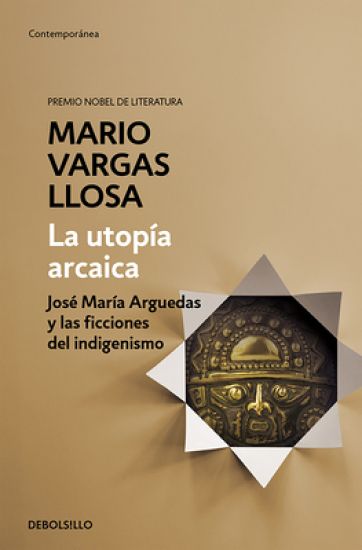
La Utopía Arcaica: José María Arguedas Y Las Ficciones del Indigenismo / The Archaic Utopia. José Maria Arguedas and the Indigenists Fiction
En La utop a arcaica, Mario Vargas Llosa nos acerca a la figura del novelista peruano Jos Mar a Arguedas, una de las m s importantes del movimiento indigenista latinoamericano, conocido por su compromiso revolucionario. «Mi inter s por Arguedas no se debe solo a sus libros; tambi n a su caso, privilegiado y pat tico. Privilegiado porque en un pa s escindido en dos mundos, dos lenguas, dos culturas, dos tradiciones hist ricas, a l le fue dado conocer ambas realidades ntimamente, en sus miserias y grandezas. Pat tico porque el arraigo en esos dos mundos antag nicos hizo de l un desarraigado. -Mario Vargas Llosa Antrop logo, universitario e intelectual militante, Arguedas «fue un hombre bueno y un buen escritor, pero hubiera podido serlo m s si, por su sensibilidad extrema, su generosidad, su ingenuidad y su confusi n ideol gica, no hubiera cedido a la presi n pol tica del medio acad mico e intelectual en el que se mov a para que, renunciando a su vocaci n natural hacia la enso aci n, la memoria privada y el lirismo, hiciera literatura social, indigenista y revolucionaria , como afirma el propio Vargas Llosa. Cruce entre la biograf a, la historia y la cr tica literaria, La utop a arcaica dibuja un fresco del contexto hist rico del pa s, rese a la vida de Arguedas, matiza sus libros y trata de describir la inmolaci n de un talento literario por razones ticas y pol ticas. ENGLISH DESCRIPTION A cross between biographical, historical, and literary critique genres, The Archaic Utopia is a fresco that illustrates Peru's historical context as well as an account of Arguedas' life, an explanation of his work, and an attempt to describe the immolation of a literary genius for ethical and political reasons. An anthropologist, scholar, and intellectual militant, Peruvian novelist Jos Mar a Arguedas was considered one of the foremost figures of the Indigenists Movement in Latin America and a committed revolutionary.
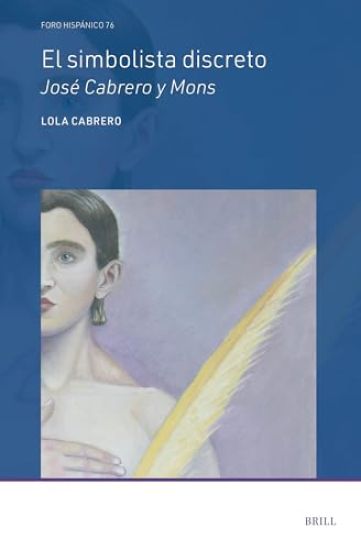
El simbolista discreto José Cabrero y Mons
In the words of early 20th-century writer Ramón Gómez de la Serna, José Cabrero y Mons (1871–1954) is the central figure in the novela del Arte. However, he remains the only unknown artist in José Gutiérrez Solana’s iconic painting La tertulia del café de Pombo, one of the most significant works in the Museo Reina Sofía. This monograph delves into his fascinating artistic life, uncovering previously unpublished details, including rare books from his personal library, correspondence with fellow artists, his artistic work, and his remarkable collection of modern art, featuring works by Puvis de Chavannes, Solana, Rodin, Carrière, Iturrino and De Groux, among others. En palabras del escritor de principios de siglo Ramón Gómez de la Serna, José Cabrero y Mons (1871–1954) es el personaje principal de la novela del Arte. Sin embargo es el único artista desconocido en el cuadro La tertulia del café de Pombo de José Gutiérrez Solana, obra maestra del Museo Reina Sofía. Esta monografía sobre su intrigante vida artística explora las paradojas definitivas del período estético de Fin de Siècle. En su desarrollo revela datos únicos e inéditos de su biblioteca personal, con cartas y ediciones dedicadas y raras, su obra artística y su excepcional colección de arte moderno: Puvis de Chavannes, Solana, Rodin, Carrière, Iturrino o De Groux, entre otros.
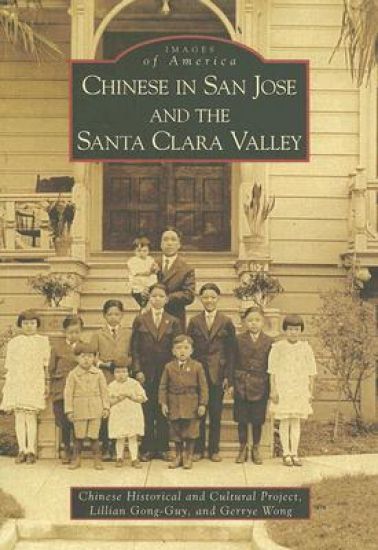
Chinese in San Jose and the Santa Clara Valley

Chinese in San Jose and the Santa Clara Valley

Lillian Gong-Guy; Gerrye Wong; Chinese Historical and Cultural Project

Arcadia Publishing (SC)
2007
nidottu
The fertile Santa Clara Valley--once called the Valley of Heart's Delight and later Silicon Valley--has long been home to a substantial Chinese population. Like other immigrants, they arrived seeking opportunity and armed with survival instincts and the ability to persevere, but the struggles they faced were unique. From 1866 to 1931, five distinct Chinatowns existed in San Jose, each one devastated by mysterious fires or stifled by unjust laws. Early Chinese in the region labored relentlessly, building railroads and levees and toiling as laundrymen, grocers, cooks, servants, field hands, and factory workers. In the 20th century, new industries replaced agriculture, and an influx of Chinese invigorated the valley with innovative ideas, helping it emerge as a leader in technology.
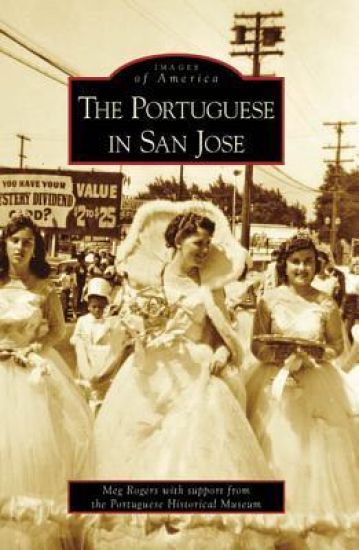
The Portuguese in San Jose

The Portuguese in San Jose

Megan Flautt; Portuguese Historical Museum

Arcadia Publishing (SC)
2007
nidottu
For hundreds of years, Portuguese explorers have swept across the globe, many of them landing in California in the 1840s as whalers, ship jumpers, and Gold Rush immigrants. Gold was the lure, but land was the anchor. San Jose became home to Portuguese immigrants who overcame prejudice to contribute to the area politically, socially, and economically. They worked hard, transplanting farming, family, and festa traditions while working in orchards and dairies. Many came from the Azores Islands, 800 miles out to sea from mainland Portugal. For over 160 years, the Portuguese have enriched San Jose with colorful figures, including radio star Joaquim Esteves; jeweler and filmmaker Antonio Furtado; the charismatic and controversial Fr. Lionel Noia; educator Goretti Silveira; and community leaders Vicki and Joe Machado.
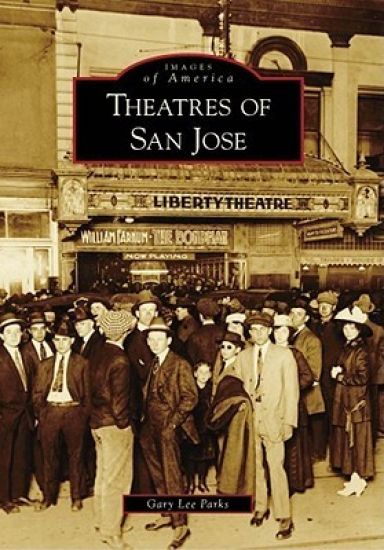
Theatres of San Jose

Theatres of San Jose

Gary Lee Parks

Arcadia Publishing (SC)
2009
nidottu
San Joseans have long had their pick of the best in stage and screen entertainment. In the late 19th through the mid-20th centuries, theatres were beloved places. Whether in downtown, the neighborhoods, or surrounding communities, theatres provided the thrill of a night on the town. Most of the early theatres built in San Jose exist only in photographs, many exhibited in this book for the first time. A few, such as the palatial California Theatre and the venerable Jose Theatre, serve exciting new uses in today's entertainment marketplace. Even such relative newcomers as the Century 21 Theatre and its fellow domed cinemas have begun to gain a romance of their own.
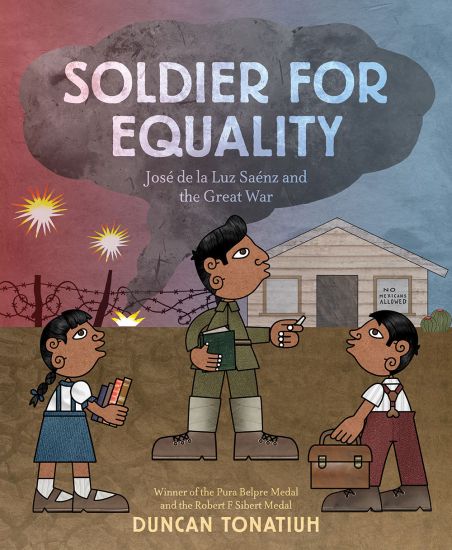
Soldier for Equality: José de la Luz Sáenz and the Great War

Soldier for Equality: José de la Luz Sáenz and the Great War

Duncan Tonatiuh

Abrams Books for Young Readers
2019
sidottu
Award-winning author Duncan Tonatiuh brings to life the story of a Mexican-American war hero Jos. de la Luz S.enz (1888–1953)—or Luz—believed in fighting for what was right. Although he was born in the United States, he and his family experienced prejudice because of their Mexican heritage. When World War I broke out, Luz volunteered to join the fight. Because of his ability to quickly learn languages, he became part of the Intelligence Office in Europe. However, despite his hard work and intellect, Luz often didn’t receive credit for his contributions. Upon his return to the US, he joined other Mexican-Americans whom he had met in the army to fight for equality. His contribution, along with others, ultimately led to the creation of the League of United Latin American Citizens (LULAC), which is the oldest Latino civil rights organization. Soldier for Equality is based in part on Luz’s diary during the war. It includes a biography of Luz’s later years, an author’s note, a timeline, a bibliography, and an index.
Motul De San Jose

Motul De San Jose

VDM Publishing House
2010
nidottu
Observera att förlaget som ger ut denna produkt baserar innehållet i sina produkter på fria källor som Wikipedia. Boken är med stor sannolikhet endast ett utdrag ur dessa informationskällor, alltså inte en vanlig bok i den bemärkelsen.