Kirjojen hintavertailu. Mukana 11 244 527 kirjaa ja 12 kauppaa.

Kirjahaku

Etsi kirjoja tekijän nimen, kirjan nimen tai ISBN:n perusteella.

1000 tulosta hakusanalla Joseph Hatton

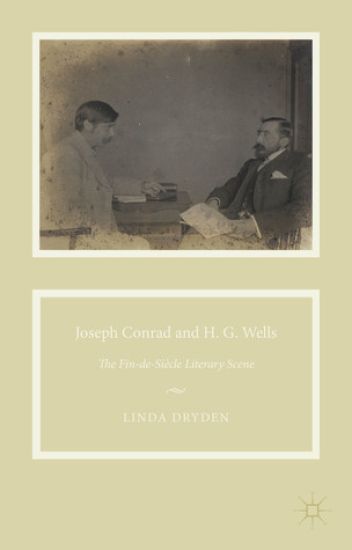
Joseph Conrad and H. G. Wells

Joseph Conrad and H. G. Wells

L. Dryden

Palgrave Macmillan
2015
sidottu
This book traces the literary friendship between Joseph Conrad and H. G. Wells from their early correspondence through to the differences that caused their estrangement, including their respective responses to the First World War. It thus gives an overview of the literary scene in the late Victorian and early Edwardian period.
Joseph Conrad Among the Anarchists

Joseph Conrad Among the Anarchists

David Mulry

Palgrave Macmillan
2016
sidottu
This book looks at the inception, composition, and 1907 publication of The Secret Agent, one of Joseph Conrad’s most highly regarded political novels and a core text of literary modernism. David Mulry examines the development and revisions of the novel through the stages of the holograph manuscript, first as a short story, then as a serialized sensation fiction in Ridgway’s Militant Weekly for the American market, before it was extensively revised and published in novel form. Presciently anticipating the climate of modern terror, Conrad’s text responds to the failed Greenwich Bombing, the first anarchist atrocity to occur on English soil. This book charts its historical and cultural milieu via press and anarchist accounts of the bombing, to place Conrad foremost among the dynamite fiction of revolutionary anarchism and terrorism in the late nineteenth and early twentieth centuries.
Joseph Chamberlain

Joseph Chamberlain

Palgrave Macmillan
2016
sidottu
Winston Churchill described Joseph Chamberlain as 'the man who made the weather' for twenty years in British politics between the 1880s and the 1900s. This volume contains contributions on every aspect of Chamberlain's career, including international and cultural perspectives hitherto ignored by his many biographers. It breaks his career into three aspects: his career as an international statesman, defender of British interests and champion of imperial federation; his role as a national leader, opposing Gladstone's crusade for Irish home rule by forming an alliance with the Conservatives, campaigning for social reform and finally advocating a protectionist economic policy to promote British business; and the aspect for which he is still celebrated in his adopted city, as the provider of sanitation, gas lighting, clean water and cultural achievement for Birmingham – a model of civic regeneration that still inspires modern politicians such as Michael Heseltine, Tristram Hunt and DavidWilletts.
Joseph Conrad, Cosmopolitanism and Transnationalism
In 1908, Joseph Conrad was criticised by a reviewer for being a man ‘without either country or language’: even his shipboard communities were the product of a ‘cosmopolitan’ vision. This book takes off from that criticism and begins by exploring the history and meanings of the term ‘cosmopolitan’. It then considers the multinational world of Conrad’s ships – and of the Merchant Marine more generally – to differentiate multinationalism from cosmopolitanism. Subsequent chapters then address nationalism, nation-formation and the concept of the nation through a reading of Nostromo; cosmopolitanism and internationalism in The Secret Agent; nationalism, internationalism and transnational activism in relation to Under Westen Eyes; and Conrad’s own transnational activism in his later essays. While drawing distinctions between cosmopolitanism, internationalism and transnationalism as the appropriate conceptual framings for Conrad’s works, this book traces Conrad’s own engagement with nationalism, cosmopolitanism, and transnational activism in relation to the political events of his time.
Joseph Banks and the British Museum
Concentrating on the explorer and naturalist Joseph Banks (1743-1820), this book explores the early history of collections at the British Museum. Taking Banks' extraordinary career as its basis, it examines the changes that took place during a period of transition that led to collecting on an increasingly global scale.
Joseph Conrad and the Swan Song of Romance

Joseph Conrad and the Swan Song of Romance

Katherine Isobel Baxter

Routledge
2020
nidottu
In the first critical study wholly devoted to Joseph Conrad's use of techniques associated with the literary tradition of romance, the author argues that Conrad's engagement with the genre invigorated his work throughout his career. Exploring the ways in which Conrad borrows from, alludes to, and subverts the tropes of romance, the author suggests that Conrad's ambivalent relationship with popular forms like the adventure novel is revealed in the way he uses romance conventions to disrupt narrative expectations and make visible ethical problems with Europe's colonial project. The author examines not only familiar novels like Lord Jim but also less-studied works such as Romance and The Rover, using Robert Miles's model of the 'philosophical romance' to show that for Conrad, romance is also philosophically engaged with issues of ideology. Her study enables a new appreciation of the ways in which Conrad continued to experiment, even in his later fiction, and of the ethical import of that aesthetic experimentation.