Kirjojen hintavertailu. Mukana 11 244 527 kirjaa ja 12 kauppaa.

Kirjahaku

Etsi kirjoja tekijän nimen, kirjan nimen tai ISBN:n perusteella.

1000 tulosta hakusanalla Joseph Ray

Joseph Conrad: Contemporary Reviews 4 Volume Hardback Set
An indispensable resource both to Conrad specialists and to students of literary Modernism, this four-volume collection seeks to provide as complete as possible a view of the contemporary reception of the writer's works in the English-speaking world. The reviews cover all of Conrad's writings from Almayer's Folly (1895) to the posthumously published Last Essays (1926). The volumes also take into their purview the collaborations with Ford Madox Ford. Found here are evaluations by journalists as well as by creative writers, the latter including H. G. Wells, Katherine Mansfield, Walter de la Mare and Virginia Woolf. The volumes offer insights into early twentieth-century reviewing practices, the marketing of 'literary' fiction and the wide interest in such writing, as reviews of Conrad's work regularly appeared in provincial and colonial newspapers.
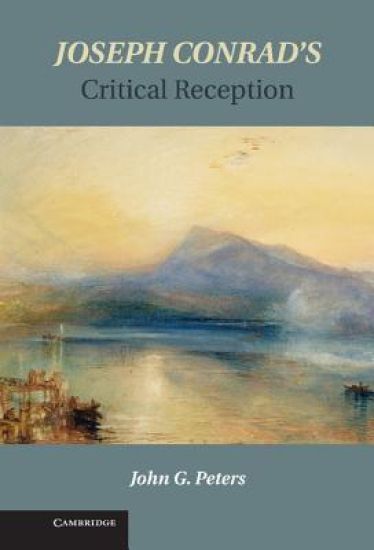
Joseph Conrad's Critical Reception

Joseph Conrad's Critical Reception

John G. Peters

Cambridge University Press
2013
sidottu
Throughout the twentieth and twenty-first centuries, Joseph Conrad's novels and short stories have consistently figured into - and helped to define - the dominant trends in literary criticism. This book is the first to provide a thorough yet accessible overview of Conrad scholarship and criticism spanning the entire history of Conrad studies, from the 1895 publication of his first book, Almayer's Folly, to the present. While tracing the general evolution of the commentary surrounding Conrad's work, John G. Peters's careful analysis also evaluates Conrad's impact on critical trends such as the belles lettres tradition, the New Criticism, psychoanalysis, structuralist and post-structuralist criticism, narratology, postcolonial studies, gender and women's studies, and ecocriticism. The breadth and scope of Peters's study make this text an essential resource for Conrad scholars and students of English literature and literary criticism.
Joseph Conrad in Context

Joseph Conrad in Context

Cambridge University Press
2014
pokkari
Joseph Conrad's Polish background, his extensive travels and his detached view of his adopted country, Britain, gave him a perspective unique among English writers of the twentieth century. Combining Continental and British influences, Victorian and Modernist styles, he was an artist acutely responsive to his age, whose works reflect and chronicle its shaping forces. This volume examines the biographical, historical, cultural and political contexts that fashioned his works. Written by a specialist, each short chapter covers a specific theme in relation to Conrad's life and work: letters, Modernism, the sea, the Polish and French languages, the First World War, and many other topics. This book will appeal to scholars as well as to those beginning their study of this extraordinary writer. It shows how this combination of different contexts allowed Conrad to become a key transitional figure in the early emergence of British literary modernism.
Joseph II: Volume 2, Against the World, 1780–1790

Joseph II: Volume 2, Against the World, 1780–1790

Derek Beales

Cambridge University Press
2013
pokkari
This second and final volume of Derek Beales's magisterial biography of the emperor Joseph II describes the period when he was sole ruler of the Austrian monarchy. Influenced partly by Enlightenment ideals, Joseph relaxed censorship, introduced wide-ranging religious toleration and fostered a 'new Catholicism' whilst Mozart's music, the greatest cultural achievement of his reign, owed much to Joseph's patronage. He also abolished personal serfdom and diminished the nobles' power, seeking to achieve full personal control over all his provinces. Opposition became serious when his hyperactive foreign policy landed him in war against the Turks, and he died with his Belgian provinces in rebel hands and Hungary threatened by revolt and invasion. Though these pressures forced Joseph to withdraw some of his measures, Derek Beales argues that he left an indelible mark on the history of all his lands, which now form part of fifteen modern states.
Joseph Conrad

Joseph Conrad

M. C. Bradbrook

Cambridge University Press
2014
pokkari
Originally published in 1941, this book provides a brief study of the life and work of Joseph Conrad ('Poland's English genius') through the lens of his writings. Bradbrook divides Conrad's stories by three main themes: the wonders of the deep, the hollow men and recollections in tranquillity, in order to show Conrad's literary development. This book will be of value to anyone with an interest in Conrad's writings.
Memoirs of Dr. Joseph Priestley

Memoirs of Dr. Joseph Priestley

Joseph Priestley; Thomas Cooper

Cambridge University Press
2010
pokkari
Joseph Priestley (1733–1804) was an eighteenth-century English polymath with accomplishments in the fields of science, pedagogy, philosophy and theology. Among his more notable achievements were the discovery of oxygen and his work in establishing Unitarianism. Often a controversialist, Priestley's efforts to develop a 'rational' Christianity and support for the French Revolution eventually made him unwelcome in his native land. His 1807 Memoirs relate the story of his life until the time of his 1794 emigration to America and include other biographical materials written by his son. This first volume also contains five appendices discussing his philosophy, scientific work and religious opinions. Priestley's memoirs are an important source for anyone interested in the state of epistemology, rationalism, and religious belief in the age of the Enlightenment, and in a man who, in the words of his son, 'gave unremitting exertions in the cause of truth'.
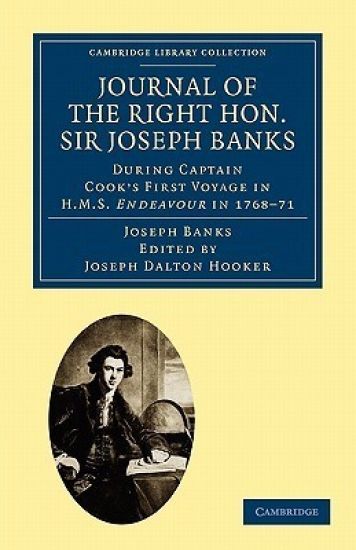
Journal of the Right Hon. Sir Joseph Banks Bart., K.B., P.R.S.
Sir Joseph Banks (1743–1820) was a British botanist and one of the most influential scientific patrons of the eighteenth century. After inheriting a fortune on the death of his father in 1761, Banks devoted his life to studying natural history. His fame following his participation in Captain Cook's epic voyage on the Endeavour between 1768 and 1771 led to his election as President of the Royal Society in 1778, a post which he then held until his death. This volume, first published in 1896, contains Banks' account of the voyage of the Endeavour across the Pacific Ocean. Edited by the great botanist Sir Joseph Hooker, it describes in fascinating detail the peoples, cultures and wildlife Banks encountered in Tahiti, New Zealand and Australia. Banks' aptitude as a natural historian and the crucial role he played in cataloguing and illustrating exotic wildlife during the expedition are emphasised in the work.
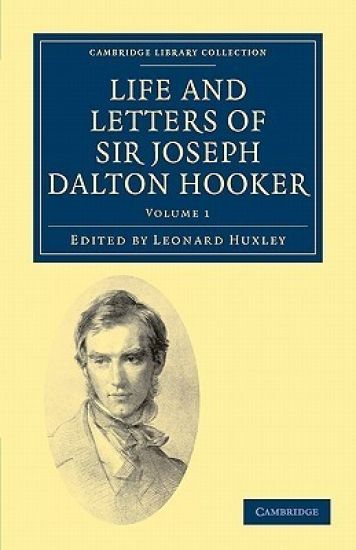
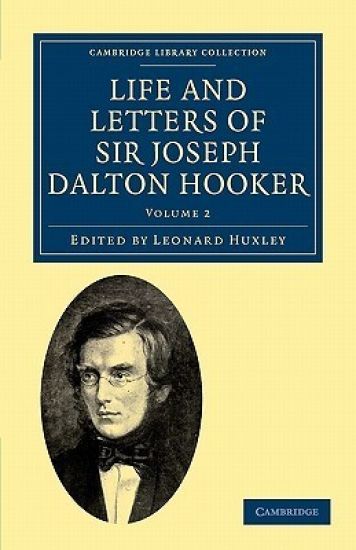
Life and Letters of Sir Joseph Dalton Hooker O.M., G.C.S.I.

Life and Letters of Sir Joseph Dalton Hooker O.M., G.C.S.I.

Joseph Dalton Hooker

Cambridge University Press
2011
pokkari
Sir Joseph Dalton Hooker (1817–1911) was one of the most eminent botanists of the later nineteenth century. Educated at Glasgow, he developed his studies of plant life by examining specimens all over the world. After several successful scientific expeditions, first to the Antarctic and later to India, he was appointed to succeed his father as Director of the Botanical Gardens at Kew. Hooker was the first to hear of and support Charles Darwin's theory of natural selection, and over their long friendship the two scientists exchanged many letters. Another close friend was the scientist T. H. Huxley, and it was the latter's son, Leonard (1860–1933), who published this standard biography in 1918. The first volume describes Hooker's early life and his career up to 1860. It includes many letters to Darwin as the two men discussed the new theories and the publication of On the Origin of Species.
Life and Letters of Sir Joseph Dalton Hooker O.M., G.C.S.I.

Life and Letters of Sir Joseph Dalton Hooker O.M., G.C.S.I.

Joseph Dalton Hooker

Cambridge University Press
2011
pokkari
Sir Joseph Dalton Hooker (1817–1911) was one of the most eminent botanists of the later nineteenth century. Educated at Glasgow, he developed his studies of plant life by examining specimens all over the world. After several successful scientific expeditions, first to the Antarctic and later to India, he was appointed to succeed his father as Director of the Botanical Gardens at Kew. Hooker was the first to hear of and support Charles Darwin's theory of natural selection, and over their long friendship the two scientists exchanged many letters. Another close friend was the scientist T. H. Huxley, and it was the latter's son, Leonard (1860–1933), who published this standard biography in 1918. The second volume details Hooker's management of Kew, his later travels, and the end of his long life.
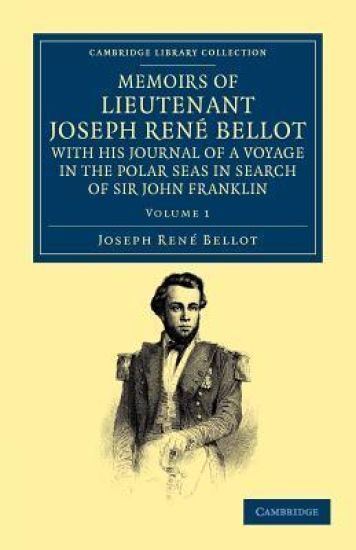
Memoirs of Lieutenant Joseph René Bellot, with his Journal of a Voyage in the Polar Seas in Search of Sir John Franklin
Joseph René Bellot (1826–53) was a French naval officer whose travels took him from Africa to the Arctic before his tragic death at the age of 27. In 1851 he joined a British expedition to search for the missing explorer Sir John Franklin (1786–1847), whose expedition to find the North-West Passage was last heard of in July 1845. Although the voyage was unsuccessful in its search, it explored previously unknown areas of the Arctic. Bellot kept extensive notes about his journey in this remote region; they originally appeared in French in 1854 and were translated into English in 1855 and published in two volumes. Volume 1 contains a biography of Bellot, who was regarded as a hero in both France and Britain, and the first part of his journal, which describes the ship's departure from Scotland, their arrival in Greenland and their encounters with the indigenous people there.
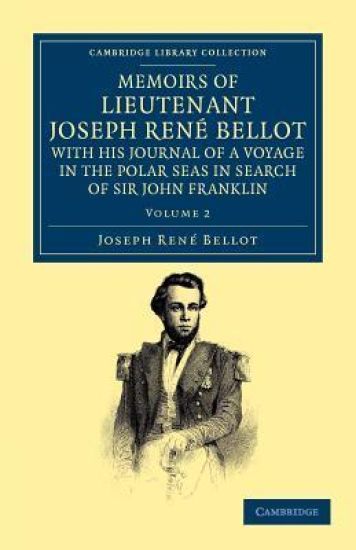
Memoirs of Lieutenant Joseph René Bellot, with his Journal of a Voyage in the Polar Seas in Search of Sir John Franklin
Joseph René Bellot (1826–53) was a French naval officer whose travels took him from Africa to the Arctic before his tragic death at the age of 27. In 1851 he joined a British expedition to search for the missing polar explorer Sir John Franklin (1786–1847), whose expedition to find the North-West Passage was last heard of in July 1845. Although the voyage was unsuccessful in its search, it explored previously unknown areas of the Arctic. Bellot kept extensive notes about his journey in this remote region; they originally appeared in French in 1854 and were translated into English in 1855 and published in two volumes. In Volume 2, Bellot, who was regarded as a hero in both France and Britain, describes how the crew survived the harsh climate of the Arctic winter, his exploration by dog-sledge of inland polar regions and his eventual return to Britain.
Joseph Conrad

Joseph Conrad

Ford Madox Ford

Cambridge University Press
2013
pokkari
Determined not to write a biography about his friend Joseph Conrad (1857–1924) in the usual dry style, Ford Madox Ford (1873–1939) instead produced a novel. As a result, some biographical facts are given less emphasis than others, in particular the acrimony which later blighted relations between the two men. But the work is distinguished by its liveliness and by a wealth of vivid detail. Ford describes Conrad's remarkably long-eared horse, his haphazard use of adverbs and their fraught collaboration over their second joint novel, Romance, during which Ford's carefully unexciting style provoked the adventure-loving Conrad to depression. Ford's impressionistic portrayal of Conrad as an elegant, likeable swindler and 'beautiful genius' strikes a far richer chord than a purely historical account. First published in 1924, just after Conrad's death, this work remains a striking example of creative non-fiction, instructive for scholars and students of English literature.
Joseph Haydn

Joseph Haydn

Pauline D. Townsend

Cambridge University Press
2013
nidottu
Admired and studied by both Mozart and Beethoven, Franz Joseph Haydn (1732-1809) imbued his life-enhancing compositions with wit, elegance and deep emotion. His output was prolific and included symphonies (most notably those written during his two visits to London, where he received a rapturous welcome), string quartets, chamber music, piano sonatas and choral works. This concise biography, first published in 1884, forms part of music critic Francis Hueffer's Great Musicians series, which was intended to provide succinct accounts of popular composers for the general reader. The author, Pauline D. Townsend, drew much of her material for the book from the painstaking research on Haydn published by the German musicologist Carl Ferdinand Pohl, archivist and librarian of the Vienna Society of the Friends of Music. A list of Haydn's works forms an appendix, based on the information in Grove's Dictionary of Music and Musicians.