Kirjojen hintavertailu. Mukana 11 627 624 kirjaa ja 12 kauppaa.

Kirjahaku

Etsi kirjoja tekijän nimen, kirjan nimen tai ISBN:n perusteella.

1000 tulosta hakusanalla Joyce Grant

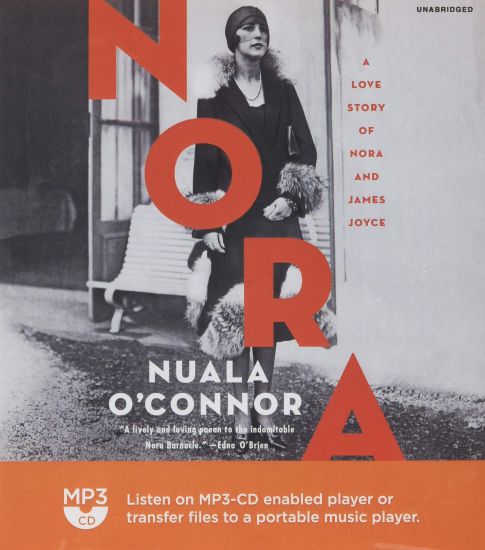
Nora: A Love Story of Nora and James Joyce

Nora: A Love Story of Nora and James Joyce

Nuala O'Connor

Harpercollins
2021
mp3 cd-levyllä
Acclaimed Irish novelist Nuala O'Connor's bold reimagining of the life of James Joyce's wife, muse, and the model for Molly Bloom in Ulysses is a "lively and loving paean to the indomitable Nora Barnacle" (Edna O'Brien). Dublin, 1904. Nora Joseph Barnacle is a twenty-year-old from Galway working as a maid at Finn's Hotel. She enjoys the liveliness of her adopted city and on June 16--Bloomsday--her life is changed when she meets Dubliner James Joyce, a fateful encounter that turns into a lifelong love. Despite his hesitation to marry, Nora follows Joyce in pursuit of a life beyond Ireland, and they surround themselves with a buoyant group of friends that grows to include Samuel Beckett, Peggy Guggenheim, and Sylvia Beach.But as their life unfolds, Nora finds herself in conflict between their intense desire for each other and the constant anxiety of living in poverty throughout Europe. She desperately wants literary success for Jim, believing in his singular gift and knowing that he thrives on being the toast of the town, and it eventually provides her with a security long lacking in her life and his work. So even when Jim writes, drinks, and gambles his way to literary acclaim, Nora provides unflinching support and inspiration, but at a cost to her own happiness and that of their children.With gorgeous and emotionally resonant prose, Nora is a heartfelt portrayal of love, ambition, and the quiet power of an ordinary woman who was, in fact, extraordinary.
A Portrait of the Artist as a Young Man by James Joyce: A Portrait of the Artist as a Young Man by James Joyce
A Portrait of the Artist as a Young Man is the first novel by Irish writer James Joyce. A K nstlerroman in a modernist style, it traces the religious and intellectual awakening of young Stephen Dedalus, a fictional alter ego of Joyce and an allusion to Daedalus, the consummate craftsman of Greek mythology. Stephen questions and rebels against the Catholic and Irish conventions under which he has grown, culminating in his self-exile from Ireland to Europe. The work uses techniques that Joyce developed more fully in Ulysses (1922) and Finnegans Wake (1939). A Portrait began life in 1904 as Stephen Hero-a projected 63-chapter autobiographical novel in a realistic style. After 25 chapters, Joyce abandoned Stephen Hero in 1907 and set to reworking its themes and protagonist into a condensed five-chapter novel, dispensing with strict realism and making extensive use of free indirect speech that allows the reader to peer into Stephen's developing consciousness. American modernist poet Ezra Pound had the novel serialised in the English literary magazine The Egoist in 1914 and 1915, and published as a book in 1916 by B. W. Huebsch of New York. The publication of A Portrait and the short story collection Dubliners (1914) earned Joyce a place at the forefront of literary modernism.
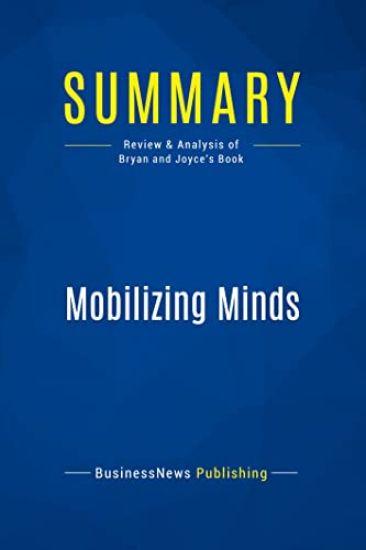
Summary: Mobilizing Minds: Review and Analysis of Bryan and Joyce's Book
The must-read summary of Lowell Bryan and Claudia Joyce's book "Mobilizing Minds: Creating Wealth from Talent in the 21st Century Organization". This complete summary of the ideas from Lowell Bryan and Claudia Joyce's book "Mobilizing Minds" shows that a company's existing workforce is the key to its growth - not its technology, systems or any other assets. In their book, the authors explain that the central theme of your corporate strategy should be to redesign your organisation in order to better mobilise the mind power of the people who already work for you. This summary provides everything you need to design an organisation that can better capture the opportunities of the 21st century. Added-value of this summary: - Save time- Understand key concepts- Expand your knowledge To learn more, read "Mobilizing Minds" and discover the key to structuring your organisation for future success.
Living Streams: Continuity and Change from Rabelais to Joyce
This book examines how a long line of imaginative writers, starting from Rabelais and continuing over Cervantes and Sterne down to such modernists as Proust, Mann, Joyce, and Barth, has reaffirmed the picture of an enduring Western civilization despite repeated crises and transformations. The humanist capacity to recapture a sense of European greatness as exhibited in Antiquity was paralleled by and continued in the guise of newer vernacular works, achievements regarded as vital forms of a shared cultural rebirth. This was amplified most notably in the tradition of the ironic encyclopedic novel which surveyed the state of successive phases of culture. The evolving heritage and revitalization of the arts constituted main subject matters in the series of major self-conscious epochal movements, the Enlightenment, Romanticism, and Modernism, which Postmodernism reflexively now struggles to supersede.
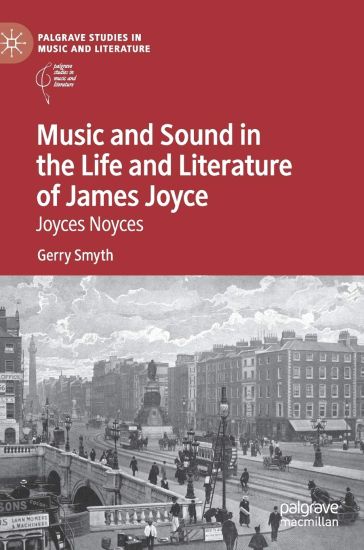
Music and Sound in the Life and Literature of James Joyce

Music and Sound in the Life and Literature of James Joyce

Gerry Smyth

Springer Nature Switzerland AG
2020
sidottu
Music and Sound in the Life and Literature of James Joyce: Joyces Noyces offers a fresh perspective on the Irish writer James Joyce’s much-noted obsession with music. This book provides an overview of a century-old critical tradition focused on Joyce and music, as well as six in-depth case studies which revisit material from the writer’s career in the light of new and emerging theories. Considering both Irish cultural history and the European art music tradition, the book combines approaches from cultural musicology, critical theory, sound studies and Irish studies. Chapters explore Joyce’s use of repetition, his response to literary Wagnerism, the role and status of music in the aesthetic and political debates of the fin de siècle, music and cultural nationalism, ubiquitous urban sound and ‘shanty aesthetics’. Gerry Smyth revitalizes Joyce’s work in relation to the ‘noisy’ world in which the author wrote (and his audience read) his work.
Music and Sound in the Life and Literature of James Joyce

Music and Sound in the Life and Literature of James Joyce

Gerry Smyth

Springer Nature Switzerland AG
2021
nidottu
Music and Sound in the Life and Literature of James Joyce: Joyces Noyces offers a fresh perspective on the Irish writer James Joyce’s much-noted obsession with music. This book provides an overview of a century-old critical tradition focused on Joyce and music, as well as six in-depth case studies which revisit material from the writer’s career in the light of new and emerging theories. Considering both Irish cultural history and the European art music tradition, the book combines approaches from cultural musicology, critical theory, sound studies and Irish studies. Chapters explore Joyce’s use of repetition, his response to literary Wagnerism, the role and status of music in the aesthetic and political debates of the fin de siècle, music and cultural nationalism, ubiquitous urban sound and ‘shanty aesthetics’. Gerry Smyth revitalizes Joyce’s work in relation to the ‘noisy’ world in which the author wrote (and his audience read) his work.
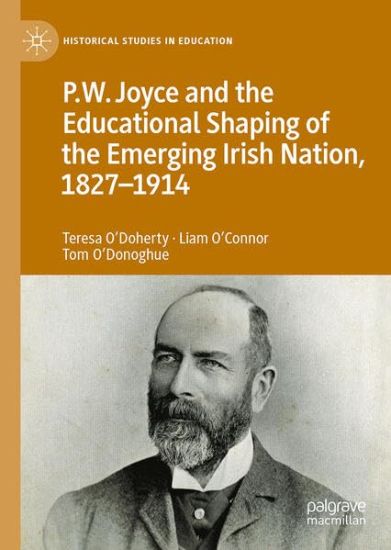
P.W. Joyce and the Educational Shaping of the Emerging Irish Nation, 1827-1914

P.W. Joyce and the Educational Shaping of the Emerging Irish Nation, 1827-1914

Teresa O'Doherty; Liam O’Connor; Tom O'Donoghue

Springer International Publishing AG
2024
sidottu
This book provides an exposition on the professional and cultural life of Patrick Weston Joyce (1827–1914), more popularly known as P. W. Joyce, who lived and worked during the final phase of British rule in Ireland. The focus throughout is very much on how family, locale, and schooling influenced this significant Irish patriot, polymath, and pioneering pedagogue who worked across a range of disciplines, including education, language, history, and music. Moreover, attention is paid to how his achievements were possible only because of the variety of leading roles he played in the development of the Irish National School System between 1845 and 1893. Thus positioned, Joyce was in many ways a significant choreographer of a slow revolution in which education, in both formal and informal settings, was used to educate the Irish people regarding their cultural heritage.
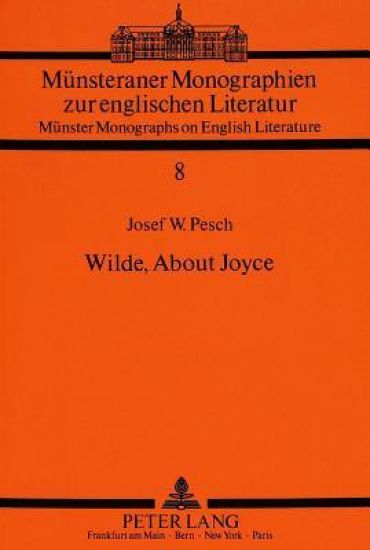
Wilde, about Joyce

Wilde, about Joyce

Josef Wilhelm Pesch

Peter Lang AG
1992
nidottu
Die literarische Moderne feiert sich gerne als Phanomen "sui generis," doch ihre theoretischen Voraussetzungen wurden in England im Kampf von Asthetizismus und Dekadenz gegen den Viktorianismus erstritten. Oscar Wilde ist als bekanntester Autor auch der wichtigste 'Kritikkunstler' des englischen Fin de Siecle. Die vorliegende Arbeit untersucht, auf welche Weise sein Werk und Leben auf das literarische Schaffen des bedeutendsten Schriftstellers der Moderne, James Joyce, einwirkten. In den fruhen kritischen Schriften, in "Stephen Hero" und "A Portrait of the Artist as a Young Man" entwirft Joyce das Bild seines 'Critic as Artist', von dem er im "Ulysses" ein kritisches Selbstportrat zeichnet. "Finnegans Wake" schliesslich ist neben vielem anderen eine Joycesche Hommage an Wildes Gesamtkunstlebenswerk."
Autobiography and the Modernist Consciousness in Conrad and Joyce

Autobiography and the Modernist Consciousness in Conrad and Joyce

Amungwa Veronica Nganshi

Justfiction Edition
2020
pokkari
The book shows how Conrad and Joyce project different shades of consciousness- socio-political, moral, religious, individual and artistic from an autobiographical perspective to enrich modernist values. It evaluates the achievement of the authors' use of this technique of parallel narratives to portray the nihilism of the early twentieth century. Joseph Conrad, in exposing the mode of existence in the early twentieth century, suggests that man lives in a civilization in which obsession with materialistic ambitions undermines genuine values. James Joyce in a similar vein reveals that social arrangement hinders progress and so the artist has to overthrow rather than embrace the nihilistic aspects of the society. A comparative analysis of the texts of Conrad and Joyce shows how these authors artistically integrate facts or history with fiction.