Kirjojen hintavertailu. Mukana 12 558 361 kirjaa ja 12 kauppaa.

Kirjahaku

Etsi kirjoja tekijän nimen, kirjan nimen tai ISBN:n perusteella.

1000 tulosta hakusanalla Joycee Clark

A critique of mariolatry in James Joyce "Ulysses". Incongruities in Gerty McDowell's self-depiction and actions
Seminar paper from the year 2013 in the subject English - Discussion and Essays, grade: 1,0, Johannes Gutenberg University Mainz, course: Modernism, language: English, abstract: For Gerty McDowell, it is mariolatry that conceals her personal philosophy. It is mariolatry she uses as a hideout and it is mariolatry she uses as a Mask. To see her true face, we must have a look at her mask, for it is what she wants us to think of her, a look at her actions, for it is her most objective description, and finally a look at her dreams, for they are whom she wishes to be. It is her being in all its contradictions, that gives Gerty her purpose in Joyce's "Ulysses." Despite her relatively brief appearance, her character is integral as it represents the aspect of woman that is connected with piety. By looking at the incongruities in Gerty McDowell's self-depiction and her actions, we see Joyce's criticism that women hide their true personality behind the mask of mariolatry.
Der Wille zum Wissen bei James Joyce

Der Wille zum Wissen bei James Joyce

Wolfgang Streit

Books on Demand
2000
pokkari
"Betrachtet man James Joyces text in progress unter dem Gesichtspunkt der Sexualität, entsteht folgende Genealogie: Das Thema wird zwischen Chamber Music und Finnegans Wake erstens exakter geordnet, so daß symmetrische Beziehungen zwischen den Figuren entstehen. Zweitens präzisiert sich der Versprachlichungszwang, unter dem Figuren, vor allem Künstlerfiguren und somit auch der Text selbst stehen. Und schließlich rücken der von Anfang an präsente Wille zum Wissen und der Widerstand gegen ihn ins Zentrum des Textes. Sie lösen sich völlig von ihrer, besonders in den Dubliners vorherrschenden, gesellschaftlichen Einbindung, um bis in Finnegans Wake zur Triebkraft der Handlung und des Schreibens zu werden."9319336September 1939. England is at war with Nazi Germany. In Southampton, the world's most luxurious airliner - the legendary Pan Am clipper - takes off for its final flight to neutral America. Aboard are the cream of society and the dregs of humanity, all fleeing the war for reasons of their own... shadowed by a danger they do not know exists... and heading straight into a storm of violence, intrigue, and betrayal...
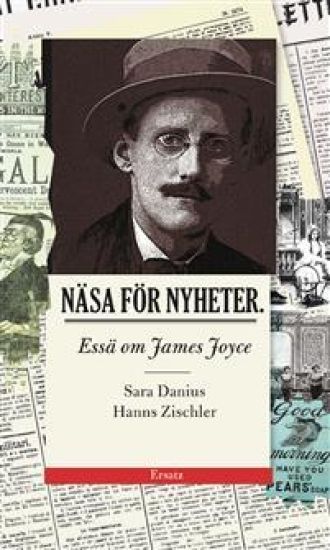
Näsa för nyheter : essä om James Joyce

Näsa för nyheter : essä om James Joyce

Sara Danius; Hanns Zischler

Ersatz
2013
sidottu
Denna bok handlar om vad som gör den moderna romanen modern. James Joyce visste detta bättre än de flesta. Han var en tidningsslukare av stora mått, och Ulysses vore otänkbar utan denna omättliga hunger - såväl innehållsligt som formmässigt. Oktober 1904 till mars 1905: den medellöse irländske författaren upptäcker mitt i den habsburgska monarkins falnande glans ett nytt sätt att berätta som kommer att revolutionera romankonsten. Sara Danius är litteraturhistoriker, kritiker och essäist. Tidigare böcker: »Prousts motor« (2000), »The senses of modernism: technology, perception, and aesthetics« (2002), »The prose of the world: Flaubert and the art of making things visible« (2006), »Proust-Benjamin: om fotografin« (2011) och »Den blå tvålen« (2013). Hanns Zischler är författare, översättare, film- och litteraturkritiker. Han är också en av Tysklands mest kända skådespelare. År 1996 utkom hans bok »Kafka går på bio«, som översatts till flera språk. »Det djupt tilltalande med den här essän, som dessutom tryfferas med en mängd fotografier och tidningsklipp, är den lekfulla lättheten med vilken den ger en initierad kulturhistorisk inblick i Joyces verk.« Frankfurter Allgemeine Zeitung »Det är en fröjd att följa de här två författarnas intelligenta lek.« Buchkultur
Porträtt av min älskare som Joyce Carol Oates

Porträtt av min älskare som Joyce Carol Oates

Siddhartha Larsson

Miders förlag
2015
nidottu
En miljon dollar är inte coolt. Vet du vad som är coolt? En älskare. "Roligt och tänkvärt" "En bok som sticker ut skarpt" - Anne Brügge, Arbetarbladet "Jag läser, njuter och finner mig glatt i att bli förförd av Siddharta Sebastian Larssons lekfulla fullträff." - Calle Flogman https://miders.se
Forms of Materiality in James Joyce's Fiction

Forms of Materiality in James Joyce's Fiction

Alberto Tondello

EDINBURGH UNIVERSITY PRESS
2026
sidottu
Forms of Materiality in James Joyce’s Fiction offers a fundamental reappraisal of material entities in James Joyce’s works from a new materialist and ecocritical perspective. It argues that material entities – parsed under the categories of symbols, banal objects, waste and the substance of art – are essential in Joyce’s articulation of aesthetic ideas, theories of perception and practices of representation. Alberto Tondello claims that Joyce’s objects are particularly well placed to highlight collaborations and dissonances between human and nonhuman entities, and to link the material nature of objects with the abstraction of aesthetic concepts and philosophical ideas. With its interdisciplinary approach, Forms of Materiality recognises the complexities of the material world and the vibrancy of human perception as depicted in Joyce’s works, thus offering novel readings and original approaches to his oeuvre.
Nora: A Love Story of Nora and James Joyce

Nora: A Love Story of Nora and James Joyce

Nuala O'Connor

HARPER PERENNIAL
2021
nidottu
Named one of the best books of historical fiction by the New York TimesAcclaimed Irish novelist Nuala O'Connor's bold reimagining of the life of James Joyce's wife, muse, and the model for Molly Bloom in Ulysses is a "lively and loving paean to the indomitable Nora Barnacle" (Edna O'Brien).Dublin, 1904. Nora Joseph Barnacle is a twenty-year-old from Galway working as a maid at Finn's Hotel. She enjoys the liveliness of her adopted city and on June 16--Bloomsday--her life is changed when she meets Dubliner James Joyce, a fateful encounter that turns into a lifelong love. Despite his hesitation to marry, Nora follows Joyce in pursuit of a life beyond Ireland, and they surround themselves with a buoyant group of friends that grows to include Samuel Beckett, Peggy Guggenheim, and Sylvia Beach.But as their life unfolds, Nora finds herself in conflict between their intense desire for each other and the constant anxiety of living in poverty throughout Europe. She desperately wants literary success for Jim, believing in his singular gift and knowing that he thrives on being the toast of the town, and it eventually provides her with a security long lacking in her life and his work. So even when Jim writes, drinks, and gambles his way to literary acclaim, Nora provides unflinching support and inspiration, but at a cost to her own happiness and that of their children.With gorgeous and emotionally resonant prose, Nora is a heartfelt portrayal of love, ambition, and the quiet power of an ordinary woman who was, in fact, extraordinary.
The Most Dangerous Book: The Battle for James Joyce's Ulysses

The Most Dangerous Book: The Battle for James Joyce's Ulysses

Kevin Birmingham

Penguin Publishing Group
2015
nidottu
Recipient of the 2015 PEN New England Award for Nonfiction "The arrival of a significant young nonfiction writer . . . A measured yet bravura performance." --Dwight Garner, The New York Times James Joyce's big blue book, Ulysses, ushered in the modernist era and changed the novel for all time. But the genius of Ulysses was also its danger: it omitted absolutely nothing. Joyce, along with some of the most important publishers and writers of his era, had to fight for years to win the freedom to publish it. The Most Dangerous Book tells the remarkable story surrounding Ulysses, from the first stirrings of Joyce's inspiration in 1904 to the book's landmark federal obscenity trial in 1933. Written for ardent Joyceans as well as novices who want to get to the heart of the greatest novel of the twentieth century, The Most Dangerous Book is a gripping examination of how the world came to say Yes to Ulysses.
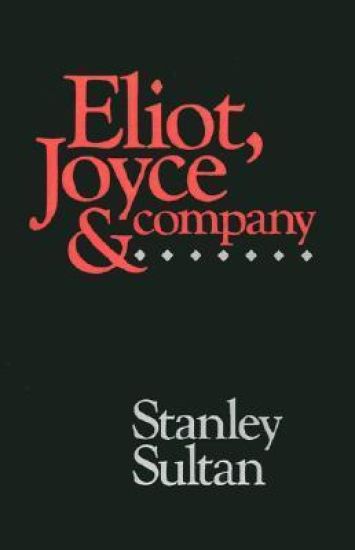
Eliot, Joyce and Company

Eliot, Joyce and Company

Stanley Sultan

Oxford University Press Inc
1990
nidottu
In this new look at Modernism, Sultan illuminates the shared enterprise of T. S. Eliot and James Joyce. The author discusses their seminal works, considering new aspects of the company they kept, and revealing their rich connection with the writers who preceeded them. Sultan combines a literary history of Modernism with objective analysis of three of its key works, Ulysses, The Waste Land, and The Love Song of J. Alfred Prufrock.
Death in Dublin During the Era of James Joyce’s Ulysses
The funeral of Paddy Dignam in James Joyce’s Ulysses serves as the pivotal event of the ‘Hades’ episode. This volume explores how Dignam’s interment in Glasnevin Cemetery allowed Joyce the freedom to consider the conventions, rituals and superstitions associated with death and burial in Dublin.Integrating the words and characters of Ulysses with its figurative locale, the book looks at the presence of Dublin in Ulysses, and Ulysses in Dublin. It emphasises the highly visible public role assigned to death in Joyce’s world, while also appreciating how it is woven into the universe of Ulysses. The study examines the role of Glasnevin Cemetery – where the Joyce family plot was opened in 1880 and remained in use for eight decades – as well as the social and medical problems associated with life in Dublin, a city divided by class, status, wealth and health. Nineteen burials took place in Glasnevin on 16 June 1904, and the analysis of this group illuminates the role of undertakers and insurers, along with the importance of memorialisation.This book is an important contribution to Joyce and Irish studies, as well as to international studies related to the treatment of the dead body and the development of garden cemeteries.
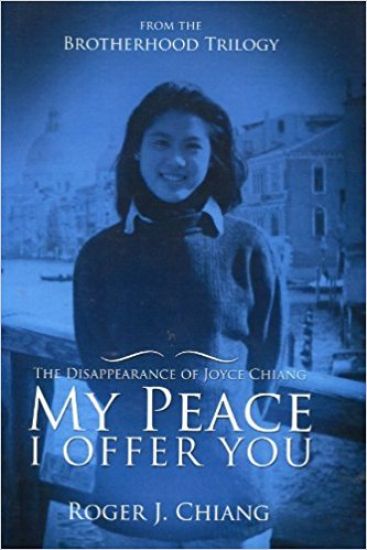
My Peace I Offer You: The Disappearance of Joyce Chiang
The entire country followed the disappearances of three women who vanished from one of Washington, DC's popular neighborhoods. In 1999, a beautiful, young Justice Department attorney, Joyce Chiang, disppeared from the ominous streets of our Nation's Capitol. Three months later, Joyce's corpse was discovered in the murky waters of the Potomac River. The FBI and police were only able to theorize how Joyce died. Two years later, Chandra Levy disappeared a few blocks from where Joyce vanished. Joyce's murder is brought back into the spotlight, but an egomaniacal police chief discredits the case, blasphemously professing that Joyce committed suicide to discount the media's assertion that a serial killer was lurking. Joyce's brother, Roger, goes on the offensive to set the record straight. Despite the tragedy, author Roger J. Chiang learns a life lesson that is transformed into "My Peace I Offer You." Chiang evangelizes God's Commandment of love for neighbor and revives the lost virtue of brotherhood.
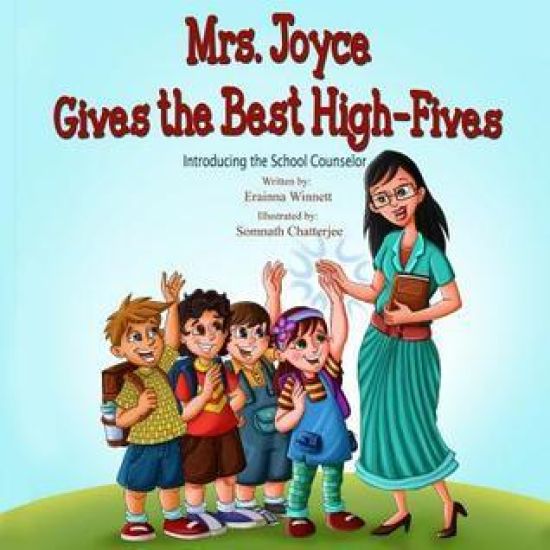
Mrs. Joyce Gives the Best High-Fives: Introducing the School Counselor
Teachers Pay Teachers offers this title in read aloud book video; search Counseling with HEART Mrs. Joyce Gives the Best High-Fives Grades K-6, Softcover, 32 pagesThere are activity pages available for this title at CounselingwithHEART.comMrs. Joyce, the school counselor at Emerson Elementary, uses high-fives to connect with her students. When Raymond moves to town he's not sure what to think of Mrs. Joyce. He enters her office nervous and full of questions, but it doesn't take long for him to trust the caring counselor. By learning exactly what a school counselor does, Raymond finds he has nothing to fear and much to gain from friendly Mrs. Joyce. Building relationships is one of the primary jobs of a school counselor. Whether it's giving a high-five, a thumbs-up, a fist bump, a handshake or a hug, finding a way to connect with students is vital. "Mrs. Joyce Gives the Best High-Fives" is a fun-loving story that explains the important role of the school counselor.
Reading Derrida, Reading Joyce

Reading Derrida, Reading Joyce

Roughley Alan

University Press of Florida
1999
sidottu
This work analyzes Derrida's uses of Joyce within his own work and demonstrates how Joyce's writings operate deconstructively. Alan Roughley offers readings of both Joyce and Derrida texts, in particular ""Finnegan's Wake"" and ""Glas"". Exploring how Joyce's ghost haunts many of Derrida's major works, he concentrates on two areas: how Derrida reads Joyce and sees his work as deconstructive, and how English-speaking Joyceans have made use of Derrida's theories. The study demonstrates specific ways in which the major works of one of the century's most important writers are some of the most powerful forces in the work of the century's most complex and controversial theorists.
Manuscript Genetics, Joyce's Know-how, Becket's Nohow

Manuscript Genetics, Joyce's Know-how, Becket's Nohow

Dirk van Hulle

University Press of Florida
2009
nidottu
By taking the principles of manuscript genetics and using them to engage in a comparative study of James Joyce and Samuel Beckett, Dirk Van Hulle has produced a provocative work that re-imagines the links between the two authors. His elegant readings reveal that the most striking similarities between these two lie not in their nationality or style but in their shared fascination with the process of revision.Van Hulle's thoughtful application of genetic theory--the study of a work from manuscript to final form in its various iterations--marks a new phase in this dynamic field of inquiry. As one of only a handful of books in English dealing with this emerging area of study, Manuscript Genetics, Joyce's Know-How, Beckett's Nohow will be indispensable not only to Joyce and Beckett scholars but also to anyone interested in genetic criticism.
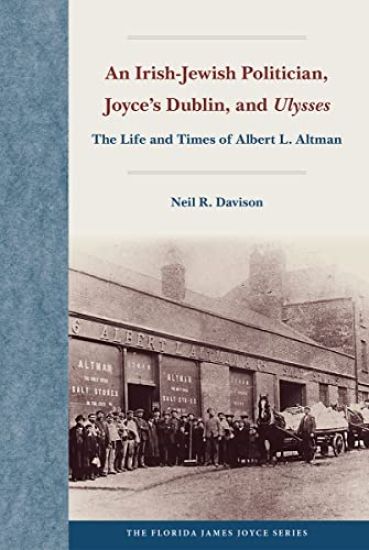
An Irish-Jewish Politician, Joyce's Dublin, and "Ulysses

An Irish-Jewish Politician, Joyce's Dublin, and "Ulysses

Neil R. Davison

University Press of Florida
2022
sidottu
A forgotten historical figure and his influence on the writing of James JoyceIn this book, Neil Davison argues that Albert Altman (1853—1903), Dublin-based businessman and Irish nationalist, influenced James Joyce's creation of the character of Leopold Bloom as well as Ulysses broader themes surrounding race, nationalism, and empire. Using extensive archival research, Davison reveals parallels between the lives of Altman and Bloom, including how the experience of double marginalization which Altman felt as both a Jew in Ireland and an Irishman in the British Empire is a major idea explored in Joyce's work. Altman, successful salt and coal merchant, was involved in municipal politics ove issues of Home Rule and labour, and frequently appeared in the press over the two decades of Joyce's youth. His prominence, Davison shows, made him a familiar name in the Home Rule circles with which Joyce and his father most identified. The book concludes by tracing the influence of Altman's career on the Dubliners story Ivy Day in the Committee Room as well as throughout the whole of Ulysses.Through Altman's biography, Davison recovers a forgotten life story that illuminates Irish and Jewish identity and culture in Joyce's Dublin.A volume in the Florida James Joyce Series, edited by Sebastian D. G. Knowles.