Kirjojen hintavertailu. Mukana 11 342 296 kirjaa ja 12 kauppaa.

Kirjahaku

Etsi kirjoja tekijän nimen, kirjan nimen tai ISBN:n perusteella.

1000 tulosta hakusanalla Keith L. Cook

Jeroboam's Royal Drama

Jeroboam's Royal Drama

Keith Bodner

Oxford University Press
2012
nidottu
Among the most challenging biblical figures to understand is Jeroboam son of Nebat, the first monarch of northern Israel whose story is told in 1 Kings 11-14. This book explores the characterization of Jeroboam in the Hebrew text, and traces his rags to riches career trajectory. What are the circumstances whereby this widow's son is elevated to the position of king, with a conditional promise for a lasting dynasty? A close reading of the narrative reveals a literary achievement of great subtlety and complexity. Even though he becomes the negative standard for the rest of Israel's royal history, Jeroboam's portrait is far more nuanced than is often realized and yields a host of surprises for the engaged reader. Numerous issues are raised in the 1 Kings 11-14 material, including questions of power, leadership, and the role of the prophetic office in national affairs. Against the grain of conventional interpretation that tends to idealize or vilify biblical characters, Keith Bodner's study locates the arrival of Jeroboam's kingship as a direct response to scandalous activity within the Solomonic empire.
The Metaphysics of Knowledge

The Metaphysics of Knowledge

Keith Hossack

Oxford University Press
2012
nidottu
The Metaphysics of Knowledge presents the thesis that knowledge is an absolutely fundamental relation, with an indispensable role to play in metaphysics, philosophical logic, and philosophy of mind and language. Knowledge has been generally assumed to be a propositional attitude like belief. But Keith Hossack argues that knowledge is not a relation to a content; rather, it a relation to a fact. This point of view allows us to explain many of the concepts of philosophical logic in terms of knowledge. Hossack provides a theory of facts as structured combinations of particulars and universals, and presents a theory of content as the property of a mental act that determines its value for getting knowledge. He also defends a theory of representation in which the conceptual structure of a content is taken to picture the fact it represents. This permits definitions to be given of reference, truth, and necessity in terms of knowledge. Turning to the metaphysics of mind and language, Hossack argues that a conscious state is one that is identical with knowledge of its own occurrence. This allows us to characterise subjectivity, and, by illuminating the 'I'-concept, allows us to gain a better understanding of the concept of a person. Language is then explained in terms of knowledge, as a device used by a community of persons for exchanging knowledge by testimony. The Metaphysics of Knowledge concludes that knowledge is too fundamental to be constituted by something else, such as one's functional or physical state; other things may cause knowledge, but do not constitute it.
Elisha's Profile in the Book of Kings

Elisha's Profile in the Book of Kings

Keith Bodner

Oxford University Press
2013
sidottu
Elisha's Profile in the Book of Kings uses the tools of literary criticism to read the Elisha narrative as an integral component of the Deuteronomistic History compiled in the aftermath of the Babylonian invasion and destruction of Jerusalem in 586 BCE. From his investiture in 1 Kings 19 to his final cameo in 2 Kings 13, Elisha the prophet has one of the most extensively-narrated careers in Israel's royal history. During a particularly dark and contested era where the corrupt northern kings hold sway, Elisha enters the ideological battleground and boldly raises his voice and performs remarkable signs to stem the tide of injustice and religious inconstancy. Empowered by a double portion of his master Elijah's spirit, Elisha is a double agent who continues the task of dismantling the Omride dynasty. Moving between the international stage and more domestic locales, Elisha travels widely and interacts with a host of characters from virtually every socio-economic category, visiting foreign capitals and cities under siege as well as wealthy homes and obscure villages. With actions that range from feeding a multitude to mind-reading and raising the dead, Elisha's performance eclipses that of his master and ensures a lasting place in ancient Israel's prophetic heritage.
The Case for Contextualism

The Case for Contextualism

Keith DeRose

Oxford University Press
2011
nidottu
It's an obvious enough observation that the standards that govern whether ordinary speakers will say that someone knows something vary with context: What we are happy to call "knowledge" in some ("low-standards") contexts we'll deny is "knowledge" in other ("high-standards") contexts. But do these varying standards for when ordinary speakers will attribute knowledge, and for when they are in some important sense warranted in attributing knowledge, reflect varying standards for when it is or would be true for them to attribute knowledge? Or are the standards that govern whether such claims are true always the same? And what are the implications for epistemology if these truth-conditions for knowledge claims shift with context? Contextualism is the view that the epistemic standards a subject must meet, in order for a claim attributing "knowledge" to her to be true, do vary with context. This has been hotly debated in epistemology and philosophy of language during the last few decades. In The Case for Contextualism Keith DeRose offers a sustained state-of-the-art exposition and defense of the contextualist position, presenting and advancing the most powerful arguments in favor of the view and against its "invariantist" rivals, and responding to the most pressing objections facing contextualism.
The Making of Cabaret

The Making of Cabaret

Keith Garebian

Oxford University Press Inc
2011
sidottu
A handy and engaging chronicle, this book is the most detailed production history to date of the original Broadway version of Cabaret, showing how the show evolved from Christopher Isherwood's Berlin stories, into John van Druten's stage play, a British film adaptation, and then the Broadway musical, conceived and directed by Harold Prince as an early concept musical. With nearly 40 illustrations, full cast credits, and a bibliography, The Making of Cabaret will appeal to musical theatre aficionados, theatre specialists, and students and performers of musical theatre.
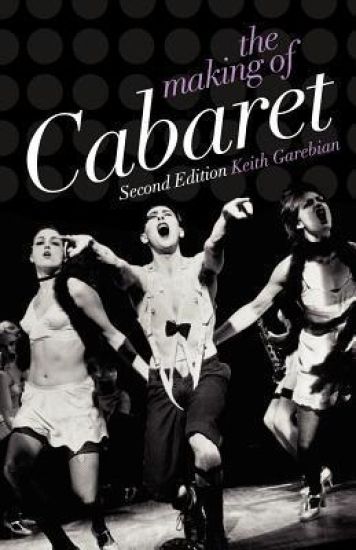
The Making of Cabaret

The Making of Cabaret

Keith Garebian

Oxford University Press Inc
2011
nidottu
A handy and engaging chronicle, this book is the most detailed production history to date of the original Broadway version of Cabaret, showing how the show evolved from Christopher Isherwood's Berlin stories, into John van Druten's stage play, a British film adaptation, and then the Broadway musical, conceived and directed by Harold Prince as an early concept musical. With nearly 40 illustrations, full cast credits, and a bibliography, The Making of Cabaret will appeal to musical theatre aficionados, theatre specialists, and students and performers of musical theatre.
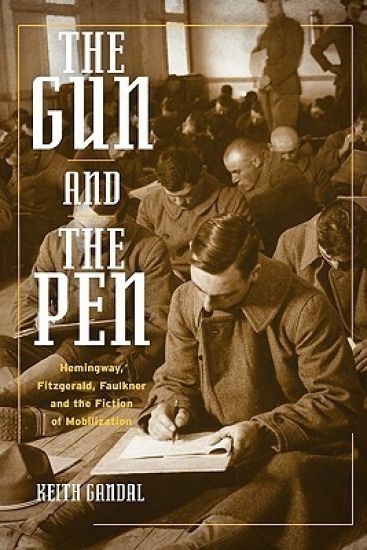
The Gun and the Pen

The Gun and the Pen

Keith Gandal

Oxford University Press Inc
2010
nidottu
Ernest Hemingway, F. Scott Fitzgerald, and William Faulkner stand as the American voice of the Great War. But was it warfare that drove them to write? Not according to Keith Gandal, who argues that the authors' famous postwar novels were motivated not by their experiences of the horrors of war but rather by their failure to have those experiences. These 'quintessential' male American novelists of the 1920s were all, for different reasons, deemed unsuitable as candidates for full military service or command. As a result, Gandal contends, they felt themselves emasculated--not, as the usual story goes, due to their encounters with trench warfare, but because they got nowhere near the real action. Bringing to light previously unexamined Army records, including new information about the intelligence tests, The Gun and the Pen demonstrates that the authors' frustrated military ambitions took place in the forgotten context of the unprecedented U.S. mobilization for the Great War, a radical effort to transform the Army into a meritocratic institution, indifferent to ethnic and class difference (though not to racial difference). For these Lost Generation writers, the humiliating failure vis-à-vis the Army meant an embarrassment before women and an inability to compete successfully in a rising social order, against a new set of people. The Gun and the Pen restores these seminal novels to their proper historical context and offers a major revision of our understanding of America's postwar literature.
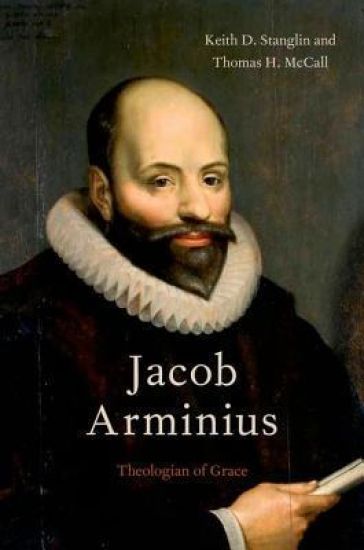
Jacob Arminius

Jacob Arminius

Keith D. Stanglin; Thomas H. McCall

Oxford University Press Inc
2012
sidottu
Jacob Arminius (1559-1609) is one of the few theologians in the history of Christianity who has lent his name to a significant theological movement. The dissemination of his thought throughout Europe, Great Britain, and North America, along with the appeal of his ideas in current Protestant evangelical spheres (whether rightly understood or misunderstood), continue to attract both scholarly and popular attention. Keith Stanglin and Thomas McCall's Jacob Arminius offers a constructive synthesis of the current state of Arminius studies. There is a chasm separating technical, scholarly discussions of Arminius and popular-level appeals to his thought. The authors seek to bridge the scholarly and general discussions, providing an account based on interaction with all the primary sources and latest secondary research that will be helpful to the scholar as well as comprehensible and relevant to the undergraduate student. The authors describe key elements of Arminius' theology with careful attention to its proper context; they also explore the broader theological implications of his views.
Jacob Arminius

Jacob Arminius

Keith D. Stanglin; Thomas H. McCall

Oxford University Press Inc
2012
nidottu
Jacob Arminius (1559-1609) is one of the few theologians in the history of Christianity who has lent his name to a significant theological movement. The dissemination of his thought throughout Europe, Great Britain, and North America, along with the appeal of his ideas in current Protestant evangelical spheres (whether rightly understood or misunderstood), continue to attract both scholarly and popular attention. Keith Stanglin and Thomas McCall's Jacob Arminius offers a constructive synthesis of the current state of Arminius studies. There is a chasm separating technical, scholarly discussions of Arminius and popular-level appeals to his thought. The authors seek to bridge the scholarly and general discussions, providing an account based on interaction with all the primary sources and latest secondary research that will be helpful to the scholar as well as comprehensible and relevant to the undergraduate student. The authors describe key elements of Arminius' theology with careful attention to its proper context; they also explore the broader theological implications of his views.
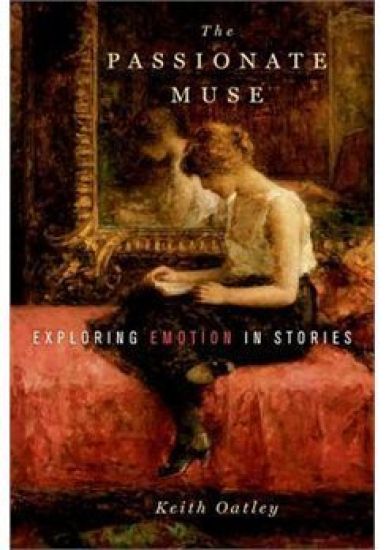
The Passionate Muse

The Passionate Muse

Keith Oatley

Oxford University Press Inc
2012
sidottu
Fiction is based on narratives in which characters act on their intentions and encounter vicissitudes. Readers enjoy entering into the lives of characters, coming to empathize with them as their plans progress or they meet obstacles. Readers enjoy, too, meeting characters with whom they sympathize, and being reminded of emotional episodes in their own lives. Keith Oatley is both a novelist and research psychologist, and so it is not surprising that he has created a hybrid text that alternates between sections of an original short story, One Another, and chapters on the psychology of emotion and fiction. People's enjoyment of stories depends on the emotions they experience as they read, watch, or listen. We human beings are intensely social and it's to imagined social worlds that fiction transports us, enabling us to meet more people and feel for them in many more situations than we could if we lived many lives. In this text, the author explains why people who read a great deal of fiction have better understandings of others than those who tend to read nonfiction. He argues that through fiction, we come to know more about the emotions of others and of ourselves.
Essays on Reference, Language, and Mind

Essays on Reference, Language, and Mind

Keith Donnellan

Oxford University Press Inc
2012
sidottu
Keith Donnellan, Emeritus of UCLA, is one of the major figures in 20th century philosophy of language, a key part of the highly influential generation of scholars that included Hilary Putnam, Saul Kripke, and David Kaplan. Like many of these philosophers, his primary contributions were published in article form rather than books. This volume presents a highly focussed collection of articles by Donnellan. In the late sixties and early seventies, the philosophy of language and mind went through a paradigm shift, with the then-dominant Fregean theory losing ground to the "direct reference" theory sometimes referred to as the direct reference revolution. Donnellan played a key role in this shift, focusing on the relation of semantic reference, a touchstone in the philosophy of language and the relation of "thinking about" - a touchstone in the philosophy of mind. The debates around the direct reference theory ended up forming the agenda of the philosophy of language and related fields for decades to come, and Donnellan's contributions were always considered essential. His ideas spawned a scholarly debate that continues to the present day. This volume collects his key contributions datng from the late 1960's through the early 1980's, along with a substantive introduction by the editor Joseph Almog, which disseminates the work to a new audience and for posterity.
First Son

First Son

Keith Koeneman

University of Chicago Press
2013
sidottu
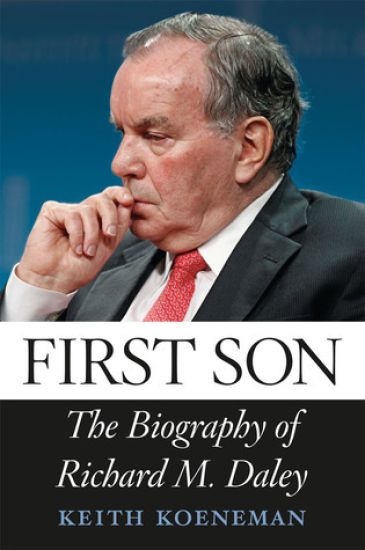
With those four words, an era ended. After twenty-two years, the longest-serving and most powerful mayor in the history of Chicago - and, arguably, America - stepped down, leaving behind a city that was utterly transformed, and a complicated legacy we are only beginning to evaluate. In "First Son", Keith Koeneman chronicles the sometimes Shakespearean, sometimes Machiavellian life of an American political legend. Making deft use of unprecedented access to key players in the Daley administration, as well as Chicago's business and cultural leaders, Koeneman draws on more than one hundred interviews to tell an up-close, insider story of political triumph and personal evolution. With Koeneman as our guide, we follow young Daley from his beginnings as an average Bridgeport kid thought to lack his father's talent and charisma to his unlikely transformation into an iron-fisted leader. Daley not only escaped the giant shadow of his father but also transformed Chicago from a gritty, postindustrial Midwestern capital into a beautiful, sophisticated global city. But in spite of his many accomplishments, Richard M. Daley's record is far from flawless. First Son sets the dramatic improvement of certain parts of the city against the persistent realities of crime, financial stress, failing public housing, and dysfunctional schools. And it reveals that in many ways Daley was unable to fully escape the machine politics of his father. A nuanced portrait of a complex man, "First Son" shows Daley to be sensitive yet tough, impatient yet persistent, a street-smart fighter and detail-driven policy expert who not only ran Chicago, but was Chicago.
Pivotal Politics – A Theory of U.S. Lawmaking

Pivotal Politics – A Theory of U.S. Lawmaking

Keith Krehbiel

University of Chicago Press
1998
nidottu
Politicians and pundits alike have complained that the divided governments of the last decades have led to a legislative gridlock. The author argues against this, advancing the theory that divided government actually has little effect on legislative productivity. Gridlock is in fact the order of the day, occurring even when the same party controls the legislative and executive branches. Anchored to real politics, the author argues that the pivotal vote on a piece of legislation is not the one that gives a bill simple majority, but the vote that allows its supporters to override a possible presidential veto. This theory of pivots also explains why, when bills are passed, winning coalitions usually are bipartisan and supermajority sized. Offering an account of when gridlock is overcome and showing that political parties are less important in legislative-executive politics than previously thought, this text offers a perspective on American lawmaking.
Hard Road West

Hard Road West

Keith Heyer Meldahl

University of Chicago Press
2007
sidottu
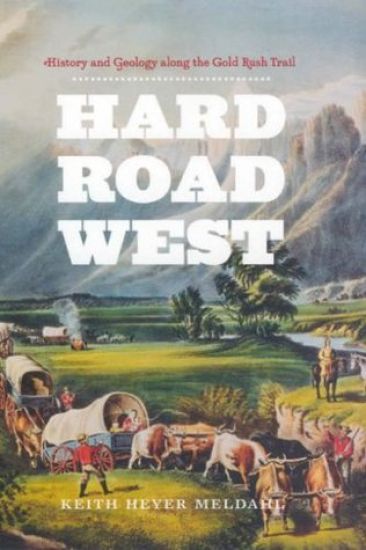
In 1849, news of the discovery of gold in California triggered an enormous wave of emigration toward the Pacific. Lured by the promise of riches, thousands of settlers left behind the forests, rain, and fertile soil of the eastern United States in favor of the rough-hewn lands of the American West. The dramatic terrain they struggled to cross is so familiar to us now that it is hard to imagine how frightening - even godforsaken - its sheer rock faces and barren deserts seemed to our forebears."Hard Road West" brings their perspective vividly to life, weaving together the epic overland journey of the covered wagon trains and the compelling story of the landscape they encountered. Taking readers along the 2,000-mile California Trail, Keith Heyer Meldahl uses the diaries and letters of the settlers themselves - as well as the countless hours he has spent following the trail - to reveal how the geology and geography of the West directly affected our nation's westward expansion. He guides us through a corrugated landscape of sawtooth mountains, following the meager streams that served as lifelines through an arid land, all the way to California itself, where colliding tectonic plates created breathtaking scenery and planted the gold that lured travelers west in the first place.
Hard Road West

Hard Road West

Keith Heyer Meldahl

University of Chicago Press
2008
nidottu
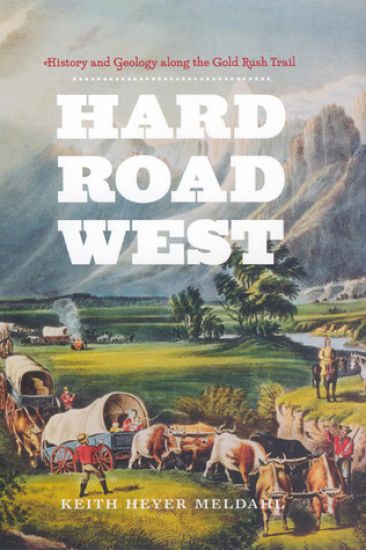
In 1849, news of the discovery of gold in California triggered an enormous wave of emigration toward the Pacific. Lured by the promise of riches, thousands of settlers left behind the forests, rain, and fertile soil of the eastern United States in favor of the rough-hewn lands of the American West. The dramatic terrain they struggled to cross is so familiar to us now that it is hard to imagine how frightening - even godforsaken - its sheer rock faces and barren deserts seemed to our forebears."Hard Road West" brings their perspective vividly to life, weaving together the epic overland journey of the covered wagon trains and the compelling story of the landscape they encountered. Taking readers along the 2,000-mile California Trail, Keith Heyer Meldahl uses the diaries and letters of the settlers themselves - as well as the countless hours he has spent following the trail - to reveal how the geology and geography of the West directly affected our nation's westward expansion. He guides us through a corrugated landscape of sawtooth mountains, following the meager streams that served as lifelines through an arid land, all the way to California itself, where colliding tectonic plates created breathtaking scenery and planted the gold that lured travelers west in the first place.
Peasants, Warriors, and Wives

Peasants, Warriors, and Wives

Keith Moxey

University of Chicago Press
2004
nidottu
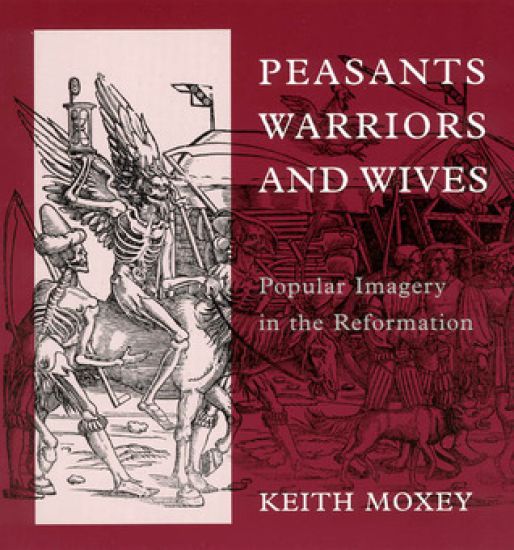
In Peasants, Warriors, and Wives, Keith Moxey examines woodcut images from the German Reformation that have often been ignored as a crude and inferior form of artistic production. In this richly illustrated study, Moxey argues that while they may not satisfy received notions of "art," they nevertheless constitute an important dimension of the visual culture of the period. Far from being manifestations of universal public opinion, as a cursory acquaintance with their subject matter might suggest, such prints were the means by which the reformed attitudes of the middle and upper classes were disseminated to a broad popular audience.
The Robot's Rebellion

The Robot's Rebellion

Keith E. Stanovich

University of Chicago Press
2004
sidottu
The idea that we might be robots is no longer the stuff of science fiction; decades of research in evolutionary biology and cognitive science have led many esteemed thinkers and scientists to the conclusion that, following the precepts of universal Darwinism, humans are merely the hosts for two replicators (genes and memes) that have no interest in us except as conduits for replication. Accepting and now forcefully responding to this disturbing idea that precludes the possibilities of morality or free will, among other things, Keith Stanovich here provides the tools for the "robot's rebellion," a program of cognitive reform necessary to advance human interests over the limited interest of the replicators. He shows how concepts of rational thinking from cognitive science interact with the logic of evolution to create opportunities for humans to structure their behavior to serve their own ends. These evaluative activities of the brain, he argues, fulfill the need that we have to ascribe significance to human life. Only by recognizing ourselves as robots, argues Stanovich, can we begin to construct a concept of self based on what is truly singular about humans: that they gain control of their lives in a way unique among life forms on Earth - through rational self-determination.
The Robot's Rebellion

The Robot's Rebellion

Keith E. Stanovich

University of Chicago Press
2005
nidottu
The idea that we might be robots is no longer the stuff of science fiction; decades of research in evolutionary biology and cognitive science have led many esteemed thinkers and scientists to the conclusion that, following the precepts of universal Darwinism, humans are merely the hosts for two replicators (genes and memes) that have no interest in us except as conduits for replication. Accepting and now forcefully responding to this disturbing idea that precludes the possibilities of morality or free will, among other things, Keith Stanovich here provides the tools for the "robot's rebellion," a program of cognitive reform necessary to advance human interests over the limited interest of the replicators. He shows how concepts of rational thinking from cognitive science interact with the logic of evolution to create opportunities for humans to structure their behavior to serve their own ends. These evaluative activities of the brain, he argues, fulfill the need that we have to ascribe significance to human life. Only by recognizing ourselves as robots, argues Stanovich, can we begin to construct a concept of self based on what is truly singular about humans: that they gain control of their lives in a way unique among life forms on Earth - through rational self-determination.
Pushing Cool

Pushing Cool

Keith Wailoo

University of Chicago Press
2021
sidottu
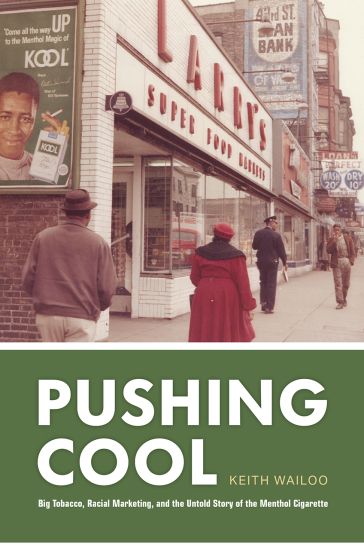
Police put Eric Garner in a fatal chokehold for selling cigarettes on a New York City street corner. George Floyd was killed by police outside a store in Minneapolis known as “the best place to buy menthols.” Black smokers overwhelmingly prefer menthol brands such as Kool, Salem, and Newport. All of this is no coincidence. The disproportionate Black deaths and cries of “I can’t breathe” that ring out in our era—because of police violence, COVID-19, or menthol smoking—are intimately connected to a post-1960s history of race and exploitation. In Pushing Cool, Keith Wailoo tells the intricate and poignant story of menthol cigarettes for the first time. He pulls back the curtain to reveal the hidden persuaders who shaped menthol buying habits and racial markets across America: the world of tobacco marketers, consultants, psychologists, and social scientists, as well as Black lawmakers and civic groups like the NAACP. Today most Black smokers buy menthols, and calls to prohibit their circulation hinge on a history of the industry’s targeted racial marketing. Ten years ago, when Congress banned flavored cigarettes as criminal enticements to encourage youth smoking, menthol cigarettes were also slated to be banned. Through a detailed study of internal tobacco industry documents, Wailoo exposes why they weren’t and how they remain so popular with Black smokers. Spanning a century, Pushing Cool reveals how the twin deceptions of health and Black affinity for menthol were crafted—and how the industry’s disturbingly powerful narrative has endured to this day.