

Kirjahaku
Etsi kirjoja tekijän nimen, kirjan nimen tai ISBN:n perusteella.
1000 tulosta hakusanalla Kenneth Stuart

Gangsters Anonymous 12 Steps and 12 Traditions is our positive contribution to our communities for the violence we created while suffering from this disease known as a gangsters mentality.

This is a nonfiction book which discusses some of the physical sciences that are often used in forensics and major crime investigations. Part I of the book discusses these. Part 2 discusses most of the major violent crimes and cites a certain case or two related to each chapter's subject. Part 3 discusses what can happen when an interrogation with a very bad person is not handled appropriately

The war on the ground and in the air over Kuwait and Iraq was not the only Gulf War being fought in early 1990. George Bush and Saddam Hussein were also battling for public opinion and for the perception of legitimacy for their actions. In this effort, both men as well as their spokespersons appealed to the just war theory of their religious traditions. In this perceptive and wide-ranging book, Kenneth Vaux elucidates the great just war traditions of Judaism, Christianity, and Islam, evaluating the key events of the war in light of the religious rhetoric used by both sides. From the first stirrings of conflict to its uncertain aftermath, religious and ethical traditions played a major role in winning support not just for the U.S. and Iraqi peoples but of public opinion worldwide. Throughout Vaux demonstrates the wide gaps between religious rhetoric and the political-military action it has been called on to support. Ethics and the Gulf War is not a typical ethical treatise; Vaux understands ethical reflection to encompass history, philosophy, psychology, ecology, theology, and eschatology. His book is a valuable contribution to the understanding of the Gulf War, and it is fascinating for scholars and laypersons coming to this subject from almost any area of interest.

Food Chains, Yields, Models, And Management Of Large Marine Ecosoystems
Kenneth Sherman
Routledge
2019
sidottu
Draws on case studies from tropical, temperate, and Arctic waters around the world, comparing multispecies biomass yield models for various large marine ecosystems. Emphasis is given to adaptive management as a strategy for maximizing the sustainability and productivity of living marine resources.

Biomass Yields And Geography Of Large Marine Ecosystems
Kenneth Sherman
TAYLOR FRANCIS LTD
2019
sidottu
Volume 111 of AAAS selected symposium, American Association of the Advancement of Science.

"This volume is a memorial tribute to the late Professor F. Earl Swisher. Born in Lyons, Kansas, July 22, 1902, he was a member of the pioneer generation of American scholars to study China. His early life offered no indication that he would become involved in Chinese studies. At an early age he moved with his family to Palisades, Colorado, where his father owned a farm. There he completed his public education. He was an avid reader as a student, and by the time of his graduation had exhaustea the libraries of his teachers and school. He entered the University of Colorado in 1920, majoring in history. Although he received an academic scholarship, he had to work his way through the University. In May 1924, he was graduated with. honors. Still he was uncertain about his career. While walking across campus to work one day shortly before graduation, he was caught in a typical Colorado cloudburst. He found shelter in a nearby building being used by Canton Christian College to recruit faculty for the forthcoming year. Waiting for the rain to stop, Swisher expressed a mild interest in a position at the College and left his name and address. He was somewhat surprised several weeks later to be offered a contract. By the end of August, he had arrived in Canton to assume his duties."
Microeconomic modeling has been an important tool for agricultural economists for several decades and promises to be important for ad-dressing the research problems of the 1980s as well. This volume explores the possibilities for using micromodeling to analyze how individual farm businesses react to and are affected by farm policies. Although this purpose represents only one potential use of micro-modeling, effective modeling for policy analysis necessitates a broad look from several historical, analytical, and institutional perspectives. The Micromodeling Conference held November 18-20, 1981, at Airlie House, Virginia, under the auspices of the U.S. Department of Agri-culture's Economic Research Service and the Farm Foundation reflected these concerns.

Law students, law professors, and lawyers frequently refer to the process of "thinking like a lawyer," but attempts to analyze in any systematic way what is meant by that phrase are rare. In his classic book, Kenneth J. Vandevelde defines this elusive phrase and identifies the techniques involved in thinking like a lawyer. Unlike most legal writings, which are plagued by difficult, virtually incomprehensible language, this book is accessible and clearly written and will help students, professionals, and general readers gain important insight into this well-developed and valuable way of thinking.Updated for a new generation of lawyers, the second edition features a new chapter on contemporary perspectives on legal reasoning. A useful new appendix serves as a survival guide for current and prospective law students and describes how to apply the techniques in the book to excel in law school.

An exposition on individuation including 'Archetypes, Individuation and Internal Objects' and 'The Individuation Process'

First published in 1983. In the 1980s, as they are today, young people were remaining longer in education, and were leaving better qualified, if only to face unemployment rather than real jobs and progressive careers. Traditional gender divisions and roles are being challenged. In this study, Kenneth Roberts uses evidence from youth and leisure research to examine the ways that young people were responding to these trends. His book combines theories of adolescence, of the role and growth of leisure, and of the sources and consequences of post-war youth cultures. Roberts stresses and explains the persistence of class and gender divisions through trends in clothing, music and hair artistry, and predicts that these patterns will survive changes. He explains why, even during the era of affluent young workers, the freedom of adolescence remained superficial, for most young people at least. The majority had never been granted any real alternative to using their ‘free’ time and money to embrace traditional class and gender roles. Contrary to popular reputations, Youth and Leisure argues that, on balance, youth cultures exercised a conservative influence and that the more radical styles are nurtured by middle- and not working-class youths.The analysis has policy implications which are drawn together in the final chapter. Practitioners are advised to recognise that youth and leisure services cannot override divisions and tastes grounded in the wider social structure, but this does not mean that these interventions must be ineffective. Roberts explains how leisure education and provision can modify broader patterns and enable all young people to explore the leisure opportunities their circumstances allow.

First published in 1983. In the 1980s, as they are today, young people were remaining longer in education, and were leaving better qualified, if only to face unemployment rather than real jobs and progressive careers. Traditional gender divisions and roles are being challenged. In this study, Kenneth Roberts uses evidence from youth and leisure research to examine the ways that young people were responding to these trends. His book combines theories of adolescence, of the role and growth of leisure, and of the sources and consequences of post-war youth cultures. Roberts stresses and explains the persistence of class and gender divisions through trends in clothing, music and hair artistry, and predicts that these patterns will survive changes. He explains why, even during the era of affluent young workers, the freedom of adolescence remained superficial, for most young people at least. The majority had never been granted any real alternative to using their ‘free’ time and money to embrace traditional class and gender roles. Contrary to popular reputations, Youth and Leisure argues that, on balance, youth cultures exercised a conservative influence and that the more radical styles are nurtured by middle- and not working-class youths.The analysis has policy implications which are drawn together in the final chapter. Practitioners are advised to recognise that youth and leisure services cannot override divisions and tastes grounded in the wider social structure, but this does not mean that these interventions must be ineffective. Roberts explains how leisure education and provision can modify broader patterns and enable all young people to explore the leisure opportunities their circumstances allow.

This book elucidates the great just war traditions of Judaism, Christianity, and Islam, evaluating the key events of the war in light of the religious rhetoric. It is fascinating for scholars and laypersons coming to this subject from almost any area of interest.

Food Chains, Yields, Models, And Management Of Large Marine Ecosoystems
Kenneth Sherman
Routledge
2020
nidottu
This book focuses on the food chains and biomass yields of the U.S. Exclusive Economic Zone and adjacent waters. It provides case studies of large marine ecosystems and focuses on the management strategies for increasing the long-term sustainability of the living marine resources. .

Biomass Yields And Geography Of Large Marine Ecosystems
Kenneth Sherman
TAYLOR FRANCIS LTD
2021
nidottu
Volume 111 of AAAS selected symposium, American Association of the Advancement of Science.

Eminent economists and development experts focus on a number of concerns that are currently the major preoccupation of development economists, policymakers, and practitioners. The issues addressed in this collection center on strategies to eradicate poverty, reduce inequality, and deal effectively with problems of management and the utilization of land and water resources. The contributors analyze the issues in the context of past experience, the present international setting, and possible alternative strategies for the future, and consider, as well, theoretical and methodological concerns.

This collection of letters and diary entries by late Professor Earl Swisher takes us on a journey into the life and politics of Canton in the mid-1920s. His account of the creation and destruction of the 'Canton Commune' includes rare photographs taken when Canton was liberated from the Communists.

This book focuses on the potential of economic and behavioral models at the micro level to depict the complex nature of growth and adjustment decisions by farm firms in response to various policy and regulatory environments.
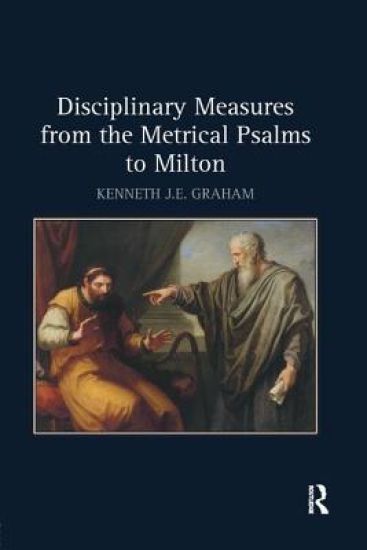
Disciplinary Measures from the Metrical Psalms to Milton studies the relationship between English poetry and church discipline in four carefully chosen bodies of poetry written between the Reformation and the death of John Milton. Its primary goal is to fill a gap in the field of Protestant poetics, which has never produced a study focused on the way in which poetry participates in and reflects on the post-Reformation English Church's attempts to govern conduct. Its secondary goal is to revise the understandings of discipline which social theorists and historians have offered, and which literary critics have largely accepted. It argues that knowledge of the early modern culture of discipline illuminates some important poetic traditions and some major English poets, and it shows that this poetry in turn throws light on verbal and affective aspects of the disciplinary process that prove difficult to access through other sources, challenging assumptions about the means of social control, the structures of authority, and the practical implications of doctrinal change. More specifically, Disciplinary Measures argues that while poetry can help us to understand the oppressive potential of church discipline, it can also help us to recover a more positive sense of discipline as a spiritual cure.

This book offers a deep dive into the social, political, and economic forces that make white-collar crime and corruption a staple feature of the nightlife economy. The author, a former bouncer-turned-bartender of party bars and nightclubs in a large U.S. city, draws from an auto-ethnographic case study to describe and explain the routine and embedded nature of corruption and deviance among the regulators and the regulated in the nightlife environment. This text offers a contemporary and incisive theoretical framework on the criminogenic features and structural contradictions of capitalism. The author both describes and explains how the dominant political economy is rife with structural contradictions that, in turn, generate various manifestations of white-collar crime, organizational deviance, and public corruption. The author uses the bar and nightlife environment to empirically anchor these claims. Methodologically, the research is innovative in advancing inquiry into ethically and logistically challenging environments. The style of writing and framing of the text is one that punches upward and avoids the voyeuristic and reductionist tropes historically associated with "dangerous fieldwork." Through a range of disciplinary perspectives, Corrupt Capital offers both scholarly rigor and inviting prose to advance our understanding of crimes of the relatively powerful and powerless alike. An accessible and compelling text, this book will appeal to readers in criminology, sociology, law and society, political science, and all those interested in learning about the relationship between power, law, and routinized corruption in the nightlife economy.